
Results
-
£72.00
Sing Sang Sung - Gordon Goodwin - Reid Gilje
"Sing Sang Sung" is inspired by "Sing Sing Sing" from the legendary 1938 Carnegie Hall Concert by Benny Goodman & His Orchestra. The famous "Jungle Groove" presented by drummer Gene Krupa and the opening riff from the 1938 performance is retained in this brilliant, swinging tune composed by Gordon Goodmin.The style changes from swing to "jungle groove" (with extensive use of tom-toms), is essential for both these tunes.The best sound recording of "Sing Sang Sung" is "Swingin' For the Fences" by Gordon Goodwin Big Phat Band released in 2000. But, you should also listen to the original "Sing Sing Sing" from the 1938 Benny Goodman recording as well!
Estimated dispatch 7-14 working days
-
£250.00
Symphony No 1 for Wind Band - Solitude Standing - Stig Nordhagen
The two movements in this symphony have quite similar structure and length, and this is no coincidence.As a composer, I try to create two musical stories that comes from the same starting point and thought, but they sound and feel different.Music often describes something you cant say in words. This composer stands in the middle of the symphony, here personalized as trombone solo (or euphonium) and tries "Solitude Standing" to make a bridge between the two parts.- Stig Nordhagen -
Estimated dispatch 7-14 working days
-
£29.95
ARMY OF GOD (Brass Band Set) - Emil Soderstrom
This march was awarded first prize in the 1930 American Golden Jubilee National Music Competition and was published the same year in the first edition of the American Festival Series. It was subsequently re-printed in the General Series of 1984. Soderstrom's imaginative use of syncopation and chromatic harmony brought a new, American sound to the Salvation Army march. For example, he took the old Salvation Army fight song Hark, hark my soul written and changes its metre from 6/8 to 4/4 while also syncopating it!
Estimated dispatch 7-14 working days
-
£44.95
EUPHONY (Euphonium Solo with Brass Band Set) - Robert Redhead
Previously only available in manuscript form, this euphonium solo with brass band accompaniment is now available in printed format. Euphony (meaning a pleasant, sweet sound) is based on the tunes of Sidney Cox with material taken from the songs; 'He found me', 'This one thing I know', 'You can tell out the sweet story' and 'Deep and wide'. At the time of writing, the composer remarked; 'The euphonium is often associated with melodies and harmonies that lend themselves to pleasing sounds'. That is true of this solo but it also presents considerable technical challenges for the soloist in terms of range and technique.
Estimated dispatch 7-14 working days
-
 £30.00
Building on Sand - Jock McKenzie
This piece was composed with the intention of replicating some of the sounds of the New Orleans Brass Bands; particularly those whose music has a funky, riff-based edge to their sound e.g. the Hot 8, Rebirth, Dirty Dozen and Soul Rebels brass bands. As well as elements of the second line parade, the music also has a full-on, swing out section.
-
 £30.00
Inchcolm - Terry Johns
The island of Inchcolm was visited by St Columba in 567 and is mentioned in Shakespeare's Macbeth. It lies on the stretch of water beyond my balcony, known locally as "Mortimer's deep", and on short winter days, the ruins of Columba's abbey are shrouded in the mists of the estuary and bring a flavour of mystery and legend to my morning coffee. Music comes easily here amidst the crying of the seabirds, and the horn has given its distinctive voice to history, myth and folklore for centuries. Its sound was born in the wide-open spaces and can paint a broad seascape with ease.
-
 £40.00
Nightingale Dances - Matthew Hall
Matthew Hall Nightingale DancesNightingale Dances opens with a mellophonium-esque ensemble sound of 5 flugel horns, 3 tenor horns and trombones inspired by the Manhattan Transfer version of A Nightingale Sang in Berkeley Square, leading into a fast quickstep section for full band.Solo flugel horn takes the lead into the paso-doble middle section of the piece before the original opening to A Nightingale Sang in Berkeley Square becomes the main focus in the euphonium and baritone.A big build up into the final kit-led Hollywood-style show dance section with a half tempo feel ends the work with a real thumping ending to any contest or concert performance.Matthew Hall Nightingale Dances
Estimated dispatch 5-7 working days
-
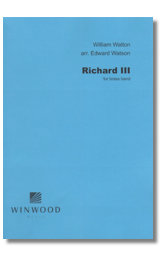 £62.00
Richard III (Score only) - William Walton
It takes a special ability to compose film scores which serve the images perfectly yet translate into first class concert music. William Walton was such a talent as the continuing popularity of his brilliantly evocative film music shows. This suite presents a rich, vivid musical tapestry with all the drama of the original captured to perfection. Winwood Music are delighted to bring this music from Laurence Olivier's classic film to the brass band world in a fabulous arrangement by Edward Watson - so idiomatic that you'll think this is the original version! There are seven movements: 1. Prelude 2. Fanfare and Processional 3. Sound Drums and Trumpets & Recessional 4. Elegy 5. The Princes in the Tower 6. The Battle of Bosworth Field 7. Death of Richard and Finale
Estimated dispatch 7-9 working days
-
 £74.00
Richard III (Parts only) - William Walton
It takes a special ability to compose film scores which serve the images perfectly yet translate into first class concert music. William Walton was such a talent as the continuing popularity of his brilliantly evocative film music shows. This suite presents a rich, vivid musical tapestry with all the drama of the original captured to perfection. Winwood Music are delighted to bring this music from Laurence Olivier's classic film to the brass band world in a fabulous arrangement by Edward Watson - so idiomatic that you'll think this is the original version! There are seven movements: 1. Prelude 2. Fanfare and Processional 3. Sound Drums and Trumpets & Recessional 4. Elegy 5. The Princes in the Tower 6. The Battle of Bosworth Field 7. Death of Richard and Finale
Estimated dispatch 7-9 working days
-
£40.00
Where Eagles Dare - Goodwin, R - Barry, D
A high-powered, big-budget WWII espionage thriller, the film follows an elite group of allied commandos assigned to rescue an American general being held captive by the Nazis in a castle high in the Bavarian Alps. A "Boys Own" style adventure with a sound track by Ron Goodwin that matches the power of the film.3rd section +
In Stock: Estimated dispatch 1-3 working days
 View Music