
Results
-
 £22.27
All Tuned Up - 120 Famous Tunes for All Occasions (Full Score A4 Size) PDFs
This unique new resource from BrookWright Music will be an essential part of every band's library! All Tuned Up is designed to cater for ensembles for occasions throughout the year. Tunes are drawn from genres including Classical, Hymns, Folk and Patriotic amongst many others to form a comprehensive book that will cover a wide variety of events such as Weddings, Funerals, Graduation Ceremonies, Parties, Proms, Remembrance, Street Playing and Thanksgiving. Playable by as few as five players but also designed to work for full brass band or wind band, it features flexible parts in a wide variety of transpositions. These excellent arrangements have been expertly created by Andrew Wainwright, David E. Jones, Dean H. Jones and Steven Ponsford. The general harmonic format of All Tuned Up is in five parts, although additional notes have been included to thicken the harmony where more players are available. Therefore, the book will work equally well with larger groups, including full brass bands and wind bands. To view a promotional video please visit www.youtube.com/watch?v=nmodRrXQRRs At the end of the Part 1 Bb book are four a capela tunes for Remembrance/Memorial occasions. This PDF download is International Size - A4 (297mm x 210mm) Physical copies of the books available from: UK - Individual Books Full Set Brass Band Set USA - www.solidbrassmusic.com/product/all-tuned-up-ensemble-books
In Stock: Estimated dispatch 1-3 working days
-
£22.27
All Tuned Up - 120 Famous Tunes for All Occasions (Full Score - US Size) PDFs
This unique new resource from BrookWright Music will be an essential part of every band's library! All Tuned Up is designed to cater for ensembles for occasions throughout the year. Tunes are drawn from genres including Classical, Hymns, Folk and Patriotic amongst many others to form a comprehensive book that will cover a wide variety of events such as Weddings, Funerals, Graduation Ceremonies, Parties, Proms, Remembrance, Street Playing and Thanksgiving. Playable by as few as five players but also designed to work for full brass band or wind band, it features flexible parts in a wide variety of transpositions. These excellent arrangements have been expertly created by Andrew Wainwright, David E. Jones, Dean H. Jones and Steven Ponsford. The general harmonic format of All Tuned Up is in five parts, although additional notes have been included to thicken the harmony where more players are available. Therefore, the book will work equally well with larger groups, including full brass bands and wind bands. To view a promotional video please visit www.youtube.com/watch?v=nmodRrXQRRs At the end of the Part 1 Bb book are four a capela tunes for Remembrance/Memorial occasions. This PDF download is US Letter Size - 11" x 8.5" Physical copies of the books available from: UK - Individual Books Full Set Brass Band Set USA - www.solidbrassmusic.com/product/all-tuned-up-ensemble-books
In Stock: Estimated dispatch 1-3 working days
-
 £38.95
Unity Series Band Journal - Numbers 530 - 533, June 2024
530: Carol Arrangement - God rest you merry, gentlemen (Noel Jones)This swing arrangement of the traditional English carol also features references to O come, all ye faithful (C.C. 61) and Jingle Bells (C.C. 121). Play with imagination and a sense of style!531: Go, tell it on the mountain! (Nathanael Watchorn)Historically, the passion of enslaved people in America for singing about the Gospel of Jesus is well documented, but it was men of three generations, each named John Wesley Work, who enabled spirituals to become more widely known. John Wesley Work Sr, a church choir director in Nashville, Tennessee, wrote and arranged music for the pioneering Fisk Jubilee Singers whose early repertoire consisted largely of spirituals. This passion and knowledge of spirituals was passed down through the generations. John Work III travelled hundreds of miles to collect songs by attending church services in remote areas. In 1940, he published a collection of 230 songs which included a setting of Go, tell it on the mountain! that is still performed today.Nathanael Watchorn, a Bandsman at Regent Hall Corps in London, is a new contributor to the journals. He originally wrote this as a vocal arrangement for the group FourHymn, subsequently transcribing it for the corps' Young People's Band, while he was Band Leader.532: Carol Arrangement - They all were looking for a king (Stephen Hull)At the North American Composers Forum, Major Len Ballantine challenged participants to find an unfamiliar song in the Salvation Army Song Book and try to write an arrangement of the listed tune. Stephen Hull happened across They all were looking for a king (S.A.S.B. 128) and the tune Childhood (T.B. 421) which lead to this arrangement.533: March - Washed and healed (Eiliv Herikstad)The Christian experience of many people will have been positively impacted by the life of the late Bandmaster Eiliv Herikstad, either personally or through his musical leadership and compositions. This march is the second publication from this well-known Salvation Army composer since his Promotion to Glory last year. This march is more traditional in style that many of his compositions but contains a strong Christian message and demonstrates his compositional expertise.
Estimated dispatch 7-14 working days
-
.png) £34.95
£34.95Bah Humbug! - Jonathan Bates
DURATION: 3'00". DIFFICULTY: 3rd+. Composed for Strata Brass in 2020 as part of their COVID-19 induced, virtually recorded 'A Christmas Carol' (a new suite for brass band lasting around 30 minutes in total), 'Bah Humbug!' is a tongue-in-cheek yet showy solo composed for Bass Trombone. Throughout the work, the solo line is used to depict Ebenezer Scrooge, a miserly old man with little-to-no compassion or generosity and this grumpiness is portrayed throughout the solo. Often there will be moments of lightness and hoy, quickly banished by the misery of the Bass Trombonist!.
In Stock: Estimated dispatch 1-3 working days
-
 £38.95
Unity Series Band Journal - Numbers 522 - 525, October 2023
522: Festival March - The Rescuers (Andrew Hedley)This exciting and bright festival march comes from a new contributor to the band journals. Andrew Hedley is a bandsman at Chester-le-Street Corps and a member of the Euphonium Section of the International Staff Band. This work contains inventive harmonic and melodic patterns and we hope this will be the first of many works from this composer to be seen in our journals.523: Moses and Pharaoh (Ralph Pearce)This piece owes its creation to the playing of the Montclair Citadel Young Peoples' Band in the Sunday School assembly every weekend. The song Pharaoh, Pharaoh is extremely popular and is sung with gusto and much movement. The presentation of this song derives for an accompaniment written for the band to play along with the singing. To widen its use, the spiritual Go down, Moses (STTL Vol.7, Part 2) was added to make the present composition. This music should have drive throughout and be played with a sense of fun.524: Lord, to thee (Alan Williams)This is a setting of the tune Hendon (T.B. 249). The piece uses the first verse of Frances Ridley Havergal's commonly associated text 'Take my life and let it be consecrated, Lord, to thee' (S.A.S.B. 623), and from there it takes its title.525: Song Arrangement - This is why (Noel Jones)This music is based on the tune This is why (T.B. 353) by Elisha Albright Hoffman and this two-verse arrangement reflects the great song of testimony Would you know why I love Jesus (S.A.S.B. 912). An associated scripture reference is found in Mark 10:45 'For even the Son of Man did not come to be served, but to serve, and to give his life as a ransom for many'. The motif 'Would you know' occurs in the opening bars and is repeated throughout the piece, along with fragments of the first verse. The chorus confirms the hoy that Christians experience knowing that Christ's sacrifice has bought forgiveness for our wrongdoings.
Estimated dispatch 7-14 working days
-
 £34.95
Charles Dickens Christmas, A - Jonathan Bates
DURATION: 4'00". DIFFICULTY: 4th+. Composed for Strata Brass in 2020 as part of their COVID-19 induced, virtually recorded 'A Christmas Carol' (a new suite for brass band lasting around 30 minutes in total), 'A Charles Dickens Christmas' was used as the opening number for the event. The work utilises a number of instantly recognisable fragments of much-loved Christmas carols but acts more as a quasi-premonition into the original Charles Dickens novel which follows. Each section is marked with the point in the story which the music refers to and ends in a celebratory manner. .
In Stock: Estimated dispatch 1-3 working days
-
 £19.95
Judd: To Music
This beautiful melody became popular in The Salvation Army after it appeared with a new set of words by Will Brand under the title More than these in January 1949. This arrangement for cornet and brass band was originally published in 1961.
Estimated dispatch 7-14 working days
-
 £133.70
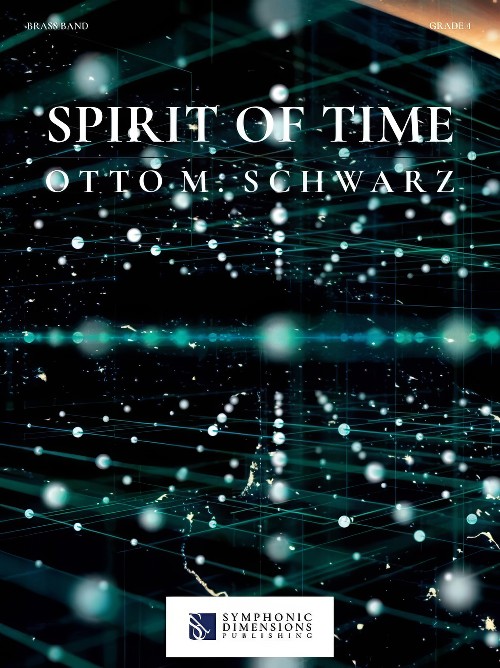
Spirit of Time (Brass Band - Score and Parts) - Schwarz, Otto M.
Zeitgeist; transformations; a departure for new shores... these are buzzwords we often encounter nowadays. Above all in this digital age, it is essential that we face changes positively and that we make the very best of them. Music is emotion! Otto M. Schwarz begins many of his lectures with this phrase, and this is exactly what we feel in this new concert work. Rapid, and full of energy, is the leap into a new chapter, wonderful opportunities are waiting to be discovered in uncharted lands. But change is not only loud and momentous. The creative power of the future lies dormant in the inventive spirit of the individual, quietly, thoughtfully, silently and alone! The final sequence of this work is all about good vibes: it lights the way to a positive future and stands for the dawn of a new era!Duration: 10.00
Estimated dispatch 7-14 working days
-
 £40.00
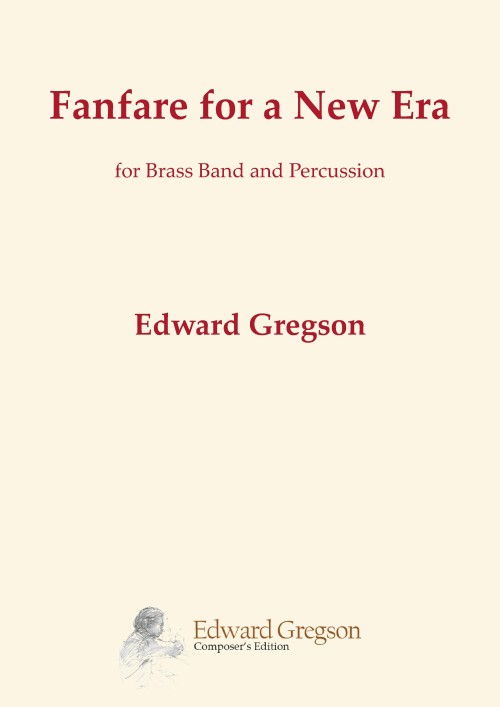
Fanfare for a New Era (Brass Band - Score and Parts) - Gregson, Edward
Fanfare for a New Era is the most substantial of Edward Gregson's fanfares and was the result of a private commission by Lady Sheila Stoller to celebrate the opening in April 2017 of the Stoller Hall at Chetham's School of Music, Manchester. Gregson dedicated it to Sir Norman Stoller, who donated the funding for the new concert hall. The Fanfare was designed to fill the whole space, with separate brass choirs - trumpets, horns, trombones and tuba - playing their own music. A solo trumpeter playing 'on high' announces first the four horns and timpani, who enter with a stately measure. Next the herald trumpeter ushers in trombones, tuba and drums, with a faster dance. Finally, the remaining three trumpets amplify the peeling of bells. All four elements then come together, surrounding the audience with a 'joyful noise' of festive brass and percussion.Duration: 3.00
Estimated dispatch 7-14 working days
-
£14.00
Fanfare for a New Era (Brass Band - Score only) - Gregson, Edward
Fanfare for a New Era is the most substantial of Edward Gregson's fanfares and was the result of a private commission by Lady Sheila Stoller to celebrate the opening in April 2017 of the Stoller Hall at Chetham's School of Music, Manchester. Gregson dedicated it to Sir Norman Stoller, who donated the funding for the new concert hall. The Fanfare was designed to fill the whole space, with separate brass choirs - trumpets, horns, trombones and tuba - playing their own music. A solo trumpeter playing 'on high' announces first the four horns and timpani, who enter with a stately measure. Next the herald trumpeter ushers in trombones, tuba and drums, with a faster dance. Finally, the remaining three trumpets amplify the peeling of bells. All four elements then come together, surrounding the audience with a 'joyful noise' of festive brass and percussion.Duration: 3.00
Estimated dispatch 7-14 working days
 View Music