
Results
-
£27.50
Eighteenth (18th) Variation, The Rachmaninov, S.
In Stock: Estimated dispatch 3-5 working days
-
 £27.50
The Eighteenth Variation
A melancholy Rachmaninov melody (from the Paganini Variations for Piano & Orchestra) to melt any romantic's soul. Anyone who doesn't find this melody gorgeous in the extreme needs prolonged medical treatment !
Estimated dispatch 7-14 working days
-
£29.50
Rhapsody On a Theme of Paganini - Rachmaninorff - Ed Keeley
Almost everyone will know and recognise this work simply as the Eighteenth Variation of a Theme by Paganini. Is one of the most beautiful melodies that known throughout the world & regularly features on Classic FM. Now the famous work by Rachmaninoff is available as a lyrical slow melody solo for Euphonium. Featuring intricate parts for the band and a challenging euphonium solo that needs empathetic and expressive accompaniment. Free solo part is available to download below.
In Stock: Estimated dispatch 1-3 working days
-
 £54.99
The Irish Dancemaster - William Vean
During the eighteenth century a person called 'the Dance Master' made his appearance in Ireland. He was a travelling dance-teacher, who moved from one village to another to teach the people there how to dance. They were often flamboyant personalities, gorgeously dressed and holding a staff in one hand. In order to teach their pupils the difference between their right and left leg, the dance master used to tie a small bunch of straw or hay to their leg and then would order them to either lift their 'hay-leg' or their 'straw-leg'. The dancing masters used to stay in one particular village for about six weeks (if they were not claimed by a neighbouringvillage), after which they continued their journey. Having a famous dance master gave a village a certain distinction and did not seldom lead to boasting and pride. Also on account of the popularity of Celtic music in general at the moment, William Vean was inspired to writing 'The Irish Dance Master'. He 'teaches' you two dances, the Reel and the Jig. In between these two dances there is a short breathing space, during which a traditional Irish rhythm can be enjoyed.
Estimated dispatch 5-14 working days
-
 £29.95
Caelidh - Rodney Newton
Caelidh was commissioned by Robert and Lorraine Childs and given to their son David as an eighteenth birthday present. Composed by Rodney Newton in 1999 it was first performed by David with Brighouse and Rastrick Band in Huddersfield Town Hall...
Estimated dispatch 5-7 working days
-
 £49.95
Andante and Rondo - and Robert Childs
Capuzzi was an Italian violinist and composer who worked in Venice in the 1780s. His Concerto for Double Bass is charming and sports simple lines, crisp rhythms, and elegance of form. As a result, it is a great favourite. An ideal addition to recital and exam programmes, the present version of the second and third movements is perfect for young players and professionals alike, and lls a substantial hole in the euphonium repertoire of eighteenth century classics.
Estimated dispatch 7-9 working days
-
 £51.95
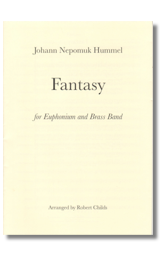
Fantasy - and Robert Childs
In the late eighteenth and early nineteenth centuries the 'fantasia' or 'pot-pourri' was a popular genre built on a selection of hit tunes of the day. Hummel wrote three such works, for guitar, cello, and viola; this arrangement is based on a shortened version of the work for viola and orchestra. The original, published as Hummel's Opus 94, dates from about 1820 and includes themes from Mozart's Don Giovanni, The Marriage of Figaro, Die Entfuhrung aus dem Serail, and Rossini's Tancredi.
Estimated dispatch 7-9 working days
-
 £45.00
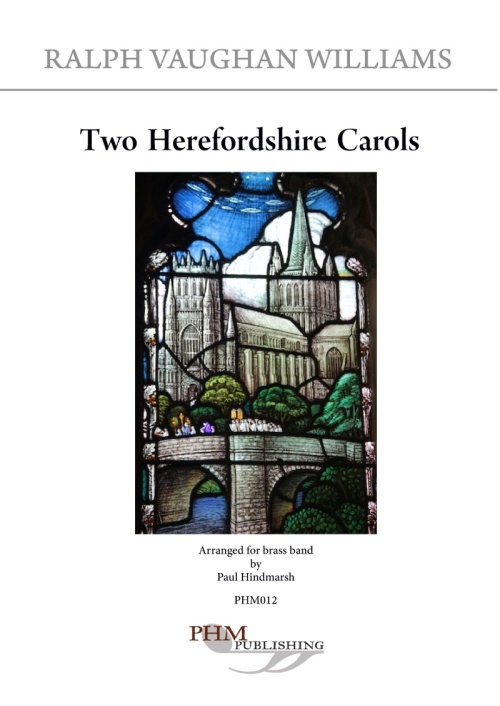
Two Herefordshire Carols (Brass Band - Score and Parts)
The two traditional tunes that comprise this straightforward setting were sung to Ralph Vaughan Williams (1872-1958) by Mrs. Esther Smith of Dilwyn, near Hereford, during one of the great composer's folk song collecting tours of England in the early years of the twentieth century. They were included in Twelve Traditional Carols from Herefordshire, edited by E.M. Leather and Vaughan Williams. The words to which Mrs. Smith sung the first tune were probably drawn from eighteenth century evangelical sources. The editors replaced these with six of the 16 verses of a traditional seventeenth century carol text, Joseph and Mary.The second melody, which appears as the centre piece of this arrangement, was sung to a carol that tells of a farmer who ploughed on Christmas Day. It is in fact a translation of a German traditional carol Gelobet seist du Jesu Christ that was published in Goodly Psalmes and Spiritualle Songes (1546) translated by Miles Coverdale. Vaughan Williams used the title Coverdale's Carol.The brass band settings follow the settings made by Vaughan Williams in 1920 for the Oxford Book of Carols. Since his simple harmonic approach is similar in both settings, three verses of his haunting version of Coverdale's Carol have been folded inside four verses of the slightly more animated treatment of Joseph and Mary. The harmonisations of Vaughan Williams have been given some brass band colour, with some verses taken by soloists from the ensemble. The accompaniment figuration that embellishes the second verse of Joseph and Mary has been used to open and close this arrangement and to bind the verses together.- Paul HindmarshDuration: 5.00
Estimated dispatch 7-14 working days
-
 £45.00
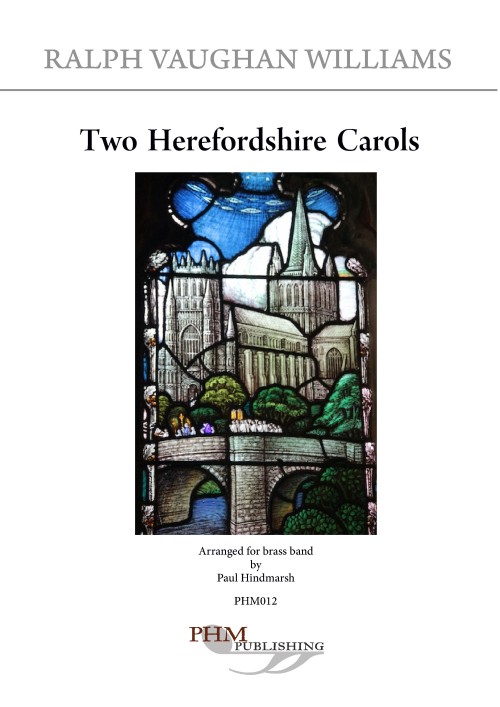
Two Herefordshire Carols (Brass Band - Score and Parts) - Vaughan Williams, Ralph - Hindmarsh, Paul
The two traditional tunes that comprise this straightforward setting were sung to Ralph Vaughan Williams (1872-1958) by Mrs. Esther Smith of Dilwyn, near Hereford, during one of the great composer's folk song collecting tours of England in the early years of the twentieth century. They were included in Twelve Traditional Carols from Herefordshire, edited by E.M. Leather and Vaughan Williams. The words to which Mrs. Smith sung the first tune were probably drawn from eighteenth century evangelical sources. The editors replaced these with six of the 16 verses of a traditional seventeenth century carol text, Joseph and Mary.The second melody, which appears as the centre piece of this arrangement, was sung to a carol that tells of a farmer who ploughed on Christmas Day. It is in fact a translation of a German traditional carol Gelobet seist du Jesu Christ that was published in Goodly Psalmes and Spiritualle Songes (1546) translated by Miles Coverdale. Vaughan Williams used the title Coverdale's Carol.The brass band settings follow the settings made by Vaughan Williams in 1920 for the Oxford Book of Carols. Since his simple harmonic approach is similar in both settings, three verses of his haunting version of Coverdale's Carol have been folded inside four verses of the slightly more animated treatment of Joseph and Mary. The harmonisations of Vaughan Williams have been given some brass band colour, with some verses taken by soloists from the ensemble. The accompaniment figuration that embellishes the second verse of Joseph and Mary has been used to open and close this arrangement and to bind the verses together.- Paul HindmarshDuration: 5.00
Estimated dispatch 7-14 working days
 Listen to MP3
 View Music