
Results
-
 £115.60
Angels in the snow - Jonas Fjeld - Haakon Esplo
The popular Norwegian singer/songwriter Jonas Fjeld released the single "Angels in the Snow" in 1989. It was one of the tracks on the record album "Svaert nok for meg" ("Big enough for me") which was released later the same year. The album became ahuge success, topping the charts for several weeks. "Angels in the Snow" is also released on other albums, both as concert recordings and studio recording.This arrangement can also be performed with a soloist by adjusting the balance in theband.
Estimated dispatch 5-14 working days
-
 £60.99
A Summer Holiday - Patrick Millstone
In 'A Summer Holiday' Patrick Millstone takes us with him on a journey. After a year's hard work we may finally enjoy a well-earned holiday. The first part of this three-part composition has the appropriate title 'On Tour'. When we chose our holiday destination, the brochure said that it would be bathed in sunlight every day. Unfortunately, this turns out not to be the case. Somewhat melancholically, we play round games in our summer house on a 'Rainy Day'. However, the next day, when the sun again has driven away all the clouds, we naturally visit the 'Crowded Beach', where we enjoy both sun, sea and beach once again.
Estimated dispatch 5-14 working days
-
 £115.60
Julen ar har - Sölve Jan Rydell - Haakon Esplo
The beautiful and popular duet "Christmas is Here", written by Billy Butt and Solve Rydell is now available in a beautiful, symphonic arrangement for brass band.Many people know the song from a recording made by Tommy Korberg and Sissel Kyrkjebo in 1989. This version ended up on the Swedish charts for four weeks over the Christmas-New Year 1989-1990 and has been very popular at Christmas concerts since.The lyrics of the song describe Christmas in the Nordic countries.
Estimated dispatch 5-14 working days
-
 £54.99
Mid-Winter - Gustav Holst - Stephen Bulla
This beautiful Christmas tune by Stephen Bulla sets the perfect atmosphere for your Christmas concert. Light the candles and enjoy the most wonderful time of the year with friends, family and music...
Estimated dispatch 5-14 working days
-
 £104.99
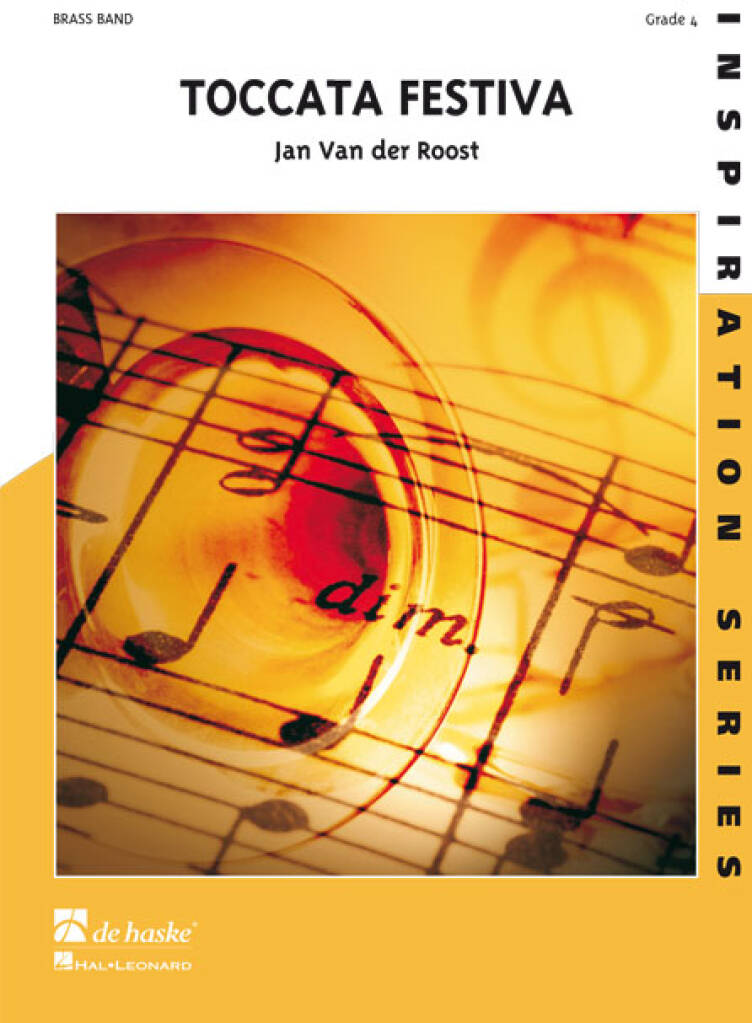
Toccata Festiva - Jan Van der Roost
'Toccata Festiva' was commissioned in 1994 by the Dutch Brass Band Championships. The wind band version was made a year later by the composer himself. Historically speaking, the toccata is considered to be one of the first independent instrumental forms for keyboard instruments. Originally the toccata was typically more or less improvised, later this musical form was given a more regulated structure. Both elements are used in the 'Toccata Festiva': on the one hand the different themes are developed freely, on the other, the piece has an orderly structure. It is in a three part form (quick-slow-quick) and includes both strong rhythmical figures and broad melodic lines. Partof the composition is written in a more or less archaic tone idiom, referring to the period from which the toccata form originates (16th century).
Estimated dispatch 5-14 working days
-
£60.99
It's a Sin - Klaas van der Woude
In the eighties the Pet Shop Boys produced hit after hit. It's a Sin originates from the same year as their largest selling record West End Girls and this brave arrangement by Klauss van der Woude now means your brass band can enjoy the simplicity of this great pop song.
Estimated dispatch 5-14 working days
-
 £60.99
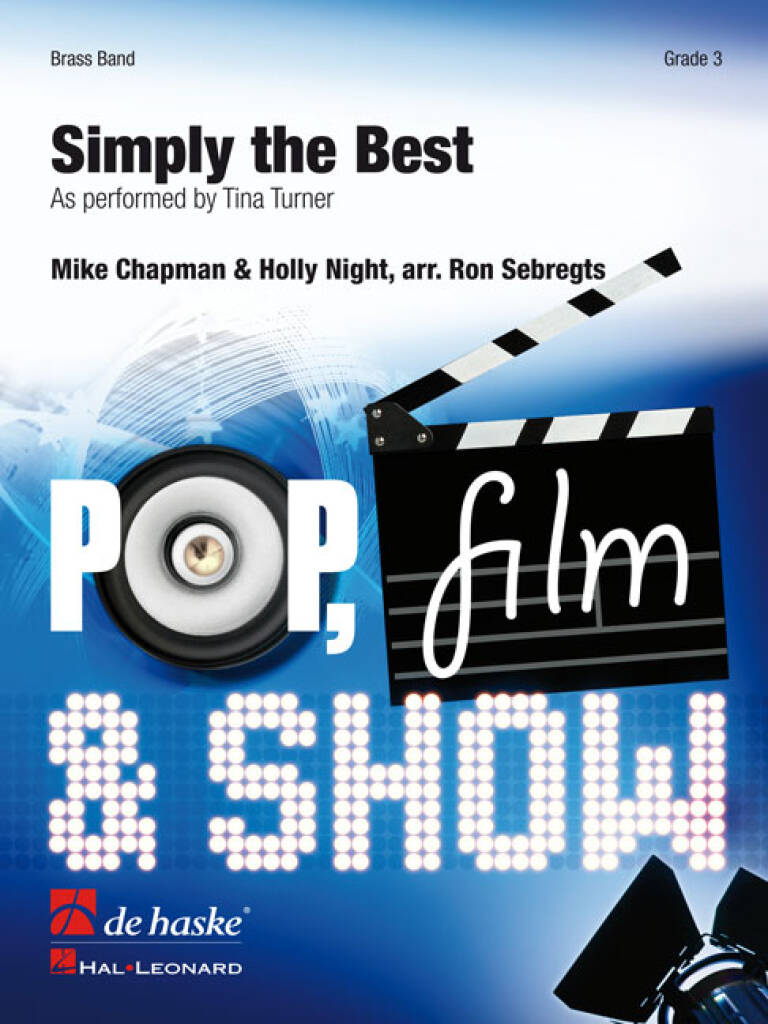
Simply the Best - Mike Chapman - Ron Sebregts
Simply the Best was first performed by the little known Bonnie Tyler in 1988, but did not gain wide-spread popularity until Tina Turner recorded it barely one year later. The song has become one of Tina Turner's all time greatest hits and is a favourite around the world when something needs celebrating. Ron Sebregts' arrangement really rocks and will make sure your next concert is Simply the Best!
Estimated dispatch 5-14 working days
-
 £37.35
March - The Stewards (Brass Band) Dave Collins
This rousing march by Dave Collins is a dedication to the remarkable group of volunteers - the unsung heroes - who, each year, organise and run the iconic Whit Friday brass band contests. They ensure that the heritage and tradition of this uniquely special event is not lost, preserving its ongoing and continued success. BrookWright is offering a 25% discount for bands who perform this march at the Whit Friday Contest. To claim the discount, please send a scan or photo of your band's adjudication card after the event to [email protected] Whit Friday, 'The Greatest Free Show on Earth', is synonymous with the brass band tradition. Its importance in the annual calendar to the players, supporters and spectators is vital to the Tameside and Saddleworth community. However, this mighty contest simply could not take place without the willing volunteers who dedicate their services year after year to keep this unique banding tradition going.Traditionally, on Whit Friday Morning, Hail! Smiling Morn (Roud #1346), also known as Praise Ye the Lord, is heard across the Saddleworth villages. This is where I have taken my inspiration, and the entire march is built upon quotes and references of this joyous work.The Stewards has many traditional elements drawing on the vast repertory of well-known marches, as well as some untraditional techniques and harmonies. The work aims to be a good test for the bands in its performance, but also fun and entertaining for the players and audiences alike - featuring a cheeky cornet solo, thunderous bass feature, and lyrical euphonium melodies, before concluding with a triumphant quote from the original source material.To you all who perform or hear this work, the stewards of the brass band tradition, HAIL! To view a follow-the-score video featuring Tredegar Town Band performing the work please visit www.youtube.com/watch?v=-CNgqvc534s PDF download includes score and parts, and comes in both A4 size and A5 landscape parts for marching purposes. A single page A5 conductor reduced score is also included. Sheet music available from: UK - www.brassband.co.uk USA - www.solidbrassmusic.com Difficulty Level: 3rd Section + Instrumentation: Soprano Cornet Eb Solo Cornet Bb Repiano Cornet Bb 2nd Cornet Bb 3rd Cornet Bb Flugel Horn Bb Solo Horn Eb 1st Horn Eb 2nd Horn Eb 1st Baritone Bb 2nd Baritone Bb 1st Trombone Bb 2nd Trombone Bb Bass Trombone Euphonium Bb Bass Eb Bass Bb Cymbals Side Drum Bass Drum
In Stock: Estimated dispatch 1-3 working days
-
£44.95
JOY THROUGH THE AGES (Brass Band Set) - Howard Evans
This work was written for the 125th anniversary of Boscombe Band, celebrated in November 2011, and is the title track of the band' album released in the same year. The music is celebratory in nature and is dedicated to all those who have served in the band during its 125 year history. The theme of the work is a song by Charles Hutchison Gabriel which was the favourite of the band's librarian, Gerald Whittingham, who was 'promoted to Glory' after a long battle with a brain tumour. The title comes from the last verse, 'When with the ransomed in Glory, his face I at last shall see, 'twill be my joy through the ages, to sing of his love for me'.
Estimated dispatch 7-14 working days
-
Saviour's Day - Chris Eaton - Len Jenkins
Chris Eaton wrote "Saviour's Day" in October 1989 and took the original version of the song to a Christmas party to show Cliff Richard, despite having been told that his songs had already been selected for the following year. Nevertheless, they listened to the tape in Cliff's Rolls Royce. He liked it and predicted it could be a 'number one'. The following year it became just that; the second Christmas solo 'number one' for Cliff, following the success of "Mistletoe and Wine" in 1988. Since then it has variously been voted into lists of both the best and the most annoying Christmas songs. A music video of the song was filmed at Durdle Door near Swanage in Dorset, in warm, sunny September weather but with extras wearing winter clothes as if at Christmas. Enjoy!
 View Music