
Results
-
 £59.99
Eloise - Paul Ryan - Philip Sparke
Paul and Barry Ryan were identical twin sons of 1950's pop singer Marion Ryan and were born on 24th October 1948. They were groomed for stardom and had started singing as a duo before their fifteenth birthday. They were signed by Decca in 1965 and brilliantly marketed as clean-cut fashion icons. Their first single 'Don't Bring Me Your Heartaches' reached the UK top twenty but their success as twin performers lasted only three years. In 1968 Barry embarked on a solo career while Paul concentrated on writing and producing. Eloise with its melodramatic vocal style and heavily orchestrated backing was an early success of this new collaboration and went on to be covered by a variety ofartists, including punk legends The Damned
Estimated dispatch 5-14 working days
-
 £106.99
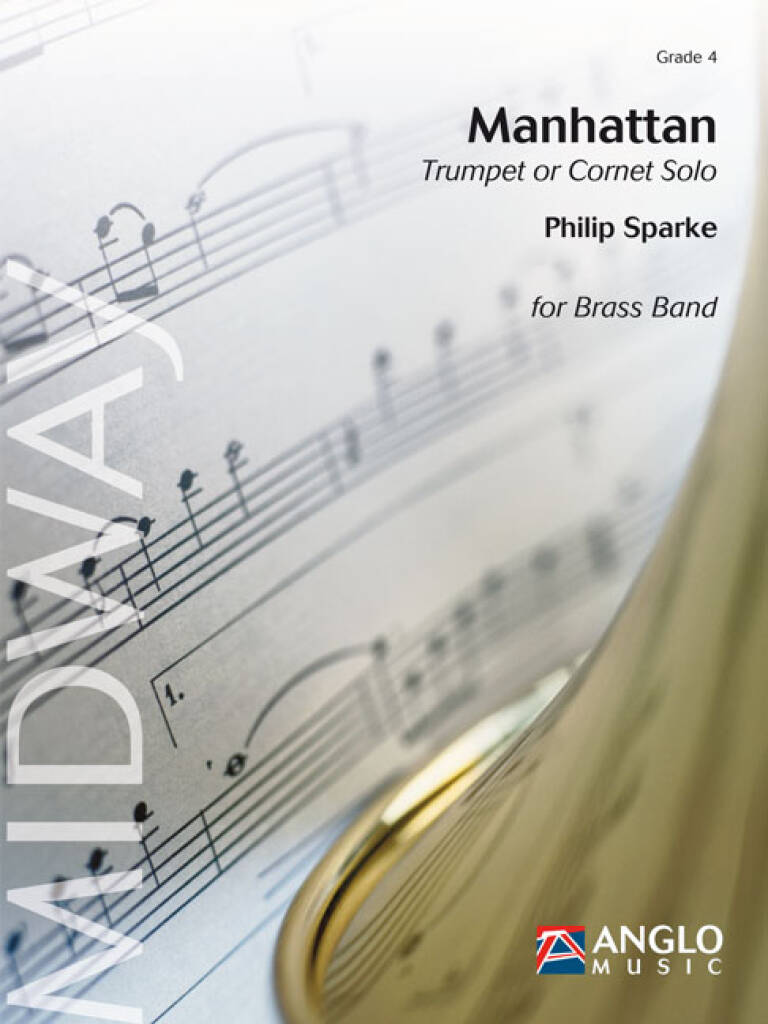
Manhattan - Philip Sparke
Manhattan was commissioned by the United States Army Band for their solo cornet player Woodrow English and first performed by them in Carnegie Hall, New York, in November 2003. The two-movement work demonstrates both the lyrical and technical abilities of this outstanding player. The 'theme' is a weekend in New York and the opening bluesy movement, Saturday Serenade, describes the city on a Saturday night. While writing the second movement, Sunday Scherzo, the composer pictured an early morning jog in Central Park. This vivaciously rhythmic second movement ends with an even quicker coda bringing the work to a brilliant close. Each movement can also be playedindividually when a shorter solo is required.
Estimated dispatch 5-14 working days
-
 £69.99
Pastime with Good Company - King Henry VIII - Philip Sparke
The English King, Henry VIII (1491-1547), is mainly remembered for disposing of his wives on a regular basis and breaking with the Catholic Church when the Pope Clement VII refused to grant him a divorce so he could marry Anne Boleyn. He was, however, a gifted athlete, dancer and composer, writing many songs, poems and consort pieces (though not Greensleeves, as is often believed). Pastime with Good Company is undoubtedly the best-known of these, written in the first years of the 16th century while he was still a handsome prince, newly married to Catherine of Aragon and the envy of Europe. The lyrics tell of the joys of hunting, dancing and singing andwould have been sung as part of the court entertainment.
Estimated dispatch 5-14 working days
-
 £54.99
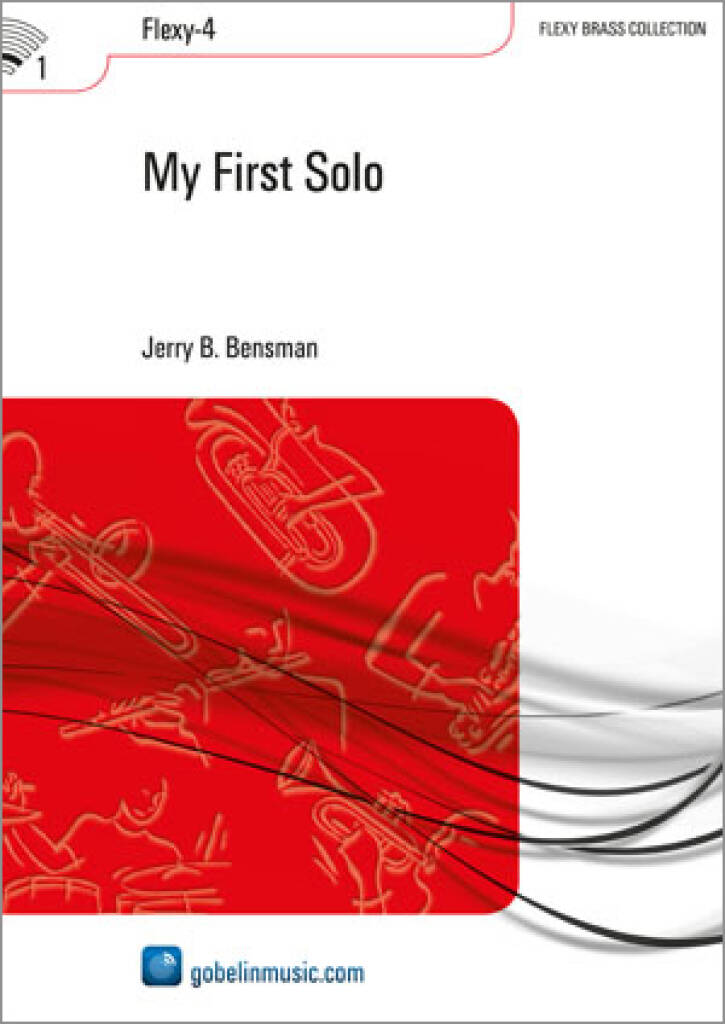
My First Solo - Jerry B. Bensman
You only have had a couple of months of lessons and already you are to play a solo at your band's annual gala concert. in a big concerthall, on a huge platform and in front of people from your own town or village. Now there's something ! This circumstance inspired Jerry Bensman into writing your very first solo piece with band accompaniment. The solo part may be played by various instruments and was kept very simple indeed. Parts are available in various transpositions and keys.
Estimated dispatch 5-14 working days
-
 £15.00
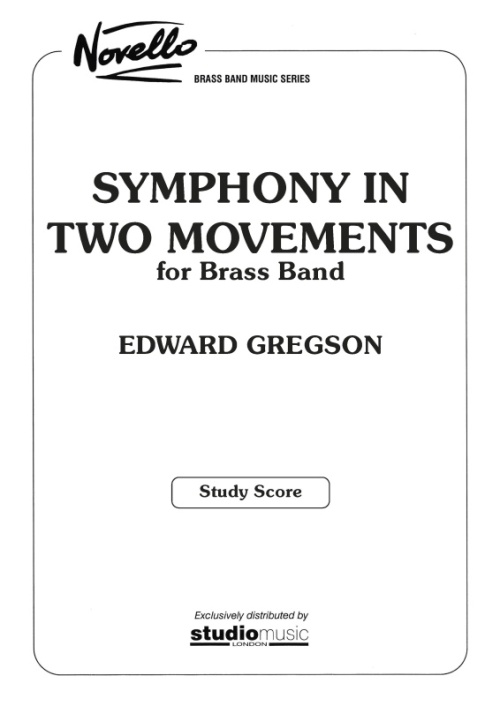
Symphony in Two Movements (Study Score Only)
Selected as the Championship Section test piece for the National Brass Band Championships of Great Britain 2025This work was jointly commissioned by the National Youth Brass Band of Great Britain (NYBBGB) and the National Youth Brass Band of Wales (NYBBW), the latter with funding from T Cerdd (Music Centre Wales), to celebrate their 60th and 30th anniversaries respectively. The first performances were given at Cadogan Hall, London, in April 2012, by the NYBBGB, conducted by Bramwell Tovey; and at the Great Hall, Aberystwyth University, in July 2012, by the NYBBW, conducted by Nicholas Childs.When I was approached about a joint commission to write a new work to celebrate the anniversaries of these two outstanding youth bands I was delighted to accept, and decided to respond by writing a work apposite for the magnitude of these special occasions, namely a 'symphony for brass'.Through a long journey of writing music for brass band, which commenced with Connotations (1977), and continued with Dances and Arias (1984), Of Men and Mountains (1991), The Trumpets of the Angels (2000) and Rococo Variations (2008), I arrived at what I regard as the most important work of the cycle to date, combining as it does serious musical intent with considerable technical demands. It is perhaps my most abstract work for brass band, avoiding any programmatic content.The symphony lasts for some 19 minutes and is structured in two linked movements. The form is based on that used by Beethoven in his final piano sonata (Op.111), which is in two movements only: a compact sonata-form allegro, followed by a more expansive theme and four variations. Prokofiev also adopted this model in his 2nd Symphony of 1925.The opening Toccata of this Symphony is highly dramatic but compact, whilst still retaining the 'traditional' structural elements of exposition, development and recapitulation; indeed, it also has the 'traditional' element of a contrasting second subject - a gentle, lyrical modal melody first heard on solo cornets.In contrast, the longer and more substantial second movement Variations is built around a theme and four variations. The slowly unfolding chorale-like theme accumulates both added note harmony and increasing instrumentation, whilst the four variations which follow are by turn mercurial (fast, starting with all the instruments muted), march-like (menacing, with short rhythmic articulations underpinning an extended atonal melody), serene (a series of 'romances' for solo instruments alongside echoes of the chorale) with an emerging theme eventually bursting into a climax of passionate intent; whilst the final variation is a dynamic scherzo (concertante-like in its series of rapid-fire solos, duets, trios and quartets) with the music gradually incorporating elements of the main ideas from the first movement, thus acting as a recapitulation for the whole work. It reaches its peroration with a return to the very opening of the symphony, now in the 'home' tonality of F, and thus creating a truly symphonic dimension to the music.Most of the melodic material of the symphony is derived from the opening eleven-note 'row', which contains various intervallic sets, and although the work is not serially conceived it does use some typical quasi-serial procedures, such as canons, inversions, and retrogrades. The symphony uses somewhat limited percussion, in line with a 'classical' approach to the sound world of the brass band, alongside a use of multi-divisi instrumentation, whereby each player has an individual part rather than the traditional doubling within certain sections of the band.- Edward GregsonDuration: 19.00
Estimated dispatch 7-14 working days
-
 £88.00
Bass Trombone Concerto - Christopher Brubeck
Grammy-nominated composer Chris Brubeck continues to distinguish himself as an innovative performer and composer who is clearly tuned into the pulse of contemporary music. Respected music critic for The Chicago Tribune, John von Rhein called Chris: "a composer with a real flair for lyrical melody--a 21st Century Lenny Bernstein." In addition to creating an impressive body of work, including several band pieces, chamber pieces, 3 concertos for trombone, a trombone quartet, and several concertos for stringed instruments, Chris maintains a demanding touring and recording schedule playing bass and trombone with his two groups: the Brubeck Brothers Quartet, with brother Dan on drums, Chuck Lamb on piano and Mike DeMicco on guitar (www.brubeckbrothers.com); and Triple Play, an acoustic jazz-funk-blues-Americana trio with Joel Brown on guitar and Peter Madcat Ruth on harmonica and Chris on bass, trombone and piano (www.chrisbrubeckstripleplay.com.) Additionally, Chris performs as a soloist playing his trombone concertos with orchestras and has served as Artist in Residence with orchestras and colleges in America, coaching, lecturing, and performing with students and faculty. Once a year he tours England with the group "Brubecks play Brubeck" along with brothers Darius (on piano) and Dan as well as British saxophonist Dave O'Higgins. Chris had been a long-standing member of the Dave Brubeck Quartet, writing arrangements and touring and recording with his father's group for over 20 years.
-
£74.95
Second Suite in F (Score and Parts)
During Holst's earlier years as a composer, he took interest, as did many other English composers at the time, in writing pieces based on folk music. His contemporary Ralph Vaughan Williams had written his English Folk Song Suite, all based on English folk tunes. Holst followed suit and composed the Second Suite as a result. Six tunes are compressed into the four movements of the suite, each with their own character.The Second Suite consists of movements based on specific English folk songs
Estimated dispatch 7-14 working days
-
£32.95
Second Suite in F (Score Only)
During Holst's earlier years as a composer, he took interest, as did many other English composers at the time, in writing pieces based on folk music. His contemporary Ralph Vaughan Williams had written his English Folk Song Suite, all based on English folk tunes. Holst followed suit and composed the Second Suite as a result. Six tunes are compressed into the four movements of the suite, each with their own character.The Second Suite consists of movements based on specific English folk songs
Estimated dispatch 7-14 working days
-
 £38.03
A Fugal Overture (Brass Band) Gustav Holst arr. Rob Bushnell
A Fugal Overture was written in 1922 by Gustav Holst. It was first performed at the Royal Opera House, Covent Garden on 14 May 1923 and was used as an opening work to Holst's one-act opera The Perfect Fool. It received its concert premiere on 11 October 1923 at one of Henry Wood's Queen's Hall Promenade Concerts. It is an early example of neoclassicism and was influenced by the counterpoint of J. S. Bach, despite its unconventional use of the fugal process.Holst began writing the piece in the summer of 1922, having hoped to develop it into a ballet. It is divided into three sections, the fugal subject with its distinct 3+3+2 pattern, a slower section with solos at the end, and a third section where the subject returns.Although reviews of the piece were mixed at the time of its premiere, the likes of Adrian Boult have said it was "an invigorating work that could effectively start any [...] concert". In more recent years, it has been compared to John Adam's A Short Ride in a Fast Machine.This arrangement is for the British-style brass band, with alternative parts for horns in F and bass-clef lower brass. A recording of the original composition can be found here: www.youtube.com/watch?v=a8xfwJyFq2E.Duration: Approx. 5.40 minutesDifficulty Level: 1st Section +PDF download includes parts and score.Sheet music available from www.brassband.co.ukInstrumentation:Soprano Cornet EbSolo Cornet BbRepiano Cornet Bb2nd Cornet Bb3rd Cornet BbFlugel Horn BbSolo Horn Eb1st Horn Eb2nd Horn Eb1st Baritone Bb2nd Baritone Bb1st Trombone Bb2nd Trombone BbBass TromboneEuphonium BbBass EbBass BbTimpaniPercussion 1-2
In Stock: Estimated dispatch 1-3 working days
-
 £79.95
Neverland - Christopher Bond
"All children, except one, grow up" wrote J.M. Barrie about Peter Pan in 1911; the first line and an expression of beautiful melancholy and fantasy, coming to represent one of the best-loved children's stories of the twentieth century. 'Peter & Wendy', as the book was first released, has subsequently been transformed into adaptations for film and stage, with subsequent books based on this iconic tale. In writing this new work for brass band, the composer has taken three of the main themes from J. M. Barrie's book, and used these themes to create new musical material, forming a work in three contrasting sections. I. Journey to Neverland The opening of the work, mysterious in its style, reflects the opening chapters of the story - a leafy London street, still in the dead of night - with the music transforming quickly as it builds in texture and momentum - a Journey to Neverland through the night sky; Second Star to the Right and straight on 'til morning. "Then Peter knew that there was not a moment to lose. 'Come,' he cried imperiously, and soared out at once into the night, followed by John and Michael and Wendy. Mr & Mrs Darling and Nana rushed into the nursery too late. The birds were flown." II. The Windows that Closed The central section of the work takes its inspiration from the sense of longing throughout the book, mainly by Peter Pan, the Darling Children & The Lost Boys. Distant memories of life before Neverland, memories of the Lost Boys' mothers, and regret at what the children have missed. Peter says "Long ago, I thought like you that my mother would always keep the window open for me; so I stayed away for moons and moons and moons, and then flew back; but the window was barred, for mother had forgotten all about me, and there was another little boy sleeping in my bed." III. Aboard the Pirate Ship The final section of the work takes its inspiration from the Pirate Ship, and Peter Pan's ultimate battle with its infamous Captain Hook. "In person, he was cadaverous and blackavized, and his hair was dressed in long curls, which at a distance looked like black candles, and gave a singularly threatening expression to his handsome countenance. His eyes were the blue of the forget-me-not, and of a profound melancholy, save when he was plunging his hook into you, at which time two red spots appeared in them and lit them up horribly."
Estimated dispatch 10-14 working days
 View Music