
Results
-
 £76.99
Last Call (Brass Band - Score and Parts)
Last Call was commissioned by and written for Brass Band Ober?sterreich (Austria) as a special concert finale. Austrian composer Otto M. Schwarz was asked to write an encore piece with which the band could really show off. Featuring all the sections of the band in turn, your audience will surely be dazzled by their skills! 05:10
Estimated dispatch 7-14 working days
-
 £32.95
LINCOLNSHIRE POACHER (Brass Band) - Broadbent, Derek
Brass Band Set (inc. solo cornet conductor). This piece will also work with 10 piece.
Estimated dispatch 7-14 working days
-
£60.99
Mah Na, Mah Na (Brass Band - Score and Parts)
This catchy piece became a massive hit in the 1970s, when Jim Henson used the catchy melody in his children's TV series The Muppet Show and Sesame Street. Stefan Schwalgin has produced this excellent version to give bass trombone players, who sometimes feel left out by the band's repertoire, a platform for their soloistic development. This gem is full of little musical surprises and will hold a special place in your bands repertoire. 03:45
Estimated dispatch 7-14 working days
-
£79.99
MAMMA MIA (Brass Band - Score and Parts) - Schaars, Peter Kleine
Arranger Peter Kleine Schaars has selected five of the most famous titles from the musical, added the hit Waterloo and used his musical imagination. The result is a catchy ABBA medley that will appeal to young and old.Includes:Mamma MiaKnowing Me, Knowing YouMoney, Money, MoneyDancing QueenI Do, I DoWaterlooGrade: IntermediateDuration: 7:00
Estimated dispatch 7-14 working days
-
 £60.99
Marching Blues (Brass Band - Score and Parts)
Marching Blues was written in the blues and swing-jazz style of the great big bands. It is an ideal show march that can be used for encores, popular performances, family concerts and much more. As an added entertaining feature why not get your Eb bass player to stand for his/her 28-bar solo! From small ensembles to large bands, Marching Blues will bring great joy to all generations of performers and audiences on many occasions. 04:00
Estimated dispatch 7-14 working days
-
 £59.99
Marchissimo (Brass Band - Score and Parts) - Sparke, Philip
Marchissimo will make a fantastic opening piece for any concert. It does however come with a twist! It can be played simply as written, but is really designed to be 'staged' with players coming on the concert platform one by one as they begin to play. The piece actually consists of three marches in one, each of which highlights a section of the band. The piece culminates in a final climax where all three march themes are played simultaneously.Duration: 4.30
Estimated dispatch 7-14 working days
-
£60.99
Mr. Sandman (Brass Band - Score and Parts)
Who doesn't remember this international 70's hit for Emmylou Harris with it's special 'barber shop' style harmony. The three parts are given to the cornets as soloists with subtle band accompaniment featuring a great part for your vibraphone player. Everyone will leave your concert humming this great tune. 02:04
Estimated dispatch 7-14 working days
-
£54.99
O Mio Babbino Caro (Brass Band - Score and Parts)
Giacomo Puccini composed Gianni Schicchi in 1918. It was the third opera of Il trittico (a trilogy). O mio babbino caro is a famous arietta sung by Gianni Schicchi's daughter Lauretta. The song is very melodic and it has a beautiful harmonization. This arrangement is ideal for smaller bands or bands missing certain players as it offers alternatives for many parts and will make an ideal encore. 02:30
Estimated dispatch 7-14 working days
-
 £30.00
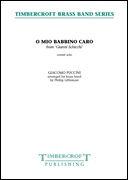
O Mio Babbino Caro (from Gianni Schicchi) (Cornet Solo with Brass Band - Score and Parts) - Puccini, Giacomo - Littlemore, Phillip
O Mio Babbino Caro (Oh My Dear Papa) is taken from the opera Gianni Schicchi by Giacomo Puccini. It is sung by Lauretta after tensions between Schicchi and his prospective in-laws have reached a breaking point that threatens to separate her from Rinuccio, the boy she loves. It provides a contrasting interlude expressing lyrical simplicity and single-hearted love in the atmosphere of hypocrisy, jealousy, double-dealing and feuding in medieval Florence. The story of Gianni Schicchi concerns a rich old man who dies leaving all his possessions to the local monastery. His outraged relatives persuade Gianni Schicchi to impersonate the dead man and to dictate a new will. It is the second opera of Puccini's operatic triptych, which also includes?Il Tabarro?and?Suor Angelica. Duration: 2:00
Estimated dispatch 7-14 working days
-
 £30.00
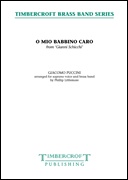
O Mio Babbino Caro (from Gianni Schicchi) (Vocal Solo (Soprano) with Brass Band - Score and Parts) - Puccini, Giacomo - Littlemore, Phillip
O Mio Babbino Caro (Oh My Dear Papa) is taken from the opera Gianni Schicchi by Giacomo Puccini. It is sung by Lauretta after tensions between Schicchi and his prospective in-laws have reached a breaking point that threatens to separate her from Rinuccio, the boy she loves. It provides a contrasting interlude expressing lyrical simplicity and single-hearted love in the atmosphere of hypocrisy, jealousy, double-dealing and feuding in medieval Florence. The story of Gianni Schicchi concerns a rich old man who dies leaving all his possessions to the local monastery. His outraged relatives persuade Gianni Schicchi to impersonate the dead man and to dictate a new will. It is the second opera of Puccini's operatic triptych, which also includes?Il Tabarro?and?Suor Angelica. Duration: 2:00
Estimated dispatch 7-14 working days
 View Music