
Results
-
 £30.00
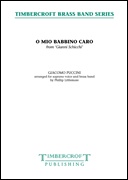
O Mio Babbino Caro (from Gianni Schicchi) (Vocal Solo (Soprano) with Brass Band - Score and Parts) - Puccini, Giacomo - Littlemore, Phillip
O Mio Babbino Caro (Oh My Dear Papa) is taken from the opera Gianni Schicchi by Giacomo Puccini. It is sung by Lauretta after tensions between Schicchi and his prospective in-laws have reached a breaking point that threatens to separate her from Rinuccio, the boy she loves. It provides a contrasting interlude expressing lyrical simplicity and single-hearted love in the atmosphere of hypocrisy, jealousy, double-dealing and feuding in medieval Florence. The story of Gianni Schicchi concerns a rich old man who dies leaving all his possessions to the local monastery. His outraged relatives persuade Gianni Schicchi to impersonate the dead man and to dictate a new will. It is the second opera of Puccini's operatic triptych, which also includes?Il Tabarro?and?Suor Angelica. Duration: 2:00
Estimated dispatch 7-14 working days
-
 £42.95
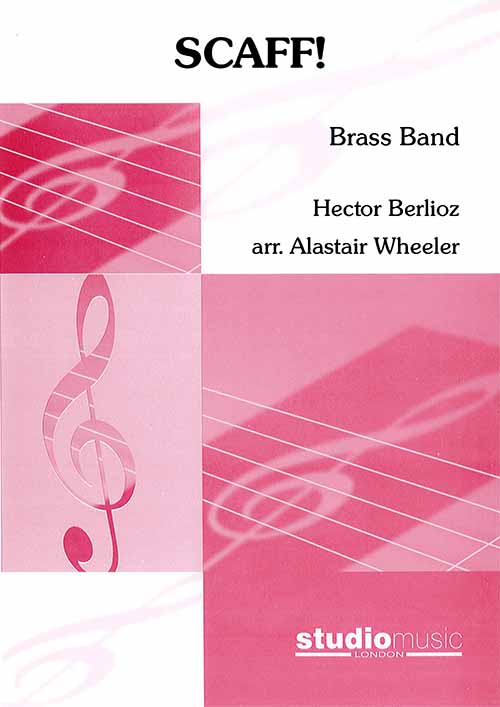
Scaff! (Brass Band - Score and Parts) - Berlioz, Hector - Wheeler, Alastair
While in the Oxford University Jazz Orchestra, trumpeter Alex Gallafent confided that he had always wished there was a big band arrangement of 'March to the Scaffold' opening with Gene Kruppa toms. Fast forward several years to the Kew Wind Orchestra, where Andy Black is a chartered surveyor who "loves a nice piece of scaff...". Here is a great arrangement done for brass band.The protagonist in the story of this 4th movement is having a nightmare that he has killed his loved one, that he is condemned and he is being led to execution where he will witness his own guillotining.
Estimated dispatch 7-14 working days
-
 £60.99
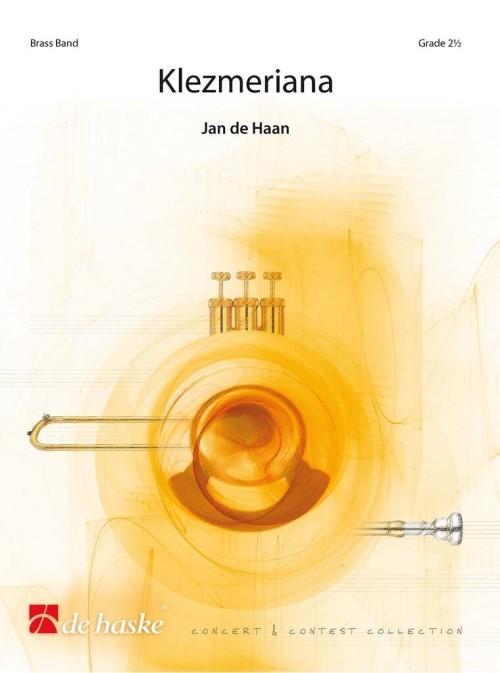
Klezmeriana (Brass Band - Score and Parts) - De Haan, Jan
The instrumental music of the Yiddish-speaking Jews, especially those of Eastern Europe, is known as klezmer. This terminology was originally used in Jewish cultural life as the name of a musician who played at weddings. At Jewish weddings, which usually last several days, klezmer musicians played not only dance music but also ceremonial music - for example during the wedding ceremony, and also music that was listened to during the wedding feast. Originally, there was no special term for this style of music. It was simply referred to as 'Jewish wedding music'. In the 1970s, the music - which is actually a fusion of different influences - enjoyed a resurgence in popularity and came to be known as klezmer. This music contains not only the sounds of the Balkans, but also influences of oriental and gypsy music too. Jan de Haan used no original klezmer melodies for Klezmeriana, but composed a series of sound-alike in an instrumentation for brass band.Duration: 6.00
Estimated dispatch 7-14 working days
-
 £76.99
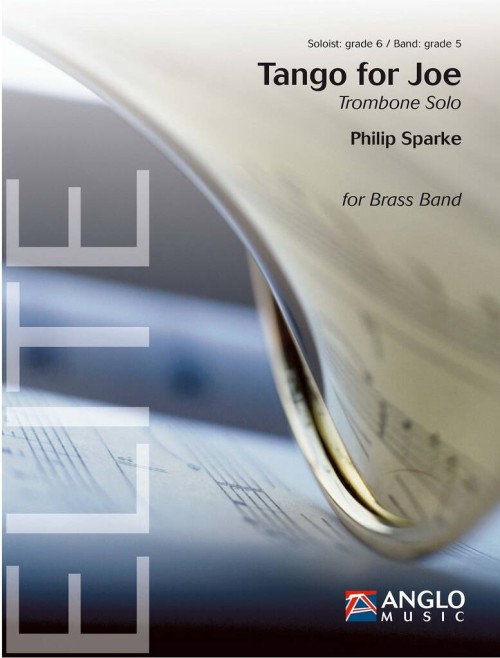
Tango for Joe (Trombone Solo with Brass Band - Score and Parts) - Sparke, Philip
Tango for Joe was written for Joe Alessi, principal trombone of the New York Philharmonic. He gave the official premiere with the Brass Band of Battle Creek on 3rd December 2022 at the W K Kellogg Auditorium in Battle Creek, Michigan.Opening with an (optional) unaccompanied recitative for the soloist, Tango for Joe then develops into a slow and sensuous tango, exploring the lyrical properties of the trombone. The opening of this theme is then taken up by the full band but is soon interrupted by a highly decorated version of the melody by the soloist. A further cadenza-like passage then leads to a faster 'tango nuevo' which makes up the majority of the work.A long introduction by the band builds to the first entry of the soloist, who plays the main tango melody over a rhythmic accompaniment. This is taken up briefly by the band but the soloist enters again with his own variation on the theme. After a bridge passage featuring a brief 'question and answer' exchange between the instruments, the soloist then plays a new version of the opening slow tango theme over rhythmic interpolations. After a climax, the soloist presents a long and elaborate cadenza accompanied only by a solo cajon or drum kit. This eventually leads to a repeat of the main theme and , after a short second cadenza, the piece ends with a flourish for band and soloist.Duration: 8.45
Estimated dispatch 7-14 working days
-
 £12.00
Of Men and Mountains (Brass Band - Study Score) - Gregson, Edward
Of Men and Mountains was commissioned by the Netherlands Brass Band Championships for their 10th Anniversary Contest, held in Drachten in December 1990.The title of the work and its genesis came about as a result of a train journey the composer took in July 1989 across Canada from Toronto to Vancouver. The awe-inspiring journey through the Rocky Mountains, with its high peaks and shafts of sunlight breaking through the clouds, with its canyons and ferocious rapids, made the composer understand a little more about the majesty of nature and the fragility of humanity. The eternal struggle between man and nature was personified in the building of this incredible railway, hence the title (after Blake).The work is dedicated to the memory of Eric Ball, who died shortly before the writing of the work was commenced.Of Men and Mountains is in one continuous movement and lasts about 17 mins. Its form is difficult to describe because of its motivic and accumulative nature, but it is essentially a symphonic tone poem in search of a theme, which eventually comes in its final and complete state in the majestic ending after an ever-increasing paced scherzo.Duration: 17.00
Estimated dispatch 7-14 working days
-
 £35.00
Starlings (Brass Band - Score and Parts) - Fernie, Alan
Starlings is a beautifully reflective piece influenced by starlings' extraordinary murmuration. It is dedicated to the memory of Steve Munn, who sadly passed away in December 2022 from bowel cancer.The premiere was given by a massed band comprising players from Ware Brass and Potters Bar Band, and other players from Hertfordshire and beyond, at a fundraising concert on 29th April 2023 to celebrate Steve's life but also raise awareness of, and funds for Bowel Cancer UK.A contribution from each sale of this work will be donated to Bowel Cancer UK.Suitable for bands of all levelsDuration: 4.15
Estimated dispatch 7-14 working days
-
 £40.00
A Song for Bram (Brass Band - Score and Parts) - Gregson, Edward
A Song for Bram is a short work, originally composed piano and brass band, and is dedicated to the memory of Bramwell Tovey, a close friend and colleague of the composer, and a conductor, composer, pianist and musician of huge talent, who sadly passed away before his time in the summer of 2022. In this short piece the composer has tried to imagine what kind of tune Bram would have improvised at the piano, something he frequently engaged in. No doubt it would have been a mixture of bluesy jazz, hymn tune, and love song, and this is how the solo piano takes off. In the middle section of a what is a simple tertiary structure, introduced are quotes from two hymn tunes Bram particularly loved, never having forgotten his Salvation Army roots. Bram's 'Song' returns, this time on a plaintive flugelhorn horn, and which reaches a climax with the full band before receding, literally, into the distance.....(to a new life beyond?).Duration: 6.00
Estimated dispatch 7-14 working days
-
£14.00
A Song for Bram (Brass Band - Score only) - Gregson, Edward
A Song for Bram is a short work, originally composed piano and brass band, and is dedicated to the memory of Bramwell Tovey, a close friend and colleague of the composer, and a conductor, composer, pianist and musician of huge talent, who sadly passed away before his time in the summer of 2022. In this short piece the composer has tried to imagine what kind of tune Bram would have improvised at the piano, something he frequently engaged in. No doubt it would have been a mixture of bluesy jazz, hymn tune, and love song, and this is how the solo piano takes off. In the middle section of a what is a simple tertiary structure, introduced are quotes from two hymn tunes Bram particularly loved, never having forgotten his Salvation Army roots. Bram's 'Song' returns, this time on a plaintive flugelhorn horn, and which reaches a climax with the full band before receding, literally, into the distance.....(to a new life beyond?).Duration: 6.00
Estimated dispatch 7-14 working days
-
 £45.00
A Song for Bram (Piano Solo with Brass Band - Score and Parts) - Gregson, Edward
A Song for Bram is a short work, originally composed piano and brass band, and is dedicated to the memory of Bramwell Tovey, a close friend and colleague of the composer, and a conductor, composer, pianist and musician of huge talent, who sadly passed away before his time in the summer of 2022. In this short piece the composer has tried to imagine what kind of tune Bram would have improvised at the piano, something he frequently engaged in. No doubt it would have been a mixture of bluesy jazz, hymn tune, and love song, and this is how the solo piano takes off. In the middle section of a what is a simple tertiary structure, introduced are quotes from two hymn tunes Bram particularly loved, never having forgotten his Salvation Army roots. Bram's 'Song' returns, this time on a plaintive flugelhorn horn, and which reaches a climax with the full band before receding, literally, into the distance.....(to a new life beyond?).Duration: 6.00
Estimated dispatch 7-14 working days
-
£15.00
A Song for Bram (Piano Solo with Brass Band - Score only) - Gregson, Edward
A Song for Bram is a short work, originally composed piano and brass band, and is dedicated to the memory of Bramwell Tovey, a close friend and colleague of the composer, and a conductor, composer, pianist and musician of huge talent, who sadly passed away before his time in the summer of 2022. In this short piece the composer has tried to imagine what kind of tune Bram would have improvised at the piano, something he frequently engaged in. No doubt it would have been a mixture of bluesy jazz, hymn tune, and love song, and this is how the solo piano takes off. In the middle section of a what is a simple tertiary structure, introduced are quotes from two hymn tunes Bram particularly loved, never having forgotten his Salvation Army roots. Bram's 'Song' returns, this time on a plaintive flugelhorn horn, and which reaches a climax with the full band before receding, literally, into the distance.....(to a new life beyond?).Duration: 6.00
Estimated dispatch 7-14 working days
 View Music