
Results
-
 £94.99
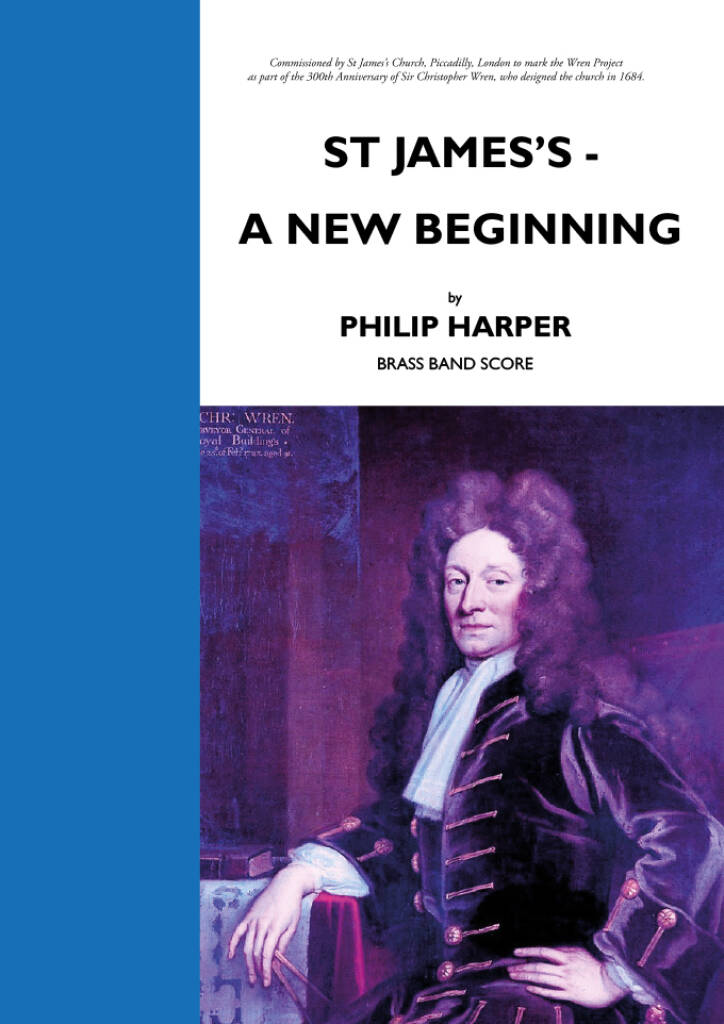
St James's - A New Beginning - Philip Harper
St James's - A New Beginning commemorates 300 years since the death of English architect Sir Christopher Wren who redesigned and rebuilt London after the Great Fire in 1666. It was used as the test-piece for the National Brass Band Championships of Great Britain (1st Section) in 2023.The piece is in four parts:I. THE GREAT FIREII. AFTERMATHIII. VISIONIV. RENAISSANCEThe bells ring the alarm and, as the capital city is engulfed by flames, panic and desperation spread. As the fire burns out, we are left to contemplate the aftermath of the inferno. Enter Sir Christopher Wren. His vision and courage were some of the most influential forces in the rebuilding of London which rose to reclaim its place as one of the great cities of the world.
Estimated dispatch 5-14 working days
-
 £74.99
Selections from ENCANTO - Lin-Manuel Miranda - Paul Murtha
From Disney's blockbuster animated feature, here is a terrific medley for the concert stage featuring plenty of Latin excitement. Includes: The Family Madrigal We Don't Talk About Bruno Dos Oruguitas Surface Pressure and Waiting on a Miracle.
Estimated dispatch 5-14 working days
-
 £149.99
Redbad - Jan de Haan
Redbad was written for the Championship Section of the Dutch Brass Band Championships - and thus it contains plenty of musical and technical challenges. In this work of seven connected movements we get to know Redbad, who was the King of the Frisians from c. 680 to 719. The composer drew his inspiration from historical information, but also from stories, anecdotes, myths and legends around this figure. The themes within the composition are closely interwoven whereas the music is varied and appealing - from heroic motifs to the melancholy of elegies. Impressive tutti passages alternate with fragments that sound more open and in which various players can take centre stage. To crown it all, the work concludes with a majestic finale.
Estimated dispatch 5-14 working days
-
 £154.99
Cantabile - Philip Harper
"As long as we live there is never enough singing." - Martin Luther Philip Harper composed this piece in response to his personal concern about the direction of new music for brass band. His goal with this 5 movementCantabile, was to compose a piece which fully complied with all that is asked of a top-level test in the 21st Century, but also to reconnect with more traditional values such as lyricism in melody and richness of blendedbrass sound. Each of the 5 parts seek to capture this idea.
Estimated dispatch 5-14 working days
-
 £115.60
Piratene Kommer! - Roar Minde Fagerli
The Pirates are comming! is a four movement suite of music originally composed for a summer course arranged by The Norwegian Band Federation. The four movments describes the pirates tale. In the first movement they set the sails for new adventures. In the second movememt we meet the pirates early one morning when the sun rises. I the third movememt the pirates are looking for a treasure map at the Isle of the Dead. In the fourth and last movememt, they hunt the teasure! The Composer has been inspired by TV-series and films with pirate themes. The Music is written especially for beginners.
Estimated dispatch 5-14 working days
-
 £87.99
Queen Symphonic Highlights - Philip Sparke
The British rock band Queen, formed in 1970, are one of the most popular bands of all time. The music of Queen already exists in numerous instrumental arrangements at all kinds of levels. However, arranger Philip Sparke has taken a unique approach: he has created an exceptional medley in a challenging, symphonic style from four of their greatest hits: 'Bohemian Rhapsody', 'Bicycle Race', 'Who Wants to Live Forever' and 'We Are the Champions'.
Estimated dispatch 5-14 working days
-
 £104.99
Sinfonietta No. 4 - Etienne Crausaz
This work was composed for the occasion of the 28. Fete Cantonale des Musiques Vaudoises (28th Music Festival of the Canton Vaud), taking place in the Valley of Joux in June 2018. The music begins with a very simple fanfare consisting of five ascending legato notes which constitute the fundamental framework of the piece. This contrasts with the more cantabile sounding theme we hear after. The following Allegro section uses the sequence in a contrapuntal style reminding us of the Renaissance period, but with more modern day harmonies. Two solo cadenzas played by cornet and euphonium initiate the middle section, in which a theme also based on the sequence builds uptowards the climax of the piece. The sequence in the last section is played in time but gives the feeling of a "one to the bar" beat. Shortly before the festive finale, the music heard in the middle part resumes.
Estimated dispatch 5-14 working days
-
 £105.50
Chiquilin De Bachin - Reid Gilje
This beautiful waltz-tango is written by Astor Piazzolla (music) and Horacio Ferrer (lyrics). Together with "Balada Para Un Loco", this one is the most famous they composed together."Chiquilin de Bachin" ("The little boy at Bachin") is thehistory about a little boy bagging on the cafe Bachin in Buenos Aires. On one of the tables are Piazzolla and Ferrer enjoying their meal together with good friends.The meeting with this little boy became the inspiration for this song. Thethemes of the lyrics are poverty, mourning, yearning and shame. The boy's shame for his own situation and own mother, and our shame because we do not do more for these children.
Estimated dispatch 5-14 working days
-
£72.70
Salute All Bands! - Hans Offerdal
A playable and fun march with exiting challenges for the players. Lyric lines in cornets to powerful passages in low brass. We salute all bands!
Estimated dispatch 5-14 working days
-
£54.99
Solemnity - Robert Finn
Solemnity gives expression to the different emotions that we feel at solemn, official or ritual events: quiet pride, hope and reflection, but also grandeur, stateliness and joy. The work contains one large construction with different high points whereby the main theme is varied or orchestrated each time in one way or another, finally ending in an impressive finale.
Estimated dispatch 5-14 working days
 View Music