
Results
-
£34.95
LIFESTREAM (Brass Band Set) - Ralph Pearce
This march is modelled on the well-known American quick march called Midwest by J.J. Richards. The melody of the second subject is by the Danish hymn-writer, Sophie Hedvig Dedakam and is associated with words by Major Clara Vint who helped to establish En Evant, the French War Cry. The title of the march is derived from the text of the song.
Estimated dispatch 7-14 working days
-
 £30.00
Black Bottom Stomp - Jelly Roll Morton
Ferdinand Joseph LaMothe, professionally known as Jelly Roll Morton, was an American ragtime and early jazz pianist, bandleader and composer who started his career in New Orleans, Louisiana. Widely recognised as a pivotal figure in early jazz, Morton is perhaps most notable as jazz's first arranger, proving that a genre rooted in improvisation could retain its essential spirit and characteristics when notated. His composition "Jelly Roll Blues" was the first published jazz composition in 1915. Morton is also notable for writing such standards as "King Porter Stomp", "Wolverine Blues", "Black Bottom Stomp", and "I Thought I Heard Buddy Bolden Say". Notorious for his arrogance and self-promotion, Morton claimed to have invented jazz outright in 1902, much to the derision of fellow musicians and the critics. At the age of fourteen, Morton began working as a piano player in a brothel (or, as it was referred to back then, a sporting house). In that atmosphere, he often sang smutty lyrics and took the nickname "Jelly Roll". While working there, he was living with his religious, church-going great-grandmother; who he convinced that he worked as a night watchman in a barrel factory. After Morton's grandmother found out that he was playing jazz in a local brothel, she kicked him out of her house and told him that "devil music" would surely bring about his downfall. Born in downtown New Orleans, Louisiana, his exact birth date differs depending to whichever source you want to believe; his half-sisters claimed he was born in September 1885, but his World War 1 draft card showed September 1884 and his California death certificate listed his birth as September 1889. He died in 1941 in Los Angeles.
-
£45.00
Hymn to the Cross - Lane, L
This beautiful, reflective piece is filmic and expansive, portraying hope in the midst of the bleak scenario of the Korean War. Features lyrical soloists throughout and an offstage Last Post ending for cornet.2nd Section +Duration 4 minsClick to Listen - Courtesy of Cory Band
In Stock: Estimated dispatch 1-3 working days
-
 £34.95
When It Is Peace - Jonathan Bates
DURATION: 5 minutes. DIFFICULTY: 4th+. When it Is Peace was commissioned by Cold Ash Brass as a sombre, reflective featured work for their concet marking the centenary of the end of World War 1. The work was originally composed alongside choir, using text from local poets to the Thatcham area, and this version was later reworked as a stand-alone work for band.
In Stock: Estimated dispatch 1-3 working days
-
 £44.95
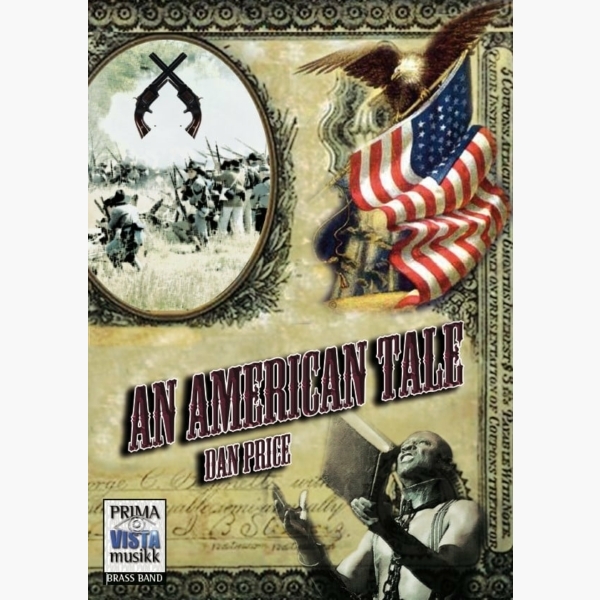
An American Tale - Dan Price
Written as the finale of the Cory Band's programme at the Brass in Concert Championships in November2008, An American Tale is a musical tribute to the American Civil War. The work includes 'The Battle Hymn of the Republic', 'The Girl...
Estimated dispatch 5-7 working days
-
 £44.95
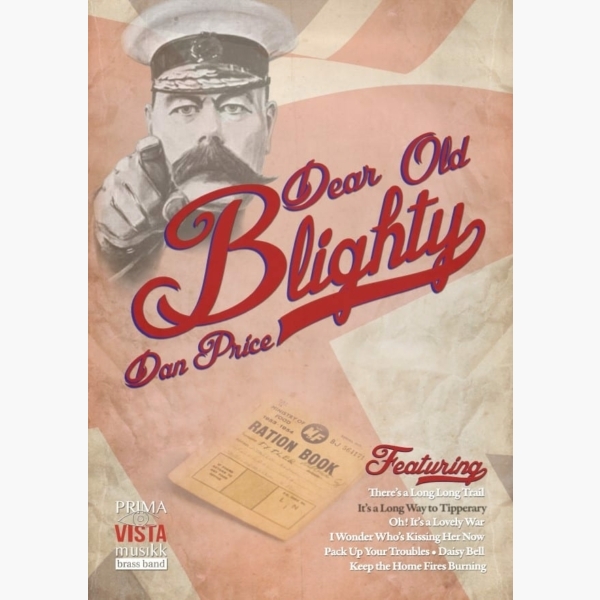
Dear Old Blighty - Dan Price
Commissioned in 2014 by the Flowers Band and premiered at the Cheltenham Music Festival in the same year, Dear Old Blighty is a creative arrangement of songs popular in 1914 and of those released during the World War I period....
Estimated dispatch 5-7 working days
-
 £44.95
For the Fallen - Karl Jenkins - Robert Childs
For the Fallen is a setting of Laurence Binyon's famous ode honouring the war dead, familiar from Remembrance Day services, including the lines "At the going down of the sun and in the morning, We will remember them". In its...
Estimated dispatch 5-7 working days
-
£29.95
VICTORS ACCLAIMED (Brass Band Set) - Bramwell Coles
Bramwell Coles became known as the Salvation Army 'march king' a label he began to earn with his first march written in 1906! This march, written in 1945 to mark the end of World War Two, saluted his seven children all of whom returned unscathed from service in the armed forces.
Estimated dispatch 7-14 working days
-
Ah! Les Crocodiles - French Traditional - Lennox Rhodes
'Ah! Les crocodiles' is a popular children's song in France. The song has been around since at least 1860 and relates the adventures of an Egyptian crocodile going to war against Elephants. It has a very catchy tune! This nineteenth-century nursery rhyme is derived from Jacques Offenbach's song Hooray for the Crocodile, part of the "Tromb-al-ca-zar ou les Criminels dramatiques", premiered in April 1856.
-
 £45.00
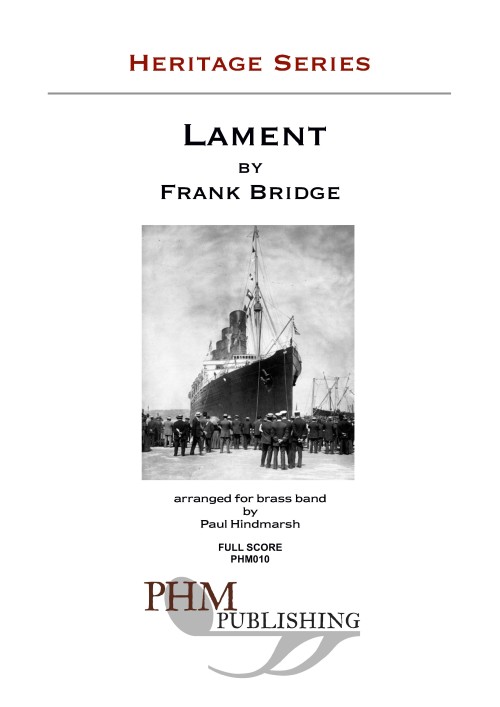
Lament (Brass Band - Score and Parts) - Bridge, Frank - Hindmarsh, Paul
The English composer Frank Bridge (1879 - 1941) did not take an active part in the First World War. However, he was devastated by the slaughter on the western and the eastern fronts, especially the loss of so many of his musicians friends and colleagues. Writing in 1963, his former pupil Benjamin Britten confessed that 'a lot of my feelings about the First World War which people seemed to see in the War Requiem came from Bridge. He had written a piano sonata in memory of a friend killed in France and though he didn't encourage me to take a stand for the sake of a stand, he did make me argue and argue and argue. His own pacifism was not aggressive, but typically gentle'.Bridge composed this Lament for string orchestra on 14 June 1915, in memory of Catherine Crompton, who drowned when the Cunard liner Lusitania was torpedoed by a German submarine on 7 May, 1915. According to figures researched by Liverpool historian Kevin Roach (www.lusitania.net), 1201 men, women and children lost their lives out of the 1962 people aboard. Ninety-four children died, including Catherine, her twin brother Paul and four other siblings. Paul Crompton, Snr. (44), a British businessman working in Philadelphia, his wife Gladys (40) and the family nanny were also drowned. How Bridge's dedication came about is uncertain. The music critic Edwin Evans, who knew Bridge well, has written that the Catherine was a young friend. It is also possible that he came across the family photograph which was published in many newspapers in the wake of the tragedy. By that time, Bridge was greatly distressed by the war as a whole. It seems perfectly in keeping with his pacifist leanings and the strength of his reaction, that this poignant and deeply touching 'war memorial' should mourn a child who he did not know, rather than one of the thousands of young men who fell in battle.Through the musical tears of this melancholy lullaby, Bridge may have regarded the death of young Catherine Crompton as symbolic of the loss of so many innocent lives in wartime. His response to this personal tragedy was characteristically spontaneous and utterly sincere. It is one of his most effective miniatures, poignant yet restrained in its lyrical beauty, with a compelling directness and simplicity of construction.This brass band transcription is pitched one tone lower than the original for string orchestra.- Paul HindmarshDuration: 5.00
Estimated dispatch 7-14 working days
 View Music