
Results
-
£54.99
One Day I'll Fly Away - Ron Sebregts
Anyone who loves the very best in love songs will fall in love with this piece by the smouldering soulful singer, who is one of the all time greatest and surprisingly one of the music industries best-kept secrets, Randy Crawford. The haunting and passionate beauty of the original song is perfectly captured in this brass band arrangement. More recently the song was also featured in the movie Moulin Rouge performed by Nicole Kidman.
Estimated dispatch 5-14 working days
-
£54.99
O Mio Babbino Caro - Giacomo Puccini
Giacomo Puccini composed Gianni Schicchi in 1918. It was the third opera of Il trittico (a trilogy). O mio babbino caro is a famous arietta sung by Gianni Schicchi's daughter Lauretta. The song is very melodic and it has a beautiful harmonization. This arrangement is ideal for smaller bands or bands missing certain players as it offers alternatives for many parts and will make an ideal encore.
Estimated dispatch 5-14 working days
-
 £54.99
Langstrump Samba - Jan Johansson - John Blanken
The popular Swedish children's series Pippi Langstrump (Pippi Longstocking) is about an exceedingly strong and strong-willed little girl with red braids - who is the brainchild of Astrid Lindgren. This series has been broadcasted in many countries. I arranged its cheerful theme tune in samba style. Even with the new rhythm, the original song is still very recognizable. In the exuberant samba style, the percussion plays an important role. Within the Langstrump Samba, this is especially clear in the ad libitum percussion solo halfway through the arrangement. The solo can go on as long as desired, and offers plenty of freedom because of the free choice of the instruments used.
Estimated dispatch 5-14 working days
-
£54.99
Inter-Pop - Kees Vlak
Five movements in techno-pop style. The work begins with Rock March with a few pithy chords over a driving percussion accompaniment. Feeling Free is a slow ballad. Rockarab is devoted to 'the ship of the desert', the camel. Little Chi Yan is a very charming, romantic song for a sweet little girl. In Disco Lights, we hear the stirring sounds of drums and bass guitar while the lights flash in the crowded discotheque.
Estimated dispatch 5-14 working days
-
 £60.99
Fantasia Di Pasqua - Michael Bilkes
Fantasia di Pasqua is a fantasy in which traditional Easter melodies have been used. The work is written for brass band with a separate brass quartet which, since this music is often performed in churches, the composer suggests should be positioned on a gallery. This creates a double choir effect and perfectly fits the Renaissance-like style. Each of the melodies is played in various dance-like cadences that, partly because of the double choir effect, will result in a very lively and original performance.
Estimated dispatch 5-14 working days
-
 £54.99
Circus Bamboni - John Blanken
COME ONE AND ALL! Come see the great Circus Bamboni! This four movement work, with flexible four-part instrumentation (+ drum set), will amaze and charm you like no other. The fi rst movement features the band as it tunes up and prepares for the show. Then the talented trapeze artists make an appearance as they fly through the sky high above the audience. The elephants parade around the ring with their very own Elephant Samba and the clowns follow leaving you in stitches! A thunderous chord and lots of applause bring the show to a breathtaking finale.
Estimated dispatch 5-14 working days
-
 £60.99
A Baroque Triptych - Robert van Beringen
In his own distinctive style, Robert van Beringen has composed a very unique fantasy on three themes by the famous Baroque composers Johann Sebastian Bach and George Friedrich Handel. Van Beringen used Bach's chorale Brich an, o schones Morgenlicht ('Break forth, O Beauteous Heavenly Light') from his Christmas Oratorio and the recitative Behold, a Virgin shall conceive, and bear a son, and shall call his name Emmanuel, God with Us from Handel's Messiah. A perfect way to say Merry Christmas in music!
Estimated dispatch 5-14 working days
-
 £69.99
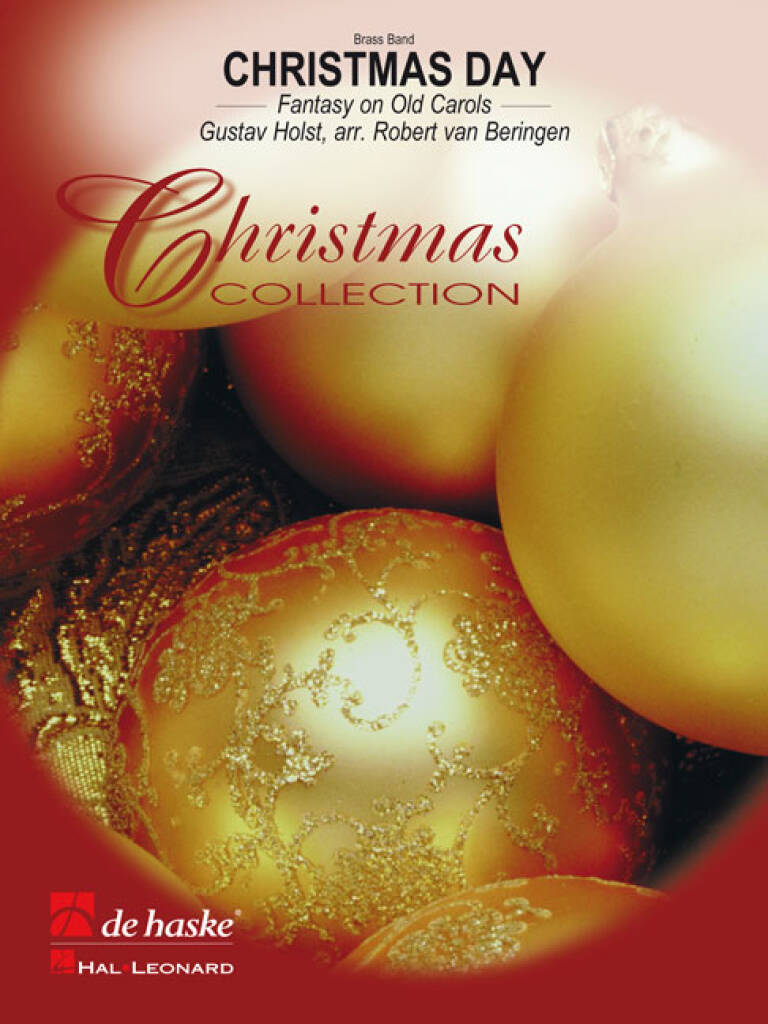
Christmas Day - Gustav Holst - Robert van Beringen
Gustav Holst composed almost 200 works, one being a very elegant and charming fantasy on the old English christmas carols: 'Good Christian Men, Rejoice'; 'God Rest You Merry, Gentlemen'; 'Come Ye Lofty, Come' and 'The First Nowell'. The fantasy called Christmas Day was originally written for Mixed Choir with Orchestra or Organ accompaniment. Robert van Beringen has arranged this work for concert band exactly 100 years later. His arrangement can be performed as an instrumental piece or with a Choir, making it suitable for any occasion.
Estimated dispatch 5-14 working days
-
 £76.99
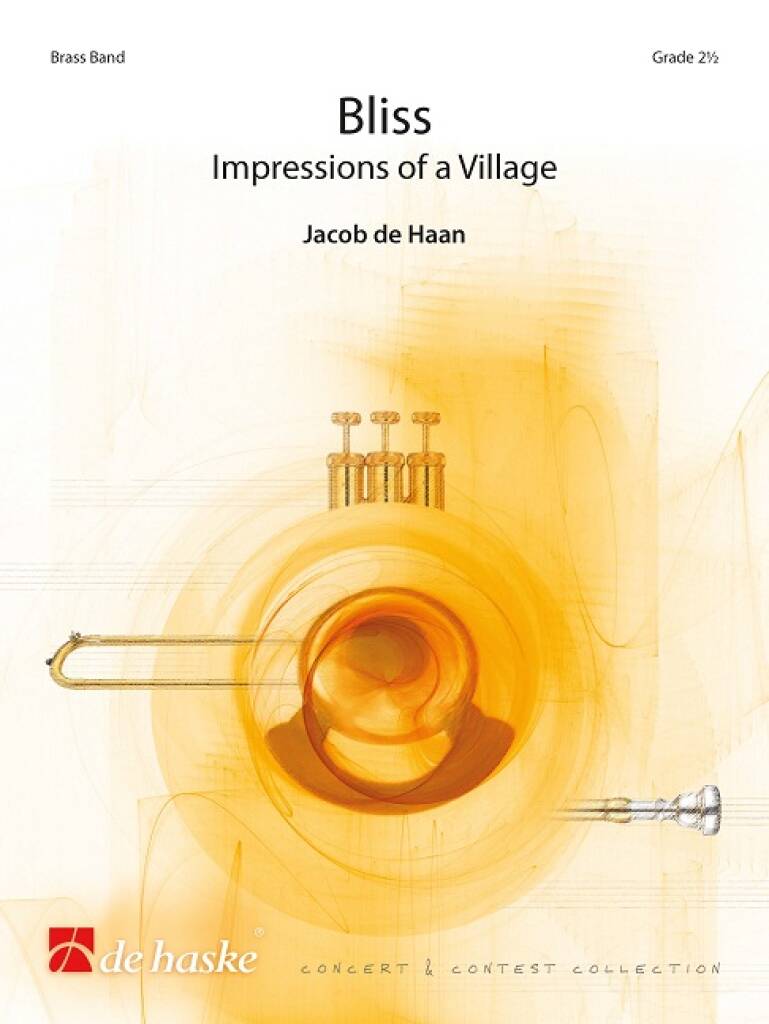
Bliss - Jacob de Haan
Bliss: Impressions of a Village is a spectacular test piece by one of the most renowned brass band composers in Holland, Jacob de Haan. It contains three impressions of a village in the beautiful Brabant province in the Netherlands. The first movement is in a very classical style, which captures the village's history appropriately. The entire band joins in as the small river approaches an ancient castle. The third movement contains lots of interesting rhythms portraying the hustle and bustle of everyday life in the village.
Estimated dispatch 5-14 working days
-
 £54.99
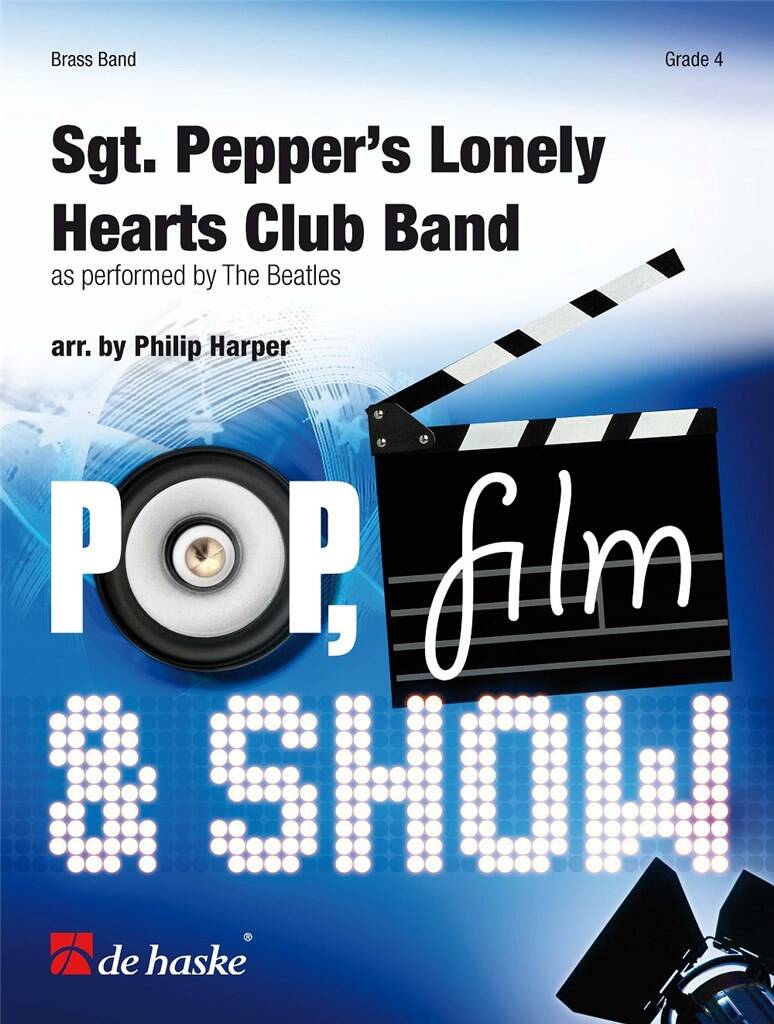
Sgt. Pepper's Lonely Hearts Club Band - John Lennon - Philip Harper
Sgt. Pepper's Lonely Hearts Club Band is the most famous album by The Beatles, and perhaps of all time. When it came out in 1967 it was remarkable not only for its many great songs, but also because of the innovative recording techniques that were used on the record for the very first time, setting a new standard for many decades to come. Conductor, arranger and composer Philip Harper is a huge Beatles fan himself and had a great time creating this grade 4 arrangement!
Estimated dispatch 5-14 working days
 View Music
 Listen to MP3