
Results
-
 £73.60
West of the Mississippi - Dean Jones
There's always a sense of adventure about America that makes it a really exciting topic to write about. The 3 States that sprang to mind in bringing a piece of music together were: California, Hawaii and Texas.We start out our American journey on the West Coast....California has provided much in the way of film and music for over 100 years. Combining this sense of free expression with the 'Surfing' culture, this initial section of the piece has an easy-going, fun feel in a pop idiom. Maybe wearing some shades might be quite a good look for this section!We move even further West now to the island of Hawaii where the free and easy goes onto a new level! The use of chromatics is a feature of Hawaiian melodies and has a feel a 'sliding' between notes that somehow sums up this feel of living on a tropical island! Have some fun with this section and have a Hawaiian garland to wear!Back into the USA mainland, and the fabulous state of Texas! Here we have the concept of the old fashioned rodeo and the 'Wild West'. Even today, the culture of horses, cowboys and tales of adventure are celebrated in places such as Fort Worth. The music captures some of these themes and has a fun and enjoyment...some get your Cowboy hats at the ready and enjoy the finale!
Estimated dispatch 5-14 working days
-
 £154.60
Momentum Sequences - Fredrick Schjelderup
Momentum Sequences was commissioned by Skjold Skoles Musikkorps (Norway) for their 60th Anniversary in 2021 (later adapted for brass band to Smoras Skolemusikk).The title of the term Momentum can be explained by an event that creates extra energy, or the driving force of a moving object. In this case, both the driving force,The energy and the object can be translated to the music, the conductor and the band.The piece is divided in three movements; I.Signals, II.Light and III.Finale which builds up the Momentum of the piece' character and theme.
Estimated dispatch 5-14 working days
-
 £115.60
Griffenfeldt - John Philip Hannevik
Here we present "Griffenfeldt, a folk-dance in the style of a Norwegian reinlender.This arrangement can be used as the first item in a concert, or after an interval.The musicians can come on stage as they join in. That is why two of the measures are notated "repeat till ready", here you have to wait until everyone is in place! If everyone is ready from the start, the repetition can be omitted.Be sure to play with a bouncy but singing style, not with short and harsh articulations.Do the trills on the beat, but these can also be omitted if it makes it too difficult.To bring out the folk music style a little extra, you can ask the musicians to play on the "backbeat", i.e. emphasize the last half of each quarter-note.In addition, the music will really come to life if all "solo" places are done standing up.The musician Anon Egeland tells this story:This song got its name from a party where it all just got a bit too lively: one of the party-goers started shooting into the ceiling with a gun just as this reinlender was being played. The fiddler - or was it the man with the gun? - was called Griffenfeldt, and that gave the name for the song.
Estimated dispatch 5-14 working days
-
 £115.60
Diplodocus - Ingebjørg Vilhelmsen
Diplodocus is said to be one of the largest dinosaus to ever have lived. This plant munching beast weighted approximately 20 tons, and could measure up to 30 metres from head to tail. The dinosaur lived in North America during the Jurassic period.This piece describes the carefree nature of a Diplodocus.A life with no natural enemies, and with an exceptionally small brain.To the conductor:The drum set part (Perc. 1) can be played as written, or ad lib. There is also a simplified drum set part that can replace Perc 1. if needed.Perc 2. is optional, and can be omitted.
Estimated dispatch 5-14 working days
-
 £54.99
Heritage - Philip Sparke
Philip Sparke wrote Heritage as a grand concert march in the tradition of Elgar and Walton. After a brief introduction, the march's long main theme is presented: first in subdued tones, then taken up by the full band, adding a tenor counter melody. The following bridge passage leads to a change of key and the traditional trio section. A repeat of previous motifs leads to a return of the main theme, followed by a short closing coda.
Estimated dispatch 5-14 working days
-
 £57.00
A Glorious Fanfare Op. 38/3 - Franco Cesarini
Franco Cesarini was commissioned to write A Glorious Fanfare by the Band Association of the Zug Canton in Switzerland (Zuger Blasmusikverband), to celebrate the centenary of the Association (1922-2022).The composition is the third in a trilogy of scintillating concert opening pieces (which make up opus 38), together with A Triumphant Fanfare and A Joyful Fanfare. A majestic fanfare entrusted to the trumpets introduces the piece. Subsequently a cantabile variant of the same theme is presented leading to a finale with rich and impressive sounds.An ideal opening piece that will delight your audience!
Estimated dispatch 5-14 working days
-
 £54.99
Till We Meet Again - Philip Sparke
Till We Meet Again was commissioned by Floraskulen Brassband, Floro, Norway, as a tribute to their former tuba player, Gunstein Stromsnes, who died tragically young in a traffic accident in 2017. They gave the premiere in December 2018. After a short introduction, a solo euphonium intones a modal, folk-like melody. This is taken up by the flugel horn and leads to a series of short solos which build to a majestic chorale for the full band. The mood subsides to reintroduce the modal melody before hints of the introduction and a short euphonium cadenza bring the work peacefully to a close.
Estimated dispatch 5-14 working days
-
 £49.99
Free Mind - Marc Jeanbourquin
For Free Mind, a light and dynamic piece, Marc Jeanbourquin drew inspiration from a gospel song, namely "Oh, Freedom", a post-Civil War African-American freedom song. In these times of crisis, the composer wanted to retain a positive and energetic spirit to symbolise the hope for better days. The four notes of the theme "Oh, Freedom" occur throughout the work and are brightened up by lively percussions, giving Free Mind a sparkling character that will lift the opening of a concert with enthusiasm.
Estimated dispatch 5-14 working days
-
 £42.50
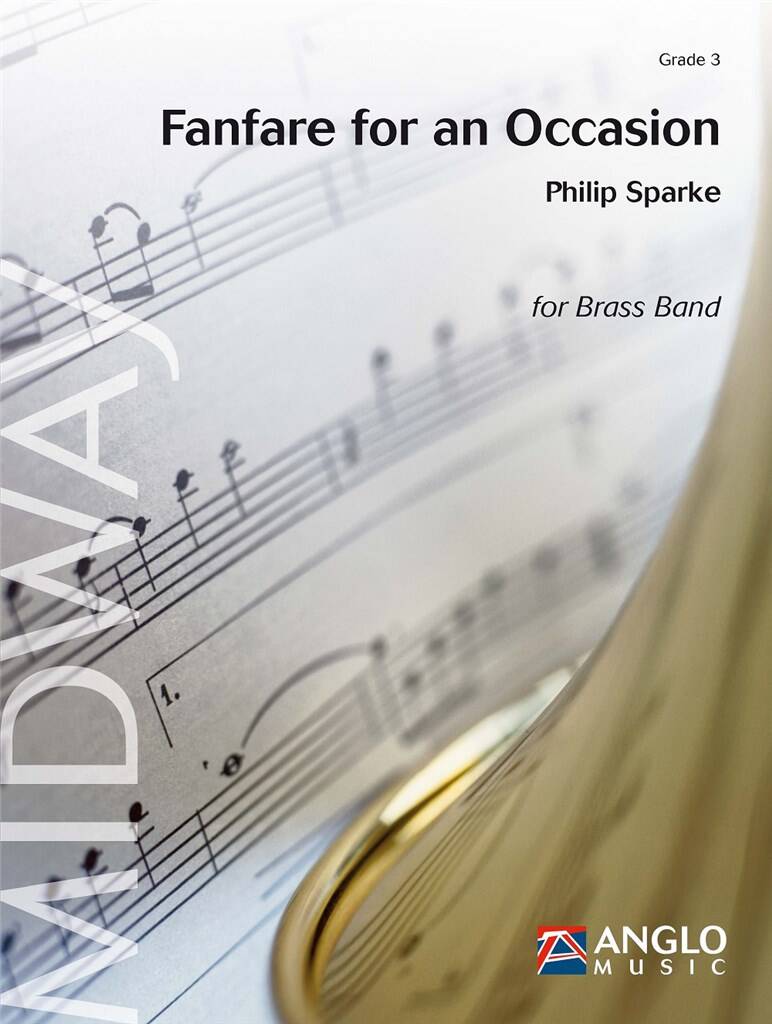
Fanfare for an Occasion - Philip Sparke
Fanfare for an Occasion was written to celebrate the 20th anniversary of the founding of Anglo Music Press, the publishing company dedicated to the works of British composer, Philip Sparke. It is a bright and festive work in which the main theme starts on the tenor instruments of the band before appearing as canonical imitation by all sections in turn. A short, repeated bridge passage leads to a second theme on the horns that is taken up by the full band and leads back to a return of the main theme and a repeat of the second subject, which brings the fanfare to a brilliant close.
Estimated dispatch 5-14 working days
-
 £68.80
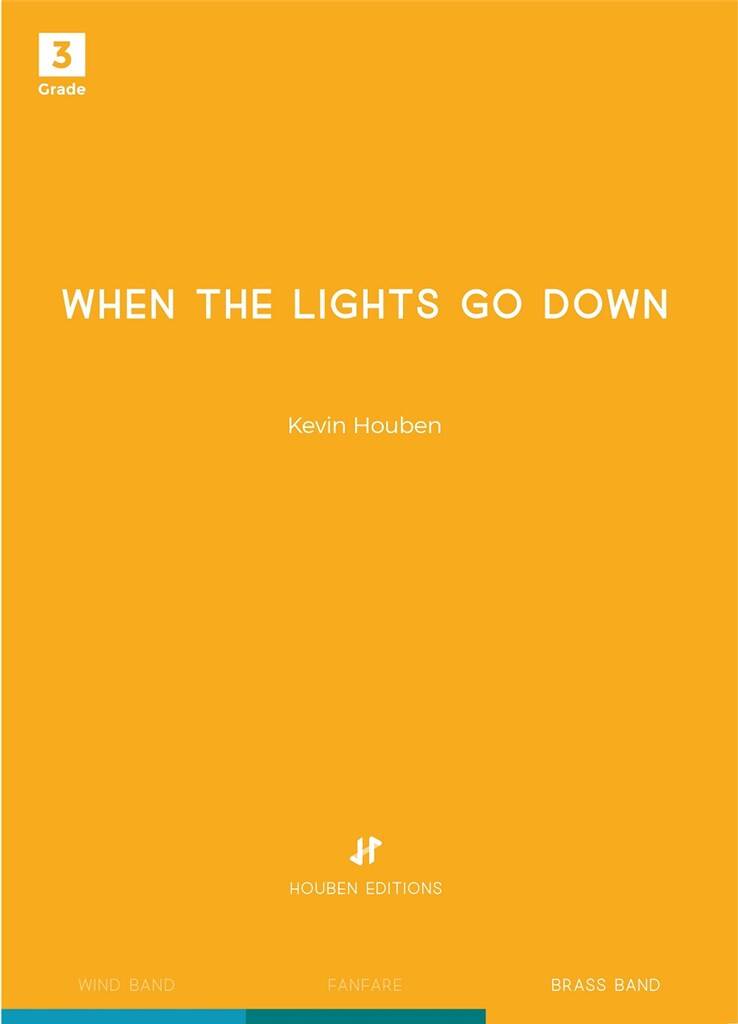
When the lights go down - Kevin Houben
Kevin Houben created with When the Lights Go Down, a wonderful chorale that can be a moment of reflection in any concert program.The resigned, magnificent melodies at the beginning of this composition slowly build up to a highlight with an increasing orchestration. The piece starts with a suggestive Adagio Meditativo, after which the main theme is immediately announced. A central bridge section takes the listener along through the different spheres at which the melodic and rhythmic drums embellish the chorale melodies. Thematic elements from the introduction brings the piece to a quiet and peaceful end.The sheer simplicity with which this work is written, makes it a resplendent, magnificent concert piece. 'When the Lights Go Down', refers to a moment when time stand still for a while, stillness within and around yourself.
Estimated dispatch 5-14 working days
 View Music