
Results
-
 £30.00
Varushkin
Whilst at the RNCM, Thomas Pitfield asked me to write a set of variations on a Russian folk tune, (the same one used by Tchaikovsky in his Serenade for Strings). Pianist Heather Slade-Lipkin said that it sounded like it should be played by a band!! So here it is! A pretty tune, and a good programme filler."The variations are divided into two sections with an interconnecting bridge. Tim Paton subjects his theme to a number of transions, which includes a 'grand waltz' and comic effects". Rodney Newton
In Stock: Estimated dispatch 3-5 working days
-
 £29.88
Bones in the Stores (Trombone Feature with Brass Band) Rob Wiffin
This arrangement for trombone section and band combines two well-known wartime songs, The Quartermaster's Store and Bless 'em All, giving the trombone section a thorough workout as well as a lot of fun. The Quartermaster's Store is a traditional song from England; the origins of both tune and words are uncertain and may date back as far as the English Civil War. The origins of Bless 'Em All are also unclear - the words have been credited to Fred Godfrey in 1917, set to music composed by Robert Kewley, though earlier versions of the song may have existed among British military personnel in the 1880s in India. It was first recorded by George Formby Jr in 1940 and became a patriotic song. Audio demo: https://soundcloud.com/user-565396545/bones-in-the-stores-trombone Duration: Approx. 2.50 minutes Difficulty Level: Medium This PDF download includes the full score and parts. Sheet music available at www.brassband.co.uk (UK) or https://satradecentral.org (USA)
In Stock: Estimated dispatch 1-3 working days
-
 £34.95
Aristotle's Air - Christopher Bond
The Ancient Greeks believed that there were four elements that everything was made up of: earth, water, air and fire. This theory was suggested around 450 BC, and was later supported and added to by Aristotle. The idea that these four elements - earth, water, air and fire - made up all matter was the cornerstone of philosophy, science, and medicine for two thousand years. Air was considered a 'pure' element, but in fact the air that's all around us is made up of a variety of gasses. Of course, in music, air has a different meaning; a beautiful song-like melody or tune and Aristotle's Air is just that. The work was commissioned by and written for The Cory Band as part of their winning 2015 Brass in Concert programme 'The Four Elements of the Universe', being premiered at the contest at The Sage, Gateshead, on 15th November 2015. The work was awarded the Cyril Beere Memorial Trophy for the Best New Composition or Arrangement.
Estimated dispatch 10-14 working days
-
Wombling Merry Christmas - Mike Batt - Len Jenkins
Every Christmas has its novelty single, and following their successful reunion at Glastonbury in 2011, it was lovingly provided by The Wombles with the re- release of their 1974 hit 'Wombling Merry Christmas'. The Wombles are a British novelty pop group, featuring musicians dressed as the characters from children's TV show The Wombles, which in turn was based on the children's book series by Elisabeth Beresford. Songwriter and record producer, Mike Batt, wrote the series' theme tune, and went on to perform and produce a number of successful albums and singles as 'The Wombles'. Enjoy....
-
Sharpe's Theme - John Tams & Dominic Muldowney - Len Jenkins
"Sharpe" is a popular British series of television dramas starring Sean Bean as Richard Sharpe, a fictional British soldier in the Napoleonic Wars, principally in Spain, Portugal and France. His activities and adventures are based on a number of novels by Bernard Cornwell, which reflect the military campaigns of the Duke of Wellington (as he became) and were filmed mainly in Turkey and Crimea, although some filming was also done in England, Spain and Portugal. This music, composed by John Tams and Dominic Muldowney, contains two aspects of the series; the iconic introductory signature tune and the equally familiar 'Over the Hills and Far Away' originally sung by John Tams (who also acted in the series) which features in the closing scenes of each episode. This arrangement is within the capabilities of a good 4th section brass band.
-
Dance The Night Away - Raul Malo - Len Jenkins
"Dance The Night Away" is an upbeat song by The Mavericks taken from their 1998 album Trampoline. The song was released as a single that same year and reached No. 4 in the UK charts.The music video of the song, set in a supermarket in America, exemplifies the infectious pull of the tune and its persistent rhythm which eventually gets everyone involved. This is an ideal piece for fetes and concerts alike, and should be played in a pronounced 'latino' style for maximum effect.
-
 £29.95
Believe Me, If All Those Endearing Young Charms - Simone Mantia - David Childs
The tune and lyrics of most folk songs we are familiar with today are usually the collaboration of several composers and lyricists over, what can sometimes be hundreds of years. Endearing Young Charms is no exception to this rule with...
Estimated dispatch 5-7 working days
-
 £24.95
Tudor Trumpeters Tune (Cornet Solo with Brass Band - Score and Parts)
Estimated dispatch 7-14 working days
-
£24.50
Aberystwyth - Joseph Parry - Ed Keeley
This arrangement is based on the famous Welsh hymn tune Aberystwyth by Joseph Parry. Composed in the late nineteenth century whilst Parry was Professor of Music at Aberystwyth University. The tune is a powerful example of the expressive style of Welsh chapel music.Most widely known today as the setting for Charles Wesley's hymn "Jesus, Lover of My Soul," the melody is notable for its haunting minor key, sweeping phrases and dramatic climax. These qualities translate naturally to the warm, resonant and warm timbre of the brass band.This setting seeks to capture both the solemn dignity and emotional depth of the original tune. Rich harmonic textures and the sonorous colours of the brass band highlight the melody's expressive contours, building towards a broad and noble climax while preserving the reflective and haunting character of the hymn.
In Stock: Estimated dispatch 1-3 working days
-
 £24.50
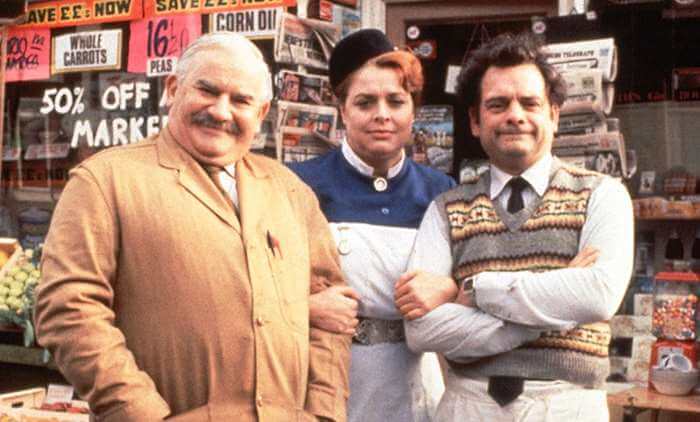
Open All Hours - Wellington Guernsey & Joseph Ascher - John Lee
The theme tune from one of Britain's iconic comedy shows is in fact, an old tune entitled 'Alice, Where Art Thou' composed by Joseph Ascher, a Dutch composer and pianist. The opening title sequence of the show heard brass arranger, Max Harris performing his own version of the tune, who also composed the incidental music for the show. This light-hearted release coincides with the release of the new Open All Hours series starring David Jason who now runs the corner shop years later. A great easy going summer concert item and one that audience members will truly enjoy.(also playable by training bands)
In Stock: Estimated dispatch 1-3 working days
 Listen to MP3
 View Music