Results
-
 £37.35
And can it be? - Brass Band (Dan Forrest arr. Andrew Wainwright)
This hugely popular choral anthem by Dan Forrest has here been expertly arranged for brass band by Andrew Wainwright. A quiet contemplative opening builds gradually to a confident stating of the truth of the gospel, ending with a pensive reiteration of the question and the assurance of the amazing love. This arrangement was originally commissioned by Norridge Citadel Band in 2019. To view the New York Staff Band performing the piece, please visit: https://www.youtube.com/watch?v=UY7YA_akFb0 Includes score and full set of parts. Sheet music available exclusively from World of Brass - www.worldofbrass.com Difficulty Level: 4th Section + Instrumentation: Soprano Cornet Eb Solo Cornet Bb 1st Cornet Bb 2nd Cornet Bb Flugel Horn Bb Solo Horn Eb 1st Horn Eb 2nd Horn Eb 1st Baritone Bb 2nd Baritone Bb 1st Trombone Bb 2nd Trombone Bb Bass Trombone Euphonium Bb Bass Eb Bass Bb Timpani Percussion 1-2
In Stock: Estimated dispatch 1-3 working days
-
 £29.95
Ghost of Christmas Present, The - Jonathan Bates
DURATION: 3'00". DIFFICULTY: 3rd+. Composed for Strata Brass in 2020 as part of their COVID-19 induced, virtually recorded 'A Christmas Carol' (a new suite for brass bandlasting around 30 minutes in total), 'The Ghost of Christmas Present' is a sorrowful and reflective solo for Tenor Horn depicting the visions shown by the Ghost of Christmas Present to Scrooge as he sleeps on Christmas eve. Lonely, cold and disliked, Scrooge begins to see how he is viewed by others and realises how he must change his ways. .
In Stock: Estimated dispatch 1-3 working days
-
 £30.00
Here's That Rainy Day
Trombone Solo.In 1953, a new musical by Johnny Burke and Jimmy Van Heusen was staged, "Carnival in Flanders". Unfortunately, it was not successful. However, one of the songs, "Here's that Rainy Day" became a standard on the cabaret scene.I have arranged this memorable song for solo trombone and brass band. It begins in a Latin style, then moves to the famous Jazz Big Band style. Good key players make the band parts playable by most bands - as long as they like to 'swing'! The trombone part is not easy, on the other hand, neither is it aimed at the 'select few' virtuoso players. Impressive stuff though, with 'written' sections that sound like improvisation.
In Stock: Estimated dispatch 3-5 working days
-
 £32.95
Variations for Brass Band (Score Only)
The great British brass band tradition has been fostered since 1860 by an annual competition for bands. Held in the Crystal Palace until that edifice burned in the 1930s, it is a major event at the Royal Albert Hall in London. Each year there is a new test piece, required of all bands and in 1957, Ralph Vaughan Williams (by then a revered, grandfatherly figure in British music) was finally persuaded to write a composition for that purpose.The 12-minute composition comprises a theme and 11 variations. The brief variations are in a variety of moods and styles, including a waltz, a polonaise, a chorale, a canon, an arabesque, and a fugue. It tests ensemble coordination, command of and flexibility concerning styles, and richness of sound.
Estimated dispatch 7-14 working days
-
£45.00
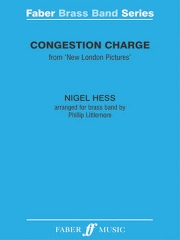
Congestion Charge - Nigel Hess
This is the third movement of Nigel Hess's New London Pictures As with all modern cities, London is over-crowded with motor vehicles. London was the first major city in Europe to adopt a Congestion Charge, and this lighthearted work includes musical images of frustrated rush hour traffic leading to a freer flowing galop.Brass Band Grade 5: 1st SectionDuration: 7 minutes.
In Stock: Estimated dispatch 1-3 working days
-
£44.95
RENAISSANCE (Brass Band Set) - Peter Graham
A sequel to the much celebrated 'Shine as the light', Peter Graham felt the dawning of a new millennium was an appropriate back-drop against which to feature Joy Webb's song 'Come into our world', with its plea for revival or Renaissance in the form of Christ's promised return.
Estimated dispatch 7-14 working days
-
 £30.00
Leviathan - Paul Denegri
Leviathan began its evolution as a workshop work inspired by the poem written by Heathcote Williams entitled; Whale Nation. At the time of this workshop the tentet brass repertoire existed of extremely well written original or arranged works of a lighter nature but there was a shortage of works with a greater emotional depth and edge, hence Leviathan's early conception as an atmospheric and emotive work. The workshop piece explored whale sound and song and was a 25-minute work in two parts. After many years of the workshop sketches sitting dormant the new work Leviathan is a much shorter and concise work. It contains only one of the original melodic themes of the workshop work. Leviathan is driven and underpinned by melodic and rhythmic elements. It is a programmed work following the awe inspiring majestic might and beauty of whales through to a hunt scene, the chase and the ultimate demise of earth's largest mammal.
-
.png) £34.95
£34.95Bah Humbug! - Jonathan Bates
DURATION: 3'00". DIFFICULTY: 3rd+. Composed for Strata Brass in 2020 as part of their COVID-19 induced, virtually recorded 'A Christmas Carol' (a new suite for brass band lasting around 30 minutes in total), 'Bah Humbug!' is a tongue-in-cheek yet showy solo composed for Bass Trombone. Throughout the work, the solo line is used to depict Ebenezer Scrooge, a miserly old man with little-to-no compassion or generosity and this grumpiness is portrayed throughout the solo. Often there will be moments of lightness and hoy, quickly banished by the misery of the Bass Trombonist!.
In Stock: Estimated dispatch 1-3 working days
-
 £39.95
Eternal Source of Light Divine (Euphonium Solo) - Jonathan Bates
DURATION: 4 minutes. DIFFICULTY: 1st+. 'Eternal Source of Light Divine is a new Euphonium solo in the style of a set of theme and variations on the famous aria by Handel. The song was most recently performed to a global audience at the Royal Wedding of Prince Harry and Meghan Markle in May 2018, which ties into Foden's Band's 'Kings & Queens' theme for Brass in Concert. The solo itself is a virtuosic showpiece for the soloist, showcasing extremes of range throughout, technical flexibility and dexterity and a demanding yet lighthearted cadenza passage - all based on melodic fragments from the original Handel theme.'. .
In Stock: Estimated dispatch 1-3 working days
-
.png) £29.95
£29.95Ghost of Christmas Past, The - Jonathan Bates
DURATION: 2'30". DIFFICULTY: 2nd+. Composed for Strata Brass in 2020 as part of their COVID-19 induced, virtually recorded 'A Christmas Carol' (a new suite for brass bandlasting around 30 minutes in total), 'The Ghost of Christmas Past' is a lively and virtuosic cornet solo portraying the visions Scrooge is shown of his childhood. Beginning in a jovial mood, the ghost then shows Scrooge his early love life, before showing how Scrooge's unsympathetic and callous ways lead to his loss of love and friendship throughout the years as the music gets gradually darker and darker with each passing section. .
In Stock: Estimated dispatch 1-3 working days