
Results
-
 £124.99
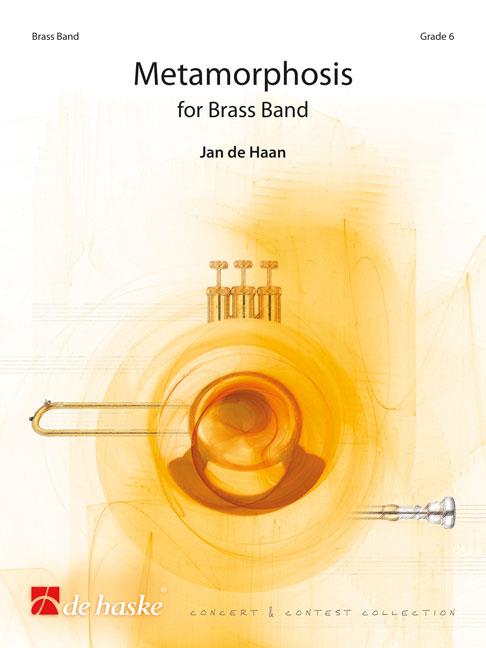
Metamorphosis (Brass Band - Score and Parts)
The opening of this three-movement work features an initial appearance of the thematic material that returns in various guises later on in the work. The leitmotiv centres on a minor second.A range of thematic variations is heard in the lively and energetic Metamorphosis One. This movement is interrupted by an atmospheric meno mosso, containing melodic passages that return to the opening theme.Metamorhosis Two is characterised by various changes in tempo and musical character. Seven different soloists transform the thematic material - each in their own way. This eventually culminates in a passionate tutti passage.The source of inspiration for Metamorphosis Three is the so-called BACH-motif, a musical autograph consisting of the notes B flat, A, C and B. This distinctive motif arises from the leitmotiv (here a descending minor second), which continues to evolve through various transpositions and transformations. For the composer, this spectacular last movement is an homage to one of the greatest and most influential composers in the history of music: Johann Sebastian Bach.Duration: 17:00
Estimated dispatch 7-14 working days
-
 £40.00
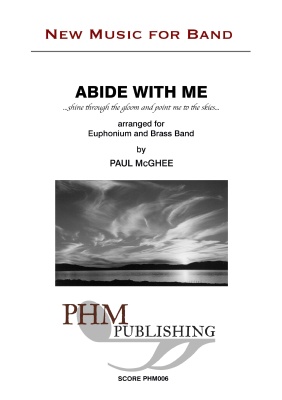
Abide With Me (Euphonium Solo with Brass Band - Score and Parts)
My arrangement of William H. Monk's tune of 1861, uses the euphonium soloist as the central figure for the melodic line in the three verses. Surrounding the solo line is an irregular pulsed figure in the percussion to give the music an unsettled feel whilst the muted ensemble lightly colour the melodic contour of the soloist. From the low beginnings of the piece, where no high instrumentation is used, we are led through the darkened texture to a bright finale, although the sense of the forbidding is always present.Abide With Me has always been a favourite hymn of mine and it was when watching the film 28 Days Later that I believed it would make a rather striking arrangement for brass band. This was confirmed further when the hymn was used at the 2012 opening ceremony of the London Olympics. The juxtaposition between the static, slow moving melody and the rhythmic effects of the dancers was something that I thought could be captured in an arrangement.- Paul McGheeDuration: 5.00
Estimated dispatch 7-14 working days
-
£64.95
Proverbially
Proverbially is a concertino for euphonium and brass band composed for Glenn Van Looy. The piece is structured in three individual movements, each around 3 minutes. Each movement is based on a particular modern proverb: Between the Lines, inspired by the phrase, reading between the lines; Red Sky, inspired by the proverb, red sky at night, shepherd's delight; A Stitch in Time, inspired by the proverb, a stitch in time saves nine.
Estimated dispatch 7-14 working days
-
 £89.95
Revelation (Score and Parts)
Symphony for Double Brass on a theme of Purcell 1995 marked the tercentenary of Purcell's death, and my new score Revelation has been written as a tribute to his music and the ornate and confident spirit of his age. There are five major sections: 1 Prologue 2 Variations on a ground bass I 3 Fugue 4 Variations on a ground bass II 5 Epilogue and Resurrection The score uses many features of the Baroque Concerto Grosso, and arranges players in two equal groups from which soloists emerge to play in a variety ofvirtuoso ensembles. It quotes freely from Purcell's own piece Three Parts on a Ground in which he has composed a brilliant sequence of variations over a repeating six-note bass figure. This original motif can be heard most clearly beneath the duet for Cornet 5 and Soprano at the beginning of the 2nd section. There is, of course, a religious dimension to Revelation as the title suggests, and the score is prefaced by lines by the 17th century poet John Donne. His Holy Sonnet paraphrases the Book of Revelation in which the dead are raised at the sounds of the last trumpet. Donne's trumpets are themselves placed stereophonically ". . . At the round Earth's imagined corners" and it is this feature that today's players represent as they move around the performing area. Their final apocalyptic fanfares can be heard at the close of the score, as Purcell's music re-enters in a lasting tribute to England's first composer of genius. Philip Wilby September 1995 At the round Earth imagined corners, blow your trumpets, angels, and arise, arise from death, you numberless infinities Of souls, and to your scattered bodies go. All whom the flood did, and fire shall o 'erthrow All whom war, dearth, age, agues, tyrannies, Despair, law, chance hath slain, and you whose eyes Shall Behold God, and never taste death woe. John Donne after Revelation Ch. 11 v.15
Estimated dispatch 7-14 working days
-
 £44.95
Revelation (Score Only)
Symphony for Double Brass on a theme of Purcell 1995 marked the tercentenary of Purcell's death, and my new score Revelation has been written as a tribute to his music and the ornate and confident spirit of his age. There are five major sections: 1 Prologue 2 Variations on a ground bass I 3 Fugue 4 Variations on a ground bass II 5 Epilogue and Resurrection The score uses many features of the Baroque Concerto Grosso, and arranges players in two equal groups from which soloists emerge to play in a variety ofvirtuoso ensembles. It quotes freely from Purcell's own piece Three Parts on a Ground in which he has composed a brilliant sequence of variations over a repeating six-note bass figure. This original motif can be heard most clearly beneath the duet for Cornet 5 and Soprano at the beginning of the 2nd section. There is, of course, a religious dimension to Revelation as the title suggests, and the score is prefaced by lines by the 17th century poet John Donne. His Holy Sonnet paraphrases the Book of Revelation in which the dead are raised at the sounds of the last trumpet. Donne's trumpets are themselves placed stereophonically ". . . At the round Earth's imagined corners" and it is this feature that today's players represent as they move around the performing area. Their final apocalyptic fanfares can be heard at the close of the score, as Purcell's music re-enters in a lasting tribute to England's first composer of genius. Philip Wilby September 1995 At the round Earth imagined corners, blow your trumpets, angels, and arise, arise from death, you numberless infinities Of souls, and to your scattered bodies go. All whom the flood did, and fire shall o 'erthrow All whom war, dearth, age, agues, tyrannies, Despair, law, chance hath slain, and you whose eyes Shall Behold God, and never taste death woe. John Donne after Revelation Ch. 11 v.15
Estimated dispatch 7-14 working days
-
 £27.50
Rise of the Phoenix Score Only)
As the title suggests, the phoenix was a fabulous mythical bird, who every morning at dawn, sang a song so enchanting that even the sun God, Apollo, would stop and listen. The bird would live for a hundred years, and at the end of its life, would build a pyre, set it on fire and be consumed by the flames. After three days, the phoenix would be reborn from the ashes, to sing once more.This work was commissioned by Clifton and Lightcliffe Band and reflects the difficulties and rebirth of the band to make music once more.Suitable for second section bands and above.
Estimated dispatch 7-14 working days
-
 £10.00
Swedish Festival Music (Study Score)
This three-movement suite was commissioned by the Swedish Brass Band Association as the test piece for the Championship Section of their 2008 National Contest. The first movement is inspired by the magnificent Swedish hymn 'How Great Thou Art'. Indeed the influence of that hymn can be traced in all three movements. The declamatory style of the opening gives way to other, more reflective expressions of awe and wonder. A more animated section develops before a final, triumphant statement of the 'How Great' idea returns to finish the movement. The slow second movement features another much-loved Swedish hymn. The music provides plenty of scope for expressive playing, and a feeling of intimacy should be created by the use of several short solo passages. The third movement Allegro brings a totally different, dance-like mood with frequent references to a reel from the region of Uppland. This eventually brings a return to the opening subject and a final, triumphant reference to 'How Great Thou Art'.
Estimated dispatch 7-14 working days
-
 £25.00
The Garland Waltz (Tchaikovsky arr. Dan Price)
The Garland Waltz comes from 'The Sleeping Beauty', the second of three ballets by Pyotr Tchaikovsky. Sleeping Beauty's theme is simplistic and focuses on the conflicting forces of good and evil through the characters the Lilac Fairy (good) and Carabosse (evil). The ballet's premiere in 1890 received more favourable accolades than 'Swan Lake' but Tchaikovsky never witnessed the work's true success outside of Russia as he died in 1893. By 1903, 'The Sleeping Beauty' was the second most popular ballet in the repertoire of the Imperial Ballet, having been performed 200 times in only 10 years. The waltz and other music from the ballet has been used extensively in film and television, most notably in Disney's animated version of 'Sleeping Beauty' and the recently released 'Maleficent'. Here, Dan Price faithfully transcribes Tchaikovsky's original score for Brass Band. Duration : 00:04:45 Grade : 3.5 / 4
Estimated dispatch 5-7 working days
-
 £48.56
Benedicamus Domino - Brass Band (Andrew Wainwright)
A spectacular major Christmas work for brass band, based on the well-known carols 'Unto us is born a son' and 'Infant Holy'. Set in three through-composed movements, the outer two sections are full of joy and vibrance, with a magical, ethereal middle movement featuring 'Infant Holy'. The work comes to a close with a grandioso finish and rendition of 'Unto us is born a son' in full glory. Includes score and full set of parts. To view a follow-the-score video of the work featuring the Canadian Staff Band, please visit www.youtube.com/watch?v=y6uprFRJolY Sheet music available exclusively from World of Brass - www.worldofbrass.com Difficulty Level: 1st Section + Instrumentation: Soprano Cornet Eb Solo Cornet Bb Repiano Cornet Bb 2nd Cornet Bb 3rd Cornet Bb Flugel Horn Bb Solo Horn Eb 1st Horn Eb 2nd Horn Eb 1st Baritone Bb 2nd Baritone Bb 1st Trombone Bb 2nd Trombone Bb Bass Trombone Euphonium Bb Bass Eb Bass Bb Timpani Percussion 1-3
In Stock: Estimated dispatch 1-3 working days
-
 £37.35
El Camino A Belen - Trumpet Solo with Brass Band (Nick Simmons-Smith)
VIEW SCORE PDF This trumpet solo was written by Nick Simmons-Smith at the request of Dallas Brass Band for a Christmas concert featuring Elmer Churampi, international trumpet soloist. The solo features three Christmas songs: i. Mi Burrito Sabanero voy camino de Belen (With my donkey of the Savannah, I'm going to Bethlehem) ii. Noche de paz (Silent night) iii. Campana Sobre Campana (Bell above bells, O bells of Bethlehem) These songs are all very popular in Central and South America - including Peru, where Elmer Churampi is originally from. Each tune has been given a different Latin treatment producing a fast-slow-fast festive concert solo. The solo is not long, but each movement could be played individually. To view a video of Elmer Churampi performing the solo with Dallas Brass Band, please visit: www.youtube.com/watch?v=cpQCFXReEJg PDF download includes score and full set of parts. Sheet music available from: UK - www.brassband.co.uk USA - www.solidbrassmusic.com Instrumentation: Trumpet Soloist Bb Soprano Cornet Eb Solo Cornet Bb Repiano Cornet Bb 2nd Cornet Bb 3rd Cornet Bb Flugel Horn Bb Solo Horn Eb 1st Horn Eb 2nd Horn Eb 1st Baritone Bb 2nd Baritone Bb 1st Trombone Bb 2nd Trombone Bb Bass Trombone Euphonium Bb Bass Eb Bass Bb Percussion 1-3
In Stock: Estimated dispatch 1-3 working days