
Results
-
 £69.99
Fanfares and Love Songs (Brass Band - Score and Parts) - Higgins, Gavin
Fanfares and Love Songs was commissioned by the National Children's Brass Band of Great Britain for performance on 25th July 2009. Its three movements contrast the extrovert and lyrical qualities of the traditional brass band. The fanfare with which the work opens involves the whole cornet section. The second movement is reflective in mood, beginning somewhat pensively on muted brass, and building to an emotional climax before subsiding back to a distant pianissimo chord. The finale is a fast dance, which with a final recapitulation of the opening fanfare drives on to a breathless close.Suitable for Advanced Youth/3rd Section Bands and aboveDuration: 12.00
Estimated dispatch 7-14 working days
-
£14.99
Fanfares and Love Songs (Brass Band - Score only) - Higgins, Gavin
Fanfares and Love Songs was commissioned by the National Children's Brass Band of Great Britain for performance on 25th July 2009. Its three movements contrast the extrovert and lyrical qualities of the traditional brass band. The fanfare with which the work opens involves the whole cornet section. The second movement is reflective in mood, beginning somewhat pensively on muted brass, and building to an emotional climax before subsiding back to a distant pianissimo chord. The finale is a fast dance, which with a final recapitulation of the opening fanfare drives on to a breathless close.Suitable for Advanced Youth/3rd Section Bands and aboveDuration: 12.00
Estimated dispatch 7-14 working days
-
 £54.20
FRANK SINATRA (Cornet/Brass Band) - Wormald, Christopher
Grade: easy-medium. Three solos for Cornet & BB. Includes: All the Way; Guess I'll Hang My Tears Out to Dry; I've Got You Under My Skin.
Estimated dispatch 7-14 working days
-
 £34.99
Frankly Speaking (Brass Band - Score and Parts) - Freeh, Mark
Mark Freeh's fine arrangement brings together three classic Sinatra songs in a suite for solo instruments and band: I've Got You Under My Skin (flugel solo), All the Way (trombone solo) and New York, New York (cornet or euphonium solo).Suitable for Advanced Youth/3rd Section Bands and aboveDuration: 5:00
Estimated dispatch 7-14 working days
-
 £35.00
Gymnopedie No.1 (Brass Band - Score and Parts) - Satie, Erik - Littlemore, Phillip
Erik Satie's Gymnopedies are a series of three short piano pieces that were first published in 1888. These atmospheric pieces, all written in 3/4 time and sharing a common theme and structure, are recognised the world over and are his most famous compositions. Gymnopedie No.1?is divided into two almost identical parts, with a steady accompanying rhythm of crotchet-minim, crotchet-minim (short-long, short-long) that remains constant throughout - with the exception of the last two bars of each part! This gently lilting background supports an expressive melodic line which creates the occasional dissonance, yet seems impressively tension free. Duration: 8:10
Estimated dispatch 7-14 working days
-
 £40.00
Hallelujah Chorus (from Messiah) (SATB Chorus with Brass Band - Score and Parts) - Handel, George Frideric - Littlemore, Phillip
Handel's?Messiah?was composed in 1741, receiving it's premiere in Dublin a year later. Written in three parts, the Hallelujah Chorus concludes the second part, and is often performed separately from the main oratorio, and especially around Christmas. There are no choral parts included with the set, however it works with all the major editions of vocal score. Duration: 3:30
Estimated dispatch 7-14 working days
-
 £84.95
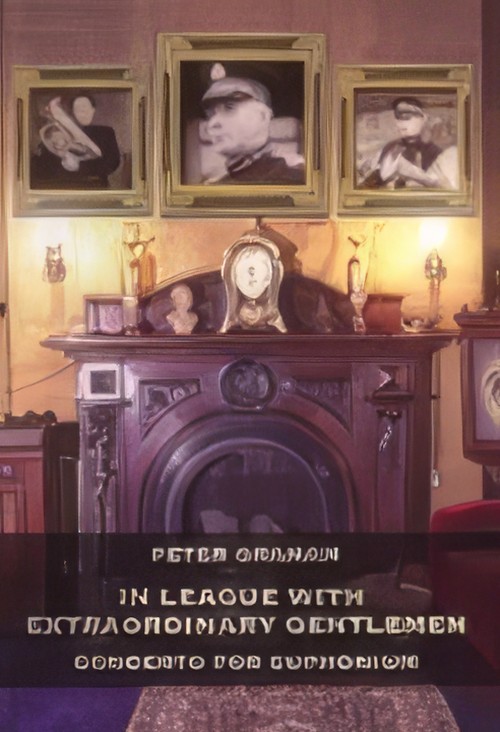
In League with Extraordinary Gentlemen (Euphonium Solo with Brass Band - Score and Parts) - Graham, Peter
Concerto for EuphoniumIn League with Extraordinary Gentlemen combines two of composer Peter Graham's life interests - composition and 19th century popular fiction. Each of the concerto's three movements takes its musical inspiration from extraordinary characters who have transcended the original genre and have subsequently found mass audiences through film, television and comic book adaptations.The first movement follows a traditional sonata form outline with one slight modification. The order of themes in the recapitulation is reversed, mirroring a plot climax in the H.G. Wells novella The Time Machine (where the protagonist, known only as The Time Traveller, puts his machine into reverse bringing the story back full circle).The Adventure of the Final Problem is the title of a short story published in The Memoirs of Sherlock Holmes by Arthur Conan Doyle. This is an account of the great detective's final struggle with his long-time adversary Professor Moriarty at the Reichenbach Falls in Switzerland. The music takes the form of a slowed down lndler (a Swiss/Austrian folk dance) and various acoustic and electronic echo effects call to mind the alpine landscape. The final bars pose a question paralleling that of Conan Doyle in the story - have we really seen the last of Sherlock Holmes?The final movement, The Great Race, (available separately) follows Phileas Fogg on the last stage of his epic journey "Around the World in Eighty Days" (from the novel by Jules Verne). The moto perpetuo nature of the music gives full rein to the soloist's technical virtuosity. As the work draws to a conclusion, the frantic scramble by Fogg to meet his deadline at the Reform Club in Pall Mall, London, is echoed by the soloist's increasingly demanding ascending figuration, set against the background of Big Ben clock chimes.In League with Extraordinary Gentlemen was first performed in the brass band version by David Thornton and the Black Dyke Band, conductor Nicholas Childs, at the RNCM Concert Hall Manchester on January 30, 2009.
Estimated dispatch 7-14 working days
-
 £44.95
INSTANT CONCERT (Brass Band) - Walters, Harold
A collection of 32 melodies which come fast and furious - and sometimes two or three at once.Your audience's smile will just get bigger and bigger as the piece progresses.One of the best all time light hearted finishers for any concert - easily playable by youth and fourth section bands upwards.
Estimated dispatch 7-14 working days
-
 £79.95
Introduction, Elegy and Caprice (Brass Band - Score and Parts) - Calvert, Morley
This work was written by Morley Calvert, the Canadian composer, especially for the first European Brass Band Championships held in 1978.The piece consists of three contrasting movements. The Introduction opens with a slow, mysterious figure after the first fanfare-like unison notes. This leads to the main section, a quick 'one-in-a-bar' movement centred around a persistent figure.The Elegy opens with an unaccompanied Euphonium solo, which is then passed through to horn, cornet, and basses in the manner of a passacaglia. This is broken and then the movement fragments.After the tension of the Elegy, the Caprice provides much needed relief: a spritely dance, very rhythmical in character, the theme of which is thrown around the band with great abandon.
Estimated dispatch 7-14 working days
-
£39.95
Introduction, Elegy and Caprice (Brass Band - Score only) - Calvert, Morley
This work was written by Morley Calvert, the Canadian composer, especially for the first European Brass Band Championships held in 1978.The piece consists of three contrasting movements. The Introduction opens with a slow, mysterious figure after the first fanfare-like unison notes. This leads to the main section, a quick 'one-in-a-bar' movement centred around a persistent figure.The Elegy opens with an unaccompanied Euphonium solo, which is then passed through to horn, cornet, and basses in the manner of a passacaglia. This is broken and then the movement fragments.After the tension of the Elegy, the Caprice provides much needed relief: a spritely dance, very rhythmical in character, the theme of which is thrown around the band with great abandon.
Estimated dispatch 7-14 working days
 View Music