
Results
-
 £20.00
What's The Matter Horn? - Steve Robson
Composed by Steve Robson and scored specifically for our Flexi-Collection World Tour Series. Steve has been inspired by fond memories of hearing Alpine Bands and seeing knee slapping dancers performing in Switzerland for this piece. It starts with some off-stage calls (which could even be from an Alpine Horn if one is available), and moves into a lively dance section, ending with a little yodeling! There are various ways to convey the yodeling through instruments, but a bit of vocal yodel practice could be a novel new addition to the band's warm-up routine!Our Flexi-Collection Series:Flexible scoring tailored to your needs - a perfect solution for expanding the repertoire of Junior/Youth brass bands and ensembles. The Flexi-Collection currently offers two series and these will be regularly expanded to offer groups an even wider variation of music. Based on four-part harmony, these collections provide brass groups with the advantage of complete flexibility when may not be balanced.Added Extras:Each part of The World Tour Series also includes rudimentary theory reference sheet andLearn Together Moments(warm-up passages which relate to each of the styles of pieces included in the whole series). The score also includes background/programme notes andCheck It Outideas to encourage the players to find out more about the music style and/or inspiration behind the piece.If players or instruments are missing, the show can still go on! The thoughtful scoring and arranging by Steve Robson now means that groups of all abilities have access to a truly flexible set of music for their needs.Available for Brass Band (with world parts included), pieces included in our World Tour Series offer flexibility in every sense of the word.(Available individually or as part of the completeFlexi-Collection World Tour Series Album).
In Stock: Estimated dispatch 3-5 working days
-
 £15.00
Jupiter from the Planet Suite - Holst
Programme notes:The hauntingly beautiful theme from Jupiter, from The Planets Suite has a rare qualityexpressing both optimism and dignity which makes it a popular choice for many formalpublic events such as opening and award ceremonies.The tune is originally found in the Jupiter movement from the large-scale work fororchestra called 'The Planets Suite'. Written by the English composer Gustav Holt ThePlanets Suite is thought to be his finest work.The theme has a steady 3/4 rhythm which provides a contrast in terms of tempo andmeter to the rest of the movement, and has been made popular as a patriotic song called'I vow to Thee My Country'.Performance notes:This arrangement makes use of a gradual increase in dynamics, beginning p and ending ff.With this gradual increase in dynamics is a gradual increase in the scoring starting offwith only the lower instruments playing p and ending up with everyone playing ff.The percussion part is very minimal in this arrangement (only 2 notes for the suspendedcymbal) and is an optional part.Just before the final chord there is a cut off marked in the parts. This may be a newconcept for some inexperienced players so it should be fully explained by the conductor.The Flexi-Collection ApproachFlexible scoring tailored to your needs - A perfect solution for expanding the repertoire of training and junior brass bands. The Flexi-Collection currently offers two series - Popular Classics and World Tour. Based on four-part harmony, these collections provide groups with the advantage of complete flexibility when they may not be balanced. If players or instruments are missing, the show can still go on!The Flexi-Collection - Popular Classics Series, encapsulates all that is great about the wonderful range of musical styles produced by Holst, Elgar, Handel, Verdi, Tchaikovsky, Grieg, Bizet and Parry.The thoughtful scoring and arranging by Andrew Duncan now means that groups of all abilities have access to a truly flexible set of music for their needs. With world parts, rudimentary theory, terminology translations and large format typesetting, The Flexi-Collection ticks all the boxes when it comes to bringing interesting music to the training and junior band/brass group environment.Available individually or as part of the money-saving Flexi-Collection Popular ClassicsAlbum.Scored for Brass Band and supplied with additional Easy Bb, Easy Eb and world parts - The Flexi-Collection offers flexibility in every sense of the word.
In Stock: Estimated dispatch 3-5 working days
-
 £48.40
Reflections of Freedom - Andrew Duncan
Reflections of Freedom depicts the emotions and feelings of the many migrant farmers who left 19th Century Scotland to set up home and begin a new life in the 'New World'. In particular, the joys experienced on the reaping of their first harvest.Use is made of the American folk tune, Bringing in the Sheaves. Written for the US Army Brass Band in Washington DC and premiered by them in 1997.'Reflections of Freedom' was the title track on the Whitburn Band CD of the same name, recorded in 24.
In Stock: Estimated dispatch 3-5 working days
-
 £25.50
The Spirit of Brass - Youth Band Version
Commissioned for BrassFestUK 2017 & recorded by the Cory Band, the Spirit of Brass is an exciting, new energetic work that will fit perfectly into any concert, particularly as an opening item. With memorable themes, the composition takes its roots from that of John Williams' various Olympic themes that he has composed over the years. As well as this training band version, there is also a full band version of the work available for mainstream bands. The two versions work as standalone items, or can be performed side-by-side. A great new original piece for Brass Band.
Estimated dispatch 7-14 working days
-
 £34.95
The High Council (Brass Band - Score and Parts)
This march was written at the request of the then Chief of the Staff, Commissioner Arnold Brown for the welcome meeting of the 1974 High Council, a gathering of The Salvation Army's top leaders from around the world who meet to elect a new General. The scintillating music is filled with many wonderful and surprising shifts of key, rhythm and instrumental colour. Evangeline Booth's song 'The world for God' provides the international reference while at the trio's peak, the composer joins three tunes in impressive counterpoint; 'We're the Army' (cornets), 'A Robe of White' (horns and baritones) and 'Bound for Canaan's Shore' (trombones). The march ends with a dazzling shift into triple time and an impressive molto allargando codetta.
Estimated dispatch 7-14 working days
-
 £34.99
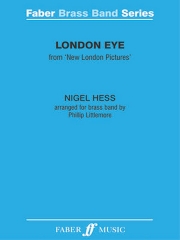
London Eye (From New London Pictures) (Brass Band - Score and Parts)
London Eye is an incredibly large rotating wheel situated on the South Bank of the River Thames. This movement depicts a flight on this riverside wheel, at the top of which the panoramic view of London is breath-taking and the expanse of the music is a suitable depiction of that view. This piece is the second movement of Nigel Hesss New London Pictures which represents elements of London in the 21st Century. Suitable for Premier Youth/2nd Section Bands and above. Duration: 4.00
Estimated dispatch 7-14 working days
-
 £49.99
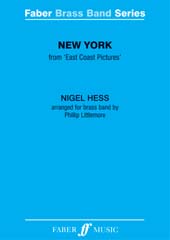
New York (from East Coast Pictures) (Brass Band - Score and Parts)
For anyone who is familiar with this bizarre and wonderful city, this piece needs no explanation. New York is the third movement of East Coast Pictures, originally written for wind band, commissioned in 1985 by the British Youth Wind Orchestra with funds from National Westminster Bank plc. These three short pictures were inspired by several visits by the composer to a small part of the USAs East Coast, an area that provides great extremes in the geography and the people. Suitable for Premier Youth/2nd Section Bands and above. Duration: 6.00
Estimated dispatch 7-14 working days
-
 £39.99
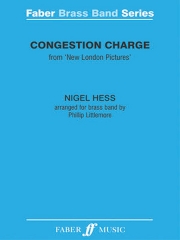
Congestion Charge (from New London Pictures) (Brass Band - Score and Parts)
This is the third movement of Nigel Hesss New London Pictures As with all modern cities, London is over-crowded with motor vehicles. London was the first major city in Europe to adopt a Congestion Charge, and this lighthearted work includes musical images of frustrated rush hour traffic leading to a freer flowing galop. Suitable for 1st Section Bands and above. Duration: 7.00
Estimated dispatch 7-14 working days
-
 £80.00
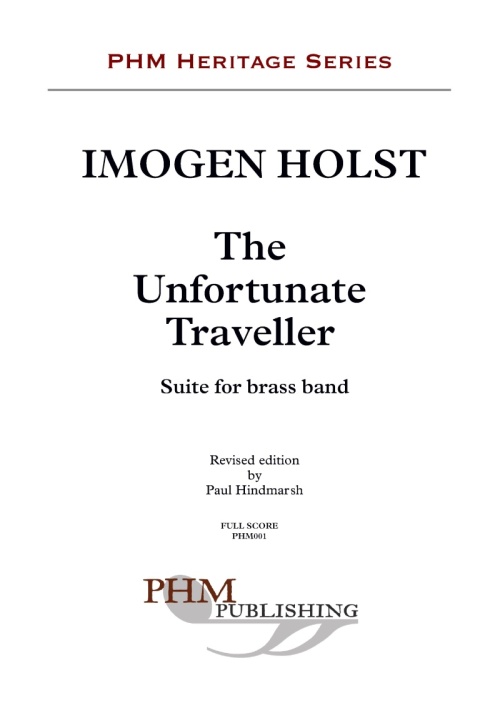
The Unfortunate Traveller (Brass Band - Score and Parts)
Imogen Holst (1907-1984) submitted The Unfortunate Traveller (1929) as her final work as a student portfolio at the Royal College of Music, where her composition teacher was Gordon Jacob. The title was taken from Thomas Nashe's famous 1594 picaresque novel of the same title. The Suite was first performed on 12 February 1933 at her Majesty's Theatre, Carlisle, by the St. Stephen's Band, with the composer conducting. Te concert was given in memory of Holst's uncle, Dr. H.A. Lediard. Holst had been impressed with the band's performance of his A Moorside Suite at the 1928 National Brass Band Championships (The Crystal Palace, South London) and was keen to work with them. Writing in Imogen Holst, a life in music, Christopher Grogan indicates that it was Gustav Holst's suggestion to include his daughter's work in the programme, quoting Imogen Holst's remarks made in interview to The Daily Mail as follows: "....it is the first time, so far as I know, that a woman has conducted a brass band at a public concert....It has been a delight to rehearse the St. Stephen's Band. It was their performance at the Crystal Palace Festival that inspired me to write this Suite, which I have dedicated to them."Imogen Holst accompanied her father to the Crystal Palace in 1928 to hear the performances of A Moorside Suite, and was so excited by the played and, audibly, by her father's music that she decided to write a brass band piece for her final examination. Te result was The Unfortunate Traveller (1929). However, it was not possible for her to present a brass band work for examination. She arranged it for string orchestra so that it could be played before she left the RCM in July 1930. Following the premiere of the original in 1933, the manuscripts did not resurface until 1969 Imogen found them among her late mother's effects. Although she requested score and parts be destroyed, they ended up in the possession of Manchester composer John Golland, who marked up the score presumably with the intention of creating a new performing edition. The original scoring reveals a lack of experience with what can be a tricky medium.With the agreement of the Holst Foundation, a revised edition, with additional percussion, was prepared in 2011 since when the work has been fortunate to travel round the world as a concert and contest piece. The original includes drums in the March only. The title was taken from Tomas Nashe's famous 1594 picaresque novel of the same title. Several Morris Dance tunes are introduced during the course of the four short movements, including Bonnie Green Garters, Shepherd's Hey, The Rose and The Wind Blaws Cauld. Quirky twists and turns of harmony and spirited rhythms that remind us how much Imogen Holst loved tradition English dance music.In September 2025, I made a performing edition of the composer's arrangement for string orchestra. The manuscript lacks the final movement, which I arranged in a similar style, ie. without extending the upper ranges. Making this edition raised some issues regarding the accuracy of my band version and some of the solutions I used to smooth out the voicing. I have used the composer's second thoughts to refine my performing edition and to correct a textual errors.- Paul HindmarshDuration: 10.00
Estimated dispatch 7-14 working days
-
£40.00
The Unfortunate Traveller (Brass Band - Score only)
Imogen Holst (1907-1984) submitted The Unfortunate Traveller (1929) as her final work as a student portfolio at the Royal College of Music, where her composition teacher was Gordon Jacob. The title was taken from Thomas Nashe's famous 1594 picaresque novel of the same title. The Suite was first performed on 12 February 1933 at her Majesty's Theatre, Carlisle, by the St. Stephen's Band, with the composer conducting. Te concert was given in memory of Holst's uncle, Dr. H.A. Lediard. Holst had been impressed with the band's performance of his A Moorside Suite at the 1928 National Brass Band Championships (The Crystal Palace, South London) and was keen to work with them. Writing in Imogen Holst, a life in music, Christopher Grogan indicates that it was Gustav Holst's suggestion to include his daughter's work in the programme, quoting Imogen Holst's remarks made in interview to The Daily Mail as follows: "....it is the first time, so far as I know, that a woman has conducted a brass band at a public concert....It has been a delight to rehearse the St. Stephen's Band. It was their performance at the Crystal Palace Festival that inspired me to write this Suite, which I have dedicated to them."Imogen Holst accompanied her father to the Crystal Palace in 1928 to hear the performances of A Moorside Suite, and was so excited by the played and, audibly, by her father's music that she decided to write a brass band piece for her final examination. Te result was The Unfortunate Traveller (1929). However, it was not possible for her to present a brass band work for examination. She arranged it for string orchestra so that it could be played before she left the RCM in July 1930. Following the premiere of the original in 1933, the manuscripts did not resurface until 1969 Imogen found them among her late mother's effects. Although she requested score and parts be destroyed, they ended up in the possession of Manchester composer John Golland, who marked up the score presumably with the intention of creating a new performing edition. The original scoring reveals a lack of experience with what can be a tricky medium.With the agreement of the Holst Foundation, a revised edition, with additional percussion, was prepared in 2011 since when the work has been fortunate to travel round the world as a concert and contest piece. The original includes drums in the March only. The title was taken from Tomas Nashe's famous 1594 picaresque novel of the same title. Several Morris Dance tunes are introduced during the course of the four short movements, including Bonnie Green Garters, Shepherd's Hey, The Rose and The Wind Blaws Cauld. Quirky twists and turns of harmony and spirited rhythms that remind us how much Imogen Holst loved tradition English dance music.In September 2025, I made a performing edition of the composer's arrangement for string orchestra. The manuscript lacks the final movement, which I arranged in a similar style, ie. without extending the upper ranges. Making this edition raised some issues regarding the accuracy of my band version and some of the solutions I used to smooth out the voicing. I have used the composer's second thoughts to refine my performing edition and to correct a textual errors.- Paul HindmarshDuration: 10.00
Estimated dispatch 7-14 working days