
Results
-
 £102.99
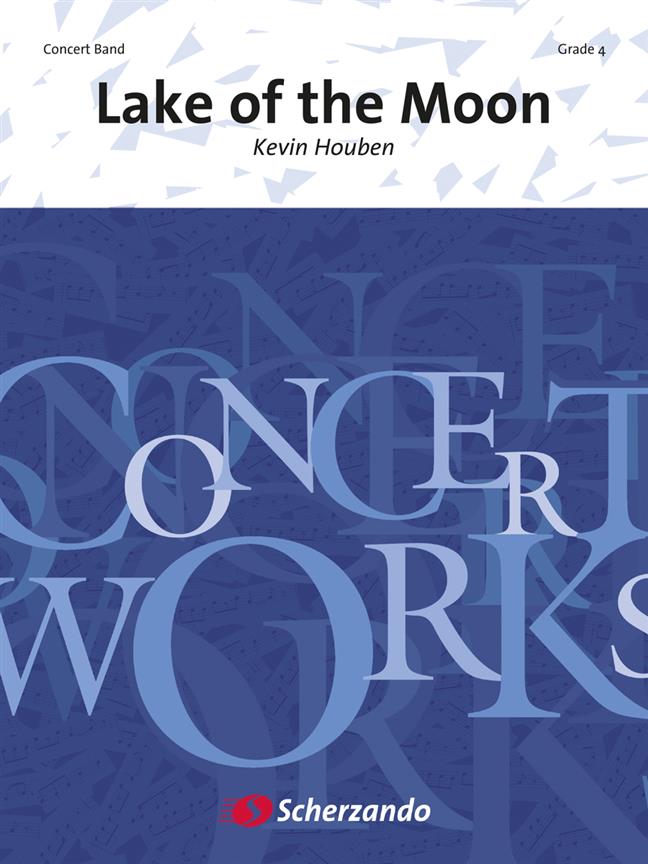
Lake of the Moon (Brass Band - Score and Parts)
3rd Section Test Piece 2016 National Finals of the British Brass Band Championship.The travels of the Aztec people as they headed south through North America looking for a new home, acted as the inspiration for Lake of the Moon. The composition contains small fragments of Oriental music and South American rhythms and occasionally, Russian Cossacks seem to raise their heads. The journey from North to South is not without danger, which is represented by threatening sounds within the music. In the Adagio divoto the composer takes us along to the Texcoco Lake, which the Aztecs called the lake of the moon. Bring a little bit of South American history to your concert with Lake of the Moon.Duration: 11:15
Estimated dispatch 7-14 working days
-
 £79.99
The Alchymist's Journal (Brass Band - Score and Parts)
The Alchymist's Journal (Variants for Brass Band) was commissioned by Faber Music Band Consultant Paul Hindmarsh in 2001, with the support of the Brass Band Heritage Trust, as a substantial concert/contest challenge that would be within the compass of the country's most able youth and first section bands. It received its first performance in January 2002, by Black Dyke Band under Nicholas Childs, as part of the Royal Northern College of Music Festival of Brass.Since its original publication, composer Kenneth Hesketh has made a number of revisions to the work. Most of these were included in the recording made by Foden's Band conducted by Bramwell Tovey. This definitive new edition, including all the composer's revisions, has been specially prepared for the 2015 National Brass Band Championships of Great Britain and is the text that all bands performing were required to use.Suitable for 1st Section Bands and aboveDuration: 12 minutes
Estimated dispatch 7-14 working days
-
 £34.95
The Fire and the Phoenix (Trombone Solo)
Trombone Solo with Brass BandThe Fire & the Phoenix (2015) was commissioned by Brett Baker in early 2015 as the opening track to his solo CD 'Myths & Legends'. Whilst structurally a single-movement work, it is presented so that it can link directly into the next work on the CD, adding to a continuous theme comprising a number of pieces from a number of composers.Opening with huge strident chords in the full band, the representation of the phoenix is instantly reflected; bold, powerful and a bird of great intensity. This makes way for a more mystical section marked 'distant' which reflect the beauty of the Phoenix and it's mythical nature where the trombone soars up into its higher register with a sweeping melody.Soon after, the music takes a sharp turn, becoming dramatic and instantly moving away from the mystical mood created previously. Here, we imagine the Phoenix catching fire, burning intensely with huge flames as it gradually turns into ash. We reach a tonic pedal point in the music, over which chord progressions subtly weave in and out of the texture. Here, we imagine the Phoenix rising from the ashes, with the dynamics gradually increasing to reflect this, slowly taking shape as it is born again.A return to earlier material follows, this time manipulated to reflect the Phoenix in its new form - the same bird; the same animal; but at the same time different. A beautiful chorale-like passage is heard before the music transports us back into a magical land, where delicate rhythmic ideas are juxtaposed against bolder lower chords; both ideas together transporting the listener forward into the next piece.
Estimated dispatch 7-14 working days
-
 £60.99
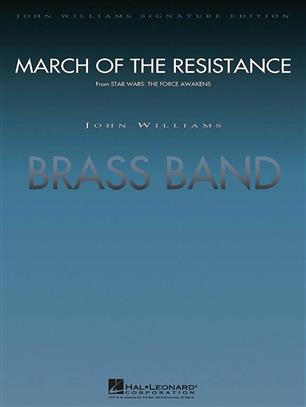
March of the Resistance (Brass Band - Score and Parts)
From the blockbuster film Star Wars: The Force Awakens, John Williams reprises a few earlier themes along with dynamic new material. The memorable March of the Resistance is fittingly dramatic and powerful, and is prominent at key moments in the movie.
Estimated dispatch 7-14 working days
-
 £6.99
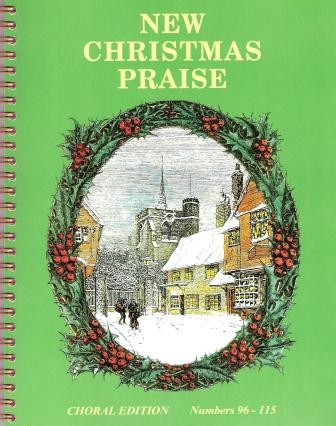
£6.99New Christmas Praise 96 - 115 Choral Edition
A full vocal music/accompaniment edition,this supplementary album contains 20 Christmas songs which will enhance the choral repertoire.Contents :96. Deck the hall 97. Frosty the snowman 98. Have yourself a merry little Christmas 99. Here we come a-wassailing 100.Jingle Bells 101.I saw Mommy kissing Santa Claus 102.O Christmas tree 103.Patapan 104.Rudolph, the red-nosed reindeer 105.Santa Claus is comin to town 106.Sleigh ride 107.The Boars Head carol 108.The twelve days of Christmas 109.The Christmas Song 110.We wish you a merry Christmas 111.When Santa got stuck up the chimney 112.Winter Wonderland 113.When a child is born 114.Worldwide Christmas message 115.Auld Lang Syne
Estimated dispatch 7-14 working days
-
 £44.95
The Day of the Lord (Brass Band - Score and Parts)
This music was inspired by passages from the Old and New Testaments where the last days are prophesied. It features several references to the tune 'The judgment day' along with the more contemporary songs 'I see the King of Glory' and Salvation belongs to our God.
Estimated dispatch 7-14 working days
-
 £3.95
£3.95On the Face! (1st Bb Trumpet/Cornet)
On the Face is a complete repertoire (warm-ups and 23 pieces) for beginner brass ensemble. Perfect material for school assemblies and music centres, it includes folk songs, famous classical themes, and exciting new jazz and pop numbers. Each piece is score for a basic trio of two trumpets/cornets and one trombone/euphonium (TC or BC). However, optional independent parts can also be added for horn in E flat or F; high trombone or euphonium (tenor part); tuba; and drum kit. The pieces work equally well either with one player to a part, or in larger group settings. With its appealing variety of musical styles and textures, On the Face is sure to make the young brass player's first experience of group playing both rewarding and fun.
Estimated dispatch 7-14 working days
-
 £3.95
£3.95On the Face! (2nd Bb Trumpet/Cornet)
On the Face is a complete repertoire (warm-ups and 23 pieces) for beginner brass ensemble. Perfect material for school assemblies and music centres, it includes folk songs, famous classical themes, and exciting new jazz and pop numbers. Each piece is score for a basic trio of two trumpets/cornets and one trombone/euphonium (TC or BC). However, optional independent parts can also be added for horn in E flat or F; high trombone or euphonium (tenor part); tuba; and drum kit. The pieces work equally well either with one player to a part, or in larger group settings. With its appealing variety of musical styles and textures, On the Face is sure to make the young brass player's first experience of group playing both rewarding and fun.
Estimated dispatch 7-14 working days
-
 £24.95
On the Face! (Basic Set)
The Basic Set contains:Score1st B flat Trumpet/Cornet2nd B flat Trumpet/CornetTrombone/Euphonium/Baritone BCTrombone/Euphonium/Baritone TCOn the Face is a complete repertoire (warm-ups and 23 pieces) for beginner brass ensemble. Perfect material for school assemblies and music centres, it includes folk songs, famous classical themes, and exciting new jazz and pop numbers. Each piece is score for a basic trio of two trumpets/cornets and one trombone/euphonium (TC or BC). However, optional independent parts can also be added for horn in E flat or F; high trombone or euphonium (tenor part); tuba; and drum kit. The pieces work equally well either with one player to a part, or in larger group settings. With its appealing variety of musical styles and textures, On the Face is sure to make the young brass player's first experience of group playing both rewarding and fun.
Estimated dispatch 7-14 working days
-
£19.95
On the Face! (Conductor Score)
On the Face is a complete repertoire (warm-ups and 23 pieces) for beginner brass ensemble. Perfect material for school assemblies and music centres, it includes folk songs, famous classical themes, and exciting new jazz and pop numbers. Each piece is score for a basic trio of two trumpets/cornets and one trombone/euphonium (TC or BC). However, optional independent parts can also be added for horn in E flat or F; high trombone or euphonium (tenor part); tuba; and drum kit. The pieces work equally well either with one player to a part, or in larger group settings. With its appealing variety of musical styles and textures, On the Face is sure to make the young brass player's first experience of group playing both rewarding and fun.
Estimated dispatch 7-14 working days