
Results
-
 £12.50
Lloyd (Brass Band - Score only) - Howard, Cuthbert - Coles, Bramwell
The first presentation of the theme can be used for the purpose of accompanying congregational singing. At Section A the second presentation of the tune appears in the key of the dominant, the melody being given throughout to Solo Horn, with First Horn, First Trombone, Soprano and Flugel reinforcing the melody in the various phrases. Incidentally, see that the players do not break these phrases; it should be possible to take the four bars in one breath quite easily. Take due care of the light and shade which should be delicately applied. In the last bar the music gathers strength as we pass back into the original key for the last verse; pay particular attention to the part allotted to Second Baritone and Euphonium which needs to be slightly stressed. For the last appearance of the tune at Section B the full Band is used, apart from the third phrase which is given solo by Solo Comet with a light accompaniment above a bass pedal. Notice the rit. operating from the end of the eleventh bar and also the short swell effect on the fourth beat of the fourteenth bar.
Estimated dispatch 7-14 working days
-
£59.95
My Strength, My Tower - Rhapsodic Variations (Brass Band - Score and Parts) - Goffin, Dean
This music consists of a theme followed by five extensive variations. The theme is the composer's own tune set to the words, 'Thee will I love, my strength, my tower', a hymn by Johann Scheffler translated by John Wesley. A strong modal flavour is characteristic of the theme. Variation 1: This is a light and graceful variation with a good deal of imitative writing. It leads, without a break, into the next variation. Variation 2: Fire and ferocity are asked for in the course of this variation. Variation 3: This variation demonstrates the original approach of the composer. Solo lines for cornet and euphonium are included with their arabesques and arpeggii. Variation 4: Taking the form of a passacaglia, the 'ground' is given out at once by the basses. Fragments of the 'ground', plain or decorated, are combined and used in a number of ways, revealing the composer's mastery of counterpoint. Variation 5: The briskly moving and scintillating final variation abounds in sudden variations of dynamic. The tempo remains constant until an increase is called for in the coda. This 'contest' version has been prepared by Brian Bowen who was asked to re-work the percussion part and introduce a repiano cornet part (Salvation Army band publications do not, in general, have a part for repiano cornet).
Estimated dispatch 7-14 working days
-
£29.95
My Strength, My Tower - Rhapsodic Variations (Brass Band - Score only) - Goffin, Dean
This music consists of a theme followed by five extensive variations. The theme is the composer's own tune set to the words, 'Thee will I love, my strength, my tower', a hymn by Johann Scheffler translated by John Wesley. A strong modal flavour is characteristic of the theme. Variation 1: This is a light and graceful variation with a good deal of imitative writing. It leads, without a break, into the next variation. Variation 2: Fire and ferocity are asked for in the course of this variation. Variation 3: This variation demonstrates the original approach of the composer. Solo lines for cornet and euphonium are included with their arabesques and arpeggii. Variation 4: Taking the form of a passacaglia, the 'ground' is given out at once by the basses. Fragments of the 'ground', plain or decorated, are combined and used in a number of ways, revealing the composer's mastery of counterpoint. Variation 5: The briskly moving and scintillating final variation abounds in sudden variations of dynamic. The tempo remains constant until an increase is called for in the coda. This 'contest' version has been prepared by Brian Bowen who was asked to re-work the percussion part and introduce a repiano cornet part (Salvation Army band publications do not, in general, have a part for repiano cornet).
Estimated dispatch 7-14 working days
-
 £79.99
Variants on an English Hymn Tune (Euphonium Solo with Brass Band - Score and Parts) - Sparke, Philip
This set of variations on the well-known hymn tune Holy, holy, holy! will make a most satisfying addition to the solo repertoire for euphonuim and brass band. It is in the traditional air varie form with an introduction, theme and 3 variations. The original melody (known as Nicaea) was composed by John Bacchus Dykes' especially for Reginald Heber's renowned hymn of praise and became universally popular when it was included in Hymns Ancient and Modern in 1861. A beautiful solo that will test the soloists ability to show true emotion.Duration: 7:15
Estimated dispatch 7-14 working days
-
 £290.99
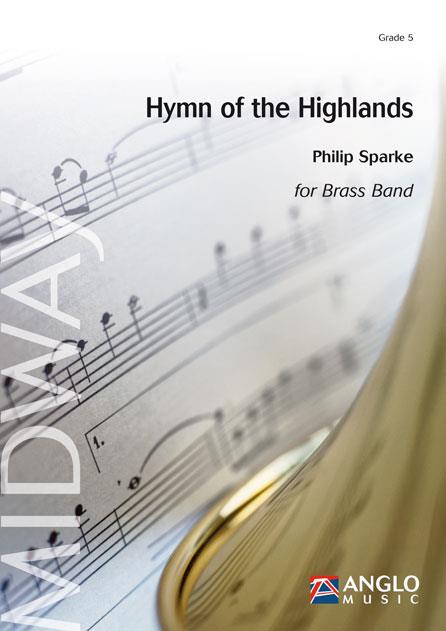
Hymn of the Highlands (Complete Edition) (Brass Band - Score and Parts) - Sparke, Philip
Hymn of the Highlands was commissioned by David King and the Yorkshire Building Society Band for first performance at the 2002 European Brass Band Championships Gala Concert in Brussels. The complete suite lasts approximately 35 minutes however it is possible that pieces of different lengths can be constructed to feature particular soloists or fit different programming constraints.Includes:Ardross Castle, Duration: 7:00Summer Isles (Euphonium solo), Duration: 4:00Flowerdale (Soprano Cornet solo), Duration: 4:30Strathcarron (Sword Dance), Duration: 5:30Lairg Muir (Cornet solo), Duration: 4:30Alladale (Flugel Horn, Horn and Baritone trio), Duration: 4:15Dundonnell (Finale), Duration: 5:45Duration: 35:00
Estimated dispatch 7-14 working days
-
 £35.00
GOD ONLY KNOWS (Flugel feature/Brass Band) - Baker, Leigh
Recorded in 1966 as a part of the Beach Boys' landmark?Pet Sounds?album, this ballad has become a prime example of Brian Wilson's innovative approach to songwriting and recording. Hailed for its formal and harmonic complexities as well as a memorable hook, "God Only Knows" has remained popular through the years, and was featured prominently in the biographical film Love & Mercy?about the life of Brian Wilson.This Beach Boys Classic is arranged as a Flugel Solo, and features a Trombone Quartet (spotlight your 'sectret' Trombonist or use a Baritone/Valve Trombone soloist from your Euphonium/Baritone Team.Commissioned by The Leland Band for their Brass in Concert performance 2012 this is a real favourite with audiences and something a little bit different. This is ripe for Choreography.
Estimated dispatch 7-14 working days
-
 £30.00
Voi Che Sapete (from The Marriage of Figaro) (Euphonium Solo with Brass Band - Score and Parts) - Mozart, Wolfgang Amadeus - Littlemore, Phillip
Mozart's opera, The Marriage of Figaro, was based on what was a rather scandalous play by Pierre Beaumarchais, because the drama involves an incompetent nobleman being upstaged by a crafty, quick-witted servant named Figaro, in their quest for the same woman. The action takes place in just one day and offers a series of awkward and humorous situations, complete with a vibrant dialogue between the all the main characters. Voi Che Sapete?is performed by Cherubino, who is about to be sent off to the army because the Count finds him a nuisance. When Cherubino appears before the Countess and Susanna to tell them of his fate, this aria is sung at the request of Susanna for a love song. Cherubino is characterized as a young adolescent who is in love with every woman he meets, and because his voice is yet unbroken, he is always played by a female singer.?Duration: 2:30
Estimated dispatch 7-14 working days
-
 £37.95
Benvenuto Cellini (Brass Band - Score only) - Berlioz, Hector - Wright, Frank
Berlioz's opera Benvenuto Cellini was first produced in Paris in 1838 but was withdrawn as a failure, and it was not until the production in Dresden in 1888 that it was finally acclaimed by the Germans as a triumph. Adapted from certain episodes recorded in the memoirs of Benvenuto Cellini, Tuscan sculptor and goldsmith, the story, laid in Rome during the mid-sixteenth century, is not strictly historical. The short opening Allegro, marked deciso con impeto, is conceived in the most brilliant Berlioz manner, utilising full instrumentation. In the Larghetto we meet at once the first of the opera themes - the Cardinal's aria (from the last act) introduced in the bass, quasi pizzicato. A second melody leads to a resumption of the Allegro, the contrasting second subject in the tenor horns being an adaptation of Teresa's aria (Act I). Towards the end the Cardinal theme is re-introduced by trombones, fortissimo against an energetic cornet and euphonium passage (senza stringendo - without hurry, says the score). After a unison passage storming skywards, there is a sudden, dramatic three-bar silent pause broken by Eb basses alone, again stating the Cardinal theme. A simple molto crescendo on the dominant, begun piano, leads to the long, resounding chord.
Estimated dispatch 7-14 working days
-
 £82.95
Benvenuto Cellini (Brass Band - Score and Parts) - Berlioz, Hector - Wright, Frank
Berlioz's opera Benvenuto Cellini was first produced in Paris in 1838 but was withdrawn as a failure, and it was not until the production in Dresden in 1888 that it was finally acclaimed by the Germans as a triumph. Adapted from certain episodes recorded in the memoirs of Benvenuto Cellini, Tuscan sculptor and goldsmith, the story, laid in Rome during the mid-sixteenth century, is not strictly historical. The short opening Allegro, marked deciso con impeto, is conceived in the most brilliant Berlioz manner, utilising full instrumentation. In the Larghetto we meet at once the first of the opera themes - the Cardinal's aria (from the last act) introduced in the bass, quasi pizzicato. A second melody leads to a resumption of the Allegro, the contrasting second subject in the tenor horns being an adaptation of Teresa's aria (Act I). Towards the end the Cardinal theme is re-introduced by trombones, fortissimo against an energetic cornet and euphonium passage (senza stringendo - without hurry, says the score). After a unison passage storming skywards, there is a sudden, dramatic three-bar silent pause broken by Eb basses alone, again stating the Cardinal theme. A simple molto crescendo on the dominant, begun piano, leads to the long, resounding chord.
Estimated dispatch 7-14 working days
-
 £34.95
Trusting Faith (Euphonium Solo with Brass Band - Score and Parts) - Beijer, Anders
La fe es la victoria was written for the USA Southern Staff Band and premiered on its tour of the UK in 2018. It is based on the well-known gospel song Faith is the victory (S.A.S.B. 919) and this salsa-style arrangement is meant to express the believer's joy in knowing that faith in Jesus is the 'glorious victory that overcomes the world'.
Estimated dispatch 7-14 working days
 View Music