
Results
-
 £29.95
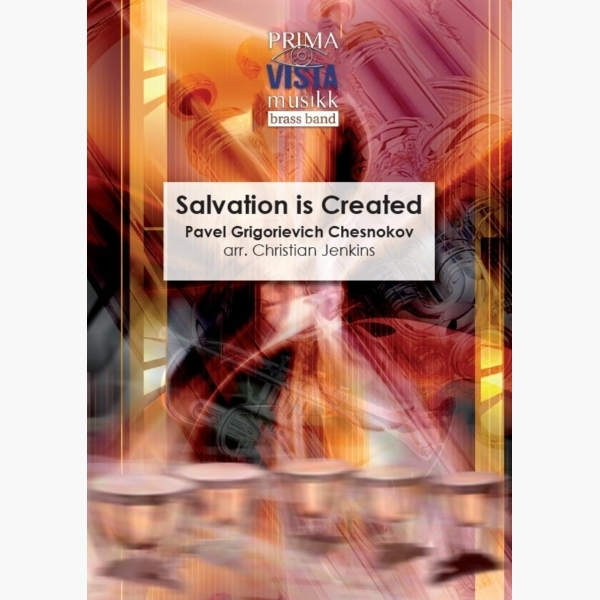
Salvation is Created - Pavel Grigorievich Chesnokov - Christian Jenkins
Spaseniye, sodelal (Salvation is Created), by the Russian composer Pavel Chesnokov, is a Communion Hymn intended for the Russian Orthodox liturgy for Friday. Its text ("Salvation is created, in midst of the earth, O God, O our God. Alleluia") is...
Estimated dispatch 5-7 working days
-
 £74.95
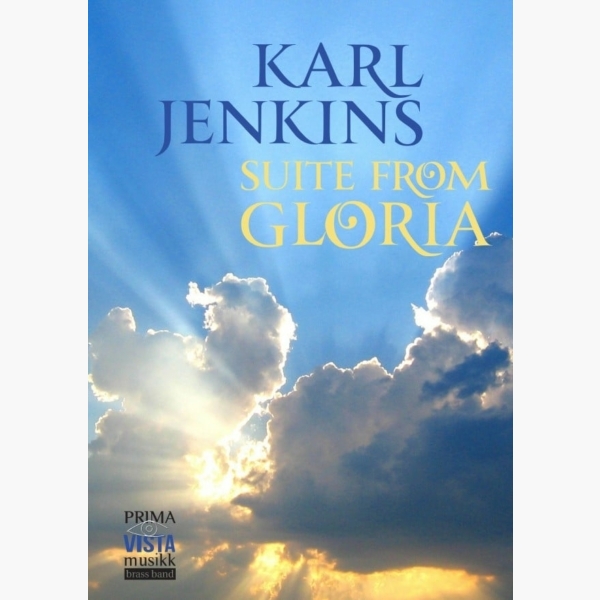
Suite from Gloria - Karl Jenkins - Arranged & Edited Childs & Wainwright
The Latin text of the Gloria is an ancient hymn of praise from the Christian tradition derived from the song of the angels who announce the birth of Jesus, as recorded in the Gospel according to St Luke. The Gloria...
Estimated dispatch 5-7 working days
-
£29.95
WAR CRY (Brass Band Set) - Dorothy Gates
This work was written as the opener for the New York Staff Band's 125th anniversary concert in Carnegie Hall in March 2012. Based on the song, 'Ever is the war cry'. the music is quite militant in nature which is a direct reflection of the text. While the composer pays homage to the past in this fitting salute, the overall musical style is decidedly that of the 21st century.
Estimated dispatch 7-14 working days
-
£44.95
DEUS INVICTUS - GOD UNCONQUERED (Brass Band Set) - Andrew Mackereth
Deus Invictus draws its inspiration from well-known words from Romans 8: 38-39; 'For I am convinced that neither death nor life, neither angels nor demons, neither the present nor the future, nor any owers, neither height nor depth, nor anything else in all creation, can separate us from the love of God'. The music reflects the confidence and certainty of the scripture text while, as in everyday life, trials and tests come along which are reflected in a sequence of musical skirmishes. The work introduces the 19th century hymn 'St Albinus' to a wider audience and also includes references to the tunes 'St Margaret' and 'Rachie'. A setting of the Easter Hymn, 'Christ the Lord is risen today!', is heard followed by a final reprise of 'St Albinus'.
Estimated dispatch 7-14 working days
-
£59.95
ELLACOMBE CHRONICLES, The (Brass Band Set) - James Curnow
This piece was commissioned by Brass Band of Columbus for the occasion of the band's 25th anniversary in 2009. It is dedicated to current and former members of the band and its founding Director, Dr Paul Droste. The hymns of Isaac Watts (1674 - 1748) have been a source of inspiration for musical thought and development by composers for over 200 years. His glorious hymn 'I sing the mighty power of God' has been coupled with the hymn tune 'Ellacombe' in many hymnals over these two centuries. This work was created and inspired by Isaac Watts's text and chronicles the three verses of the hymn through a set of diverse variations on the hymn tune 'Ellacombe'. The opening fanfare is intended to capture the joy and exuberance of the first phrase of the first verse, 'I sing the mighty power of God that made the mountains rise'. The developmental material following the fanfare gives a hint of the three large variations that are extracted from the tune.
Estimated dispatch 7-14 working days
-
£29.95
WELLINGTONIAN, The (Brass Band Set) - Harold Scotney
Scotney immortalised his native town and corps in this march and also in 'Wellington Citadel'. In a departure from normal process, Scotney uses a Salvation Army song, 'A robe of white' in the first strain while the hymn-like trio section has no associated text.
Estimated dispatch 7-14 working days
-
£34.95
LIFESTREAM (Brass Band Set) - Ralph Pearce
This march is modelled on the well-known American quick march called Midwest by J.J. Richards. The melody of the second subject is by the Danish hymn-writer, Sophie Hedvig Dedakam and is associated with words by Major Clara Vint who helped to establish En Evant, the French War Cry. The title of the march is derived from the text of the song.
Estimated dispatch 7-14 working days
-
£24.95
HE CAN BREAK EVERY FETTER (Brass Band Set) - Kenneth Downie
This is a setting of a chorus that the composer remembers being sung in Scotland as a child. The words encapsulate the truth of the Christian gospel in one sentence; 'He can break every fetter, He can set you free!'. Starting with trombone quartet, two more statements of the chorus follow, each in a new key. The final, extended, cadence emphasizes the spiritual release declared in the text.
Estimated dispatch 7-14 working days
-
 £25.00
Meditation - John Stainer
Based on "God So Loved The World" from John Stainer's "Crucifixion".In the 19th century, the English composer John Stainer wrote an oratorio named "The Crucifixion". It contains a beautiful a capella setting of the Biblical text from John chapter 3 verses 16 & 17. Although I have added a few obligati and counter subjects, and a short fugal link, for the most part, I have not tried to add too much to a beautiful piece of traditional harmony. What I have done, is to try to emphasise the subtle changes of tone colour in the unique sound of the brass band. "Meditation" is on the latest CD from Weston Brass. Order from [email protected] price �6.95."..a beautiful concert item that reflects the title of the work perfectly." Robert Childs
In Stock: Estimated dispatch 3-5 working days
-
 £38.95
Unity Series Band Journal - Numbers 522 - 525, October 2023
522: Festival March - The Rescuers (Andrew Hedley)This exciting and bright festival march comes from a new contributor to the band journals. Andrew Hedley is a bandsman at Chester-le-Street Corps and a member of the Euphonium Section of the International Staff Band. This work contains inventive harmonic and melodic patterns and we hope this will be the first of many works from this composer to be seen in our journals.523: Moses and Pharaoh (Ralph Pearce)This piece owes its creation to the playing of the Montclair Citadel Young Peoples' Band in the Sunday School assembly every weekend. The song Pharaoh, Pharaoh is extremely popular and is sung with gusto and much movement. The presentation of this song derives for an accompaniment written for the band to play along with the singing. To widen its use, the spiritual Go down, Moses (STTL Vol.7, Part 2) was added to make the present composition. This music should have drive throughout and be played with a sense of fun.524: Lord, to thee (Alan Williams)This is a setting of the tune Hendon (T.B. 249). The piece uses the first verse of Frances Ridley Havergal's commonly associated text 'Take my life and let it be consecrated, Lord, to thee' (S.A.S.B. 623), and from there it takes its title.525: Song Arrangement - This is why (Noel Jones)This music is based on the tune This is why (T.B. 353) by Elisha Albright Hoffman and this two-verse arrangement reflects the great song of testimony Would you know why I love Jesus (S.A.S.B. 912). An associated scripture reference is found in Mark 10:45 'For even the Son of Man did not come to be served, but to serve, and to give his life as a ransom for many'. The motif 'Would you know' occurs in the opening bars and is repeated throughout the piece, along with fragments of the first verse. The chorus confirms the hoy that Christians experience knowing that Christ's sacrifice has bought forgiveness for our wrongdoings.
Estimated dispatch 7-14 working days