
Results
-
 £94.99
Wigerathorp - Jan de Haan
Brass Band Gloria Dei, the group that commissioned this work, has its roots in the Frisian town of Gerkesklooster (the Netherlands), where the settlement Wigerathorp used to be. In the 13th century, a monastery was erected here, named Jeruzalem. This inspired the composer to base the work on the well-known melodious hymn Jerusalem by Sir Hubert Parry. Gercke's Overture - the monastery was built by order of landowner Gercke Harkema - is followed by a slow movement in which the founders of the monastery, The Monks of Claercamp, take shape through the Gregorian chant Veni creator spiritus. In the last movement, Monastery Jerusalem, the main theme develops in all its glory.
Estimated dispatch 5-14 working days
-
 £174.99
The Turing Test - Simon Dobson
Alan Turing is considered the father of modern computational science and much, if not all, of our modern computer technology and the connectivity that we now take for granted is born of the work of this one great, but troubled man. His famous test was designed to prove whether artificial intelligence (AI) could successfully imitate human thought. The single movement of The Turing Test is essentially non-programmatic, but it does seek to show something of the emotion and colour of Turing's life in its different sections. The composer employs bi-tonality and complex rhythms to show opposing worlds colliding. At the end of each test, we must decide: has true AI beenborn?
Estimated dispatch 5-14 working days
-
 £54.99
Peche Melba - Peter Martin
A delicacy for the eye, ear, and taste buds that was originally created by a Parisian cook in London. A musical haven of peace as a dessert and a romantic highlight of a diner a la carte. The melodic lines are relaxed and smooth and will definitely take you to another dimension for a while.
Estimated dispatch 5-14 working days
-
 £76.99
Bread and Games - William Vean
'Panem et Circenses', Bread and Games were essential for keeping the citizens of ancient Rome in check. While the bread was meant for the poorest among the Romans, the Games were Popular Pastime Number One for everybody.There were different kinds of games, such as chariot races (especially popular with female spectators), or wild-beast fights, where lions, tigers, bulls or bears were set on one another or even on human beings. Most popular, however, were the Gladiator fights. In 'Bread and Games' William Vean depicts one of the many fights in the antique Colosseum. 1. Entrance of the Gladiators: By powerful bugle-calls the attention of the peoplewas asked for, after which the Gladiators entered the Arena at the sound of heroic marching-music.2.Swordfight: We can hear that the fights were not mere child's play in this part.On the contrary, they were a matter of life and death and were fought accordingly.3.Mercy of the Emperor: Sometimes a wounded gladiator could be fortunate, depending on the mercy of the audience. Waving one's handkerchief meant mercy, a turned-down thumb meant no pardon. The Emperor had the right to take the final decision, but he usually complied with the wish of the majority of the public. 4.Lap of Honour: Gladiators were mainly selected among slaves, convicted criminals, or prisoners of war. Consequently, winning was very important, as it would mean fame, honour and sometimes even wealth. A lap of honour, therefore, was the winner's due reward.
Estimated dispatch 5-14 working days
-
 £106.99
Portrait of a City - Philip Sparke
In this exciting suite Philip Sparke sets out to capture the essence of his hometown, London, with each of the three movements depicting one of the many characteristics of this fascinating city. Skyline shows the frantic lifestyles of Londoners with millions of diverse people with different hopes and needs. Autumn shows the changes that take place in London during the different seasons and Downtown portrays the exciting nightlife of the West End.
Estimated dispatch 5-14 working days
-
 £69.99
Trumpeter's Lullaby - Leroy Anderson - Naohiro Iwai
Leroy Anderson is part of American cultural heritage and he is often compared to such masters as Gershwin and Copland. Trumpeter's Lullaby was written for The Boston Pops Orchestra of which he was the conductor. This new arrangement for brass band gives your three cornet soloists a chance to 'take to the fore' in a variety of up-tempo jazz styles. Once performed this item will become a favourite that you will use time and time again.
Estimated dispatch 5-14 working days
-
 £76.99
The Heart of Lithuania - Jacob de Haan
Composer Jacob de Haan has based The Heart of Lithuania on five folk melodies from Lithuania, a country that despite its small size has a rich cultural heritage. The choice and diversity of emotions, largely determined by the characteristic melodies, take the listener straight to the heart of the Lithuanian people.
Estimated dispatch 5-14 working days
-
 £149.40
Winter Solstice - Stig Nordhagen
This work describes the shortest day og the year, but also the longest night. The solo cornet summarizes the struggle of the winter and darkness. The solo rises out of the coral in the beginning of the piece, and escapades into rhapsodic parts, until the coral again catches all players in the ensemble.Throughout the piece we hear the soloist take us on a journey from despair and darkness, through gratitude for the solstice that turns the night into day. And gives us all light and hope for a better tomorrow.
Estimated dispatch 5-14 working days
-
£107.80
Arctic Funk (Introduction no. 3) - Torstein Aagaard-Nilsen
After composing "Introduction" in 1989 and "Entrada" in 1990, Aagaard-Nilsen received a new commission for a "concert-opener", this time from Tromso Brass in 1991.Tromso is a city in the north of Norway, but despite the cold and snowywinters, the city is famous for it's night-life.In "Arctic Funk" you might get a feeling of a part that take place between ice-rocks and snow-wrapped mountains.
Estimated dispatch 5-14 working days
-
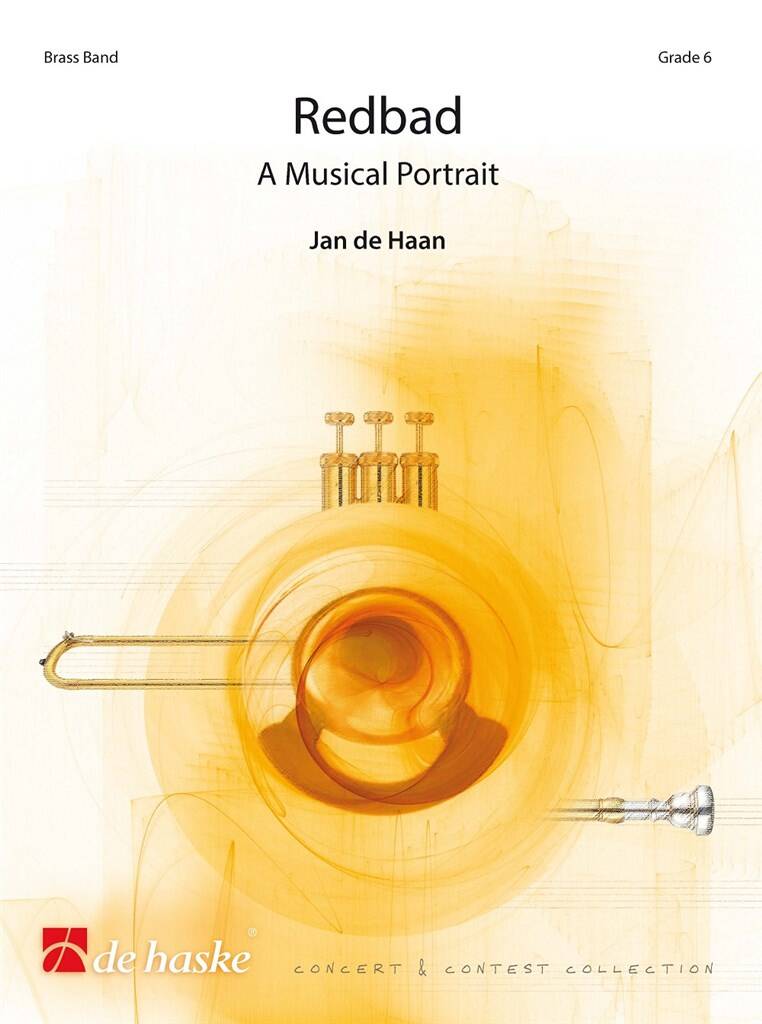 £149.99
Redbad - Jan de Haan
Redbad was written for the Championship Section of the Dutch Brass Band Championships - and thus it contains plenty of musical and technical challenges. In this work of seven connected movements we get to know Redbad, who was the King of the Frisians from c. 680 to 719. The composer drew his inspiration from historical information, but also from stories, anecdotes, myths and legends around this figure. The themes within the composition are closely interwoven whereas the music is varied and appealing - from heroic motifs to the melancholy of elegies. Impressive tutti passages alternate with fragments that sound more open and in which various players can take centre stage. To crown it all, the work concludes with a majestic finale.
Estimated dispatch 5-14 working days
 View Music