
Results
-
 £74.95
Sinfonietta (Brass Band - Score and Parts) - Horovitz, Joseph - Gay, Bram
2012 Belgian National Championships - 3rd SectionRecorded on Polyphonic DPRL901D Joseph Horovitz (The Brass Band Music of)
Estimated dispatch 7-14 working days
-
 £32.95
Vizcaya (Brass Band - Score only) - Vinter, Gilbert
This work makes use of three Basque melodies. The final section, Fete Basque, may be played separately as a concert item with an approximate duration of 4.30Suitable for 3rd Section bands and aboveRecorded on Polyphonic QPRL058D SPECTRUM: The Music of Gilbert Vinter Vol.1
Estimated dispatch 7-14 working days
-
 £69.95
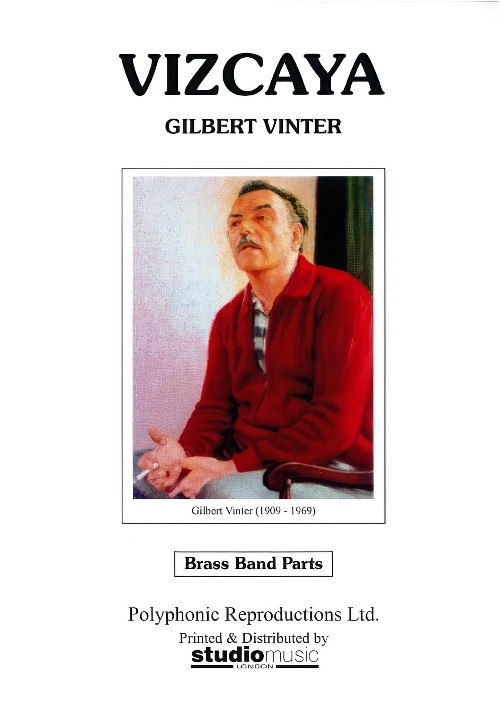
Vizcaya (Brass Band - Score and Parts) - Vinter, Gilbert
This work makes use of three Basque melodies. The final section, Fete Basque, may be played seperately as a concert item with an approximate duration of 4.30Suitable for 3rd Section bands and aboveRecorded on Polyphonic QPRL058D SPECTRUM: The Music of Gilbert Vinter Vol.1
Estimated dispatch 7-14 working days
-
 £32.95
The Shipbuilders (Brass Band - Score only) - Yorke, Peter
Suite for Brass BandMovements:Web of Steel (Dur: 2.30)The Launching (Dur: 2.15)All Hands at Work (Dur: 2.15)Maiden Voyage (Dur: 2.00)Duration: 9.002008 National Championships Final, Fourth SectionRecorded on Polyphonic QPRL050D Harry Mortimer: A Tribute in Music
Estimated dispatch 7-14 working days
-
 £69.95
The Shipbuilders (Brass Band - Score and Parts) - Yorke, Peter
Suite for Brass BandMovements:Web of Steel (Dur: 2.30)The Launching (Dur: 2.15)All Hands at Work (Dur: 2.15)Maiden Voyage (Dur: 2.00)Duration: 9.002008 National Championships Final. Fourth SectionRecorded on Polyphonic QPRL050D Harry Mortimer: A Tribute in Music
Estimated dispatch 7-14 working days
-
 £37.95
Serenade (Eine Kleine Nachtmusik) (Brass Band - Score only) - Mozart, Wolfgang Amadeus - Ball, Eric
The German title, Eine Kleine Nackmusik, means a little serenade, though it is often rendered more literally as a little night music. In this arrangement some of the traditional repeats have been omitted.Duration: 15.00
Estimated dispatch 7-14 working days
-
£82.95
Serenade (Eine Kleine Nachtmusik) (Brass Band - Score and Parts) - Mozart, Wolfgang Amadeus - Ball, Eric
The German title, Eine Kleine Nackmusik, means a little serenade, though it is often rendered more literally as a little night music. In this arrangement some of the traditional repeats have been omitted.Duration: 15.00
Estimated dispatch 7-14 working days
-
 £52.50
Farewell with a Little Smile (Brass Band - Score and Parts) - Doss, Thomas
A farewell can have many faces: sad, happy, content, grateful... This special piece was composed as a heart-warming gift for an exceptional musician upon retirement from his beloved music society. The work carries an important message: every farewell is also an opportunity for a new beginning; a moment to cherish with a little smile.This atmospheric work opens with subdued, warm brass sounds that create a sense of intimacy. Through alternating (smaller) instrumentations, it builds up to a sonorous tutti climax, eventually leading to a subdued mood again. The closing passage offers room for reflection, memories, and gratitude. Farewell With a Little Smile is a beautiful, solemn composition suitable for countless occasions. Whether the work serves as a resting point in a concert programme or is used to frame a meaningful farewell, this music will add lustre to numerous precious moments.Duration: 6.30
Estimated dispatch 7-14 working days
-
 £74.95
A Tale of Hope (Brass Band - Score and Parts) - Ponsford, Steven
The piece tells the story of Chicago lawyer and Presbyterian church elder Horatio Gates Spafford. In 1873, the Spafford family planned a vacation to England, but last-minute business demands prevented Horatio from sailing with them. Tragedy struck when the ship collided with an iron sailing vessel while crossing the Atlantic, killing 226 people, including all four of Spafford's daughters. His wife, Anna, survived the tragedy, and upon arriving in Cardiff, Wales, she sent a telegram to Spafford that simply read "Saved alone." Shortly afterwards, as Spafford travelled to meet his grieving wife, he was inspired to write the hymn It Is Well with My Soul as his ship passed near where his daughters had died. The hymn was subsequently set to music by fellow American Philip Bliss, with the tune named after the ship on which Spafford's daughters died, Ville du Havre.Composer Steven Ponsford has chosen to portray this story in a substantial composition for brass band. Much of the early music is turbulent, reflecting the long voyage, and then the disaster that claimed Spafford's daughters. After a darker 'Grave' section, the hymn It Is Well With My Soul softly emerges, with the piece ending on a note of optimism and hope.Duration: 11.30
Estimated dispatch 7-14 working days
-
 £31.95
A Tale of Hope (Brass Band - Score only) - Ponsford, Steven
The piece tells the story of Chicago lawyer and Presbyterian church elder Horatio Gates Spafford. In 1873, the Spafford family planned a vacation to England, but last-minute business demands prevented Horatio from sailing with them. Tragedy struck when the ship collided with an iron sailing vessel while crossing the Atlantic, killing 226 people, including all four of Spafford's daughters. His wife, Anna, survived the tragedy, and upon arriving in Cardiff, Wales, she sent a telegram to Spafford that simply read "Saved alone." Shortly afterwards, as Spafford travelled to meet his grieving wife, he was inspired to write the hymn It Is Well with My Soul as his ship passed near where his daughters had died. The hymn was subsequently set to music by fellow American Philip Bliss, with the tune named after the ship on which Spafford's daughters died, Ville du Havre.Composer Steven Ponsford has chosen to portray this story in a substantial composition for brass band. Much of the early music is turbulent, reflecting the long voyage, and then the disaster that claimed Spafford's daughters. After a darker 'Grave' section, the hymn It Is Well With My Soul softly emerges, with the piece ending on a note of optimism and hope.Duration: 11.30
Estimated dispatch 7-14 working days
 View Music