
Results
-
 £44.95
Sweet Name (Flugel Horn Solo with Brass Band - Score and Parts)
The music was written at the request of Richard Woodrow of The International Staff Band in 2018. It is a big band setting of William Henry Rudd's melody The Saviour's name (T.B. 119), to which we associate the following words by Frederick Whitfield (S.A.S.B. 94):There is a name I love to hear,I love to sing its worth;It sounds like music in mine ear,The sweetest name on earth.O how I love the Saviour's name!The sweetest name on earth.
Estimated dispatch 7-14 working days
-
 £33.62
Viva la Banda! (Brass Band) Dave Collins
Viva la Banda is fun, high energy and has some wonderfully catchy melodies for all members of the band to enjoy. In places it is harmonically surprising, taking us through the twists and turns of a Latin adventure. Imagine the sights and sounds of a hot plaza, and transport your audiences across the sea from your local bandstand! To view a rolling score video of the work please visit www.youtube.com/watch?v=uawvYv2-INU Duration: Approx. 4.15 minutes Difficulty Level: 3rd Section + PDF download includes parts and score. Sheet music available from www.brassband.co.uk (UK) or https://satradecentral.org (USA) Instrumentation: Soprano Cornet Eb Solo Cornet Bb Repiano Cornet Bb 2nd Cornet Bb 3rd Cornet Bb Flugel Horn Bb Solo Horn Eb 1st Horn Eb 2nd Horn Eb 1st Baritone Bb 2nd Baritone Bb 1st Trombone Bb 2nd Trombone Bb Bass Trombone Euphonium Bb Bass Eb Bass Bb Drum Set Congas Agogo
In Stock: Estimated dispatch 1-3 working days
-
 £29.95
Easter Hymn (Trumpet Solo with Brass Band - Score and Parts)
Ray Steadman-Allen sketched this short, festive arrangement in the early 1990s. While labelled by RSA as a Trumpet Solo, a Cornet soloist would also be appropriate. The piece should not prove difficult to prepare except in terms of maintaining balance between the soloist and the band. Some of the harmonies are quite unexpected, even curiously dissonant in the late RSA style. However, such sounds should help the listener hear this traditional hymn in a new and vital manner. The piece would serve well as an Intrada on Easter Sunday, or during any celebratory occasion in Eastertide.
Estimated dispatch 7-14 working days
-
 £9.95
£9.95Three Ceremonial Fanfares (Brass Sextet)
Includes: Prelude to Pageantry; Sounds Ceremonial; Emblazon. Parts included for 3 trumpets, 3 trombones and percussion
Estimated dispatch 7-14 working days
-
 £271.60
Aubade - Dawn Songs of the Fabulous Birds - Torstein Aagaard-Nilsen
Commissioned by The Norwegian Band Federation for The European Brass Band Championship 2003, in Bergen, Norway (Third edition) I remember as a kid the very early morning wake-up ceremonies caused by Seagulls having a "party" outside our home. Very few would describe it as beautiful, particularly not at 4:30 in the morning... But by listening carefully to birds I was fascinated by their diversity and musical language: they dont sing tunes or long phrases, they rather make sounds and signals, based on short motives. Aubade is based on musical pictures of the imaginary birds: the creatures with wings that exists only in myths and legends. The whole story starts with aBaritone-cadenza that evoke all the sleeping creatures. Very soon they all start to sing their songs in one way or another. The composition has a burlesque scherzo-character including slow espressive intersections. Traditional elements like melody and harmony is combined with extensive sounds and textural effects created by use of multiple muting, singing and playing at the same time. I am not too concerned about having a program for the piece. I just know that by thinking of the unheard dragon-songs, griffin-songs, the sound of the dodo, my creativity was stimultated. As a piece of music, Aubade follows its own rules based on well-known elements like melodies, arpeggio-figures, harmonies, rhythms, variations and recapitulation of ideas. - Torstein Aagaard-Nilsen
Estimated dispatch 5-14 working days
-
 £60.99
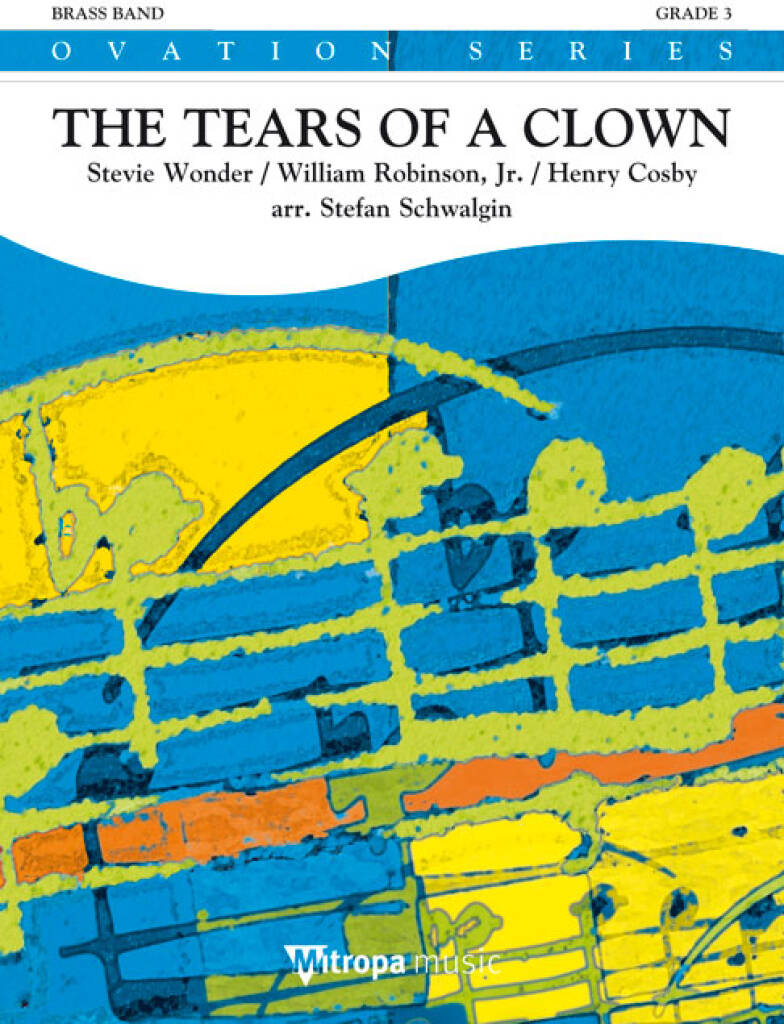
The Tears of a Clown - Stevie Wonder - Stefan Schwalgin
Stevie Wonder wrote The Tears of a Clown in 1966 and gave it to Smokey Robinson as a Christmas gift. Robinson and his band, The Miracles, turned the song into a massive hit. The songs steam-organlike sounds gives it a very unique characteristic and over the years has been recorded by numerous artists. Now you can also record it with your brass band!
Estimated dispatch 5-14 working days
-
 £79.95
The Lost Village of Imber (Brass Band - Score and Parts) - Bond, Christopher
The Lost Village of Imber was commissioned by Bratton Silver Band in 2019 in celebration of 160 years of the band; 1859-2019. Structured in three movements, the complete work was premiered by Cory Band at Wiltshire Music Centre in February 2020.The village of Imber on Salisbury Plain had been inhabited for over one thousand years when it was evacuated in 1943 to make way for military training in the Second World War. At the time, with preparations for the Allied invasion of Europe underway, most villagers put up no resistance, despite being upset, with the belief that they'd return once the war had concluded. To this day, Imber and its surrounding land remain a military training ground. The villagers never returned, and just the shell of what was once a community remains.Structured in three movements, it is on this very real story that the work is based, setting out the series of events of 1943 in chronological order.The first movement, On Imber Downe, portrays a sense of jollity and cohesiveness, a community of individuals living and working together before news of the evacuation had broken. Sounds of the village are heard throughout, not least in a series of percussive effects, the anvil of the blacksmith; the cowbell of the cattle and the bells of the church.The second movement, The Church of St. Giles, begins mysteriously and this sonorous, atmospheric opening depicts Imber in its desolate state and the apprehension of residents as they learn they have to leave their homes. Amidst this is the Church, a symbol of hope for villagers who one day wish to return, portrayed with a sweeping melodic passage before the music returns to the apprehension of villagers facing eviction around their sadness at losing their rural way of life.In complete contrast, the third movement, Imemerie Aeternum, portrays the arrival of the military, complete with the sounds of the ammunition, firing and tanks, sounds which were all too familiar to those living in the surround areas. To close, the Church of St. Giles theme returns in a triumphant style, representing the idea that the church has always been, even to this day, a beacon of hope for the villagers and local community, both the centrepiece and pinnacle of a very real story.Duration: 13.30
Estimated dispatch 7-14 working days
-
£34.95
The Southern Cross (Brass Band - Score and Parts) - Bowen, Brian
The Southern Cross is one of several excellent marches by Brian Bowen in which he carried on the more sophisticated pattern of British marches by Wilfred Heaton, Leslie Condon and Ray Steadman-Allen. It was written for the Box Hill (Australia) Corps jubilee celebrations in 1970 and formed part of the band's repertoire when it toured Great Britain in the same year. The first half of the march features part of the song, 'March on!' by Klaus Ostby, an early pioneer of Salvation Army music in Scandinavia. The contrapuntal layering of melodies in the trio, especially in the finale where 'March on!' sounds one more triumphant time, is notable, as is the shift to a slower, more stately tempo. The harmonic and rhythmic style also represents the more modern sounds of Salvation Army brass band music in the late 1960s and early 1970s. Right from the opening gestures, listeners at early performances knew that a page had turned in the evolution of the Salvation Army march.
Estimated dispatch 7-14 working days
-
£17.50
The Southern Cross (Brass Band - Score only) - Bowen, Brian
The Southern Cross is one of several excellent marches by Brian Bowen in which he carried on the more sophisticated pattern of British marches by Wilfred Heaton, Leslie Condon and Ray Steadman-Allen. It was written for the Box Hill (Australia) Corps jubilee celebrations in 1970 and formed part of the band's repertoire when it toured Great Britain in the same year. The first half of the march features part of the song, 'March on!' by Klaus Ostby, an early pioneer of Salvation Army music in Scandinavia. The contrapuntal layering of melodies in the trio, especially in the finale where 'March on!' sounds one more triumphant time, is notable, as is the shift to a slower, more stately tempo. The harmonic and rhythmic style also represents the more modern sounds of Salvation Army brass band music in the late 1960s and early 1970s. Right from the opening gestures, listeners at early performances knew that a page had turned in the evolution of the Salvation Army march.
Estimated dispatch 7-14 working days
-
 £49.99
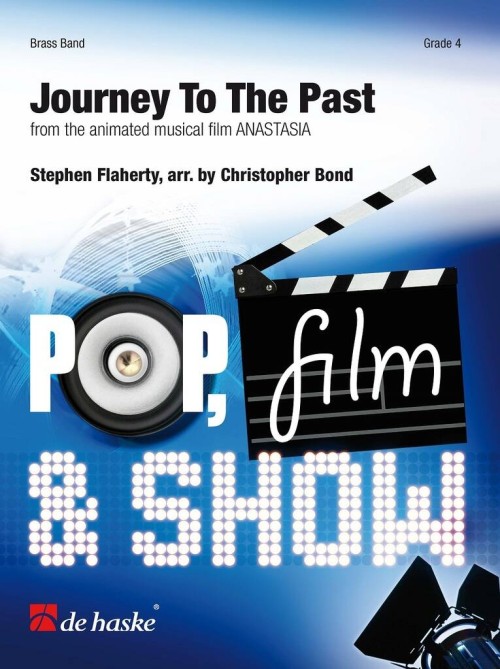
Journey to the Past (from Anastasia) (Brass Band - Score and Parts) - Flaherty, Stephen - Bond, Christopher
Step into an enchanting world of nostalgia with the compelling sounds of Journey To The Past, a wonderful little gem by Stephen Flaherty, magically arranged for brass band by Christopher Bond. This song, originally composed for the popular animated film Anastasia, tells a story of hope, discovery and finding one's true self. The warm brass band sounds add a new dimension, infusing each note with emotion and passion.Duration: 3.15
Estimated dispatch 7-14 working days
 View Music