
Results
-
 £54.99
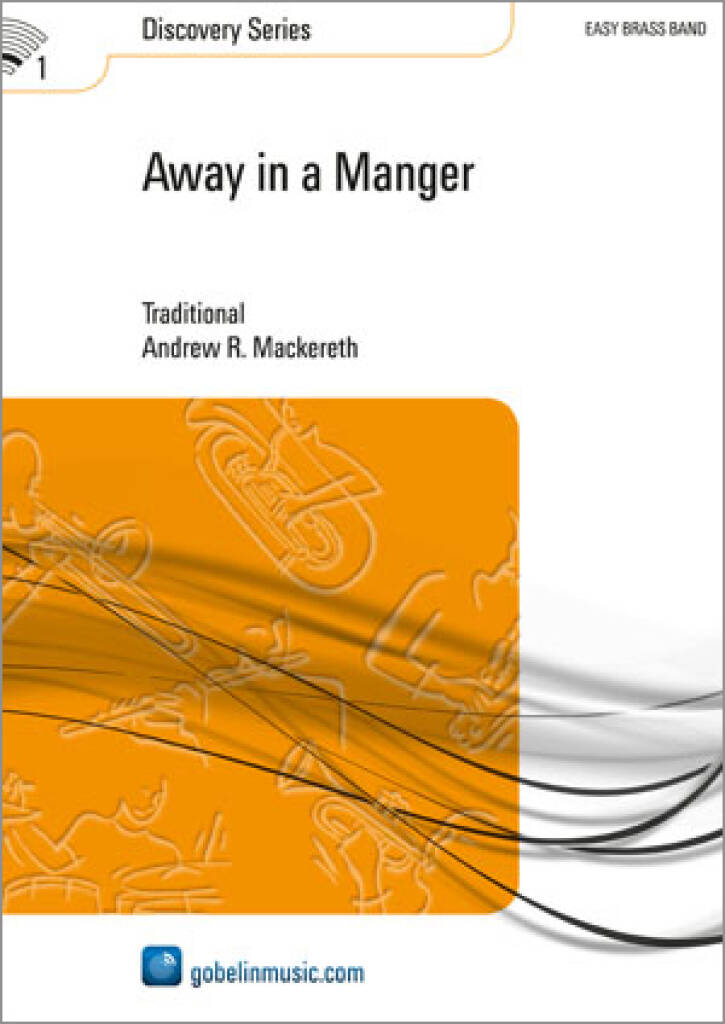
Away in a Manger - Andrew R. Mackereth
In English-speaking countries 'Away in a Manger' is one of the first Christmas songs to be taught to little children. It is a moving song with simple words, which makes it easy to understand. The song is also known as 'Luther's Cradle Hymn'. This suggests that Martin Luther was the author of the lyrics. According to researchers, however, this is a misconception the author is unknown. In England 'Away in a Manger' is sung to a different melody than in the USA, for example. The 'English' melody was composed by W.J. Kirkpatrick. Andrew Mackereth made a touching arrangement of the 'English' melody, which suits the tender lyrics perfectly.
Estimated dispatch 5-14 working days
-
 £59.99
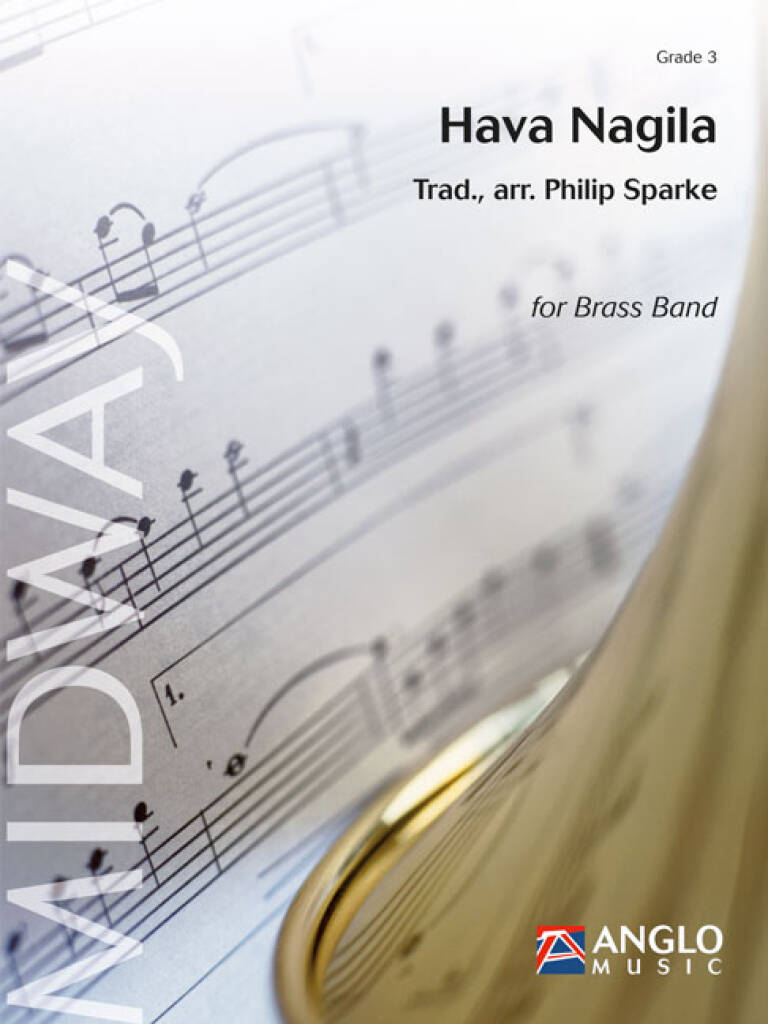
Hava Nagila - Philip Sparke
Hava Nagila (the title means 'let us rejoice') is perhaps the best known example of a style of Jewish music called 'klezmer'. Klezmer music originated in the 'shtetl' (villages) and the ghettos of Eastern Europe, where itinerant Jewish troubadours, known as 'klezmorim', had performed at celebrations, particularly weddings, since the early Middle Ages.'Klezmer' is a Yiddish term combining the Hebrew words 'kley' (instrument) and 'zemer' (song) and the roots of the style are found in secular melodies, popular dances, Jewish 'hazanut' (cantorial music) and also the 'nigunim', the wordless melodies intoned by the 'Hasidim' (orthodox Jews).Since the 16th century, lyrics hadbeen added to klezmer music, due to the 'badkhn' (the master of ceremony at weddings), to the 'Purimshpil' (the play of Esther at Purim) and to traditions of the Yiddish theatre, but the term gradually became synonymous with instrumental music, particularly featuring the violin and clarinet. The melody of Hava Nagila was adapted from a folk dance from the Romanian district of Bucovina. The commonly used text is taken from Psalm 118 of the Hebrew bible.
Estimated dispatch 5-14 working days
-
 £59.99
Hava Nagila (Brass Band - Score and Parts) - Sparke, Philip
Hava Nagila (the title means 'let us rejoice') is perhaps the best known example of a style of Jewish music called 'klezmer'. Klezmer music originated in the 'shtetl' (villages) and the ghettos of Eastern Europe, where itinerant Jewish troubadours, known as 'klezmorim', had performed at celebrations, particularly weddings, since the early Middle Ages. 'Klezmer' is a Yiddish term combining the Hebrew words 'kley' (instrument) and 'zemer' (song) and the roots of the style are found in secular melodies, popular dances, Jewish 'hazanut' (cantorial music) and also the 'nigunim', the wordless melodies intoned by the 'Hasidim' (orthodox Jews).Since the 16th century, lyrics had been added to klezmer music, due to the 'badkhn' (the master of ceremony at weddings), to the 'Purimshpil' (the play of Esther at Purim) and to traditions of the Yiddish theatre, but the term gradually became synonymous with instrumental music, particularly featuring the violin and clarinet. The melody of Hava Nagila was adapted from a folk dance from the Romanian district of Bucovina. The commonly used text is taken from Psalm 118 of the Hebrew bible.Duration: 3:00
Estimated dispatch 7-14 working days
 View Music