
Results
-
 £29.95
Exeter Temple (Brass Band - Score and Parts) - Condon, Leslie
This march was written for the centenary of Exeter Tempe Corps in 1981 and first played in Exeter Cathedral during those celebrations. While the march is intentionally retrospective, the unashamed absence of modernity receives some splashes of colour from the styles of march 'kings' like Bramwell Coles, Arthur Gullidge, Albert Jakeway and George Marshall.
Estimated dispatch 7-14 working days
-
£14.95
Exeter Temple (Brass Band - Score only) - Condon, Leslie
This march was written for the centenary of Exeter Tempe Corps in 1981 and first played in Exeter Cathedral during those celebrations. While the march is intentionally retrospective, the unashamed absence of modernity receives some splashes of colour from the styles of march 'kings' like Bramwell Coles, Arthur Gullidge, Albert Jakeway and George Marshall.
Estimated dispatch 7-14 working days
-
 £34.95
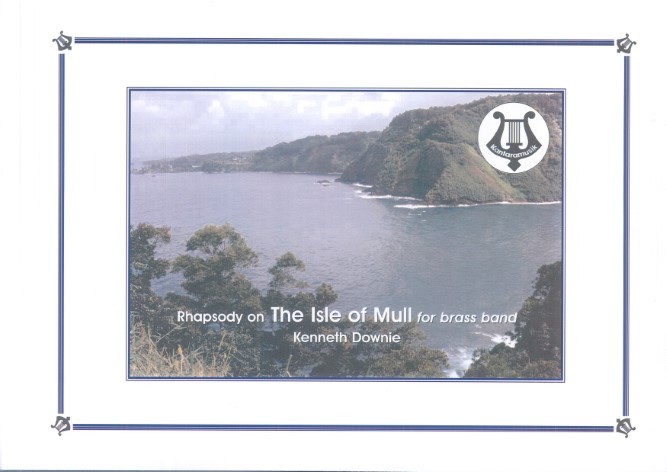
Rhapsody On The Isle Of Mull (Brass Band - Score and Parts) - Downie, Kenneth
Mull is an island off the west coast of Scotland and it gives its name to the lovely tune which forms the basis of this music. It is very scenic, with some beautiful mountains and the composer has tried to suggest something of the atmosphere of grandeur in his score. The largely pentatonic nature of the tune heavily colours the musical texture.
Estimated dispatch 7-14 working days
-
£17.50
Rhapsody On The Isle Of Mull (Brass Band - Score Only) - Downie, Kenneth
Mull is an island off the west coast of Scotland and it gives its name to the lovely tune which forms the basis of this music. It is very scenic, with some beautiful mountains and the composer has tried to suggest something of the atmosphere of grandeur in his score. The largely pentatonic nature of the tune heavily colours the musical texture.
Estimated dispatch 7-14 working days
-
 £32.00
Amazing Grace (Brass Band with opt. Bagpipes - Score and Parts) - Wilkinson, Keith M.
There are several occasions when a brass band is invited to play along with bagpipes and one of the first titles to be mentioned is the American traditional hymn melody, "Amazing Grace". This arrangement was prepared for one such occasion when Brass Band of the Western Reserve, musical director, Dr Keith M Wilkinson, was invited to play at a wedding in 2007. Parts for bagpipes are included in Concert Pitch (as shown in the full score) and in Db, the key in which they are normally pitched.There are optional parts which make the arrangement equally effective without bagpipes. A suggestion when this version is used is to place the cornet soloist at the beginning some distance from the band.
Estimated dispatch 7-14 working days
-
£24.95
Ave Verum (Brass Band - Score and Parts) - Mozart, Wolfgang Amadeus
During his brief career, Mozart wrote much music of various types, but some of his most valuable contributions were dedicated to the Church. Here is his beautiful 'Ave Verum'. The music simply breathes adoration and reverence, and because of this, if handled sympathectically, can hardly fail to stir within us deeply spiritual emotions. Adopt a vocal style of playing and observe intelligently the degrees of force and treat accordingly.
Estimated dispatch 7-14 working days
-
£12.50
Ave Verum (Brass Band - Score only) - Mozart, Wolfgang Amadeus
During his brief career, Mozart wrote much music of various types, but some of his most valuable contributions were dedicated to the Church. Here is his beautiful 'Ave Verum'. The music simply breathes adoration and reverence, and because of this, if handled sympathectically, can hardly fail to stir within us deeply spiritual emotions. Adopt a vocal style of playing and observe intelligently the degrees of force and treat accordingly.
Estimated dispatch 7-14 working days
-
£89.95
Infinity (Brass Band - Score and Parts) - Redhead, Robert
In the post-modern age in which we live, 'absolutes' are difficult for many to comprehend. Yet infinity, which means absolute, total, all-embracing, having no limits or boundaries in time, space, extent, or magnitude, has always been central to the Christian's concept of God.Through the ages, as human understanding has grown, particularly at a remarkable rate from the latter part of the twentienth century, Christianity has been continually challenged to interpret traditional beliefs in the light of new discoveries, but always within the reality of the infinite Being. In addition, scripture tells us that 'humanity was made in God's image'. Humankind is part of God's creation and as such, responsible for its upkeep. Such a commission has never been more relevant than in this present age. Psalm 8 creates a great picture of the majesty, eternal, infinte quality of God and yet reveals the desire of God to share in spirit with humankind. It recognises humankind as being, not a tool of the infinite, but as a creative contributing part of the ongoing movement and activity of the infinite. The music is deliberately melodic in context, creating a sense of unity with the infinite, in tandem with the varying expressions of individuality. It is not based on the Psalm but reflects some of the sentiments lying therein. The 'hymn-like' theme expresses the nature of the Divine using the Old Testament image of the infinite God coming to finite humankind, not in the 'wind', the 'earthquake', the 'fire', but in the 'still small voice' of quietness (1 Kings 19: 11-13). The ensuing musical development, in different styles and patterns, expresses this continual link between infinite and finite. Thus the conclusion, rather than being a symbol of might, power and magnificence, reflects the same sentiment as the opening.
Estimated dispatch 7-14 working days
-
£44.95
Infinity (Brass Band - Score only) - Redhead, Robert
In the post-modern age in which we live, 'absolutes' are difficult for many to comprehend. Yet infinity, which means absolute, total, all-embracing, having no limits or boundaries in time, space, extent, or magnitude, has always been central to the Christian's concept of God.Through the ages, as human understanding has grown, particularly at a remarkable rate from the latter part of the twentienth century, Christianity has been continually challenged to interpret traditional beliefs in the light of new discoveries, but always within the reality of the infinite Being. In addition, scripture tells us that 'humanity was made in God's image'. Humankind is part of God's creation and as such, responsible for its upkeep. Such a commission has never been more relevant than in this present age. Psalm 8 creates a great picture of the majesty, eternal, infinte quality of God and yet reveals the desire of God to share in spirit with humankind. It recognises humankind as being, not a tool of the infinite, but as a creative contributing part of the ongoing movement and activity of the infinite. The music is deliberately melodic in context, creating a sense of unity with the infinite, in tandem with the varying expressions of individuality. It is not based on the Psalm but reflects some of the sentiments lying therein. The 'hymn-like' theme expresses the nature of the Divine using the Old Testament image of the infinite God coming to finite humankind, not in the 'wind', the 'earthquake', the 'fire', but in the 'still small voice' of quietness (1 Kings 19: 11-13). The ensuing musical development, in different styles and patterns, expresses this continual link between infinite and finite. Thus the conclusion, rather than being a symbol of might, power and magnificence, reflects the same sentiment as the opening.
Estimated dispatch 7-14 working days
-
£10.00
Infinity (Brass Band - Study Score) - Redhead, Robert
In the post-modern age in which we live, 'absolutes' are difficult for many to comprehend. Yet infinity, which means absolute, total, all-embracing, having no limits or boundaries in time, space, extent, or magnitude, has always been central to the Christian's concept of God.Through the ages, as human understanding has grown, particularly at a remarkable rate from the latter part of the twentienth century, Christianity has been continually challenged to interpret traditional beliefs in the light of new discoveries, but always within the reality of the infinite Being. In addition, scripture tells us that 'humanity was made in God's image'. Humankind is part of God's creation and as such, responsible for its upkeep. Such a commission has never been more relevant than in this present age. Psalm 8 creates a great picture of the majesty, eternal, infinte quality of God and yet reveals the desire of God to share in spirit with humankind. It recognises humankind as being, not a tool of the infinite, but as a creative contributing part of the ongoing movement and activity of the infinite. The music is deliberately melodic in context, creating a sense of unity with the infinite, in tandem with the varying expressions of individuality. It is not based on the Psalm but reflects some of the sentiments lying therein. The 'hymn-like' theme expresses the nature of the Divine using the Old Testament image of the infinite God coming to finite humankind, not in the 'wind', the 'earthquake', the 'fire', but in the 'still small voice' of quietness (1 Kings 19: 11-13). The ensuing musical development, in different styles and patterns, expresses this continual link between infinite and finite. Thus the conclusion, rather than being a symbol of might, power and magnificence, reflects the same sentiment as the opening.
Estimated dispatch 7-14 working days
 View Music