
Results
-
 £87.99
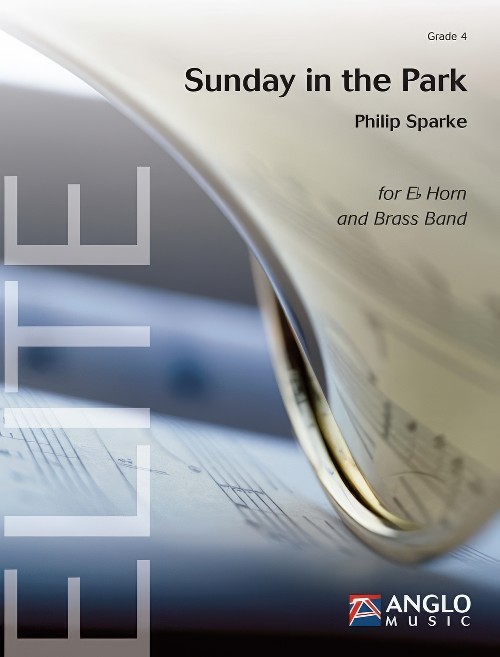
Sunday in the Park (Tenor Horn Solo with Brass Band - Score and Parts) - Sparke, Philip
Sunday in the Park was written for tenor horn virtuoso Sheona White, and commissioned by her partner, Matt Wade, as a Christmas present. Composer Philip Sparke had known and admired Sheona's playing for many years, having produced her first solo CD and written pieces for her previously. Both composer and performer are huge fans of the late Karen Carpenter, Sheona in part modelling her sound on the singer's sultry voice; so it was decided that this new solo would be a piece which, whilst not being a 'Carpenters' pastiche, paid tribute to their relaxed style and rich harmonic language. Sunday in the Park opens with an accompanied cadenza for the soloist, which leads to a gentle rhythmic melody with a laid-back feel. This is taken up by the band but the soloist sparks a change of mood by introducing a faster light rock interlude. This reaches a climax, at which point the music unwinds until the original mood returns. A variation on the original melody leads to a short cadenza from the soloist, which brings the work to a peaceful close.Duration: 7:00
Estimated dispatch 7-14 working days
-
 £84.95
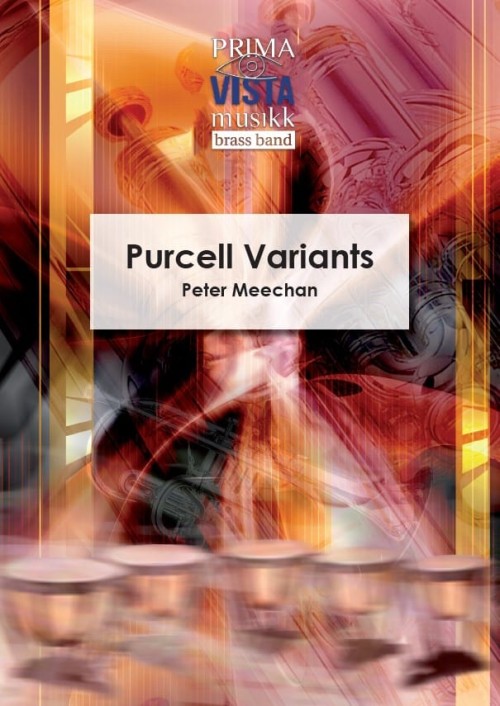
Purcell Variants (Brass Band - Score and Parts) - Meechan, Peter
Purcell Variants is based on Purcell's Queen Mary's Funeral Music, which consists of four canzonas (for brass), two elegies and an anthem.The first movement begins by sounding some of Purcell's original music in the trombones, underpinned by a timpani roll with the cornets articulating the beginnings and endings of the phrases. This leads into a cadenza for cornet and horn before the movement heads in different directions, leading us to its mysterious end, where the original music is sounded this time in the 'stabs' of the muted cornets.Originally composed for the funeral of Queen Mary in 1695, Purcell's original funeral music was used later that same year for Purcell's own funeral - he died aged only 34. The second movement is an elegy, inspired by this story. After an introduction (started by cornets sounding a last post), the main melody of the movement is introduced by the solo euphonium, with other solo roles for an off-stage soprano cornet, and trombone. This is then taken over by the cornets who lead us into the middle section of the movement. This is a quasi-funeral march, inspired by the image of Purcell's coffin being taken to its final resting point. The main melody returns in the euphonium, flugel horn and soprano cornet, this time more elaborated. The movement ends with a snare drum fading away - perhaps a metaphor. The Finale is a fast and furious movement combining thematic material from the two previous movements with new rhythmical ideas. This takes us through to the final passage - the triumphant return of Purcell's original theme.Duration: 13.00
Estimated dispatch 7-14 working days
-
 £59.99
Aria (Tenor Horn Solo with Brass Band - Score and Parts) - Sparke, Philip
Aria was commissioned by and written for the remarkable tenor horn player, Sheona White. The work opens with an accompanied recitative, which leads to a change of key where the main melody is presented. This, in turn, serves as an introduction to another melodic idea, marked calmato. The band takes up this theme and then takes centre stage with a passionate repeat of the main theme, which is completed by the soloist. A cornet then plays the calmato theme against which the soloist plays a counter melody. This leads to a return of the opening recitative which brings the work to a peaceful close. A fantastic new addition to the solo repertoire for this much neglected solo instrument.Duration: 6:00
Estimated dispatch 7-14 working days
-
 £87.99
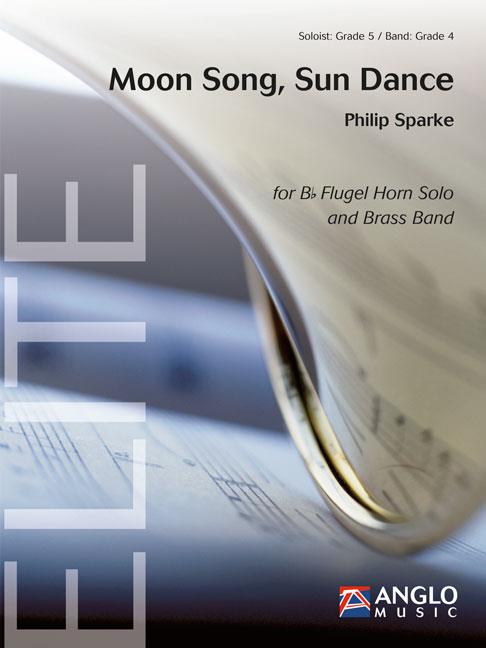
Moon Song, Sun Dance (Flugel Horn Solo with Brass Band - Score and Parts) - Sparke, Philip
Moon Song, Sun Dance was commissioned by flugel horn virtuoso, Claude Romailler, and premiered by him at the Swiss National Solo and Quartet Championships in April 2012. As the title implies, the work is in two contrasting movements, which can be performed separately or together. Moon Song opens with a flowing modal theme, which the soloist embellishes before the band takes centre stage. A central section brightens the mood with a new melody over the lightest of accompaniments; this is once again developed by the soloist until the original theme reappears, played by the band. This introduces a cadenza for the soloist which either closes the movement, or can be extended to link directly to the second movement. Sun Dance is a vivace 6/8 scherzo which opens with a flourish from the band. The soloist then introduces the main theme, which in turn is taken up by the band. A short bridge passage heralds a change of key and a new melody from the soloist. A brief central interlude then introduces a change of meter and recalls the main melody of Moon Song, before a recapitulation leads to a florid coda, which brings the work to a close.Duration: 8:45
Estimated dispatch 7-14 working days
-
 £82.95
VIVAT! (Brass Band - Score and Parts) - Davoren, Tom
2012 National Championships Finals - First Section.Commissioned for the 2012 Section 1 Finals as a celebration of the Queen's Diamond Jubilee, the work is in three contrasting continuous sections that run continuously and the music is derived from Parry's coronation anthem, I Was Glad. The sections are:In Memorium, evoking the noble but gentle personality of the Queen's father, George VI. Opening with an atmospheric baritone solo (and later featuring solo horn, flugel horn, euphonium and solo cornet), the music explores themes of grief, sentimentality and hope.Coronation, a fanfare and subsequent theme which is grandiose in style, capturing the spirit and excitement of British pomp and ceremony.The closing, Jubilate is a celebration of life and family values, Vivat being Latin for life, or long life. The music passes through moments of tension, virtuosity, humour and jubilance before a finale constructed from connected musical fragments, drawn from throughout the work, form (for the first time) Parry's majestic I Was Glad theme.Duration: 10.45
Estimated dispatch 7-14 working days
-
 £44.95
VIVAT! (Brass Band - Score only) - Davoren, Tom
2012 National Championships Finals - First Section.Commissioned for the 2012 Section 1 Finals as a celebration of the Queen's Diamond Jubilee, the work is in three contrasting continuous sections that run continuously and the music is derived from Parry's coronation anthem, I Was Glad. The sections are:In Memorium, evoking the noble but gentle personality of the Queen's father, George VI. Opening with an atmospheric baritone solo (and later featuring solo horn, flugel horn, euphonium and solo cornet), the music explores themes of grief, sentimentality and hope.Coronation, a fanfare and subsequent theme which is grandiose in style, capturing the spirit and excitement of British pomp and ceremony.The closing, Jubilate is a celebration of life and family values, Vivat being Latin for life, or long life. The music passes through moments of tension, virtuosity, humour and jubilance before a finale constructed from connected musical fragments, drawn from throughout the work, form (for the first time) Parry's majestic I Was Glad theme.Duration: 10.45
Estimated dispatch 7-14 working days
-
 £43.00
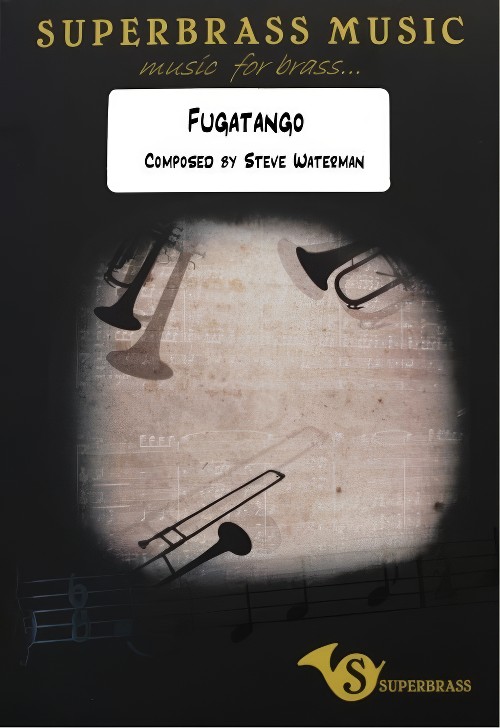
Fugatango (Brass Band - Score and Parts) - Waterman, Steve
Composer and Internationally reknown jazz trumpeter Steve Waterman writes... "When Roger Argente approached me to write a composition for his Spanish flavoured brass project he made the suggestion that a Tango, although more Argentinian than Spanish, would fit in well with the overall concept. I have always been a very big fan of the music of Argentinian composer Astor Piazzolla and particularly the way that the Tango could be combined with jazz. A favourite recording of mine is of Piazzolla himself performing (on the bandoneon) with the jazz saxophonist Gerry Mulligan. As the composing progressed, a fugato also emerged hence the title Fugatango." Originally "Fugatango" featured a french horn improvised introduction section. This new brass band version allows the flugelhorn to enjoy the moment with a wonderful 8 bar solo section, now notated. Later in the work the solo trombone is given a solo section. Duration: 5.30. Suitable for 3rd Section Bands and above.
Estimated dispatch 7-14 working days
-
 £35.00
APRIL IN PARIS (Flugel Horn Solo with Brass Band - Score and Parts) - Duke, Vernon - Freeh, Mark
April In Paris, music by E.Y. (Yip) Harburg with words by Vernon Duke. This is a classic song given excellent treatment by Mark Freeh as a Flugel Horn solo with brass band accompaniment.Suitable for Advanced Youth/3rd Sections and aboveDuration: 4.00
Estimated dispatch 7-14 working days
-
 £54.95
WORLD WITHIN, A (Brass Band Parts) - Scott, Andy
Brass Band parts only. 'A World Within' is a one-movement work that starts with a simple theme stated by the Soprano Cornet before an ostinato figure in 6/8 time emerges (Vibraphone, Horns and muted 2nd and 3rd Cornets) over which firstly Solo Cornet, and then both Solo Cornets (1 & 2), play a sustained melody. A shift between major and minor harmonies characterises the 'B' section, before making way for a virtuosic Flugel solo. When the Flugel leaves centre stage the front line Cornets take over, leading to a full bodied reprise of the 'B' section. The low brass bridge the gap between what is in effect the end of the first main section of the piece and the second section. The constant time shift between 3/4 and 6/8 that has been prevalent through-out 'A World Within', re-emerges towards the end of the 'slow, heavy blues' section, leading into an intricate almost fugue-like passage (Horn and Baritone leading the way). Out of this comes a short transitional bridge section that leads us back to the (transposed) original 6/8 time theme and feel, this time scored with a bold directness that leads to a powerful 2/4 time passage. The climax of 'A World Within' is heralded by one dark and dissonant chord that is repeated three times. A flashback moment occurs where the 'hymn' is stated (muted Cornets) in a bitonal harmonic world. A final statement emerges from the denseness of sound, a re-working of the initial theme (Solo Cornet), with the last work being left to Solo Eb Bass. Dur: 13:00
Estimated dispatch 7-14 working days
-
£20.00
WORLD WITHIN, A (Brass Band Score) - Scott, Andy
Brass Band score only. 'A World Within' is a one-movement work that starts with a simple theme stated by the Soprano Cornet before an ostinato figure in 6/8 time emerges (Vibraphone, Horns and muted 2nd and 3rd Cornets) over which firstly Solo Cornet, and then both Solo Cornets (1 & 2), play a sustained melody. A shift between major and minor harmonies characterises the 'B' section, before making way for a virtuosic Flugel solo. When the Flugel leaves centre stage the front line Cornets take over, leading to a full bodied reprise of the 'B' section. The low brass bridge the gap between what is in effect the end of the first main section of the piece and the second section. The constant time shift between 3/4 and 6/8 that has been prevalent through-out 'A World Within', re-emerges towards the end of the 'slow, heavy blues' section, leading into an intricate almost fugue-like passage (Horn and Baritone leading the way). Out of this comes a short transitional bridge section that leads us back to the (transposed) original 6/8 time theme and feel, this time scored with a bold directness that leads to a powerful 2/4 time passage. The climax of 'A World Within' is heralded by one dark and dissonant chord that is repeated three times. A flashback moment occurs where the 'hymn' is stated (muted Cornets) in a bitonal harmonic world. A final statement emerges from the denseness of sound, a re-working of the initial theme (Solo Cornet), with the last work being left to Solo Eb Bass. Dur: 13:00
Estimated dispatch 7-14 working days
 View Music