Results
-
 £34.99
Shackleton's Cross (Cornet Solo with Brass Band - Score and Parts)
Shackleton's Cross was inspired by a painting created in 1957 by the English artist Edward Seago (1910 1974). The title refers to a cross which was erected to the memory of Sir Ernest Shackleton, who led a number of explorations to the Antarctic. Shackleton died in 1922 whilst on a Polar expedition, and the cross can be found on a promontory at the entrance to the bay at Grytviken Whaling Station in South Georgia. The painting is owned by HRH The Duke of Edinburgh, and was part of an exhibition at Buckingham Palace from October 2011 to April 2012. Originally scored for oboe, trumpet and small orchestra, Daniel Hall's sensitive arrangement for trumpet or cornet and brass band follows the composer's alternative version for solo trumpet and organ, created for Crispian Steele-Perkins (trumpet) and David Goode (organ). Duration: 5.00
Estimated dispatch 7-14 working days
-
 £70.00
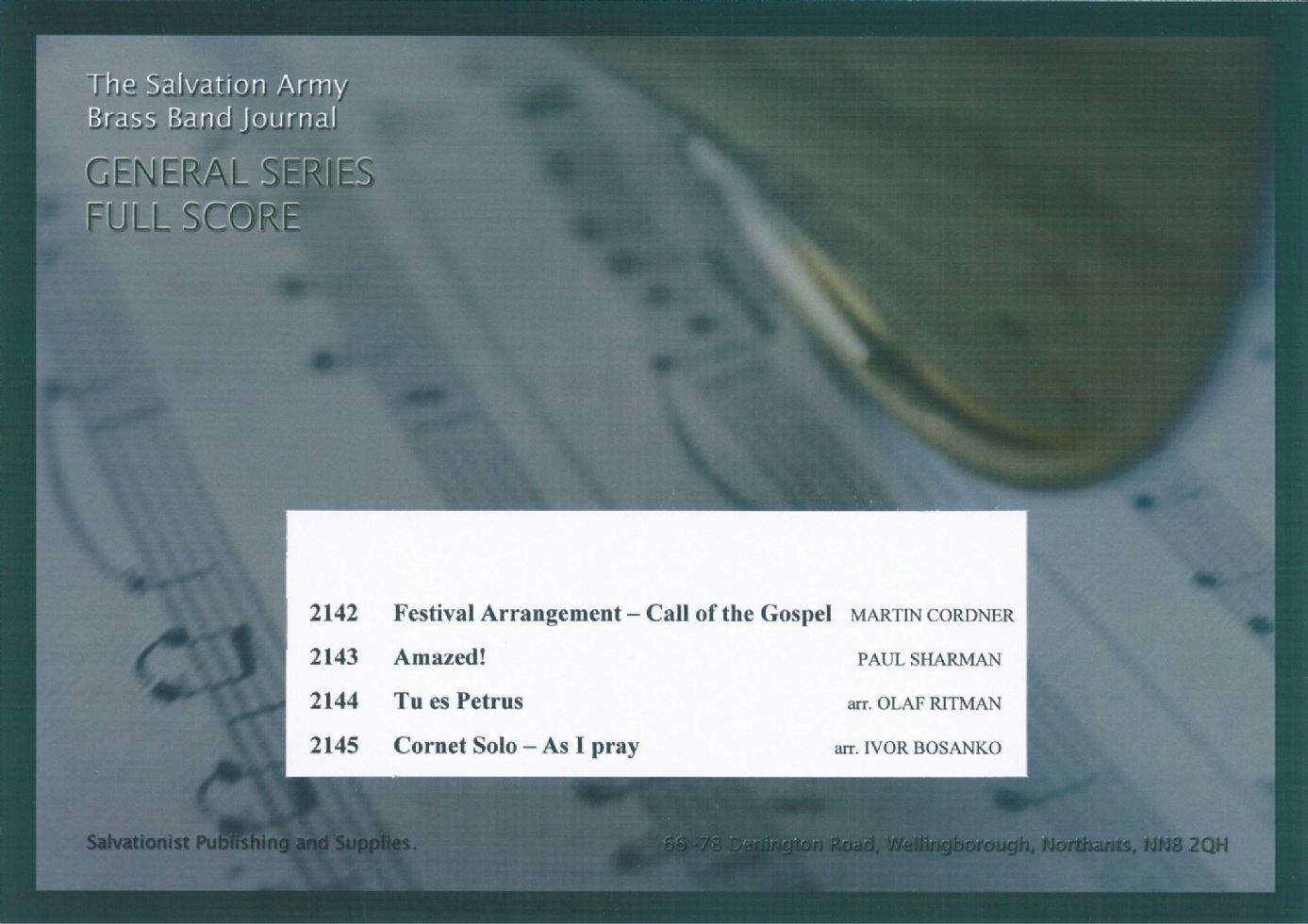
General Series Band Journal April 2015 Numbers 2142-2145
No. 2142 Festival Arrangement - Call of the Gospel (Martin Cordner)Written for the London Central Fellowship band, this foot-tapping festival arrangement treats the chorus, 'We have a gospel' in a bright, showy style.No. 2143 Amazed! (Paul Sharman)A setting of Charles Hutchison Gabriel's song, 'My Saviour's love', to which we sing his words, 'I stand amazed in the presence' (S.A.S.B. 179). Originally written for Birmingham Citadel Band, the piece aims to follow the four verses of text and is mainly up-tempo in style, depicting the amazing fact that God loves us.No. 2144 Tu es Petrus (arr. Olaf Ritman)A setting of a madrigal by Robert Pearsall. Originally entitled 'Lay a garland', the original text was swapped for the religious Latin text, 'Tu es Petrus' (You are Peter).No. 2145 Cornet Solo - As I pray (arr. Ivor Bosanko)Major Joy Webb's song, 'As I pray' (STTL Vol. 2, part 2), is arranged here as a beautiful solo for Cornet.
Estimated dispatch 7-14 working days
-
 £29.95
First Light (Cornet Solo with Brass Band - Score and Parts)
First Light was written for Kirsty Abbotts and Carlton Main Frickley Colliery Band. A slow lilting melody is presented in the cornet solo and passed between the band and the soloist to create images of the tranquil night before the piece reaches a climactic moment which is meant to represent the beams of light emerging as the sun rises. The theme is then presented in a tutti forte section before arriving at a tranquil finish. First Light is featured on the Kirsty Abbotts and Carlton Main Frickley Colliery Bands CD, A Search for Peace.
Estimated dispatch 7-14 working days
-
£55.00
Firefly (brass band score & parts) - Simon Dobson
Firefly was composed by award-winning composer Simon Dobson (b.1981) to provide an entertaining up-tempo concert work for community and youth bands. Composed in funk-rock style, and is based on the groove beat with which it opens. Dobson says, "Firefly was written as a break from my more serious music and as a 'hat tip' to the various types of beat orientated music I listen to." It was first performed by Oslofjord Brass in Norway and in its wind version by Harmonie Shostakovich, Switzerland. Duration: 5-6 minutes. INSTRUMENTATION: 1 Eflat Sop. Cornet, Solo Cornets (4), Bflat Rep. Cornet (1), 2nd Bflat, Cornets (2), 3rd Bflat Cornets (2); Flugel horn, Solo Eflat Horn, 1st Eflat Horn, 2nd Eflat Horn; 1st Bflat Bar., 1 2nd Bflat Bar., 1st Trombone, 2nd Trombone, Bass Trombone; Bflat Euphoniums (2); Eflat Tubas (2); Bflat Tubas (2); 2 percussion
In Stock: Estimated dispatch 1-3 working days
-
£44.95
LIFE ABUNDANT (Cornet Solo with Brass Band Set) - Robert Redhead
Life Abundant is a cornet solo written as a musical biography of the search of soul to find the meaning of life. The music begins with the dawning of life, then the abundant joy of childhood ('My cup is full and running over'), followed by the uncertainty of the youth who longs to say 'I want to live right' but doesn't know how. The answer comes in a meditative setting of the composer's own song 'One life to live, O may I live for Thee', after which the music confidently builds to a climax which expresses the joy of abundant life found in Jesus".
Estimated dispatch 7-14 working days
-
£24.95
NOW IS THE HOUR (Cornet Solo with Brass Band Set) - Ray Steadman-Allen
This romantic Maori song of farewell was arranged as a cornet solo for David Daws. Within The Salvation Army, the words 'Search me, O God, and know my heart today' are now associated with this beautiful tune.
Estimated dispatch 7-14 working days
-
£29.95
THIS IS MY STORY (Cornet or Trumpet Solo with Brass Band Set) - Krister Lundkvist
A 'Latin' style solo for cornet or trumpet based on the hymn tune 'Blessed Assurance'.
Estimated dispatch 7-14 working days
-
 £38.95
Siempre Verano (Always Summer) (Cornet/Trumpet Solo with Brass Band - Score and Parts)
A spectacular arrangement of Martin Clavijo J.'s Latin-style trumpet/cornet solo, as performed by Dallas Symphony Orchestra trumpet star Elmer Churampi. This item will show off the soloist's flair and technique to the full.
Estimated dispatch 7-14 working days
-
 £59.99
Cavatina for Cornet (Cornet Solo with Brass Band - Score and Parts)
In this solo work - a commission for an 18th birthday present - the opening mood of a brooding modal blues gives way momentarily to a more optimistic central section.Following an emotional climax and reflective cadenza, the opening material returns, but now tying in with the central section, and the piece finally ends in a more positive mood.
Estimated dispatch 7-14 working days
-
 £24.95
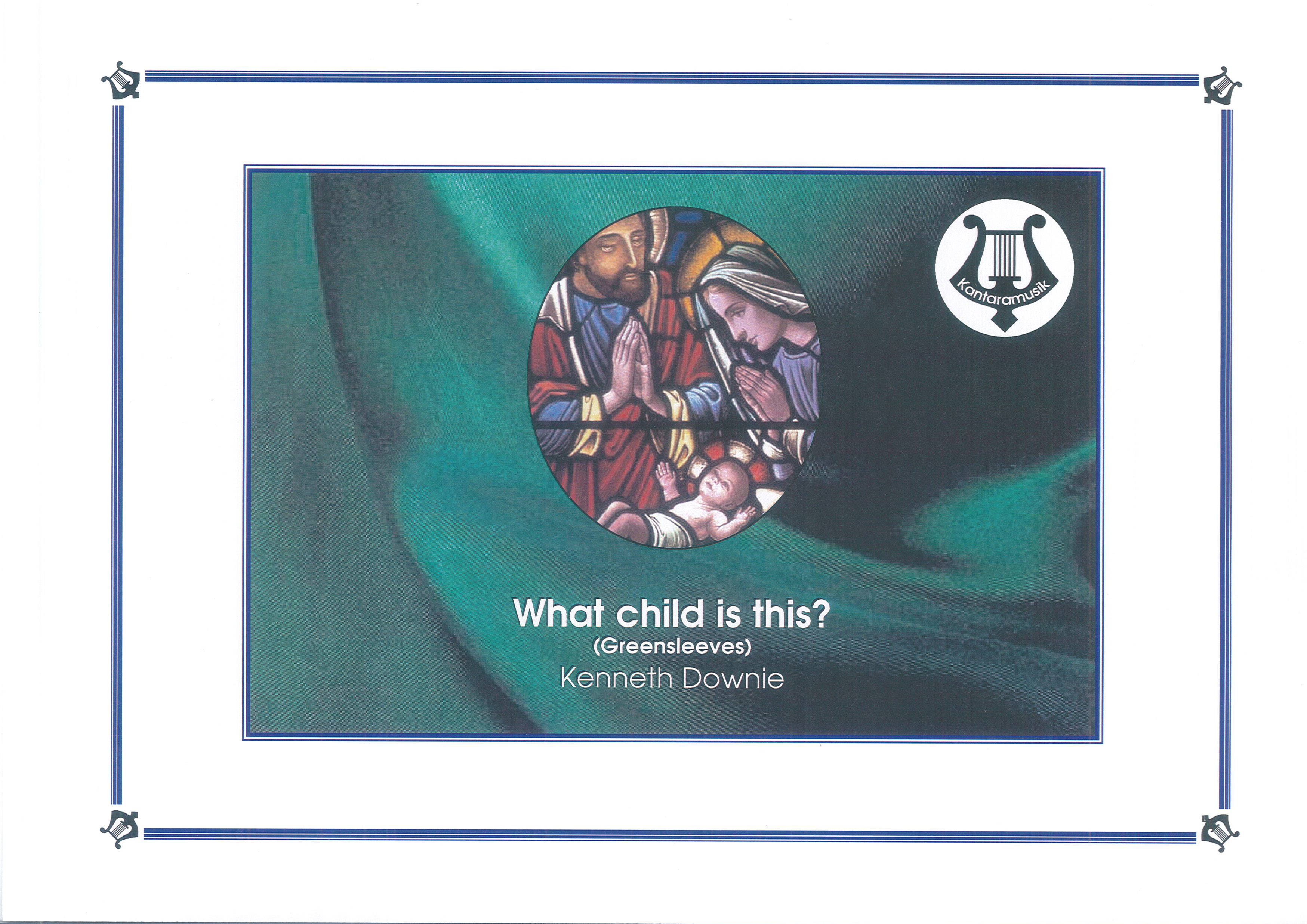
What Child is This? (Greensleeves) (Cornet Solo with Brass Band - Score and Parts)
Another Christmas arrangement of the traditional English tune 'Greensleeves'. It takes the form of a solo for Bb cornet, intentionally written to be well within the ability range of most players, yet providing plenty of scope for musical lyricism.
Estimated dispatch 7-14 working days