
Results
-
Scotch Missed - Len Jenkins - Len Jenkins
Back in the late 1980's a crowd of us went to Scotland to see in the New Year. We were dismayed to find that the pubs were shut early on New Year's Eve, and the only drink and merriment would be in an hotel (if resident or invited), or by 'first footing'. This involved taking a bottle of Scotch and presenting oneself at the door of a complete stranger, whereupon we were relieved of the bottle and welcomed into the general hubbub. The bottle was passed around those gathered there, so that by the time it got back to us it was empty. Just like its homonym, when it got around to us, it simply did not exist.
-
 £30.00
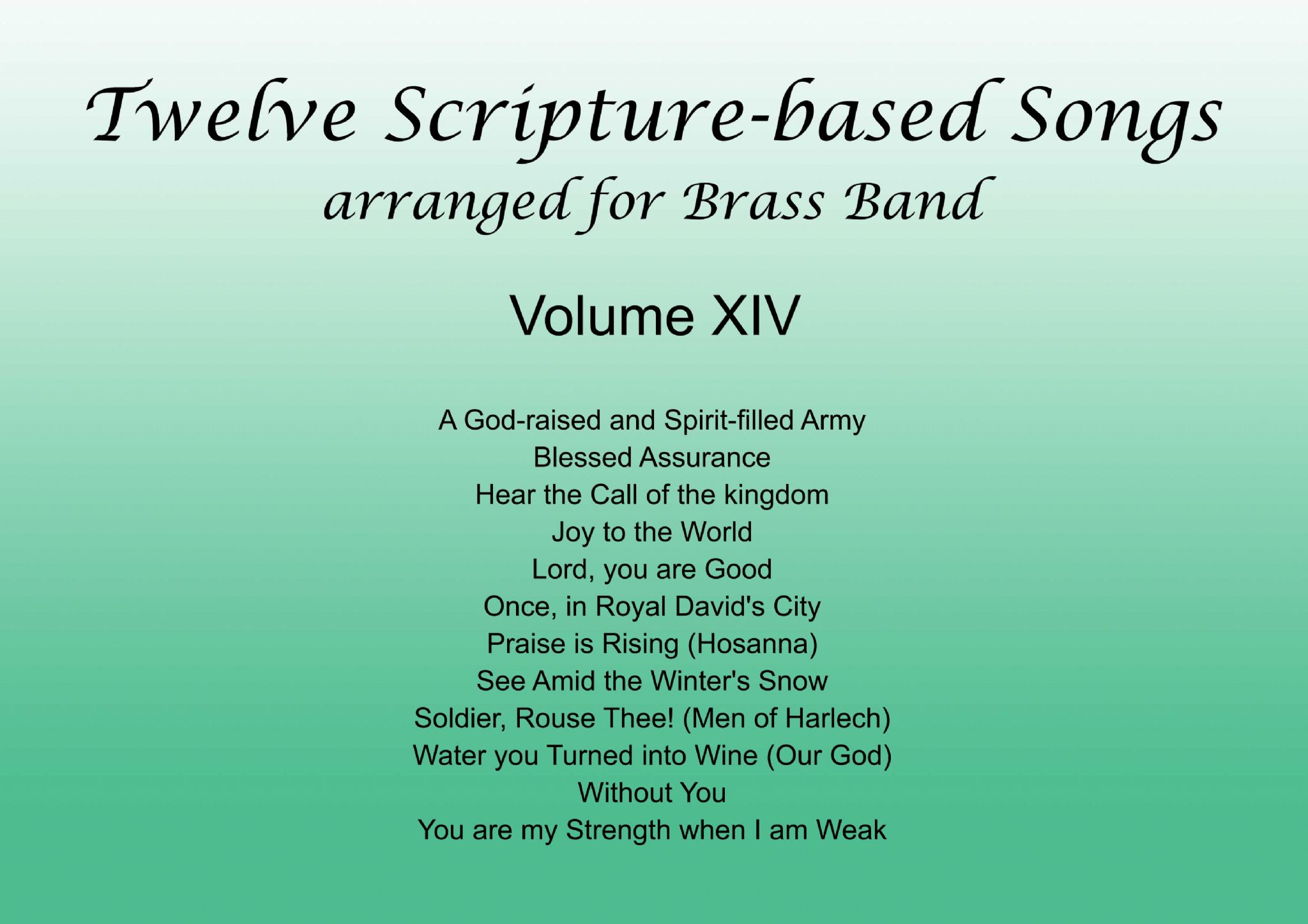
Twelve Scripture-based Songs Volume XIV
Twelve scripture-Based Songs arranged for Brass Band (Volume XIV) are packaged and marketed in complete sets which include a full score and a set of master parts. It is intended that these parts be used as 'masters', for the purpose of photocopying a quantity of parts to accommodate the precise instrumentation needs of the band for which this has been purchased.A God-raised and Spirit-filled ArmyBlessed AssuranceHear the Call of the kingdomJoy to the WorldLord, you are GoodOnce, in Royal David's CityPraise is Rising (Hosanna)See Amid the Winter's SnowSoldier, Rouse Thee! (Men of Harlech)Water you Turned into Wine (Our God)Without YouYou are my Strength when I am Weak
Estimated dispatch 7-14 working days
-
£37.50
Polish Adventures - Gavin Somerset
Composed for the All Saints Wind Band, Sheffield after their trip to Poland in the summer of 2003. This work reflects the different parts of the tour in four continuous movements... PROGRAM NOTES AS THEY APPREAR ON SCORE COVER I don't wish to ramble on with the program notes, do I do believe that if you know the story behind a piece of music, it just puts that extra something into the players performance. In 2002, the All Saints Wind Band, Sheffield, embarked on a 10 day tour of Poland. The group spent 28hrs on a couch packed with instruments, only to arrive finding Poland experiencing its worst summer in 70 years. In 2003, they decided to go back for another go! This time, luxury all the way, no 28hr coach journey, just a 1 1/2hr flight. This piece tells the story of the 2nd tour of Poland in four continuous movements... First the introduction. Early one morning, prepared for the drive to the airport, everyone tired, but excited. A day prior to this, some parents of the children set off in a van driving the instruments to the hotel, some 300 miles away. Bar 13 introduces the "Van" theme. Once arriving at the airport, the movements begin... 1. MORNING FLIGHT A very self explanatory part of the piece, and impressionist in its writing. Flying high over England and the channel, giving a sense of speed we were travelling at (compared to the poor lads in the van somewhere below us!) The Largo before F tells of the short coach journey to the hotel, and settling into what was our new home for 10 days. 2. IN THE STORM The weather was definitely an improvement on last year. So much so, that it became a regular event of the day to go and play rounders in a nearby field. This particular day however, with everyone concentrating hard on the game, it escaped everyone's attention that there was a very large storm creeping over the high mountain range near us. As the title of the movement suggests, the scene involved 25 of us running as fast as we could back to the hotel. Unfortunately, the heavy rain ran faster than us. 3. LAST MEMORIES As most of the people in the band were 18 this year, it was apparent that this would be their last event with the band. Many of the group had grown up together for the last 7 years and so, as the tour came to a close, there was a sense of sadness in the air, but everyone would always have the memories. 4. FINALE & HOME The van and the brave volunteers that went with it, set off the day before the rest of us flew home. This last movement reflect the whole tour, bringing back all the main themes from the different movements before arriving back at the school, just in time to see the van pull up. The "Van" theme makes its presence heard again towards the end. This piece was performed by the Wind Band at the leaving concert of many of the players in the band. I dedicate this piece to the band which is still functioning with new players, and to all those who took part on this tour.
In Stock: Estimated dispatch 1-3 working days
-
 £29.50
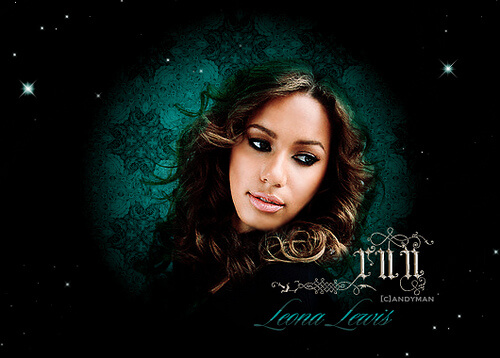
Run - Snow Patrol - Gavin Somerset
Very few songs covered by other artists are greeted with the same reception as Leona Lewis' cover version of this hit song. Whilst already a hit for Snow Patrol back in 2004, when Leona Lewis performed the song on BBC Radio One's 'Live Lounge', the DJ's and producers there on the day were reported to be tears. This highly emotional song lends itself well to the brass band sound and this arrangement by Gavin Somerset ensures your band can encapsulate audiences both on the bandstand and in the concert hall. The song's title may not be too familiar, however after just a few bars, the tune is instantly recognisable. A hit with the younger members of your band and one that people of all ages will know. A perfect addition to your concert programme and one that could see some of your audience singing!
In Stock: Estimated dispatch 1-3 working days
-
£29.50
Brass Monkey's Soloists - Martin Geovess
The main goal of any training band is to eventually see the players progress through the ranks and ultimately, be placed within the senior band. This latest instalment of the Brass Monkeys series, aims to bring that goal much closer and boost the confidence of the learners. The 'Brass Monkey's Soloists' publication features four specially composed works which allows the young soloists to perform a feature piece with accompaniment from the senior band. There is no bigger confidence boost than playing up alongside the 'big band'. The specially tailored solo parts are written at an advanced training band level, whilst the senior band parts will keep them busy as they aid the future generations to come. This publication features...THE OLD 'F' AND 'C' - (Solo for Cornet / Flugel)LAZY DAYS - (Solo for Trombone)DANNI'S SONG - (Solo for Tenor Horn)THE SHOWMAN - (Solo for Euphonium / Baritone / Xylophone)
In Stock: Estimated dispatch 1-3 working days
-
 £29.50
Christmas Scene - Gavin Somerset
This festive number sees an original theme from the pen of Gavin Somerset interspersed with festive favourites that seem to appear in an unfamiliar manner. There is plenty of Christmas spirit to be found in this work and will see your percussion section taking the limelight. Whilst they're not essential, it does add some entertainment value to the piece. As the little drummer boy rises over the hill, your audience will be left with smiling throughout the music in a work that really does add fantastic entertainment value to any Christmas concert.
In Stock: Estimated dispatch 1-3 working days
-
 £45.00
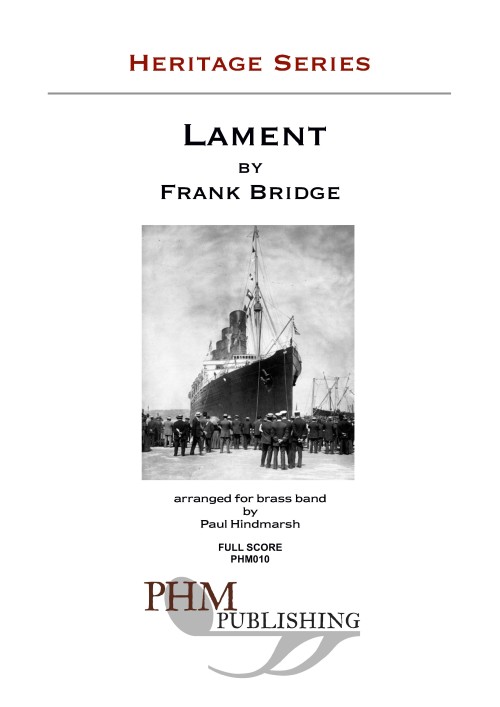
Lament (Brass Band - Score and Parts) - Bridge, Frank - Hindmarsh, Paul
The English composer Frank Bridge (1879 - 1941) did not take an active part in the First World War. However, he was devastated by the slaughter on the western and the eastern fronts, especially the loss of so many of his musicians friends and colleagues. Writing in 1963, his former pupil Benjamin Britten confessed that 'a lot of my feelings about the First World War which people seemed to see in the War Requiem came from Bridge. He had written a piano sonata in memory of a friend killed in France and though he didn't encourage me to take a stand for the sake of a stand, he did make me argue and argue and argue. His own pacifism was not aggressive, but typically gentle'.Bridge composed this Lament for string orchestra on 14 June 1915, in memory of Catherine Crompton, who drowned when the Cunard liner Lusitania was torpedoed by a German submarine on 7 May, 1915. According to figures researched by Liverpool historian Kevin Roach (www.lusitania.net), 1201 men, women and children lost their lives out of the 1962 people aboard. Ninety-four children died, including Catherine, her twin brother Paul and four other siblings. Paul Crompton, Snr. (44), a British businessman working in Philadelphia, his wife Gladys (40) and the family nanny were also drowned. How Bridge's dedication came about is uncertain. The music critic Edwin Evans, who knew Bridge well, has written that the Catherine was a young friend. It is also possible that he came across the family photograph which was published in many newspapers in the wake of the tragedy. By that time, Bridge was greatly distressed by the war as a whole. It seems perfectly in keeping with his pacifist leanings and the strength of his reaction, that this poignant and deeply touching 'war memorial' should mourn a child who he did not know, rather than one of the thousands of young men who fell in battle.Through the musical tears of this melancholy lullaby, Bridge may have regarded the death of young Catherine Crompton as symbolic of the loss of so many innocent lives in wartime. His response to this personal tragedy was characteristically spontaneous and utterly sincere. It is one of his most effective miniatures, poignant yet restrained in its lyrical beauty, with a compelling directness and simplicity of construction.This brass band transcription is pitched one tone lower than the original for string orchestra.- Paul HindmarshDuration: 5.00
Estimated dispatch 7-14 working days
-
 £69.95
Transformation (Brass Band - Score and Parts) - Downie, Kenneth
I believe in transformation, God can change the hearts of men, And refine the evil nature, till it glows with grace again'. So wrote John Gowans in the second verse of his great hymn, 'I believe that God the Father, can be seen in God the Son', written specifically to affirm Salvationists' beliefs. It is sung to the tune Bethany and in seeking to explore this great subject at the heart of the Christian gospel in musical terms, the composer has used this fine tune as the basis. Although it never appears in its entirety, it is seldom out of the picture and much of the work is derived from it. The other main source of material is the lovely, simple chorus, 'Some day I shall be like him, changed to heavenly beauty, when his face I see'. This chorus is especially prominent in the middle section but there are important references to it throughout. There are also brief references to Charles Wesley's hymn, 'Love Divine' and, in particular, the telling lines, 'Changed from glory into glory, till in Heaven we take our place'. The work suggests that, at times, the process of being transformed is a struggle, portrayed with many passages of fraught and demanding music. Considerable reserves of stamina and technique are required while, in contrast, the chorus, 'Some day I shall be like him' provides the warm, gentle centre of the work. The premiere of the work was given by The International Staff Band of The Salvation Army in Cadogan Hall on Friday 3rd June 2011, as part of the band's 120th anniversary celebrations.
Estimated dispatch 7-14 working days
-
£34.95
Transformation (Brass Band - Score only) - Downie, Kenneth
I believe in transformation, God can change the hearts of men, And refine the evil nature, till it glows with grace again'. So wrote John Gowans in the second verse of his great hymn, 'I believe that God the Father, can be seen in God the Son', written specifically to affirm Salvationists' beliefs. It is sung to the tune Bethany and in seeking to explore this great subject at the heart of the Christian gospel in musical terms, the composer has used this fine tune as the basis. Although it never appears in its entirety, it is seldom out of the picture and much of the work is derived from it. The other main source of material is the lovely, simple chorus, 'Some day I shall be like him, changed to heavenly beauty, when his face I see'. This chorus is especially prominent in the middle section but there are important references to it throughout. There are also brief references to Charles Wesley's hymn, 'Love Divine' and, in particular, the telling lines, 'Changed from glory into glory, till in Heaven we take our place'. The work suggests that, at times, the process of being transformed is a struggle, portrayed with many passages of fraught and demanding music. Considerable reserves of stamina and technique are required while, in contrast, the chorus, 'Some day I shall be like him' provides the warm, gentle centre of the work. The premiere of the work was given by The International Staff Band of The Salvation Army in Cadogan Hall on Friday 3rd June 2011, as part of the band's 120th anniversary celebrations.
Estimated dispatch 7-14 working days
-
 £30.00
A Million Love Songs - Gary Barlow
Made famous by the boy band 'Take That', this fantastic new angle on the song from Lucy Pankhurst, creatively features the flugel and tenor horn section with full support from the accompanying band.Take That's Gary Barlow wrote 'A Million Love Songs' when he was 15. He also recorded a rough demo of the track, and was one of the songs he gave to music manager Nigel Martin-Smith on a cassette tape as part of his audition to join a boy-band.In his autobiography A Better Me, Gary revealed that Martin-Smith was so impressed by the tape, that he didn't realise it was Gary singing. As legend has it, the conversation went like this:Martin-Smith: "This tape, who has written the songs?"Barlow: "Me"Martin-Smith: "Who wrote the words, then?"Barlow: "Me. And the music and the backing track."Martin-Smith: "Wow, you'd better come back and see me tomorrow."The ballad became one of the group's most popular songs, and is often voted among the greatest love songs of all time. It peaked at No. 7 in the UK charts, and remains a firm favourite, not just for its sentiment, but for the beautiful melody Barlow created.Lucy's arrangement for brass band brings a whole new dynamic to the music and offers the flugelhorn and tenor horns a golden opportunity to shine.
In Stock: Estimated dispatch 3-5 working days
 View Music