
Results
-
 £55.00
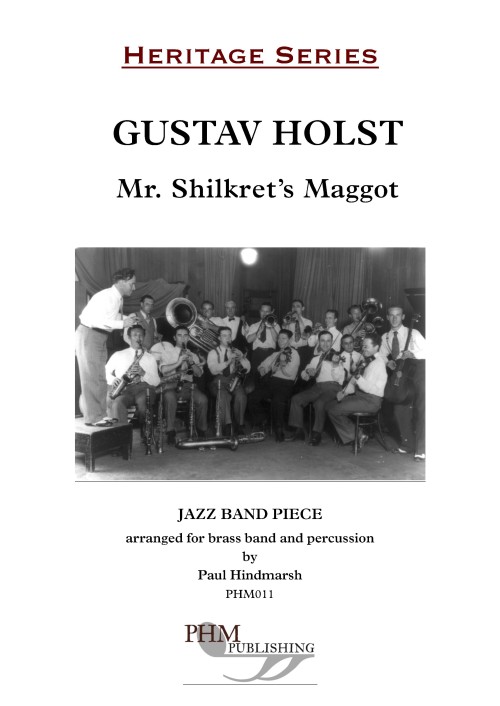
Mr Shilkret's Maggot (Brass Band - Score and Parts) - Holst, Gustav - Hindmarsh, Paul
This short piece was composed in 1932 during a visit Gustav Holst was making to the USA. He was invited by the band leader Nathaniel Shilkret to contribute to a series of piece for concert jazz band based on a folk song. Rather than using a traditional tune, Holst invented one of his own in folk song style and therefore the piece was not performed. Holst considered various titles for the piece including Mr. Shilkret's Dump, Folly and Maggot. On the manuscript he described it as a Jazz Band Piece. When the composer's daughter Imogen re-scored the piece for the English Chamber Orchestra to record under her direction in 1967, she changed decided to use the title Capriccio.Her re-orchestration involved removing the saxophone quartet, adding cor anglais and a second bassoon and changing cornet parts to trumpets. She retained the harp, extensive percussion, piano and celesta. My brass band version is based on the composer's manuscript, held at the British Library. It retains the composer's cornet parts, re-voices the woodwinds and strings, and places keyboards and harp onto glockenspiel, marimba, vibraphone and xylophone.I have selected the title Mr. Shilkret's Maggot for my scoring of Jazz Band Piece, which was first performed by The Cory Band, conducted by Philip Harper, at the Royal Northern College of Music Brass Band Festival, 29 January 2017.- Paul HindmarshDuration: 5.30
Estimated dispatch 7-14 working days
-
 £12.50
Of Distant Memories (Music in an Olden Style) (Brass Band - Study Score) - Gregson, Edward
2013 Finals of the National Brass Band Championships of Great Britain - Championship Section.Of Distant Memories pays homage to the brass band composers that form the backbone of the brass band repertoire, and their music, and in the process summons up a kind of subconscious memory bank of the musical languages, styles and forms used by them. The music is conceived in the form of a 'traditional' tone poem, reflecting certain aspects (e.g. melodic, harmonic, textural) of those early test pieces. Although fairly traditional concepts have been kept in planning the architecture of the work, certain aspects of the instrumentation, or scoring, are more contemporary in colouristic terms, as befits a composer writing in the 21st century. However, the percussion requirements are fairly modest, similar to those used in the works of that period. The brass band tradition owes much to the composers of that period, for through their music they established a truly homogenous 'British' brass band sound which has spread throughout many parts of the world. That tradition flourishes today and remains important for today's composers, even if their musical language is far removed from that of their predecessors. Of Distant Memories is the composers own way of repaying that gratitude.Duration: 15.00
Estimated dispatch 7-14 working days
-
 £89.95
Of Distant Memories (Music in an Olden Style) (Brass Band - Score and Parts) - Gregson, Edward
Of Distant Memories pays homage to the brass band composers that form the backbone of the brass band repertoire and their music, and in the process summons up a kind of subconscious memory bank of the musical languages, styles and forms used by them. The music is conceived in the form of a 'traditional' tone poem, reflecting certain aspects (e.g. melodic, harmonic, textural) of those early test pieces. Although fairly traditional concepts have been kept in planning the architecture of the work, certain aspects of the instrumentation, or scoring, are more contemporary in colouristic terms, as befits a composer writing in the 21st century. However, the percussion requirements are fairly modest, similar to those used in the works of that period. The brass band tradition owes much to the composers of that period, for through their music they established a truly homogenous 'British' brass band sound which has spread throughout many parts of the world. That tradition flourishes today and remains important for today's composers, even if their musical language is far removed from that of their predecessors. Of Distant Memories is the composers own way of repaying that gratitude.Duration: 15.00
Estimated dispatch 7-14 working days
-
 £44.95
Of Distant Memories (Music in an Olden Style) (Brass Band - Score only) - Gregson, Edward
Of Distant Memories pays homage to the brass band composers that form the backbone of the brass band repertoire, and their music, and in the process summons up a kind of subconscious memory bank of the musical languages, styles and forms used by them. The music is conceived in the form of a 'traditional' tone poem, reflecting certain aspects (e.g. melodic, harmonic, textural) of those early test pieces. Although fairly traditional concepts have been kept in planning the architecture of the work, certain aspects of the instrumentation, or scoring, are more contemporary in colouristic terms, as befits a composer writing in the 21st century. However, the percussion requirements are fairly modest, similar to those used in the works of that period. The brass band tradition owes much to the composers of that period, for through their music they established a truly homogenous 'British' brass band sound which has spread throughout many parts of the world. That tradition flourishes today and remains important for today's composers, even if their musical language is far removed from that of their predecessors. Of Distant Memories is the composers own way of repaying that gratitude.Duration: 15.00
Estimated dispatch 7-14 working days
-
 £59.95
Aspirations (Brass Band - Score and Parts) - Bourgeois, Derek
Aspirations was especially written for young bands, and is designed to test the rhythmic and melodic skills of the players.The scoring throughout uses many ensemble groupings, producing challenging sonorities.Aspirations was the set work for the Youth Section of The National Brass Band Championships of Great Britain and was first performed at the Royal College of Music, London, on Sunday 9th October, 1983.Duration: 8.30
Estimated dispatch 7-14 working days
-
£44.50
Marianne - Martin Bunce
Written in 1974, Marianne is a beautifully lyrical flugelhorn ballad by Martin Bunce, now newly arranged by the composer for brass band.Originally written during a particularly romantic period in Bunce's life, the piece was first performed on the BBC Two television programme In Concert by the National Youth Jazz Orchestra, with Martin himself featured as the flugelhorn soloist. A recording was subsequently released by RCA on 45rpm, and Marianne gradually became an established and much-loved part of the NYJO repertoire. It has since appeared on several of the orchestra's recordings, including the four-CD collection The Very Best of NYJO.The melody has also found a home in the brass band world, notably through Maurice Murphy's recording with the Leyland Band on The Lighter Side of Maurice Murphy. This new brass band arrangement places the flugelhorn's distinctive warm and mellow tone firmly at the heart of the music, supported by sympathetic and accessible scoring throughout the band.Neither the solo part nor the accompaniment is excessively demanding, making Marianne an excellent choice for a wide range of bands and an ideal contrast item for concert programmes. Warm, expressive and immediately appealing, it offers the flugelhorn soloist an opportunity to shine while giving audiences a memorable melody to take away.A charming addition to any brass band library, Marianne is particularly well suited to concerts, solo features and lighter programmes.
In Stock: Estimated dispatch 1-3 working days
-
 £29.95
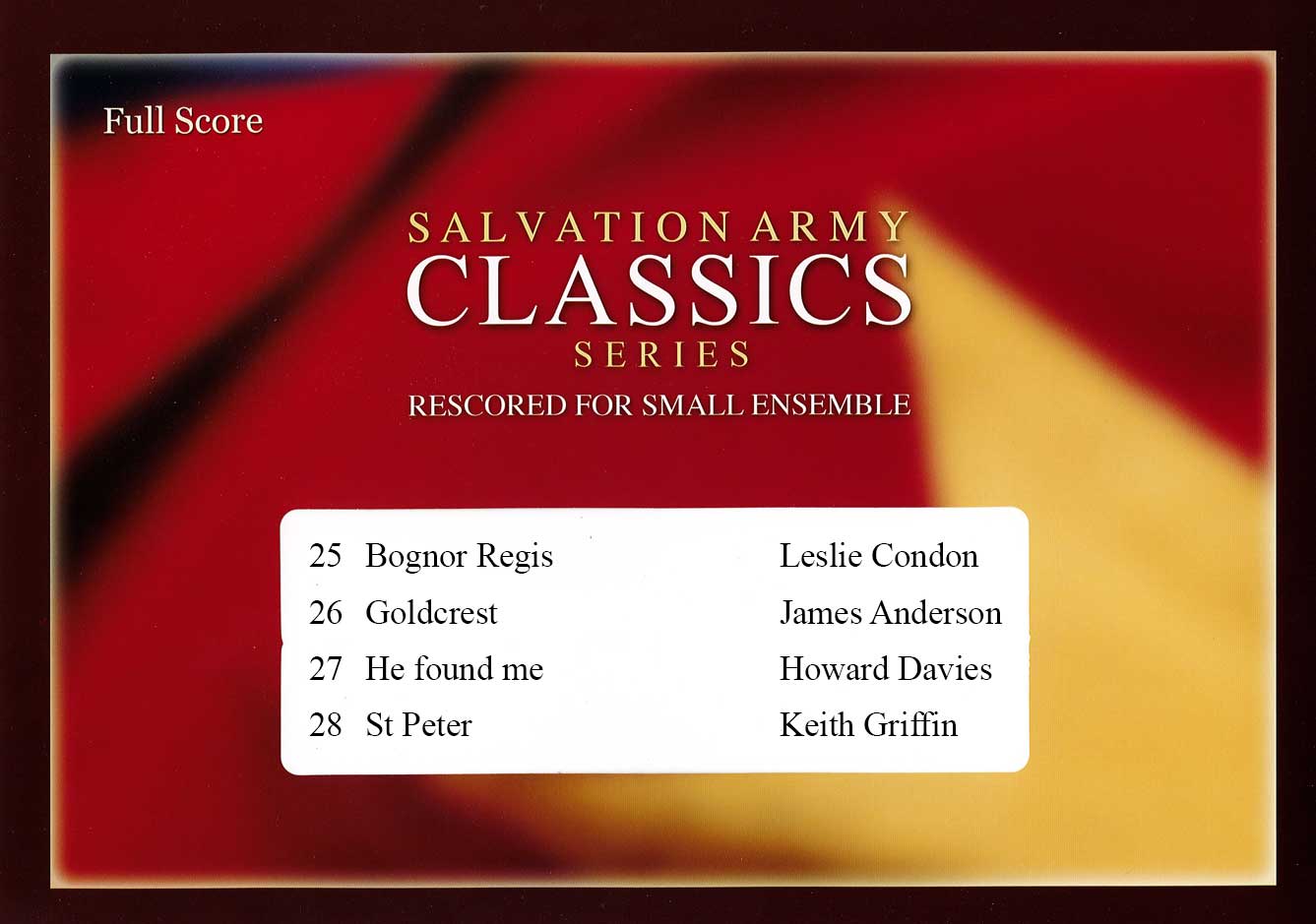
Salvation Army Classics 25-28 for Small Ensemble
Salvation Army Classics arranged for Flexible Brass Band Numbers 25-28Bognor Regis - Leslie CondonGoldcrest - James AndersonHe found me - Howard DaviesSt Peter - Keith Griffin This series features pieces that have been rescored for Unity Series (five-part) scoring.PART I 1st Cornet BbPART II 2nd Cornet Bb and 1st Horn EbPART III 2nd Horn Eb and Baritone or Trombone BbPART IV Euphonium BbPART V Bass Eb and Bass BbThese transcriptions have been carried out in such a way to facilitate the addition of any original parts that may be available.Where relevant, suggestions are made for a variation in tone colour (i.e. 2nd Cornet, Flugel, Baritone, Trombone) as well asthe occasional opportunity for rest.
Estimated dispatch 7-14 working days
-
 £8.50
£8.50BEGUINE FOR BAND (score) - Frederick, Mike
The score shows brass band scoring & percussion.
In Stock: Estimated dispatch 1-3 working days
-
 £27.50
BEGUINE FOR BAND (score & parts) - Frederick, Mike
The score shows brass band scoring & percussion.
In Stock: Estimated dispatch 1-3 working days
-
 £8.50
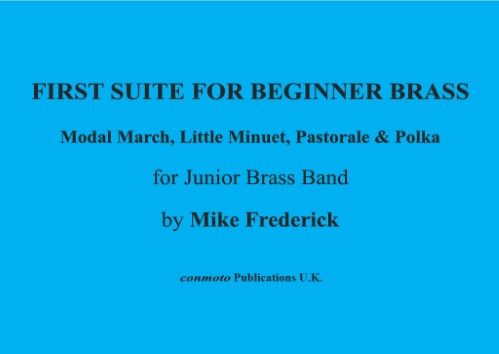
£8.50FIRST SUITE FOR JUNIOR BRASS (score) - Frederick, Mike
The score shows brass band scoring & percussion.Contents / Comments:
In Stock: Estimated dispatch 1-3 working days
 View Music
 Listen to MP3