
Results
-
 £29.50
A Touch of Brass - Gavin Somerset
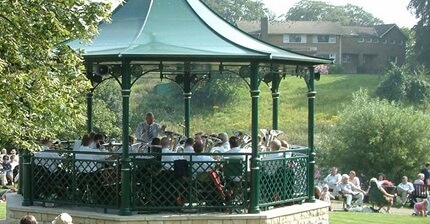
Starting with a scottish style dance, this piece explores the versatility of the Brass Band. From Scherzo to Swing, this piece has them all, an audience pleaser and one for all the band to stay alert in, and the conductor to add their own interpretations. The percussion section also has a busy part to play (altough the Timpani & Xylo/Glock parts can be omitted). An ideal concert item for all concerned. To download the Solo Cornet part, please CLICK HERE . To download the Solo Horn part, please CLICK HERE . To download the Solo Euphonium part, please CLICK HERE . To download the playback audio to play along to, please RIGHT CLICK HERE & Save As .
In Stock: Estimated dispatch 1-3 working days
-
 £25.95
Scherzo (Brass Band - Score and Parts) - Downie, Kenneth
This energetic music was originally the second movement of 'Concerto for Brass Band' and was commissioned by Brass Band Treize Etoiles from Switzerland. It provides the opportunity for a glittering bravura moment in a concert, or can be performed as an additional movement to 'Concertino for Brass Band', placed before the slow movement and thereby re-creating the original 'Concerto'.
Estimated dispatch 7-14 working days
-
£12.95
Scherzo (Brass Band - Score Only) - Downie, Kenneth
This energetic music was originally the second movement of 'Concerto for Brass Band' and was commissioned by Brass Band Treize Etoiles from Switzerland. It provides the opportunity for a glittering bravura moment in a concert, or can be performed as an additional movement to 'Concertino for Brass Band', placed before the slow movement and thereby re-creating the original 'Concerto'.
Estimated dispatch 7-14 working days
-
 £49.95
Prelude and Scherzo (Trombone Solo with Brass Band - Score and Parts) - Sparke, Philip
Written for Brett Baker
Estimated dispatch 7-14 working days
-
 £52.50
Scherzo for Xylophone (Xylophone Solo with Brass Band - Score and Parts) - Curnow, James
Let your percussionist shine with this exciting lively work for xylophone and brass band. Makes an ideal encore piece or lighter item in any concert programme.Duration: 3.00
Estimated dispatch 7-14 working days
-
 £24.95
ANDANTE AND SCHERZO (Euphonium Solo with Brass Band Set)
Estimated dispatch 7-14 working days
-
£59.95
CALIBAN (Scherzo Malevolo, Op.50) (Brass Band Set)
Estimated dispatch 7-14 working days
-
 £59.70
Prelude and Scherzo (Horn or Euphonium Solo with Brass Band - Score and Parts) - Lorriman, Howard
Eb/F Horn or Euphonium/Baritone Solo.
Estimated dispatch 7-14 working days
-
 £83.50
Toccata, Elegy and Scherzo (Brass Band - Score and Parts) - Barry, Darrol
Suitable for 1st Section bands and above
Estimated dispatch 7-14 working days
-
 £85.00
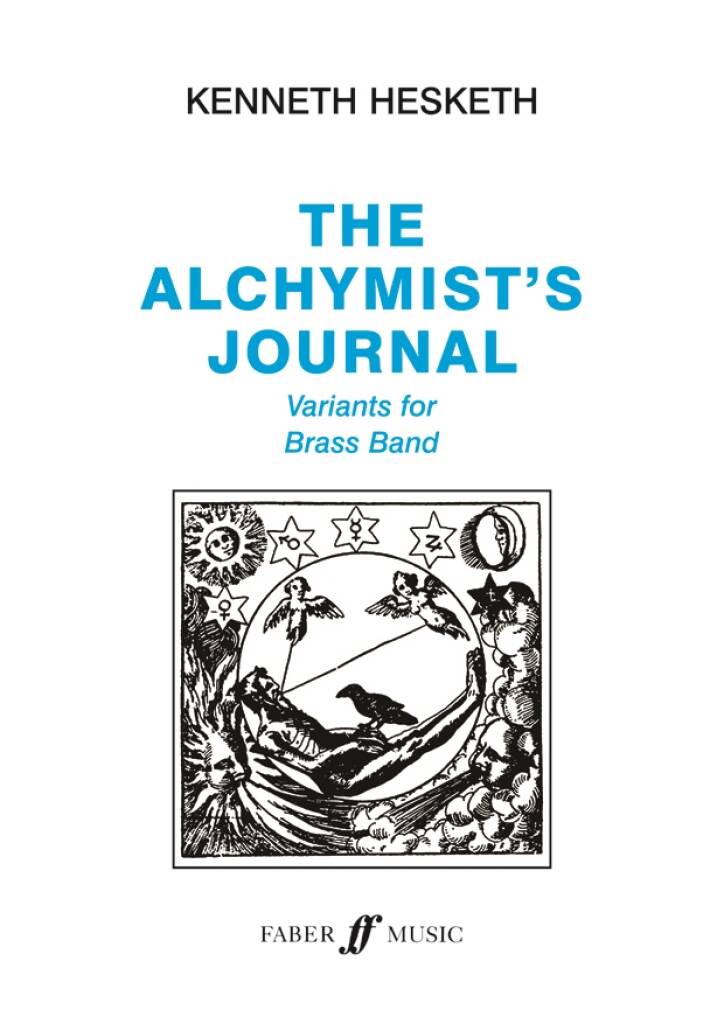
Alchymist's Journal. - Kenneth Hesketh
'The Alchymist's Journal' gets its title from the book of the same name by American author Evan S. Connell. The book fictionalises a number of famous Alchemist's writings, each one developing another's thoughts thuscontinuing one idea but changing it subtly to provide a new view point or way of thinking. This process is, in fact, alchemical as one idea transmutes into another. This idea is parallel to the processes at work within thesevariants. The whole work is constructed from 6 notes (C, A, B flat, E flat, F sharp, E) and is presented in nine different sections, each individual in mood but still based upon the original pitches. This is not a thematic setofvariations, as the themes are developed one at a time from small segments of the six notes. For example, the opening theme is the complete number of pitches, the second theme uses three notes transposed then repeated at theoriginal level, and so on. Harmonically, the six notes can be divided into two triads, A minor and E flat minor - each key beginning and ending the piece respectively. Whilst this is essentially abstract music with noprogramme there is an introduction, menacing scherzo, slow reflective section followed by a recap of the scherzo and final coda. 'The Alchymist's Journal' was commissioned by the Brass Band Heritage Trust at the suggestionof Paul Hindmarsh, to whom the work is dedicated.
Estimated dispatch 5-14 working days
 View Music