
Results
-
 £44.95
Judd: Music of a Legacy - Original Version - Steven Ponsford
This piece pays tribute to the vast heritage of Salvation Army brass band music. Written in one movement, it is rhapsodic in nature and quotes references from just a few of the many iconic pieces from the past, progressing naturally through the different styles of music; firstly marches, followed by meditations, major works and then solos. The underpinning theme that binds the work together is the much-loved hymn, by Timothy Dudley-Smith, drawing particular attention to the last line of the first verse; Lord for the years, we bring our thanks today. This is music of thanksgiving to the rich inheritance that inspires writers today to continue the mission of the gospel through this very special and unique genre.
Estimated dispatch 7-14 working days
-
 £60.99
The Call of the Shepherd - Edvard Grieg - John Brakstad
A warm, romantic "pastorale", very suitable as calm interlude in your program. John Brastad, band master of the Bergen Salvation Army Band ((Norway) made the arrangement for brass band. Een warme, romantische 'pastorale', zeer geschikt als rustpunt in uw programma. John Brakstad, bandmaster van de Bergen Salvation Army Band ((Noorwegen)maakte het arrangement voor brassband.
Estimated dispatch 5-14 working days
-
 £24.50
Keep The Rhythm Going - Neil Brownless
Keep the Rhythm Going was written for Abingdon Concert Band during the 2020 Coronavirus pandemic as a tribute to musicians around the world who found ways to play together virtually in order to 'keep the rhythm going'. This exciting piece will be a great opener for any concert or contest programme and is available for both brass band and wind band. When performing the wind band arrangement the Cor Anglais, Eb Clarinet and Alto Clarinet parts are optional and can be omitted without affecting the music. The premiere performance can be viewed here: https://youtu.be/b6f7zRzxI7k The piece was premiered virtually on 19th November 2020 by 109 musicians from around the world from the following musical organisations:Abingdon Concert BandAbbey Brass BandAbergavenny Borough BandAbingdon and District Music SocietyAlnwick PlayhouseConcert BandAlnwick Symphonic Wind EnsembleAnything Goes Swing BandAshby Concert BandAylesbury Concert BandAylesbury Symphony OrchestraBacchus Wind OrchestraBanbury Symphony OrchestraBicester Concert BandBisham Concert BandBlaina Town BandBoobs and BrassBourne Concert Band of WokingBrass for AfricaBucks WindBurford OrchestraCastleton BrassCity of Cardiff Melingriffith Brass Band OrganisationCoquet Concert BandCorpo Bandistico G. Puccini - DLF BolognaDarlington Clarinet EnsembleDidcot Concert OrchestraDragon's Big BandDurham Miners' Association Brass BandEast Grinstead Concert BandGoring & Streatley Concert BandHalifax Concert BandHenley Symphony OrchestraJazz ColossusBig BandJupiter BrassKidlington Concert BrassLangtree SinfoniaNantwich Concert BandThe British Police Symphony OrchestraNew Buckenham Silver BandNottingham Concert BandNottingham Daytime OrchestraNottingham Symphonic WindsPaddock OrchestraPeebles Concert BandPotterspury Big BandReading Concert BandRoyal College of MusicRoyal Welsh College of Music & DramaSalvation Army West Midlands Fellowship BandSalvo BrassSaxophone SundaeSevenoaks and Tonbridge Concert BandShirley BandSlinfold Concert BandSouth Norfolk Youth Symphonic BandStockport Silver BandSuper BoneTewkesbury CamerataThame Concert BandThe Band of The Royal British Legion, LeistonVale Symphonic Wind BandTowcester Studio BandUniversity of Nottingham BlowsocThe University of Trinidad and TobegoWadhurst Brass BandWest Forest SinfoniaWeston BrassWindsor & Maidenhead Symphony OrchestraYorkshire Wind OrchestraYoung Musicians Symphony Orchestra...and some freelancers.
In Stock: Estimated dispatch 1-3 working days
-
 £34.95
Chalk Farm No.2 (Brass Band - Score and Parts) - Gregson, Edward
Like so many of the best composers for brass band - Eric Ball, Wilfred Heaton, Elgar Howarth and Robert Simpson - Edward Gregson's youthful talents came to the fore in the Salvation Army. In 1975 Gregson was commissioned by the Chalk Farm Band of the Salvation Army to write a march for the centenary of the birth of the band's most long-serving bandmaster Alfred W Punchard, who conducted the band from 1894 to 1944. In 1909 the Salvation Army published a march called Chalk Farm featuring the old Army chorus 'March on, we shall win the day'.Gregson uses the same tune in his Chalk Farm No 2 march, but this is a symphonic march clearly to be played sitting down. He includes irregular bars of 5 and 7 beats as well as a tongue-in-cheek treatment of the tune, complete with bongos (in the march) and bi-tonality (in the trio). Chalk Farm No 2 imaginatively composed. Gregson's own main theme 'fits' the chorus as a counter-subject. The playful irreverence of the style has more in common with Wilfred Heaton's Praise or Glory, than the conventional Salvation Army March.Duration: 4.00
Estimated dispatch 7-14 working days
-
 £94.95
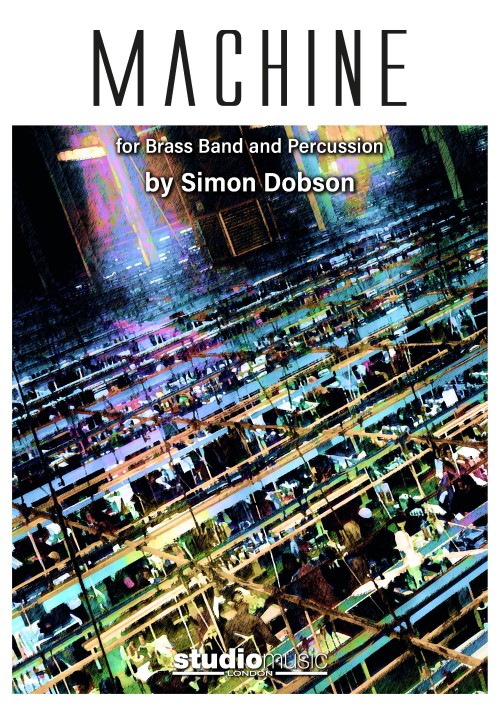
Machine (Brass Band - Score and Parts) - Dobson, Simon
Machine, was commissioned by the Salvation Army Trading Company for the National Youth Brass Band of Great Britain.The work speaks of the perils of the fast fashion industry, the part it plays in our current understanding of late-stage capitalism and it's complicity in the destruction wrought on our one home planet. It also seeks to portray the incredible efforts of the Salvation Army in their quest to slow the fast fashion industry and recycle clothing in the most innovative and progressive ways.The work is through composed and comprises five movements.Movement 1: The great Machine. The band is placed into 8 groups of three (expect tubas, in their normal position as a 4), who stand in specific places on the stage. This will create machine like antiphonal movement in the written music. The great Machine in question is the fast fashion industry, in all its chaos, seeming grandeur and relentless momentum.Movement 2: Mode phmre is fast, angular and quirky, a nod to the perilous speed and waste of the fast fashion industry (the movement title is the French for fast fashion).Movement 3: A planet to treasure (for DA) is a love letter to our home planet and its finite resources and as well as the beauty of the natural world, which unfortunately, we are destroying (hence the dedication to David Attenborough on his 100th year).Movement 4: The wheels keep turning, returns to the fast, angular, almost unstoppable grasp of capitalism and the damaging structures it promotes.Movement 5: Recycle, re-use, mirrors the opening (though without stage directions) in reference to the cyclic nature of fast fashion and the wonderful work that The Salvation Army do in trying to halt this system.
Estimated dispatch 7-14 working days
-
 £44.95
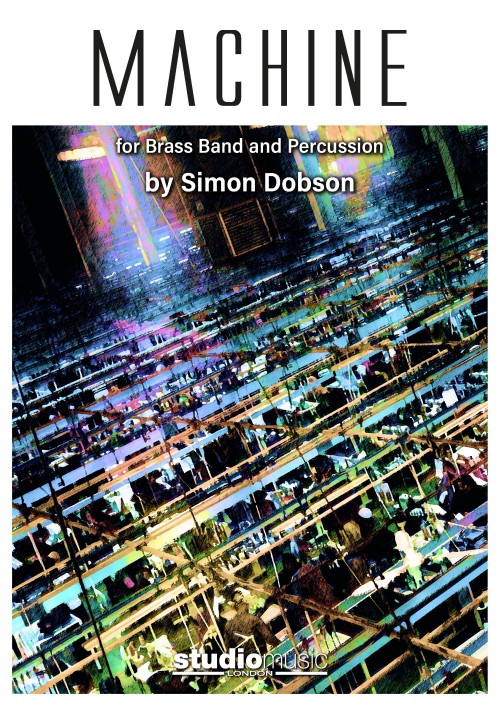
Machine (Brass Band - Score only) - Dobson, Simon
Machine, was commissioned by the Salvation Army Trading Company for the National Youth Brass Band of Great Britain.The work speaks of the perils of the fast fashion industry, the part it plays in our current understanding of late-stage capitalism and it's complicity in the destruction wrought on our one home planet. It also seeks to portray the incredible efforts of the Salvation Army in their quest to slow the fast fashion industry and recycle clothing in the most innovative and progressive ways.The work is through composed and comprises five movements.Movement 1: The great Machine. The band is placed into 8 groups of three (expect tubas, in their normal position as a 4), who stand in specific places on the stage. This will create machine like antiphonal movement in the written music. The great Machine in question is the fast fashion industry, in all its chaos, seeming grandeur and relentless momentum.Movement 2: Mode phmre is fast, angular and quirky, a nod to the perilous speed and waste of the fast fashion industry (the movement title is the French for fast fashion).Movement 3: A planet to treasure (for DA) is a love letter to our home planet and its finite resources and as well as the beauty of the natural world, which unfortunately, we are destroying (hence the dedication to David Attenborough on his 100th year).Movement 4: The wheels keep turning, returns to the fast, angular, almost unstoppable grasp of capitalism and the damaging structures it promotes.Movement 5: Recycle, re-use, mirrors the opening (though without stage directions) in reference to the cyclic nature of fast fashion and the wonderful work that The Salvation Army do in trying to halt this system.
Estimated dispatch 7-14 working days
-
 £29.95
Wisbech Citadel (Brass Band - Score and Parts) - Gay, Albert
This homage to a Salvation Army corps in Cambridgeshire is Albert Gay's most popular Salvation Army composition although he wrote several other excellent marches like His Royal Banner and Western Valley. The bass solo quotes a vocal march dating from The Salvation Army's Musical Salvationist 1916; The Call to War.
Estimated dispatch 7-14 working days
-
£14.95
Wisbech Citadel (Brass Band - Score only) - Gay, Albert
This homage to a Salvation Army corps in Cambridgeshire is Albert Gay's most popular Salvation Army composition although he wrote several other excellent marches like His Royal Banner and Western Valley. The bass solo quotes a vocal march dating from The Salvation Army's Musical Salvationist 1916; The Call to War.
Estimated dispatch 7-14 working days
-
£34.95
The Southern Cross (Brass Band - Score and Parts) - Bowen, Brian
The Southern Cross is one of several excellent marches by Brian Bowen in which he carried on the more sophisticated pattern of British marches by Wilfred Heaton, Leslie Condon and Ray Steadman-Allen. It was written for the Box Hill (Australia) Corps jubilee celebrations in 1970 and formed part of the band's repertoire when it toured Great Britain in the same year. The first half of the march features part of the song, 'March on!' by Klaus Ostby, an early pioneer of Salvation Army music in Scandinavia. The contrapuntal layering of melodies in the trio, especially in the finale where 'March on!' sounds one more triumphant time, is notable, as is the shift to a slower, more stately tempo. The harmonic and rhythmic style also represents the more modern sounds of Salvation Army brass band music in the late 1960s and early 1970s. Right from the opening gestures, listeners at early performances knew that a page had turned in the evolution of the Salvation Army march.
Estimated dispatch 7-14 working days
-
£17.50
The Southern Cross (Brass Band - Score only) - Bowen, Brian
The Southern Cross is one of several excellent marches by Brian Bowen in which he carried on the more sophisticated pattern of British marches by Wilfred Heaton, Leslie Condon and Ray Steadman-Allen. It was written for the Box Hill (Australia) Corps jubilee celebrations in 1970 and formed part of the band's repertoire when it toured Great Britain in the same year. The first half of the march features part of the song, 'March on!' by Klaus Ostby, an early pioneer of Salvation Army music in Scandinavia. The contrapuntal layering of melodies in the trio, especially in the finale where 'March on!' sounds one more triumphant time, is notable, as is the shift to a slower, more stately tempo. The harmonic and rhythmic style also represents the more modern sounds of Salvation Army brass band music in the late 1960s and early 1970s. Right from the opening gestures, listeners at early performances knew that a page had turned in the evolution of the Salvation Army march.
Estimated dispatch 7-14 working days
 View Music