
Results
-
 £45.00
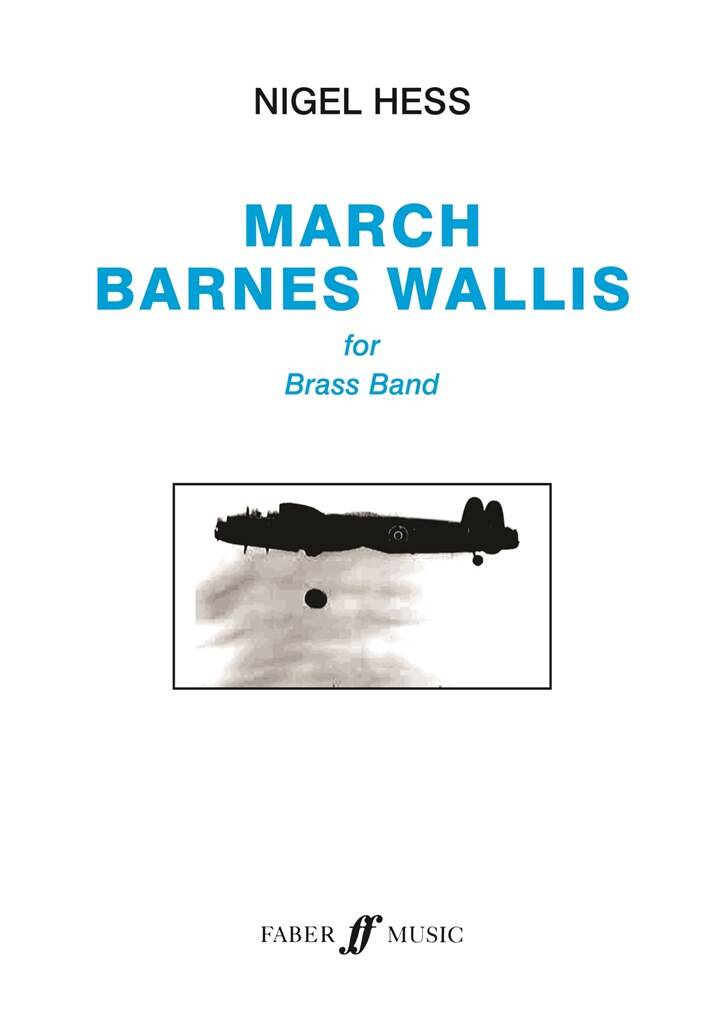
March Barnes Wallis - Nigel Hess
March Barnes Wallis was commissioned by Royal Air Force Music Services to commemorate the 70th anniversary of the famous Dambuster's raid and received its first performance on BBC Radio 2's Friday Night is Music Night, broadcast live from Biggin Hill Airport on 17 June 2013 by the Central Band of the RAF, Director of Music Wing Commander Duncan Stubbs.
Estimated dispatch 5-14 working days
-
 £105.00
Tuba Concerto. - Ralph Vaughan Williams
The Tuba Concerto was composed in 1953/4, after the London Symphony Orchestra invited Vaughan Williams to write a work for inclusion in the Orchestra's fiftieth anniversary concert. The first performance was given byPhilip Catelinet in the Royal Festival Hall, London on 13th June 1954 with the London Symphony Orchestra conducted by Sir John Barbirolli.The brass band arrangement is by Phillip Littlemore and is a welcome addition to the brassband repertoire.
Estimated dispatch 5-14 working days
-
 £154.60
Kobolt - John Brakstad
"Cobalt" was commisioned by Modum Janitsjar as own choice piece for the Norwegian Wind Band Championships, third section in 2009. The Royal Cobalt Works of Modum were established in 1773 to extract cobalt ore from the local mines. The works were in operation until 1893. The cobalt was used in the production of cobalt blue pigment for the worlds porcelain and glass industry. To day it is a museum showing us how people at that time worked and lived. Most of the work was done by hand. There were also bad accidents with many fatalites. But in their free time there were dancing and drinking, and the entire piece ends with a dance-episode including a local tune.
Estimated dispatch 5-14 working days
-
 £115.60
Generalstabens Honnormarsj - Oscar Borg - Svein H. Giske
This march was written in 1919 by Norways own March King Oscar Borg (1851-1930).He was born in the town of Halden in the southeast of Norway and received his education at the Royal Academy in Stockholm, Sweden.Upon his return to Halden he became a driving force in the towns musical life in several respects. He conducted choirs, amateur bands and played the organ in church.Borg was also the conductor of 1. Brigades Musikkorps (today The Norwegian Wind Ensemble) from 1881 to 1918.His significance for the Norwegian military bands and their repertoire is unquestionable.He wrote over 60 marches and he played several instruments; the violin, flute, cornet and the organ.This arrangement was written for Askoy Brass Band in 2021.Svein H. Giske
Estimated dispatch 5-14 working days
-
£29.95
The Land of the Long White Cloud (Score Only)
Dating from 1979, The Land of the Long White Cloud (Aotearoa) was Philip Sparke's first test-piece. It was commissioned by the New Zealand Brass Band Association for their 1980 National Championships (their centenary year) and set for the European Brass Band Championships, the same year, at the Royal Albert Hall in London. Aotearoa was the name given to New Zealand by its Polynesian settlers whose first sight of the islands was a long, flat cloud lying low over the land. The work has no specific programme although many have seen pictures of the surging ocean in the opening bars. A faster dance-like section leads to a slow, haunting solo for soprano cornet; this is taken up by the whole band before earlier material returns. The dance-like tune is, this time, given a fugal treatment and the opening bars return to close the work.Philip Sparke was born in London and studied composition, trumpet and piano at the Royal College of Music, where he gained an ARCM. It was at the College that his interest in bands arose. He played in the College wind orchestra and also formed a brass band among the students, writing several works for both ensembles.At that time, his first published works appeared - Concert Prelude (brass band) and Gaudium (wind band). A growing interest in his music led to several commissions, his first major one being this featured piece for the Centennial Brass Band Championships in New Zealand - The Land of the Long White Cloud. He has written for brass band championships in New Zealand, Switzerland, Holland, Australia and the UK, including three times for the National Finals at the Royal Albert Hall.In September 2000, he was awarded the Iles Medal of the Worshipful Company of Musicians for his services to brass bands and in 2005 Music of the Spheres won the National Band Association/William D. Revelli Memorial Band Composition Contest. In 2011, he received the BUMA International Brass Award for his contribution to brass music.His conducting and adjudicating activities have taken him to most European countries, Scandinavia, Australia, New Zealand, Japan, Taiwan, South Korea, Canada and the USA. In May 2000, he took the major step of becoming a full-time composer by founding his own publishing company, Anglo Music Press. The company is devoted to publishing his brass band, concert band, fanfare band and instrumental publications as well as recordings dedicated to his latest works.
Estimated dispatch 7-14 working days
-
 £49.95
Bestowal of a Century - Christopher Bond
Bestowal of a Century (2014) was commissioned by Lowenna Taylor, and funded through her Harry Mortimer Trust award which she was presented with at the 2013 British Open Championship following the completion of her studies at the Royal Welsh College of Music in Cardiff. The 15-minute work received its world premiere at the Cornwall Youth Brass Band Christmas concert in 2014 with solosit, Lowenna, working alongside the band under the baton of Les Neish. The 'Bestowal' refers to the presentation of the Royal Trophy by the then Prince of Wales to the famous West of England Bandsman's Festival in Bugle in 1913. Over the years it has been won by some of the greatest names in brass banding, including Black Dyke and Munn & Feltons - although more recently it has become a wonderful open festival that includes sections for local bands as well as visitors from all over the banding globe. 2014 marked the one-hundredth anniversary of the presentation of the trophy, which is the only brass band trophy to have the official seal of royal patronage. The work, in three distinct sections, opens in a mysterious way, building progressively with interjections from the horn. The composer notes its as though one can imagine different part of the trophy being put together, piece by piece, until the trophy is complete and a climax is reached. Following this, a playful theme is presented which is developed throughout the first section and interacting between soloist and band. The second movement, in complete contrast, is a lyrical melody; heart-wrenching throughout, and sits well both as part of the concerto and also as a stand-alone solo item. The third movement is light-hearted and virtuosic, demonstrating the technical capabilities of the instrument with fast and virtuosic playing, and a cadenza towards the end of the work.
Estimated dispatch 10-14 working days
-
 £49.95
Bestowal of a Century (Tenor Horn Solo)
Tenor Horn Solo with Brass BandBestowal of a Century (2014) was commissioned by Lowenna Taylor, and funded through her Harry Mortimer Trust award which she was presented with at the 2013 British Open Championship following the completion of her studies at the Royal Welsh College of Music in Cardiff. The 15-minute work received its world premiere at the Cornwall Youth Brass Band Christmas concert in 2014 with solosit, Lowenna, working alongside the band under the baton of Les Neish.The Bestowal refers to the presentation of the Royal Trophy by the then Prince of Wales to the famous West of England Bandsman's Festival in Bugle in 1913. Over the years it has been won by some of the greatest names in brass banding, including Black Dyke and Munn & Feltons - although more recently it has become a wonderful open festival that includes sections for local bands as well as visitors from all over the banding globe. 2014 marked the one-hundredth anniversary of the presentation of the trophy, which is the only brass band trophy to have the official seal of royal patronage.The work, in three distinct sections, opens in a mysterious way, building progressively with interjections from the horn. The composer notes its as though one can imagine different part of the trophy being put together, piece by piece, until the trophy is complete and a climax is reached. Following this, a playful theme is presented which is developed throughout the first section and interacting between soloist and band.The second movement, in complete contrast, is a lyrical melody; heart-wrenching throughout, and sits well both as part of the concerto and also as a stand-alone solo item. The third movement is light-hearted and virtuosic, demonstrating the technical capabilities of the instrument with fast and virtuosic playing, and a cadenza towards the end of the work.
Estimated dispatch 7-14 working days
-
 £89.95
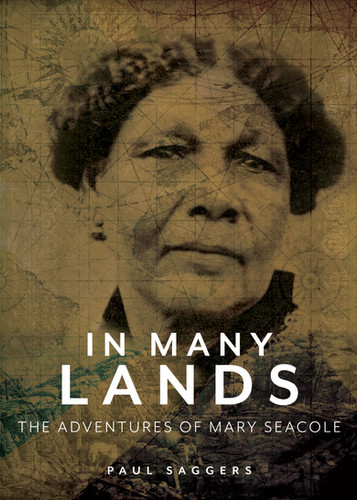
In Many Lands - The Adventures of Mary Seacole - Paul Saggers
In Many Lands - The Adventures of Mary Seacole was commissioned by The Royal Marines Band Service for The National Youth Brass Band of Great Britain. The first performance of the piece was on 16 April 2022 in Huddersfield Town Hall to celebrate the 70th anniversary of the NYBBGB. It was next performed in Birmingham Town Hall (on 28 April 2022) at a joint charity concert of the NYBBGB and The Band of Her Majestyas Royal Marines, Collingwood, for the European Brass Band Association Prelude Concert. The work is a musical account of the life of Mary Seacole who was a British-Jamaican nurse and businesswoman who set up the "British Hotel" behind the lines during the Crimean War. The work takes inspiration from Seacoleas biography Wonderful Adventures of Mrs. Seacole in Many Lands. The work is divided into three movements:
-
 £124.95
Hyperlink - Peter Graham
Hyperlink was commissioned by the National Youth Brass Band of Great Britain (funded by Arts Council England and the Department for Education) for its 70th Anniversary Year. Since the anniversary coincided with other significant celebrations in 2022 (including the Royal Albert Hall/Ralph Vaughan Williams 150th and the Platinum Jubilee of Elizabeth II) it was requested that these also be recognised in some way.
Where better to begin this challenging brief but with a computer search for the NYBBGB founder Dr Denis Wright (coincidently born in Kensington, home of the RAH). The subsequent rabbit warren of hyperlinks led me to structure the work through a series of "associations":
Movement I - The Voice of Jupiter.
Alongside the discovery that Denis Wright had been a church organist was the realisation that while the RAH has hosted thousands of musical events the fabric of the building actually incorporates a musical instrument, the famous Henry Wills organ (aka The Voice of Jupiter).Organ and J S Bach are synonymous (e.g. Toccata in D min) and so both become fundamental to the content of the movement. An opening 7 note quote from the Toccata leads to a mammoth sound cluster, as if every note on the huge RAH organ is sustained. The material which follows is based upon the notes BACH (in German notation). The notes are manipulated in various ways in a 12 tone matrix; reversed, inverted and so on. Other techniques employed in the movement are ones of which Bach was master, including ground bass and fugue.
Movement II - Remember Me.
The lives of Salvationist composer Ray Steadman-Allen (born 1922) and Ralph Vaughan Williams are remembered here, with "RSA" in musical notation and fragments of RVWs famous Tuba Concerto providing the source material.While writing the movement my father passed away and to close his funeral service the family chose the uplifting Robert Lowry hymn They'll sing a welcome home. It seemed fitting to conclude the movement with a reflective setting of the chorus, the repeated phrase "Welcome, welcome home" eventually disappearing into the ether.
Movement III - Vivat.
The finale takes the form of a short fantasy upon Hubert Parry's marvellous coronation anthem I Was Glad, truly a celebratory note with which to conclude.The first performance of Hyperlink was given by the NYBBGB conducted by Martyn Brabbins at the Royal College of Music, London on August 6th 2022.
Estimated dispatch 3-7 working days
-
£76.00
Jonny Makes Waves (Bra) - Max Stannard
Jonny Makes Waves is an exciting cornet solo with jazzy influences which is based around traditional sea songs. The main melody, A Life on the Ocean Wave, is the regimental march of the Royal Marines, while Heart of Oak , the official march of the Royal Navy, is quoted in the middle of the piece. These two melodies are given new harmonies and extensive quasi improvised sections by the soloists, in addition to call and response sections allowing all the band to join in. This fun filled piece is guaranteed to get your feet tapping.
Estimated dispatch 7-14 working days
 View Music