
Results
-
 £29.50
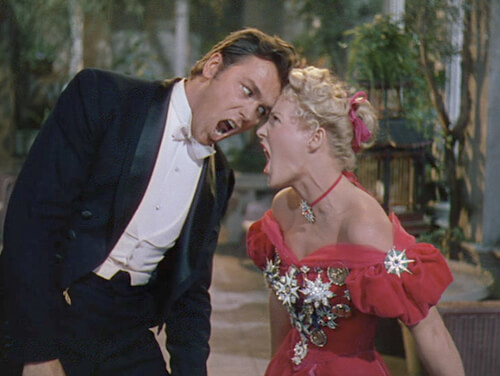
Anything You Can Play (I Can Play Better) - Irving Berlin - Martyn Patterson
This Irving Berlin hit from 'Annie Get Your Gun' is the perfect way for two argumentative instrumentalists to battle it out on stage and provide your audience with the ultimate in entertainment. Bands and soloists of course can add their own choreography to add effect to this duet. The quibbling pair get to battle it out on who can play louder, quieter, slower, faster, higher, lower etc. all in good spirited fun. This title is the perfect choice for bands looking to add something special to their programme and works a treat in the concert hall or on the bandstand. One not to be missed. For 2 Bb instruments or 1 Bb & Eb instrumentalists
In Stock: Estimated dispatch 1-3 working days
-
£31.00
Play With Your Band Volume 1 - Jerome Naulais
Amor Y Sol / As You Like / Bahia Blues / Bayside / Belo Horizonte
Estimated dispatch 7-14 working days
-
£31.00
Play With Your Band Volume 2 - Jerome Naulais
Black River / Blue Day / Cool Morning / Elisa / For You / Funky People
Estimated dispatch 7-14 working days
-
£31.00
Play With Your Band Volume 3 - Jerome Naulais
It's Time / Julito Mio / Just One / Key West / La Zorra
Estimated dispatch 7-14 working days
-
£31.00
Play With Your Band Volume 4 - Jerome Naulais
Love Train / Marche Turque / Sentimental Bossa / Take 3 / Westside
Estimated dispatch 7-14 working days
-
 £127.30
Summer Play Samba - Øystein Olsen Vadsten
"Summer Play Samba" is, as the title suggests, a light summer samba, which flows like a fresh summer breeze into the ear canals and stays there.The piece was written in connection with an assignment the composer was to have as a guest conductor at a so-called Summer Play in the Eastern Norway area. Hence the title Summer Play Samba. Here, musicians from far and near meet and participate in a kind of prima vista bonanza, where the main point is to be able to practice music during the summer break. Due to the lack of a piece in the entertainment genre, "Summer Play Samba" was written for this specific evening.After a bit of cleanup and polishing, this great samba is now ready for release."Summer Play Samba" should be a welcome contribution to any entertainment repertoire and is guaranteed to please the ears of many musicians and concertgoers.
Estimated dispatch 5-14 working days
-
 £60.90
Let's Play - Manfred Schneider
Let'sPlay' is a four part piece for youth band. You can play it with any band composition.
Estimated dispatch 5-14 working days
-
 £137.99
Sunrise with Sea Monsters - Oliver Waespi
The title of this work is based on the painting of the same name by the English painter William Turner. The ambiguity and suggestive power of this seascape offers great musical possibilities. The first part of the work represents the sunrise, and depicts scenes from Greek mythology in which two sea monsters from Odyssey play their part. In Charybdis, rugged high and low sound fields contrast with a tuneful theme, veined with restlessly pulsing lines. The subsequent fragmentary movement, Sirens, is characterized by mysterious sounds and intertwined arabesques, that are increasingly overshadowed by menacing chords. Concluding the final movement is another famous musical monster: a Tarantella. Sunrise with Sea Monsters was commissioned by the Brassband Burgermusik Luzern and was premiered at the 2023 Swiss Brass Band Championships, conducted by Michael Bach.
Estimated dispatch 5-14 working days
-
 £33.62
E lucevan le stelle (Cornet/Euphonium Duet with Brass Band) Puccini arr.Bushnell
Tosca is an opera in three acts by the Italian composer Giacomo Puccini. The opera is set in June 1800 in Rome, and tells the story of the Kingdom of Naples and the threat to its control of Rome by Napoleon's invasion of Italy. Some of Puccini's best-known arias can be found in Tosca. The opera is based on Victorien Sardou's dramatic play of the same name (La Tosca). Puccini saw the play at least twice in 1889 and begged his publisher, Giulio Ricordi, to obtain the rights to turn it into an opera, which were secured in 1891 - although Puccini relinquished the rights to Alberto Franchetti before being recommissioned in 1895. Puccini wrote "I see in this Tosca the opera I need, with no overblown proportions, no elaborate spectacle, nor will it call for the usual excessive amount of music." It took four years to write, with Puccini arguing with his librettists (Luigi Illica and Giuseppe Giacosa) and his publisher. Although the first performance was delayed by a day due to the unrest in Rome at the time, the opera was premiered on 14 January 1900 at the Teatro Costanzi in Rome. The critics reviews were indifferent, but it was an immediate success with the public. The opera is through-composed, with the different musical elements weaved from piece to piece. Puccini used the Wagner's leitmotif concept to identity different parts of the opera. Taken from Act 3, E lucevan le stelle is sung by Cavaradossi, a painter, who has fallen for the singer Tosca. The corrupt Chief of Police, Baron Scarpia, longs for Tosca himself and, upon suspecting Cavaradossi of helping a political prisoner escape, he takes the opportunity to get rid of Cavaradossi and blackmail Tosca into being with him. The guards lead Cavaradossi to the roof of Castel Sant'Angelo, where he is told he has 1 hour to live before being executed. He asks to write a letter to Tosca, overcome by memories, he sings E lucevan le stelle (And the stars shone). It was selected by the tenor Wynne Evans as one of the most romantic songs for his top ten arias for Classic FM. He described it as "another tenor classic, both tragic and beautiful." This arrangement (for cornet and euphonium duet with brass band) includes alternative parts for horns in F and lower brass in bass clef. A recording of the original song can be found here: www.youtube.com/watch?v=EAqHQMX7GHY
In Stock: Estimated dispatch 1-3 working days
" frameborder="0" allowfullscreen> -
 £34.95
Song for the Skies (Eb Bass Solo with Brass Band - Score and Parts)
Song for the Skies was commissioned by Tuba virtuoso Les Neish and was given its world premier on the December 9th 2010 with the James Madison University Brass Band in Harrisonburg, Virginia, USA.Les asked me to compose a slow melody that highlights the wonderful sonorous sound of the Tuba. I am a big fan of Les and of the instrument and knowing the capabilities of Les as a soloist I wanted to experiment with the range and colour of the instrument in this solo.After a warm introduction from the ensemble the soloist enters almost timeless over the muted cornets. The melody when it is first heard has a somewhat haunting Celtic feel to it. It is intentionally marked as con rubato so that the soloist can really put their own musical stamp on the music. As the haunting melody repeats again this time in a change of key the accompaniment takes more of a role within the piece of music performing counter melodies within this second section.The middle of the piece introduces a new secondary melodic device that serves as an introduction to the original melody played in all its glory by the ensemble. This dies away to leave the second half of the melody in the euphoniums and baritones as the soloist plays a soaring counter melody in the highest register of the instrument.The piece starts to return home with a recapitulation of the introduction followed by the second part of the original melody by the soloist. After a momentary reflective solo from the soloist the introduction is used for a final time before the tuba guides us home to conclude.For the soloist, there are a number of occasions where the opportunity to play in the upper register of the instrument arises. However, I have also given the opportunity for the soloist to play various passages down the octave so it suits the performers playing style and range.Song for the Skies is very simple yet beautiful and I feel it suits the playing of the Eb Tuba perfectly. I hope you enjoy performing it.Paul Lovatt-Cooper
Estimated dispatch 7-14 working days
 View Music