
Results
-
 £54.95
A Christmas Finale (Brass Band - Score and Parts) - Lovatt-Cooper, Paul
As the title suggests, A Christmas Finale provides an ideal close to any Christmas concert. Paul Lovatt-Cooper has taken a collection of popular works associated with Christmas and expertly crafted this wonderful piece to provide both the listener and performer with an exciting Christmas musical experience.? A note from the composer: I love the magic of Christmas. I find the whole experience exciting, from the handing out of presents to the movies shown on television. However, it is the music I love the most, from Christmas carols to Christmas number ones, it all adds to the unique atmosphere and sense of joviality associated with this wonderful time of year. A Christmas Finale captures my yuletide emotions and will hopefully provide enjoyment for you too! Merry Christmas. Duration: 7.30
Estimated dispatch 7-14 working days
-
 £82.95
The Flowers of the Forest (Brass Band - Score and Parts) - Bennett, Richard Rodney - Hindmarsh, Paul
In a preface to the score, the composer explains that 'the folk song The Flowers of the Forest is believed to date from 1513, the time if the battle of Flodden, in the course of which the archers of the Forest (a part of Scotland) were killed almost to a man'. Bennett had already used the same tune in his Six Scottish Folksongs (1972) for soprano, tenor and piano, and it is the arrangement he made then that forms the starting-point for the brass-band piece. A slow introduction (Poco Adagio) presents the folk song theme three times in succession - on solo cornet, on solo cornets and tenor horns, and on muted ripieno cornets in close harmony - after which the work unfolds through five sections and a coda. Although played without a break, each of these five sections has its own identity, developing elements of the tune somewhat in the manner of variations, but with each arising from and evolving into the next. The first of these sections (Con moto, tranquillo) is marked by an abrupt shift of tonality, and makes much of the slow rises and falls characteristic of the tune itself. The tempo gradually increases, to arrive at a scherzando section (Vivo) which includes the first appearance of the theme in its inverted form. A waltz-like trio is followed by a brief return of the scherzando, leading directly to a second, more extended, scherzo (con brio) based on a lilting figure no longer directly related to the theme. As this fades, a single side drum introduces an element of more overtly martial tension (Alla Marcia) and Bennett says that, from this point on, he was thinking of Debussy's tribute to the memory of an unknown soldier (in the second movement of En Blanc et noir, for two pianos). Bennett's march gradually gathers momentum, eventually culminating in a short-lived elegiac climax (Maestoso) before the music returns full-circle to the subdued melancholy of the opening. The work ends with a haunting pianissimo statement of the original tune.
Estimated dispatch 7-14 working days
-
£44.95
The Flowers of the Forest (Brass Band - Score only) - Bennett, Richard Rodney - Hindmarsh, Paul
In a preface to the score, the composer explains that 'the folk song The Flowers of the Forest is believed to date from 1513, the time if the battle of Flodden, in the course of which the archers of the Forest (a part of Scotland) were killed almost to a man'. Bennett had already used the same tune in his Six Scottish Folksongs (1972) for soprano, tenor and piano, and it is the arrangement he made then that forms the starting-point for the brass-band piece. A slow introduction (Poco Adagio) presents the folk song theme three times in succession - on solo cornet, on solo cornets and tenor horns, and on muted ripieno cornets in close harmony - after which the work unfolds through five sections and a coda. Although played without a break, each of these five sections has its own identity, developing elements of the tune somewhat in the manner of variations, but with each arising from and evolving into the next. The first of these sections (Con moto, tranquillo) is marked by an abrupt shift of tonality, and makes much of the slow rises and falls characteristic of the tune itself. The tempo gradually increases, to arrive at a scherzando section (Vivo) which includes the first appearance of the theme in its inverted form. A waltz-like trio is followed by a brief return of the scherzando, leading directly to a second, more extended, scherzo (con brio) based on a lilting figure no longer directly related to the theme. As this fades, a single side drum introduces an element of more overtly martial tension (Alla Marcia) and Bennett says that, from this point on, he was thinking of Debussy's tribute to the memory of an unknown soldier (in the second movement of En Blanc et noir, for two pianos). Bennett's march gradually gathers momentum, eventually culminating in a short-lived elegiac climax (Maestoso) before the music returns full-circle to the subdued melancholy of the opening. The work ends with a haunting pianissimo statement of the original tune.
Estimated dispatch 7-14 working days
-
£40.00
Take Five (Brass Band - Score and Parts) - Desmond, Paul - Sykes, Steve
The classic jazz number 'Take Five' was first recorded by the Dave Brubeck Quartet and released on its 1959 album Time Out. Composed by Paul Desmond, the group's saxophonist, it became famous for its distinctive, catchy melody and use of quintuple time, from which the piece got its name. This brass band arrangement, by Steve Sykes, captures the jaunty slant of the original.Suitable for Advanced Youth/3rd Section Bands and aboveDuration: 4.00
Estimated dispatch 7-14 working days
-
£42.95
WHEREVER YOU ARE (Brass Band) - Mealor, Paul - Stubbs, Duncan
Commissioned by Gareth Malone for Series Four of BBC TV's 'The Choir' and first performed by Malone and The Military Wives Choir as part of The Royal British Legion's Festival of Remembrance at the Royal Albert Hall on 12 November 2011, in the presence of Her Majesty The Queen. The text is taken from poems, letters and prayers written by the Military Wives, selected and adapted by Paul Mealor, and a passage from the Book of John. Selling a staggering 556,000 copies in the week leading up to Christmas, more than the rest of the Top 12 combined, Wherever You Are became the UK's Official Christmas No. 1 of 2011. A wind band version is also available. A contribution from the sales of the sheet music will be donated to the two nominated charities: The Royal British Legion and SSAFA Forces Help.
Estimated dispatch 7-14 working days
-
£59.95
Beulah Land (Brass Band - Score and Parts) - Heaton, Wilfred - Hindmarsh, Paul
Wilfred Heaton began to assemble material for 'Beulah Land' in the early 1990s following a request from the Amsterdam Staff Band for a new work. Despite reminding himself on the manuscript that he should either complete or destroy the work before his death, ultimately he did not manage either. This edition was subsequently realised in 2003 for the tour of the USA Western States by the Amsterdam Staff Band.'Beulah Land' is Heaton's vision of the joy that awaits the Christian in Heaven and, according to his family, is reminiscent of the kind of music he often improvised at the piano. The three movements are as follows;1. Better World; a waltz sequence on the tune 'Zealley' to which the words 'There is a better world, they say' are sung.2. Heavenly Home; an elegiac cortege using the tunes 'My home is in Heaven', 'I have a home that is fairer than day' and 'The home over there'.3. Happy Land; Beginning in waltz rhythm this soon gives way to a sequence of free variations on the song 'There is a happy land, Far, far away'.
Estimated dispatch 7-14 working days
-
£29.95
Beulah Land (Brass Band - Score only) - Heaton, Wilfred - Hindmarsh, Paul
Wilfred Heaton began to assemble material for 'Beulah Land' in the early 1990s following a request from the Amsterdam Staff Band for a new work. Despite reminding himself on the manuscript that he should either complete or destroy the work before his death, ultimately he did not manage either. This edition was subsequently realised in 2003 for the tour of the USA Western States by the Amsterdam Staff Band.'Beulah Land' is Heaton's vision of the joy that awaits the Christian in Heaven and, according to his family, is reminiscent of the kind of music he often improvised at the piano. The three movements are as follows;1. Better World; a waltz sequence on the tune 'Zealley' to which the words 'There is a better world, they say' are sung.2. Heavenly Home; an elegiac cortege using the tunes 'My home is in Heaven', 'I have a home that is fairer than day' and 'The home over there'.3. Happy Land; Beginning in waltz rhythm this soon gives way to a sequence of free variations on the song 'There is a happy land, Far, far away'.
Estimated dispatch 7-14 working days
-
 £39.99
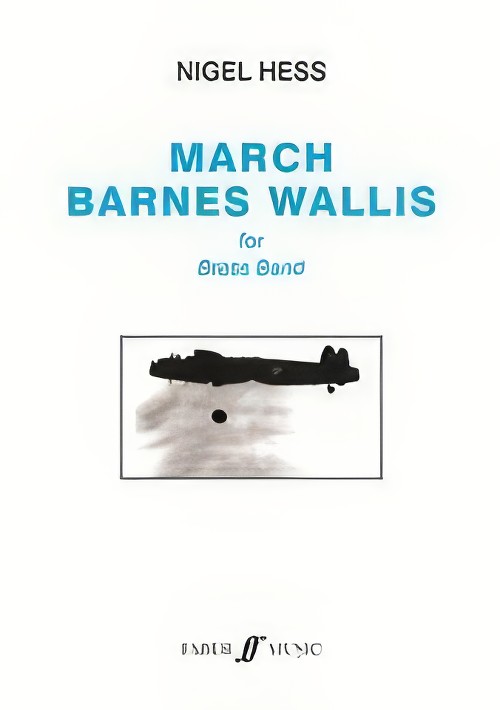
March Barnes Wallis (Brass Band - Score and Parts) - Hess, Nigel - Hindmarsh, Paul
March Barnes Wallis was commissioned by Royal Air Force Music Services to commemorate the 70th anniversary of the famous Dambuster's raid and received its first performance on BBC Radio 2's Friday Night is Music Night, broadcast live from Biggin Hill Airport on 17 June 2013 by the Central Band of the RAF, Director of Music Wing Commander Duncan Stubbs. Suitable for Premier Youth/2nd Section Bands and above. Duration: 5.30
Estimated dispatch 7-14 working days
-
 £29.95
Christmas Presence (Brass Band - Score and Parts) - Sharman, Paul
Written for Birmingham Citadel Band to play at their annual carol concert at Symphony Hall, Birmingham, this piece tells the story of the Nativity using the carols Who is He? and Calypso Carol. Brief appearances are made by the shepherds (While Shepherds Watched), the angels (Ding Dong! Merrily on High) and the wise men (The Kings' March and We Three Kings of Orient are). The music finishes with a majestic setting of the chorus of Who is He?, reminding us of baby Jesus.
Estimated dispatch 7-14 working days
-
 £59.99
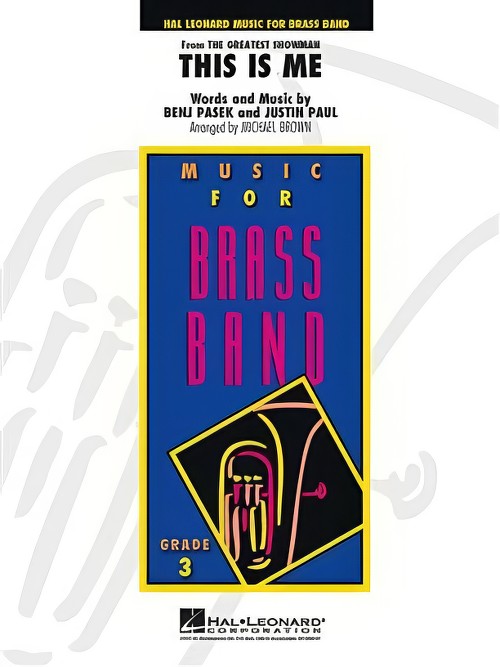
This is Me (from The Greatest Showman) (Brass Band - Score and Parts) - Pasek & Paul - Brown & Jeanbourquin
From the songwriting team who brought us Dear Evan Hansen and La La Land, the movie musical The Greatest Showman is based on the true story of P. T. Barnum, with Hugh Jackman in the title role. This arrangement of the powerful anthem from the film is a dynamic showcase for the concert stage.
Estimated dispatch 7-14 working days
 View Music