
Results
-
 £59.99
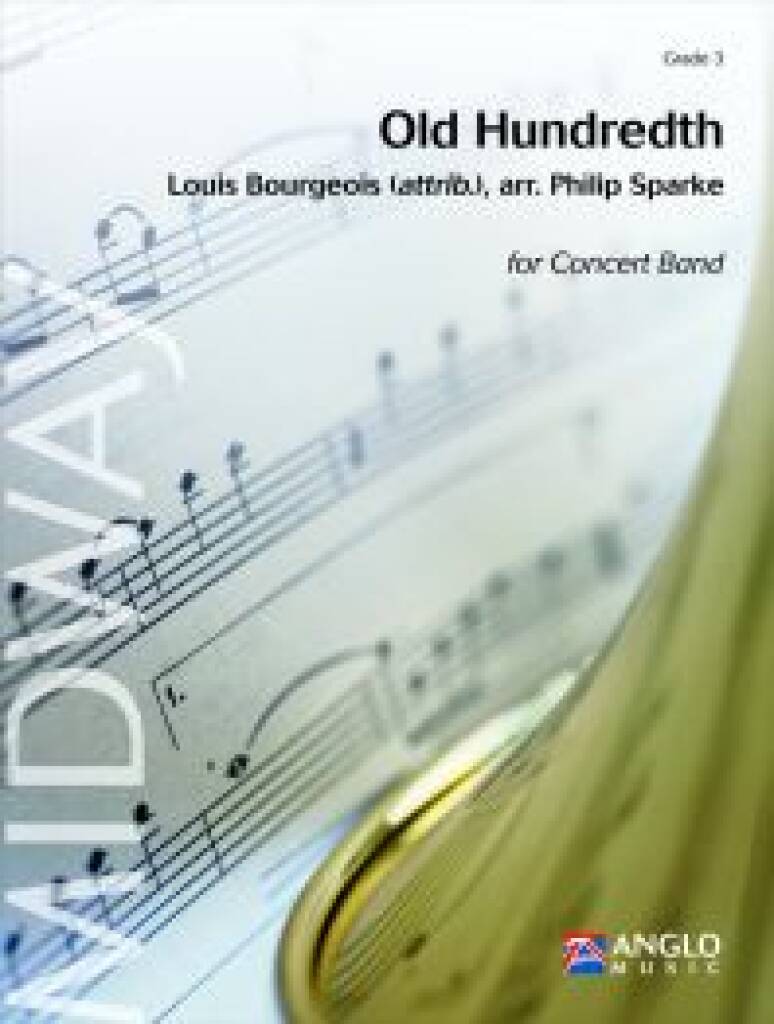
Old Hundredth - Louis Bourgeois - Philip Sparke
The tune Old Hundredth is one of the best-known melodies in all Christian musical traditions and first appeared in the 1551 psalter "Pseaumes Octante Trois de David", where it is used as a setting for a version of Psalm 134; it is usually attributed to the French composer Louis Bourgeois (c.1510 - c.1560). The melody was then used in 1561 by the Scots clergyman, William Kethe in Sternhold and Hopkins' Psalter for his paraphrase of Psalm 100 - All People that on Earth do Dwell, which is still the most familiar hymn sung to this noble tune. When Tate and Brady's "New Version of the Psalms" was published in 1696, the melody became know as the 'old' version - henceits current title. This arrangement presents three contrasting verses and is effective as a concert piece as well as an instrumental interlude as part of a church service or wedding.
Estimated dispatch 5-14 working days
-
£60.99
An Old Swedish Hymn - Klaas van der Woude
Klaas van der Woude has based his arrangement An Old Swedish Hymn on an old pastoral hymn from Dalarna. This beautiful melody even attracted ABBA as they used it as the opening music for some of their concerts. Van der Woude's arrangement is in classical style making it suitable for any occasion.
Estimated dispatch 5-14 working days
-
 £73.60
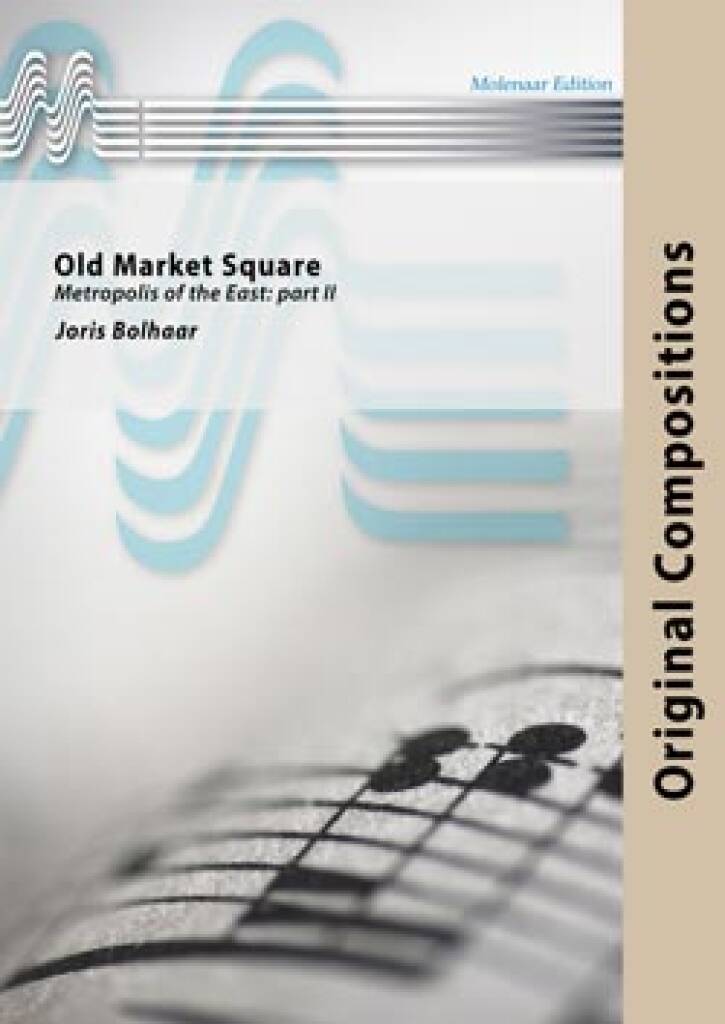
Old Market Square - Joris Bolhaar
In the second part of the two-piece work Metropolis of the East is the Old Market, the centre point of the city of Enschede in the Netherlands. Elements such as the Great Church, the monument to the city fire of 1862, and historical events such as the textile strike can be heard in this piece, as well as the sounds of the many al-fresco cafes, the theatre Concordia, and the many festivals. This piece is coupled with The Cotton Phoenix (Alex Poelman) but functions well as a stand-alone work.
Estimated dispatch 5-14 working days
-
 £24.50
The Grand Old Dukes - Traditional - Bill Willis
This new take on the much loved children's Nursery Rhyme is a great way to showcase your band's cornet players with a playful, yet in parts, challenging cornet trio. Nobody knows for certain to whom the song refers, however several candidates include Prince Frederick (Duke of York and Albany), Richard (Duke of York) and James II (formerly the Duke of York). Suitable for either the bandstand or concert hall, this is a great entertainment item that spans the generations whilst giving the soloists a chance to shine.
In Stock: Estimated dispatch 1-3 working days
-
£60.99
Old Paintings - Patrick Millstone
The composer depicts five little paintings which were hanging on the wall of the spare room of his grandparents' house when he used to stay there as a young boy. Each painting had its own place and story. Even a replica of Rembrandt's Night Watch was there and his eyes were always focussed on the person with the drums. Imaginative music of high educational value. Playing together, articulation, and playing in tune are familiar, but useful, ingredients of this varied piece.
Estimated dispatch 5-14 working days
-
 £34.95
Goodbye Old Friend - Christopher Bond
Walt Disney was just twenty-five years old when he created Oswald the Lucky Rabbit, and the pair gained huge success, but that success was short-lived. In 1928, Disney travelled to New York City in hopes of negotiating a more profitable contract for the Oswald cartoons with his producer, Charles Mintz. Unknown to Disney, Mintz had been working behind his back to counter his own financial problems by stealing many of Disney's animators and staff. Walt Disney was devastated and decided to let Oswald go, and in doing so, lose all the rights to the rabbit he had created and nurtured so dearly. 'Goodbye Old Friend' is a beautiful slow-melody for euphonium and baritone, communicating the profound loss Disney felt in losing his producer, staff, and most of all, Oswald the Lucky Rabbit.
Estimated dispatch 10-14 working days
-
 £30.00
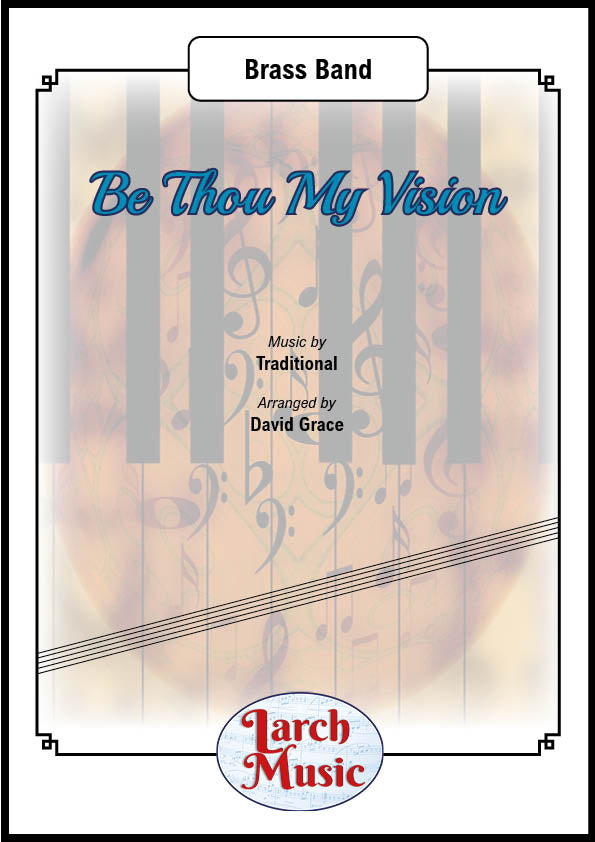
Be Thou My Vision (Traditional arr. by David Grace) - Brass Band Sheet Music Full Score & Parts - LM656 - Traditional - David Grace
COMPOSER: TraditionalARRANGER: David Grace"Be Thou My Vision" (Old Irish: Rop tu mo baile or Rob tu mo bhoile) is a traditional Christian hymn of Irish origin.The words are based on a Middle Irish poem that has traditionally been attributed to Dallan Forgaill in the 6th century.However, scholars believe it was written later than that.Some date it to the 8th century; others put it as late as the 10th or 11th century.That it sat untranslated for perhaps 14 centuries is astounding.The best-known English version, with some minor variations, was translated in 1905 by Mary Elizabeth Byrne, then made into verse by Eleanor Hull and published in 1912.Since 1919 it has been commonly sung to an Irish folk tune, noted as "Slane" in church hymnals, and is one of the most popular hymns in the United Kingdom.LM656 - ISMN : 9790570006564
In Stock: Estimated dispatch 3-5 working days
-
 £44.95
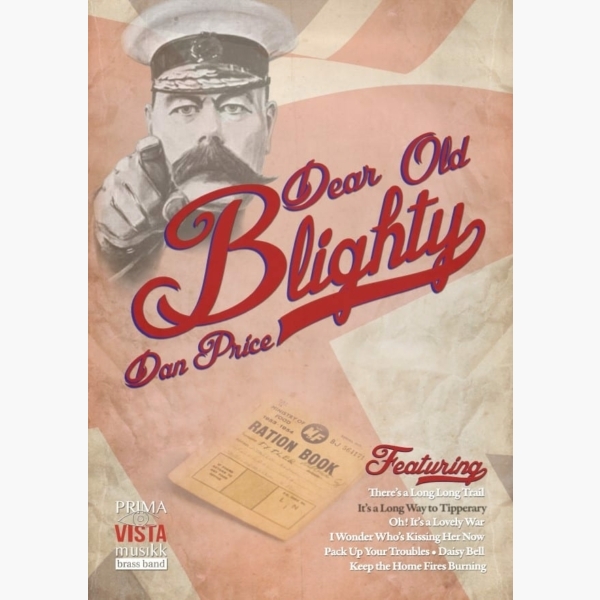
Dear Old Blighty - Dan Price
Commissioned in 2014 by the Flowers Band and premiered at the Cheltenham Music Festival in the same year, Dear Old Blighty is a creative arrangement of songs popular in 1914 and of those released during the World War I period....
Estimated dispatch 5-7 working days
-
 £29.95
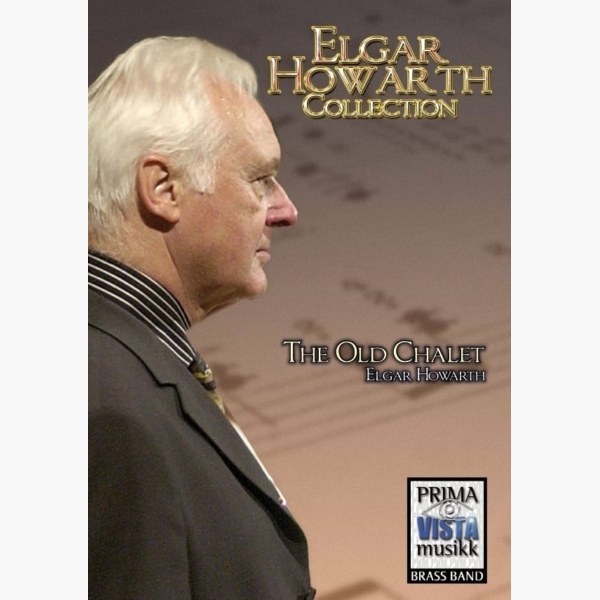
The Old Chalet - Elgar Howarth
The Old Chalet began life as brass chamber music and featured as an encore in many concerts given by the legendary Philip Jones Brass Ensemble of which Howarth was a founder member. This ensemble frequently visited Switzerland because Philip Jones'...
Estimated dispatch 5-7 working days
-
£13.00
Toast Music - Various
Includes:The Roast Beef of Old EnglandBe Present at Our Table LordThe National Anthem (British)Prince of WalesThe British GrenadiersHearts of OakHere's A Health To All Good LassiesFor He's A Jolly Good FellowAuld Lang SyneRule Britannia
In Stock: Estimated dispatch 1-3 working days
 View Music