
Results
-
 £59.99
Old Hundredth - Louis Bourgeois - Philip Sparke
The tune Old Hundredth is one of the best-known melodies in all Christian musical traditions and first appeared in the 1551 psalter "Pseaumes Octante Trois de David", where it is used as a setting for a version of Psalm 134; it is usually attributed to the French composer Louis Bourgeois (c.1510 - c.1560). The melody was then used in 1561 by the Scots clergyman, William Kethe in Sternhold and Hopkins' Psalter for his paraphrase of Psalm 100 - All People that on Earth do Dwell, which is still the most familiar hymn sung to this noble tune. When Tate and Brady's "New Version of the Psalms" was published in 1696, the melody became know as the 'old' version - henceits current title. This arrangement presents three contrasting verses and is effective as a concert piece as well as an instrumental interlude as part of a church service or wedding.
Estimated dispatch 5-14 working days
-
 £73.60
Old Market Square - Joris Bolhaar
In the second part of the two-piece work Metropolis of the East is the Old Market, the centre point of the city of Enschede in the Netherlands. Elements such as the Great Church, the monument to the city fire of 1862, and historical events such as the textile strike can be heard in this piece, as well as the sounds of the many al-fresco cafes, the theatre Concordia, and the many festivals. This piece is coupled with The Cotton Phoenix (Alex Poelman) but functions well as a stand-alone work.
Estimated dispatch 5-14 working days
-
 £24.50
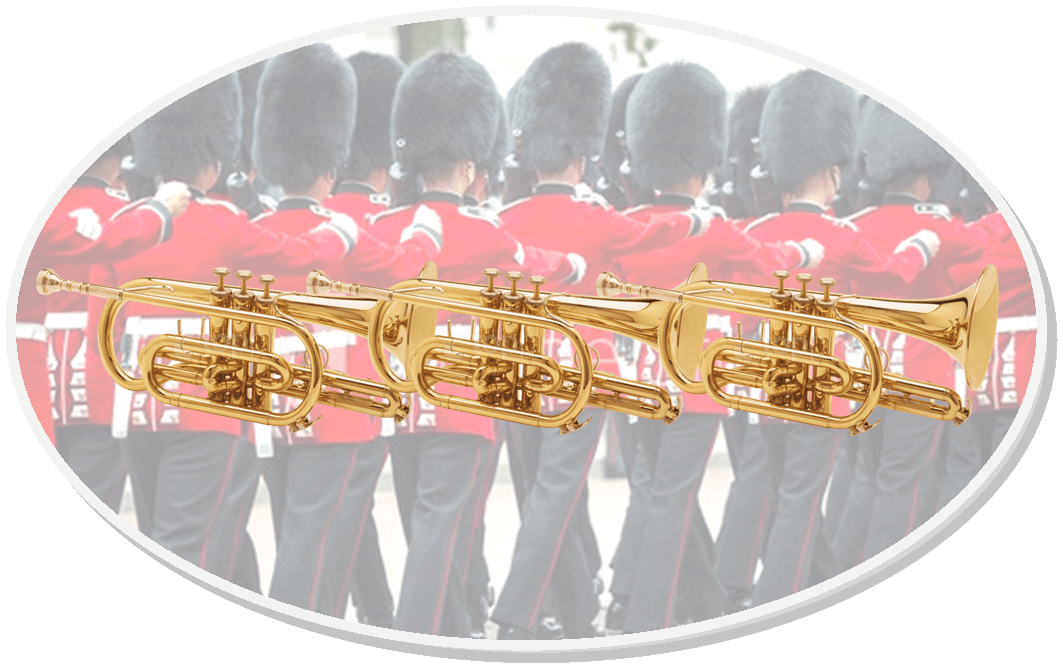
The Grand Old Dukes - Traditional - Bill Willis
This new take on the much loved children's Nursery Rhyme is a great way to showcase your band's cornet players with a playful, yet in parts, challenging cornet trio. Nobody knows for certain to whom the song refers, however several candidates include Prince Frederick (Duke of York and Albany), Richard (Duke of York) and James II (formerly the Duke of York). Suitable for either the bandstand or concert hall, this is a great entertainment item that spans the generations whilst giving the soloists a chance to shine.
In Stock: Estimated dispatch 1-3 working days
-
£60.99
Old Paintings - Patrick Millstone
The composer depicts five little paintings which were hanging on the wall of the spare room of his grandparents' house when he used to stay there as a young boy. Each painting had its own place and story. Even a replica of Rembrandt's Night Watch was there and his eyes were always focussed on the person with the drums. Imaginative music of high educational value. Playing together, articulation, and playing in tune are familiar, but useful, ingredients of this varied piece.
Estimated dispatch 5-14 working days
-
 £34.95
Goodbye Old Friend - Christopher Bond
Walt Disney was just twenty-five years old when he created Oswald the Lucky Rabbit, and the pair gained huge success, but that success was short-lived. In 1928, Disney travelled to New York City in hopes of negotiating a more profitable contract for the Oswald cartoons with his producer, Charles Mintz. Unknown to Disney, Mintz had been working behind his back to counter his own financial problems by stealing many of Disney's animators and staff. Walt Disney was devastated and decided to let Oswald go, and in doing so, lose all the rights to the rabbit he had created and nurtured so dearly. 'Goodbye Old Friend' is a beautiful slow-melody for euphonium and baritone, communicating the profound loss Disney felt in losing his producer, staff, and most of all, Oswald the Lucky Rabbit.
Estimated dispatch 10-14 working days
-
 £30.00
Be Thou My Vision (Traditional arr. by David Grace) - Brass Band Sheet Music Full Score & Parts - LM656 - Traditional - David Grace
COMPOSER: TraditionalARRANGER: David Grace"Be Thou My Vision" (Old Irish: Rop tu mo baile or Rob tu mo bhoile) is a traditional Christian hymn of Irish origin.The words are based on a Middle Irish poem that has traditionally been attributed to Dallan Forgaill in the 6th century.However, scholars believe it was written later than that.Some date it to the 8th century; others put it as late as the 10th or 11th century.That it sat untranslated for perhaps 14 centuries is astounding.The best-known English version, with some minor variations, was translated in 1905 by Mary Elizabeth Byrne, then made into verse by Eleanor Hull and published in 1912.Since 1919 it has been commonly sung to an Irish folk tune, noted as "Slane" in church hymnals, and is one of the most popular hymns in the United Kingdom.LM656 - ISMN : 9790570006564
In Stock: Estimated dispatch 3-5 working days
-
 £65.00
Second Suite in F - Brass Band Sheet Music Full Score & Parts - LM602 - Gustav Holst
COMPOSER: Gustav HolstTRANSCRIBED : Daniel S. AugustineA brand transcription from Holst's manuscript score for brass band.A very authentic version from the original for Military Band.Can be used as a testpiece in your next own choice contestSuitable for Section 3 bands upwardsSecond Suite in FOp. 28, No. 2 (1922)1. MarchThe "March" of the Second Suite begins with a simple five note motif between the low and high instruments of the band. The first folk tune is heard in the form of a traditional British brass band march using the morris-dance tune "Glorishears". After a brief climax, the second strain begins with a euphonium solo playing the second folk tune in the suite "Swansea Town". The theme is repeated by the full band before the trio. For the trio, Holst modulates to the unconventional subdominant minor of Bb minor and changes the time signature to 6/8, thereby changing the meter. Usually one would modulate to subdominant major in traditional march form. While Sousa, reputably the "king of marches", would sometimes change time signatures for the trio (most notably in "El Capitan"), it was not commonplace. The third theme, called "Claudy Banks",[2] is heard in a low woodwind soli, as is standard march orchestration. Then the first two tunes are repeated da capo.2. Song without Words "I'll Love My Love"Holst places the fourth folk song, "I'll Love My Love" in stark contrast to the first movement. The movement begins with a chord and moves into a solo over a flowing accompaniment. The solo is then repeated, forming an arc of intensity. The climax of the piece is a fermata, followed by a cornet pick-up into the final measures of the piece.3. Song of the BlacksmithAgain, Holst contrasts the slow second movement to the rather upbeat third movement which features the folk song "A Blacksmith Courted Me". There are many time signature changes (4/4 to 3/4) making the movement increasingly difficult because the accompaniment has a pick up on the up-beats of each measure. The band joins in on the melody around the body of the piece and are accompanied with the sound of a blacksmith forging metal with an anvil called for in the score. The final major chord has a glorious, heavenly sound, which opens way to the final movement.This chord works so effectively perhaps because it is unexpected.4. Fantasia on the "Dargason"This movement is not based on any folk songs, but rather has two tunes from Playford's Dancing Master of 1651. The finale of the suite opens with a solo based on the folk tune "Dargason", a 16th-century English dance tune included in the first edition of The Dancing Master. The fantasia continues through several variations encompassing the full capabilities of the band. The final folk tune, "Greensleeves", is cleverly woven into the fantasia by the use of hemiolas, with Dargason being in 6/8 and Greensleeves being in 3/4. At the climax of the movement, the two competing themes are placed in competing sections.As the movement dies down, a duet forms a call back to the beginning of the suite with the competition of low and high registers.The name 'dargason' may perhaps come from an Irish legend that tells of a monster resembling a large bear (although much of the description of the creature has been lost over time), the Dargason tormented the Irish countryside. During the Irish uprising of the late 18th century, the dargason is supposed to have attacked a British camp killing many soldiers. This tale aside, 'dargason' is more likely derived from an Old English word for dwarf or fairy, and the tune has been considered English (or Welsh) since at least the 16th century. It is also known as 'Sedony' (or Sedany) or 'Welsh Sedony'.
In Stock: Estimated dispatch 3-5 working days
-
 £30.00
Carrickfergus - Soprano Cornet & Brass Band Sheet Music Full Score & Parts - LM399
COMPOSER: TraditionalARRANGER: Alan BeaumontThe famous Irish tune given a fresh solo approachBrass Band Sheet Music Full Score & Parts"Carrickfergus" is a famous Irish folk song and traditional lament, often interpreted as a heartfelt ballad oflost love, loneliness, and a deep, aching longing for one's home or a past life. Named after the town in County Antrim, Northern Ireland, it features lyrics about a wanderer reflecting on unattainable love, often evoking themes of emigration, old age, and nostalgia.LM399 - ISMN : 9790570003990
In Stock: Estimated dispatch 3-5 working days
-
 £25.00
Ring of Fire (Johnny Cash arr. by David Beal) - Brass Band Sheet Music Full Score & Parts - LM782
COMPOSER: June Carter Cash and Merle KilgoreARRANGER: David BealUK SALES ONLY"Ring of Fire"is a song written byJune Carter CashandMerle Kilgoreand popularized byJohnny Cashin 1963.The single appears on Cash's 1963 album,Ring of Fire: The Best of Johnny Cash.The song was originally recorded by June's sister,Anita Carter,on her Mercury Records albumFolk Songs Old and New(1963)as "(Love's) Ring of Fire".Mercury released Anita's version as a single and it was a featured "pick hit" inBillboardmagazine.After hearing Anita's version, Cash claimed he had adream where he heard the song accompanied by "Mexican horns".Cash said, "I'll give you about five or six more months,and if you don't hit with it, I'm gonna record it the way I feel it."Cash noted that adding trumpets was a change to his basic sound"Ring of Fire" was ranked #4 onCMT's 100Greatest Songs of Country Musicin 2003 and #87onRolling Stone's list ofThe 500 Greatest Songs of All Time.In June2014,Rolling Stoneranked the song #27 on its list of the100greatest country songs of all time.The song was recorded on March 25, 1963, and became one of thebiggest hits of Cash's career, staying at number oneon the country chart for seven weeks.It was certified Gold on January21, 2010,by theRIAAand has also sold over1.2million digital downloads.UK SALES ONLYLM782 - ISMN : 9790570007820
In Stock: Estimated dispatch 3-5 working days
-
£16.00
Toast Music - Various
Includes:The Roast Beef of Old EnglandBe Present at Our Table LordThe National Anthem (British)Prince of WalesThe British GrenadiersHearts of OakHere's A Health To All Good LassiesFor He's A Jolly Good FellowAuld Lang SyneRule Britannia
In Stock: Estimated dispatch 1-3 working days
 View Music
