
Results
-
£26.50
Pat in America - Eden, H
Includes a full band set (no score)
In Stock: Estimated dispatch 1-3 working days
-
£11.00
Christmas Music No. 4 - Various
The First Nowell arranged G. HawkinsGood King Wenceslas arranged G. HawkinsGod Rest You, Merry Gentlemen arranged G. HawkinsIt Came Upon the Midnight Clear arranged G. HawkinsOnce in Royal David's City arranged G. HawkinsGood Christian Men, Rejoice arranged G. HawkinsHere We Come A-Wassailing arranged G. HawkinsThe Old Hundredth arranged G. HawkinsA Guid New Year arranged G. Hawkins
In Stock: Estimated dispatch 1-3 working days
-
 £14.95
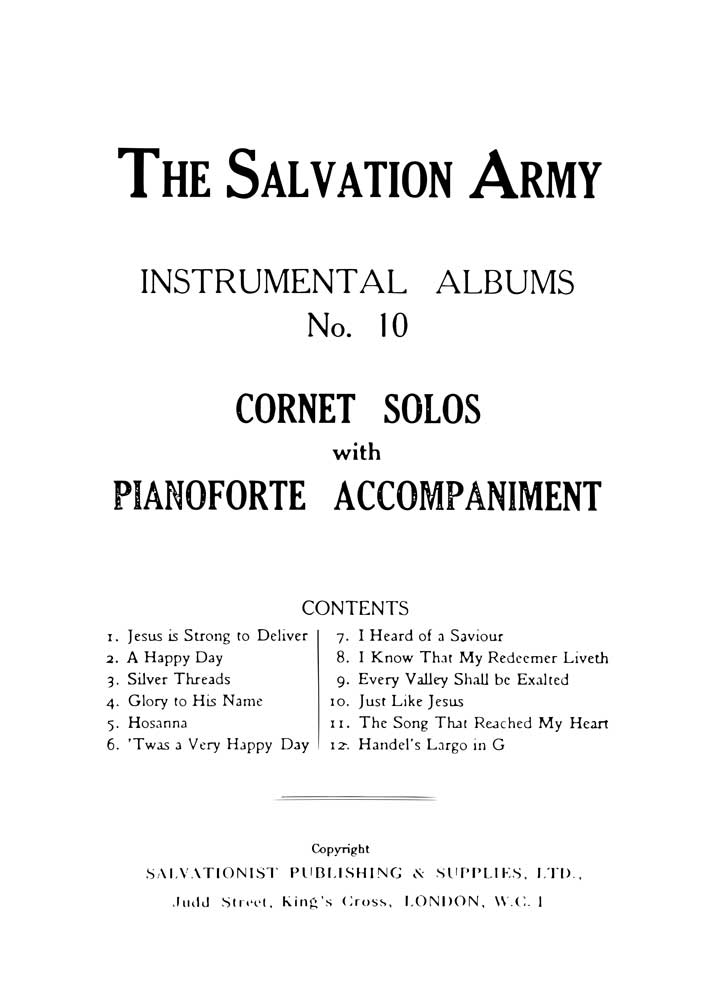
Instrumental Album No.10 - Cornet Solos
Includes: Jesus is strong to deliver; A Happy Day; Silver Threads; Glory to his name; Hosanna; Twas a Very Happy Day; I Heard of a Saviour; I Know that my redeemer liveth; Every valley shall be exalted; Just like Jesus; The song that reached my heart; Handel's Largo in GInstrumentation: Cornet with Piano Accompaniment
Estimated dispatch 7-14 working days
-
 £14.95
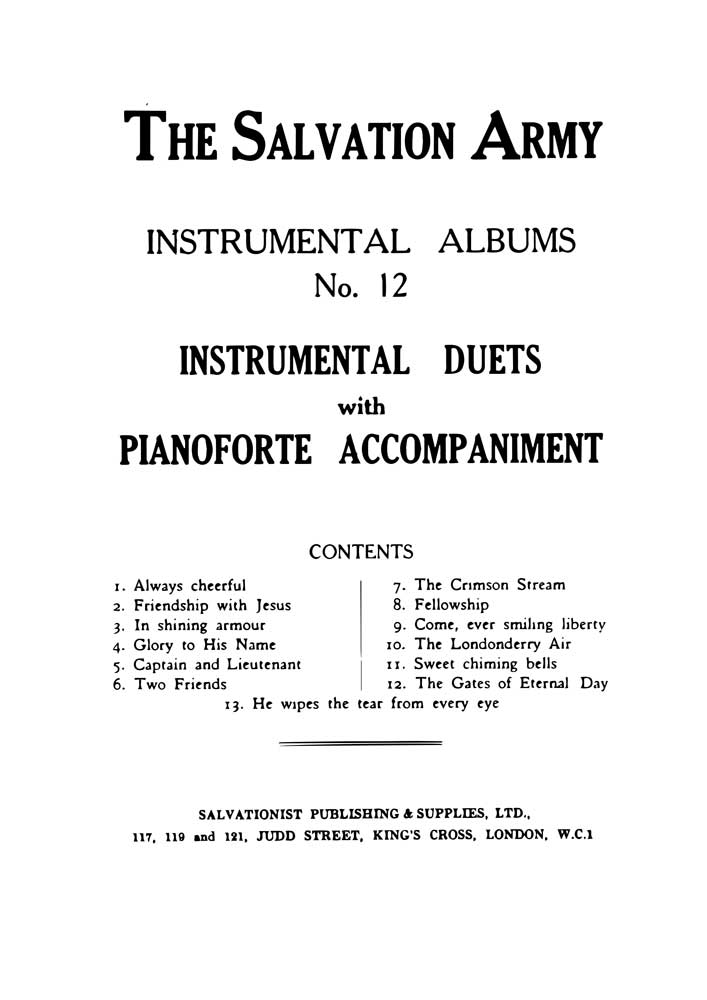
Instrumental Album No.12 - Instrumental Duets
Includes: Always cheerful; Friendship with Jesus; In shining armour; Glory to his name; Captain and Lieutenant; Two Friends; The Crimson Stream; Fellowship; Come, ever smiling liverty; The Londonderry Air; Sweet chimings bells; The gates of eternal day; He wipes the tear from every eyeInstrumentation: Bb & Eb Duets with Piano Accompaniment
Estimated dispatch 7-14 working days
-
 £14.95
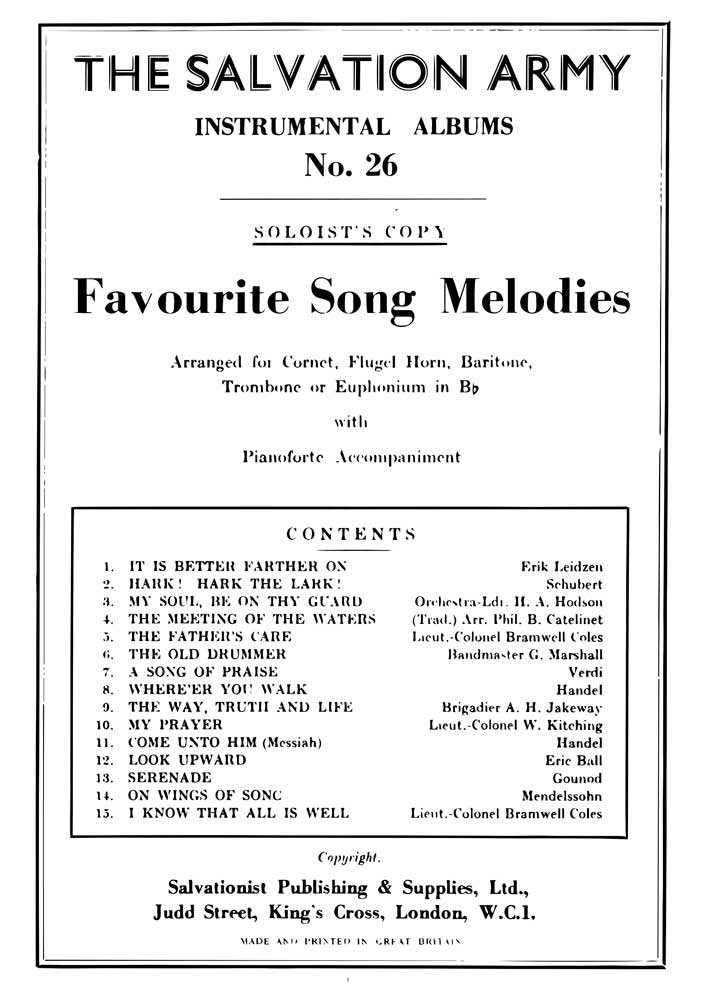
Instrumental Album No.26 - Favourite Song Melodies
Includes: It is better farther on; Hark! Hark the Lark!; My sou, be on thy guard; The meeting of the waters; The father's care; The old drummer; A song of praise; Where'er you walk; The way, truth and life; My Prayer; Come unto him (Messiah); Look Upward; Serenade; On wings of song; I know that all is wellInstrumentation: Arranged for Cornet, Flugel, Baritone, Trombone or Euphonium in Bb with Piano Accompaniment
Estimated dispatch 7-14 working days
-
 £14.95
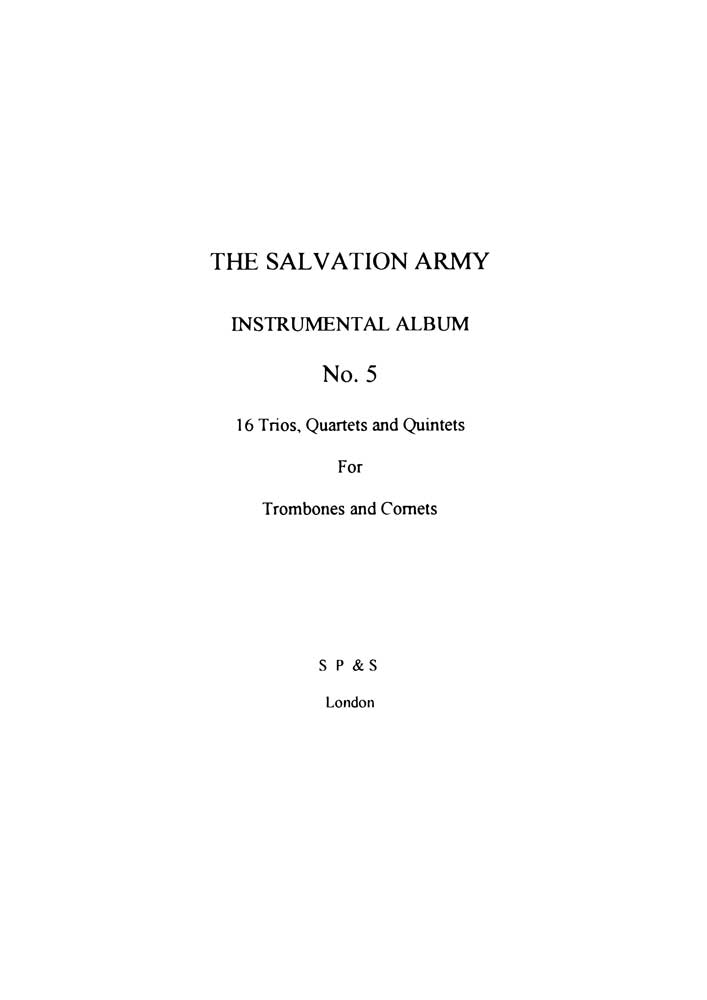
Instrumental Album No.5 - 16 Trios, Quartets & Quintets
Includes: Glorious Pardon; Norwegian Songs; Love at home; Trust; National Airs; Beethoven's Eqali; Comrades in arms; There is a green hill; Cheerful Strains; Glad Tidings; Schumann's Melodies; Mendelssohn's Songs; The Summerland; Songs without words; Hark the glad sounds; When winds breathe softInstrumentation: Trombone & Cornets
Estimated dispatch 7-14 working days
-
 £39.95
Black and White Minstrel Medley No.2
Includes: Give My Regards to Broadway; If You Were the Only Girl in the World;When the Midnight Choo-Choo Leaves for Alabam; Le Me Call You Sweetheart; Everybody's Doing It Now; Moonlight Bay; California, Here I Come.
Estimated dispatch 7-14 working days
-
 £39.95
Good Old Songs No.1
Includes: Come Landlord, Fill the Flowing Bowl; Don't Dilly-Dally on the Way; I'll Be Your Sweetheart; Following in Father's Footsteps; Bill Bailey Won't You Please Come Home.
Estimated dispatch 7-14 working days
-
 £39.95
Good Old Songs No.2
Includes: The Man Who Broke the Bank at Monte Carol; Let Him Go, Let Him Tarry; If Those Lips Could Only Speak; While Strolling in the Park; Ta-Ra-Ra-Boom-De-Ay.
Estimated dispatch 7-14 working days
-
 £39.95
Sing with the Band Medley No.1
Includes: Part 1: Tavern in the Town; My Grandfather's Clock; Little Brown Jug. Part 2: Cockles and Mussels; A Farmer's Boy; Loch Lomond; John Brown's Body. Word Sheet included
Estimated dispatch 7-14 working days
 View Music