
Results
-
 £14.95
First Light (Score Only)
First Light was written for Kirsty Abbotts and Carlton Main Frickley Colliery Band. A slow lilting melody is presented in the cornet solo and passed between the band and the soloist to create images of the tranquil night before the piece reaches a climactic moment which is meant to represent the beams of light emerging as the sun rises. The theme is then presented in a tutti forte section before arriving at a tranquil finish. First Light is featured on the Kirsty Abbotts and Carlton Main Frickley Colliery Bands CD, A Search for Peace.
Estimated dispatch 7-14 working days
-
 £33.62
O Little Town (St Louis) (Brass Band) Redner arr. Fendall Hill
This arrangement of O Little Town of Bethlehem is based on the beloved carol text by Phillips Brooks (1835-1893), set to the familiar St. Louis tune composed by Lewis Redner in 1868. Originally written for a Christmas Sunday school service, the melody famously came to Redner in a dream the night before it was needed - an origin story that mirrors the spontaneous inspiration behind this brass band setting. Fendall Hill's arrangement was prepared for Sovereign Brass (Wednesbury, England) and included in their 2023 Christmas CD. Lyrical and reverent, this version captures the timeless beauty of the carol while offering a fresh voice for modern brass ensembles. To view a rolling score video featuring Sovereign Brass's CD recording please visit: https://www.youtube.com/watch?v=HaMTVQl57ug Difficulty Level: 4th Section + PDF download includes parts and score. Sheet music available at www.brassband.co.uk (UK) or https://satradecentral.org (USA) Instrumentation: Soprano Cornet Eb Solo Cornet Bb Repiano Cornet Bb 2nd Cornet Bb 3rd Cornet Bb Flugel Horn Bb Solo Horn Eb 1st Horn Eb 2nd Horn Eb 1st Baritone Bb 2nd Baritone Bb 1st Trombone Bb 2nd Trombone Bb Bass Trombone Euphonium Bb Bass Eb Bass Bb Percussion 1-2
In Stock: Estimated dispatch 1-3 working days
-
 £29.95
Colours in Rain - Daniel Hall
Colours in Rain was commissioned by Tredegar Town Band as the opening item in their concert the night before they defended their British Open title. For a fanfare, this composition starts unusually. Breaking away from the more conventional and traditional...
Estimated dispatch 5-7 working days
-
 £29.95
First Light - Ben Hollings
First Light was written for Kirsty Abbotts and Carlton Main Frickley Colliery Band. A slow lilting melody is presented in the cornet solo and passed between the band and the soloist to create images of the tranquil night before the...
Estimated dispatch 5-7 working days
-
£24.50
Festive Intrada - Bill Willis
FESTIVE INTRADAThis is a lively opener using the well know Christmas tunes of Silent Night and O Come, All Ye FaithfulAfter a bright opening, Silent Night comes in at letter B from Solo Cornets and Soprano followed by the Horns and back to the Cornets. This leads into a brief reference to O Come, All Ye Faithful from the Trombones before the full tune appears at letter C. Care with the syncopated rhythms to ensure the momentum is maintained. As the piece concludes, Silent Night returns, with a bar of Deck the Halls thrown in for good measure leading to a bright ending.
In Stock: Estimated dispatch 1-3 working days
-
£24.50
In The Pines - Traditional - Max Stannard
Whilst the song may not be familiar with some, this traditional American folk song is believed to date back to the 1870's. With various other titles including 'Where Did You Sleep Last Night?' and 'Black Girl', this work has been recorded by numerous artists over the years and was in 1993, introduced to a new generation when it was performed by the US band, Nirvana. Max Stannard's haunting setting brings your audience in with the haunting melody before shifting gears into a great jazz-waltz section. Featuring several soloists, this is a great entertainment items and a good showcase for concerts and contests.
In Stock: Estimated dispatch 1-3 working days
-
 £37.50
A Small Christmas Suite - Jonathan Mead
This fresh new Christmas Suite is an upbeat 'festive suite' from the pen of Welsh Composer, Jonathan Mead. It features three well known carols that have been given an overhaul concerts this year. The three movements can be played as one continuous suite, or separated and performed individually if time doesn't permit for the full suite to be performed. The first Movement features a 'jazzed up' version of O Come All Ye Faithful. Movement 2 allows the bands soloists to shine if a stunningly reflective setting of See Amid the Winter's Snow. The final movement sees Silent Night in a way you've never heard before and has all the 'razzmatazz', and big finish that your concert needs. A must for your band and audiences this Christmas Season.
In Stock: Estimated dispatch 1-3 working days
-
£29.50
Brave Bones - Max Stannard
This composition is based on the melody from Scotland the Brave, with several different variations. The piece begins with a gradually build up in the style of a thriller movie, before working lighthearted through several styles and genres allowing the trombone section to show of the skills and have fun. This is an excellent showcase for your trombone section. This piece would also fit perfectly into a programme of Scottish music or a Burns Night performance
In Stock: Estimated dispatch 1-3 working days
-
 £183.20
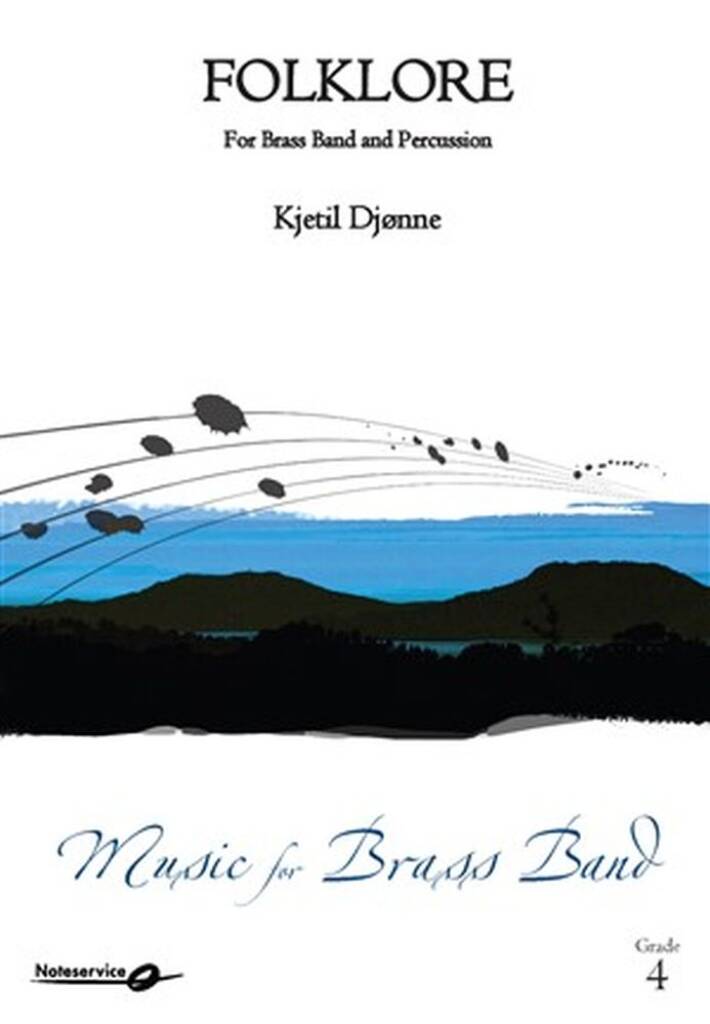
Folklore - Kjetil Djønne
"Folklore" is a work for brass band and percussion loosely based on the story of the Norwegian woman accused of witchcraft, Anne Pedersdotter. She was sentenced to be burned at the stake in Bergen in the spring of 1590 and has since been frequently highlighted as Norway's most famous and talked-about witch.The work begins with the movement "Lyderhorn," depicting the mountain outside Bergen where witches gathered to plan magical actions against the city. Here, we hear the quietness of nature and the wind blowing through the trees before a new theme appears, which will come to life in the next movement. In the distance, the witches have started their ceremony.In the next movement, "Walpurgis Night," the witches perform their rituals to afflict the city with fire, disease, and natural disasters. The ceremony becomes more and more chaotic, violent, and compelling until the darkness of the night envelops us, concluding the section.The third movement describes the women's inner struggle against the harassment they faced when the people of Bergen suspected them of being witches. Rumors often turned into formal accusations from the legal system, and many were sentenced to death after undergoing trial. "From life to death through the fire."The fourth and final movement, "The Pyre," depicts the actual death sentence. You can hear the pyre being ignited and the flames growing and intensifying. It all culminates in a chorale as a memorial to the lives that were taken.
Estimated dispatch 5-14 working days
-
 £76.99
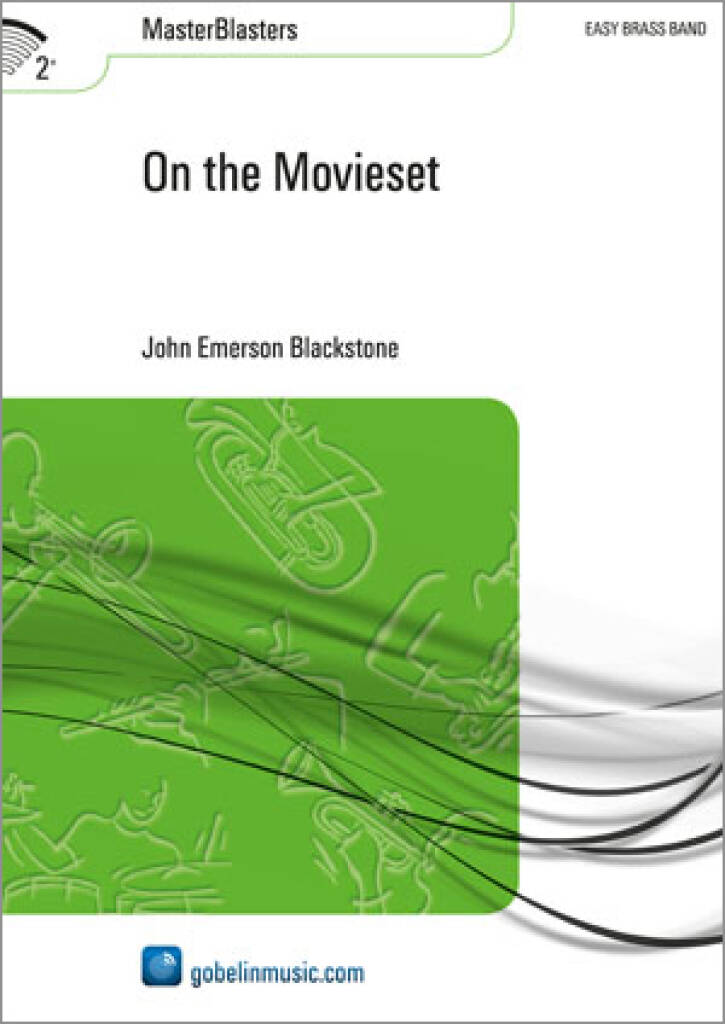
On the Movieset - John Emerson Blackstone
Glitter and glamour, good-looking people, a lot of Bling Bling and fast cars images like these will cross our minds when we think of the movie world. However, reality proves to be different : as a rule, a tremendous amount of work will have been done on the set before a film is ready to be shown on the big screen. A visit to an actual movie set inspired John Emerson Blackstone to write a composition bearing the same name. He had both seen a number of characteristic attributes and heard the typical phrases used in film making, and he incorporated them into 'On the Movie Set' . In the first part, 'The Clapboard', a 'director's assistant' is supposed to shout "Quieton the set'" and "Action!", as is done before a real scene is shot. Subsequently, in order to create the right atmosphere, the clacking of a 'Clapboard' should be heard. During a romantic scene we should be transported to another world by means of sweet sounds in the background, so romantic music is of course heard in the next part, 'Love Scene'. At the end of a long working day 'It's a wrap' is called on the set to inform everyone that the filming on that day is completed. Now there is only one more thing left to dream of : an Oscar..... Perf. Note: The use of the right props will add to the performance and appreciation of 'On the Movie Set'. A red carpet and a glamorous reception should give your audience the feeling they are attending a real 'opening night'!
Estimated dispatch 5-14 working days
 Listen to MP3
 View Music