
Results
-
 £60.99
Brass Fire - Thomas Doss
This sparkling composition by Thomas Doss, full of energy and playfulness, was commissioned by the National Youth Brass Band of Switzerland. Bursting with enthusiasm and freshness, it's exactly what you'd expect from a band brimming with young talent.With its infectious rhythms, brilliant tonal colors, and vibrant dynamics, this composition is ideal as a festive concert opener. It also makes the perfect whirlwind encore, allowing both musicians and the audience to end the concert on a high note.A composition that celebrates the strength, vitality, and future of the brass band world - enjoy listening!
Estimated dispatch 5-14 working days
-
 £49.99
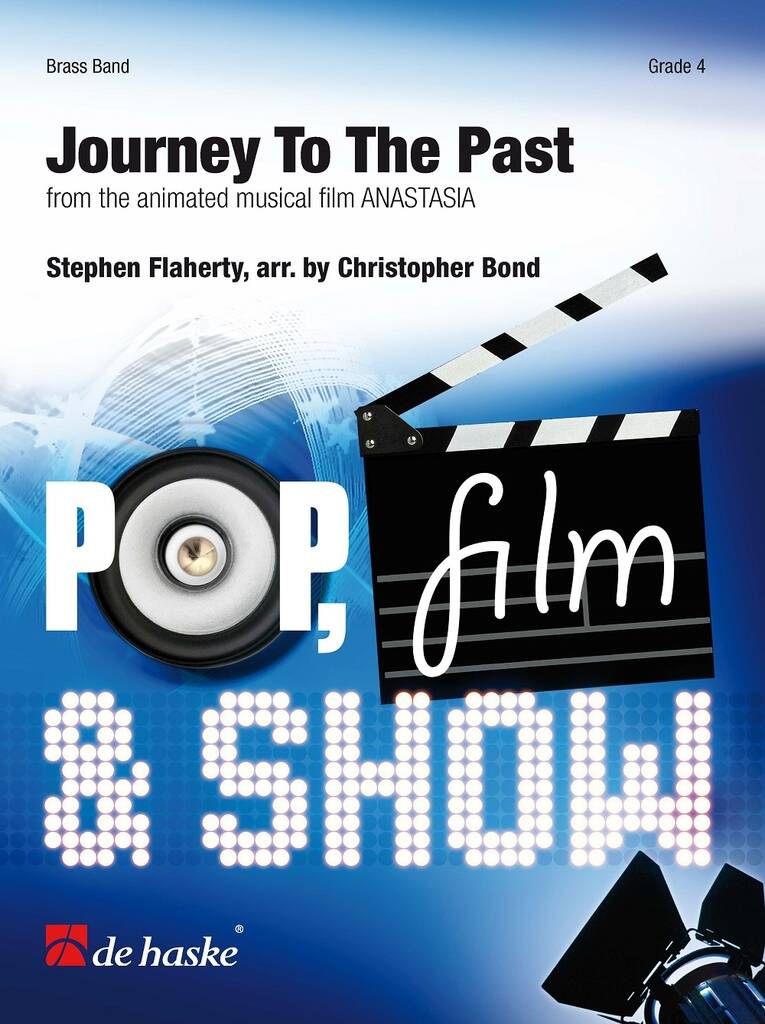
Journey To The Past - Stephen Flaherty - Christopher Bond
Step into an enchanting world of nostalgia with the compelling sounds of Journey To The Past, a wonderful little gem by Stephen Flaherty, magically arranged for brass band by Christopher Bond. This song, originally composed for the popular animated film Anastasia, tells a story of hope, discovery and finding one's true self. The warm brass band sounds add a new dimension, infusing each note with emotion and passion.
Estimated dispatch 5-14 working days
-
 £26.00
Prelude- The truth from above - Ralph Vaughan Williams - Paul Hindmarsh
In hisPrelude - The Truth from Above, outstanding arranger and curator Paul Hindmarsh has distilled the essence of a timeless Christmas classic by Ralph Vaughan Williams into five minutes of ravishingly unforgettable music for brass band. The variants of the Herefordshire tune popular from theFantasia on Christmas CarolsandThe Oxford Book of Carolsare skilfully and stylishly woven together, from an evocative opening to an ecstatic, multi-layered coda. Unerringly true to the timeless spirit of the original, with the added beauty of the brass-band sound at its most sonorously grave and haunting,Prelude - The Truth from Abovemay be performed separately, or as the first of two preludes, preceding Paul's arrangement ofRhosymedre from the Three Preludes Founded on Welsh Hymn Tunes, also available from Stainer & Bell.
Estimated dispatch 5-14 working days
-
 £60.99
Citadel's Destiny - Thierry Deleruyelle
Citadel's Destiny is a march that can be performed either in concert or on parade. It was commissioned by the Musique de l'Infanterie de Lille. A special feature is that it adheres to the conventional codes of military marches, albeit with a modern twist. The title refers to the citadel built by Vauban in Lille, "The Queen of Citadels", with which the band shares a destiny. This march is still performed by the Infantry Band as part of their traditional concert repertoire.
Estimated dispatch 5-14 working days
-
 £115.60
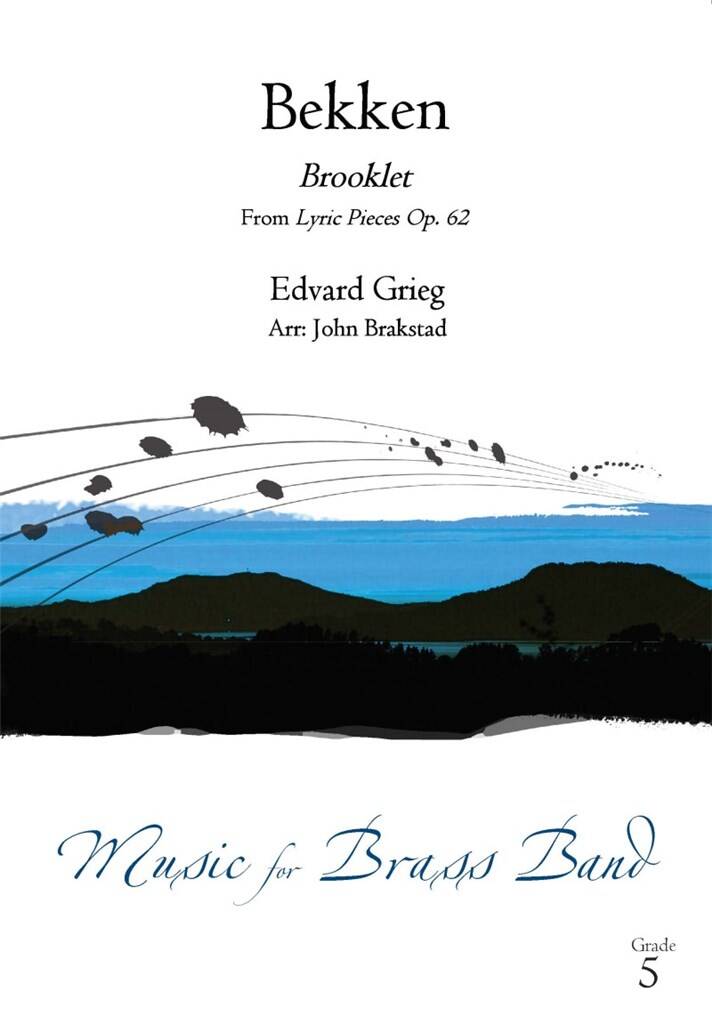
Bekken (Fra Lyriske stykker opus 62) - Edvard Grieg - John Brakstad
Brooklet is one of the movements from Grieg's Lyric Pieces for Solo Piano opus 62. Information for the conductor: Brooklet is an technically advanced work for solo piano. In this arrangement, technical passages are simplified by overlapping and doubling some of the parts. To master the technical challenges and make it sound effortless, it is important to pay close attention to balance and precision. Some of the parts also have alternative parts added which can lower the technical challenges a bit.
Estimated dispatch 5-14 working days
-
 £73.60
A Spring Lullaby - Andrew Pearce
During the past few years, Andrew Pearce enjoyed a fruitful collaboration with Phillip Cobb, principal trumpet of the London Symphony Orchestra, composing such works as The Maestro and Interlude for his album in 2012. Later Cobb invited Pearce to compose a slow melody, accompanied by the Central Band of the Royal Air Force for Cobb's upcoming album, displaying his softer, expressive side on flugelhorn. This song-like, warm lilting lullaby reflects on the joy of life.
Estimated dispatch 5-14 working days
-
 £91.99
In Memoriam: For the Fallen - Philip Sparke
In Memoriam: For the Fallen was commissioned by Bolsover District Council for the Bolsover Brass Summer School 2014. It is a setting for narrator and band of Laurence Binyon's (1869-1943) poem, For the Fallen, which was first published in The Times in September 1914. The poem is known world-wide as the famous fourth stanza (They shall grow not old...) has become a regular part of Remembrance Day and ANZAC Day services. In Memoriam: For the Fallen is a musical accompaniment to the poem, shadowing the mood of each stanza.
Estimated dispatch 5-14 working days
-
 £119.99
Landscapes - Bertrand Moren
Landscapes is a work structured around two main ideas. On the one hand, the music freely paints some of the superb landscapes I've seen during several of my trips around the world. Listeners should, however, not be influenced by this programmatic framework and are encouraged to build their own 'mind pictures'.On the other hand, Landscapes constitutes a test piece for each section of the brass band. Indeed, each musical landscape highlights a particular register. A small group of soloists is given the opportunity to fully display its skills in dialogue with the rest of the band (the tutti), hence the name 'concerto grosso'. Landscapes also relies on the band's different soloistmusicians when it comes to express highly complex, musically and technically challenging passages.
Estimated dispatch 5-14 working days
-
 £80.00
Fanfares and Love Songs - Gavin Higgins
Fanfares and Love Songs was commissioned by the National Children's Brass Band of Great Britain for performance on 25th July 2009. Its three movements contrast the extrovert and lyrical qualities of thetraditional brass band. The fanfare with which the work opens involves the whole cornet section. The second movement is reflective in mood, beginning somewhat pensively on muted brass, and building to an emotional climax beforesubsiding back to a distant pianissimo chord. The finale is a fast dance, which with a final recapitulation of the opening fanfare drives on to a breathless close. Brass Band Grade 4: Advanced Youth and 3rdSectionDuration: 12 minutes
Estimated dispatch 5-14 working days
-
 £54.99
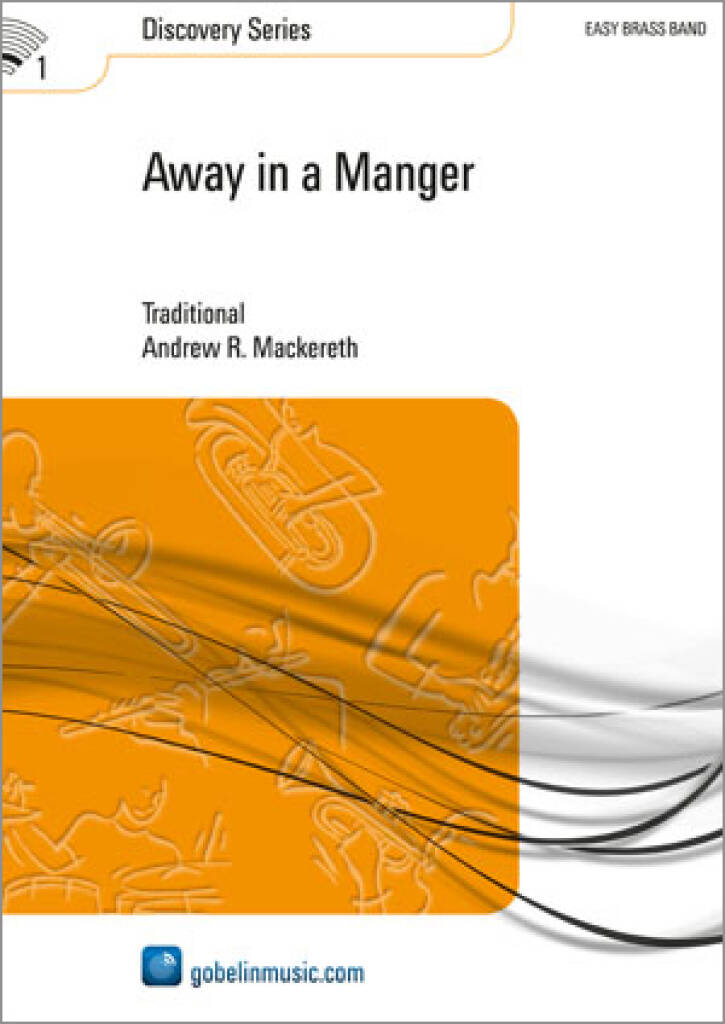
Away in a Manger - Andrew R. Mackereth
In English-speaking countries 'Away in a Manger' is one of the first Christmas songs to be taught to little children. It is a moving song with simple words, which makes it easy to understand. The song is also known as 'Luther's Cradle Hymn'. This suggests that Martin Luther was the author of the lyrics. According to researchers, however, this is a misconception the author is unknown. In England 'Away in a Manger' is sung to a different melody than in the USA, for example. The 'English' melody was composed by W.J. Kirkpatrick. Andrew Mackereth made a touching arrangement of the 'English' melody, which suits the tender lyrics perfectly.
Estimated dispatch 5-14 working days
 View Music