
Results
-
 £24.95
Prelude and Capriccio (Cornet Solo with Brass Band) - Gregson, Edward
A condensed score is included with this workGregson wrote his Prelude and Capriccio in 1972. It exists in two versions: one for cornet and band and the other for cornet or trumpet and piano.The work began life in the early sixties, the Capriccio being composed when the composer was 17. A Prelude was added to complete the work, which lasts for approximately 8 minutes. The Prelude is reflective in character and uses long melodic lines over undulating chromatic harmony. The music reaches a climax before a brief reprise of the opening. The Capriccio is somewhat jazzy in its opening syncopated rhythms, but has a more lyrical middle section before a finale exploiting the virtuoso character of the instrument.
Estimated dispatch 7-14 working days
-
 £134.99
Mirage (Brass Band - Score and Parts) - De Haan, Jan
A Symphonic Portrait inspired by the saga of The Flying Dutchman.The composition Mirage takes inspiration from the legendary ghost ship "The Flying Dutchman", a story deeply rooted in maritime folklore. Cursed to wander the oceans forever, the ship often looms like a mirage on the horizon - a mysterious apparition in which reality and illusion blend intangibly.In Mirage the music tries to bring this mystical appearance to life. The piece begins with an atmosphere of mystery and wonder, creating the illusion of a mirage. The listener is taken to the vast sea, where the boundaries between the real and the unreal blur and the ghostly silhouette of the ship gradually becomes visible. Suddenly the tone changes. Powerful rhythms and stormy harmonies follow, expressing the ship's battle against the raging forces of nature. After this intense section, in which the musicians are pushed to their limits, the tranquility of the sea returns. The recurring mirages inspired the composer to create a lyrical middle section, in which various soloists tell their stories within this legend. In the final part, the sails are hoisted again, and the three-master continues its endless journey.Duration: 15.00
Estimated dispatch 7-14 working days
-
 £26.95
Golden Lullaby (Brass Band - Score and Parts) - Wiffin, Rob
This is a song-setting giving an opportunity for some lyrical expression. It started life as a song on the subject of gold but ended up by standing alone as an instrumental piece. The gentle lilt of the 5/4 melody suggests a lullaby although the texture of the piece builds in an un-lullaby-like fashion towards the end. There is a little white-note dissonance but it is basically traditional in its language.Duration: 3.45
Estimated dispatch 7-14 working days
-
 £26.95
Heroic Etude (Trombone Solo with Brass Band - Score and Parts) - Wiffin, Rob
Back in the day I always enjoyed playing the well-known trombone works by Alexandre Guilmant and Ferdinand David and I wanted to return to that type of language and writing in a short concert piece. The music is direct in its expression, mostly exciting but sometimes lyrical. The pace of this etude is relentless and requires some deft double tonguing although I stayed away from too many running semiquavers. The last note should ideally be the high D (concert) but a B flat is indicated as a suitable alternative.- Rob WiffinDuration: 3.45
Estimated dispatch 7-14 working days
-
 £44.95
Trombone Concerto (Trombone Solo with Brass Band - Score only) - Wiffin, Rob
My Trombone Concerto was commissioned by Brett Baker following an earlier piece I had written for him called Shout! It was composed in Spain in the summer of 2010. Once I started writing I realised that this concerto was inevitably going to draw on my own experiences as a trombone player. The first movement was really a matter of getting the right thematic ideas and balancing the tutti and solo passages so, for formal structure, I studied the Gordon Jacob Trombone Concerto. There is a lyrical section preceding the first Allegro that owes much in spirit (but not in the actual music) to The Eternal Quest, Ray Steadman-Allen's Salvation Army solo. The slow movement seemed determined to come out in the vein of a Richard Strauss song. I wanted to write something ineluctably 'cantabile' as we trombone players rarely get a chance to play the melody. There is a brief allusion to that wonderful moment when the trombone gets to sing above the orchestra in Sibelius' seventh symphony. Arthur Wilson, that great exponent of the singing style in trombone-playing and my teacher at college died in the summer of 2010 so it seemed appropriate to dedicate this movement to him. The last movement is the lightest of the three in style and is slightly jazz-inflected, hopefully providing some fun for the soloist. While wanting to test the instrument I did not set out with the intention of making the concerto difficult but there are undoubtedly challenges of technique, range and style to be met by the soloist.- Rob Wiffin
Estimated dispatch 7-14 working days
-
£87.95
Trombone Concerto (Trombone Solo with Brass Band - Score and Parts) - Wiffin, Rob
My Trombone Concerto was commissioned by Brett Baker following an earlier piece I had written for him called Shout! It was composed in Spain in the summer of 2010. Once I started writing I realised that this concerto was inevitably going to draw on my own experiences as a trombone player.The first movement was really a matter of getting the right thematic ideas and balancing the tutti and solo passages so, for formal structure, I studied the Gordon Jacob Trombone Concerto. There is a lyrical section preceding the first Allegro that owes much in spirit (but not in the actual music) to The Eternal Quest, Ray Steadman-Allen's Salvation Army solo.The slow movement seemed determined to come out in the vein of a Richard Strauss song. I wanted to write something ineluctably 'cantabile' as we trombone players rarely get a chance to play the melody. There is a brief allusion to that wonderful moment when the trombone gets to sing above the orchestra in Sibelius' seventh symphony. Arthur Wilson, that great exponent of the singing style in trombone-playing and my teacher at college died in the summer of 2010 so it seemed appropriate to dedicate this movement to him.The last movement is the lightest of the three in style and is slightly jazz-inflected, hopefully providing some fun for the soloist.While wanting to test the instrument I did not set out with the intention of making the concerto difficult but there are undoubtedly challenges of technique, range and style to be met by the soloist.- Rob Wiffin
Estimated dispatch 7-14 working days
-
 £35.00
Romance (Tenor Horn Solo with Brass Band - Score and Parts) - Bennett, Fiona - Davoren, Tom
Composed by Classic FM Hall of Fame composer Fiona Bennett, this lovely melody features the lyrical tenor horn.Suitable for 2nd Section Bands and aboveDuration: 4.00
Estimated dispatch 7-14 working days
-
 £44.95
Suite Music (Brass Band - Score and Parts) - Wiffin, Rob
A tuneful and reasonably easy suite, comprising Fanfare, Lullaby and All at Sixes and Sevens. There are some asymmetric rhythmic challenges in the last movement as implied in its title, but otherwise this suite is not particularly difficult and sets out to be attractive throughout.The Fanfare is vibrant and energetic while Lullaby is very lyrical and occasionally punctuated by harmonic piquancy. All at Sixes and Sevens plays games between 3/4 and 6/8 with some sevens thrown in for good measure.Duration: 8.45
Estimated dispatch 7-14 working days
-
 £29.95
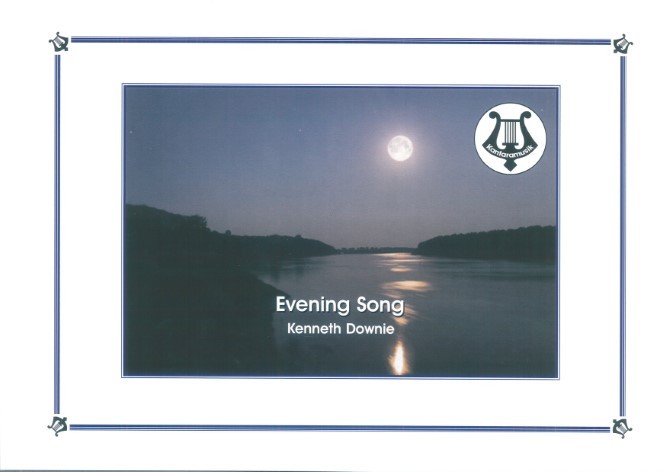
Evening Song (Brass Band - Score and Parts) - Downie, Kenneth
Evening Song recalls an old, and now rarely used, melody by William Kirkpatrick with words by pioneer Salvationist musician Fred Fry. The song's words are direct, to the point of being blunt; 'You must have your sins forgiven, ere the sun goes down; If you wish to go to Heaven, when the sun goes down'. The lyrical style of this setting is aimed at producing a feeling of calm and repose, of assurance and peace, the products of a heart reconciled.
Estimated dispatch 7-14 working days
-
£14.95
Evening Song (Brass Band - Score Only) - Downie, Kenneth
Evening Song recalls an old, and now rarely used, melody by William Kirkpatrick with words by pioneer Salvationist musician Fred Fry. The song's words are direct, to the point of being blunt; 'You must have your sins forgiven, ere the sun goes down; If you wish to go to Heaven, when the sun goes down'. The lyrical style of this setting is aimed at producing a feeling of calm and repose, of assurance and peace, the products of a heart reconciled.
Estimated dispatch 7-14 working days
 View Music