
Results
-
 £91.99
Time Remembered (Brass Band - Score and Parts) - Sparke, Philip
The initial idea was for a millennium piece, which it is, but rather than add to the many celebratory pieces that have understandably been written to salute the 3rd millennium, Philip Sparke thought it would perhaps be appropriate to think about the aspects of life that are constantly with us (such as faith and philosophy) rather than the exciting changes that the year 2000 has undeniably wrought. This calm meditative work will bring a moment of serenity and reflection to any concert.Duration: 8.30
Estimated dispatch 7-14 working days
-
 £60.99
Laurena (Brass Band - Score and Parts) - Nijs, Johan
For this composition ,the Flemish composer Johan Nijs takes his inspiration from people and events in his life. It was written for the birth and is dedicated to his daughter Laurena. It's beautiful simple melodic lines makes it a perfect item to bring a little peace and calm any concert.Duration: 3.15
Estimated dispatch 7-14 working days
-
 £10.00
Isaiah 40 (Brass Band - Study Score) - Redhead, Robert
Commissioned for the final of the 1996 National Brass Band Championships of Great Britain. The timeless truths contained in Isaiah 40 were written to encourage a people facing very intimidating circumstances. The Jewish people of the 5th Century BC were preparing to make an arduous journey though the desert to return to their ravaged homeland after a lengthy exile in the sophisticated society of Babylon. Both Scripture and music sound out a message of hope, as they view life from an eternal perspective, thus placing change in its proper context. Because 'the Lord is the everlasting God' his word 'stands forever' and 'those who hope in the Lord will renew their strength'. They will not merely get through somehow but 'they will soar on wings like eagles'.
Estimated dispatch 7-14 working days
-
 £84.99
Concerto d'Amore (Brass Band - Score and Parts) - De Haan, Jacob
In Concerto d'Amore, a maestoso opening is followed by a quick and energetic movement that leads to a magnificent adagio. A motif from this adagio can be heard in a swinging movement, after which the piece comes to a close with the return of the adagio. This arrangement for brass band certainly brings this beautiful music to life.Duration: 7:15
Estimated dispatch 7-14 working days
-
 £89.99
Inspiration (Brass Band - Score and Parts) - De Haan, Jan
This substantial work by Jan de Haan explores the many tonal qualities of the brass band. Following a quiet opening theme based on Phrygian tonality the band bursts into life with a massive climax. Following a jolly second theme characterised by large interval jumps peace and quiet is again restored. Both themes are developed with many poignant solo figures until we reach a resounding fortissimo climax with the solo cornet performing the first theme from the back of the auditorium. A spectacular concert work containing all the elements that bring out the best in brass band sound.Duration: 10:00
Estimated dispatch 7-14 working days
-
 £60.99
Spiritual Moments (Brass Band - Score and Parts) - Stratford, Dizzy
In a pop style that is characteristic for Dizzy Stratford, this composition contains famous and lesser-known spirituals which are brought back to life in a refreshing manner.Duration: 6:15
Estimated dispatch 7-14 working days
-
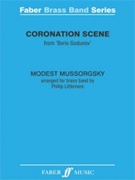 £55.00
Coronation Scene (from Boris Godunov) (Brass Band - Score and Parts) - Mussorgsky, Modest - Littlemore, Phillip
Phillip Littlemore's stunning band version brings to life the sumptuous splendour of Mussorgsky's orchestral and choral Coronation Scene from the opera Boris Godunov. It exists in three complete versions by the composer, Shostakovich and Rimsky-Korsakov, whose version is used here.Suitable for 1st Section Bands and aboveDuration: 6.00
Estimated dispatch 7-14 working days
-
£134.99
Dreams (Brass Band - Score and Parts)
This composition by Bertrand Moren presents various dreams which could have an effect on a dreamer's life. Its very high level of difficulty provides a great challenge for the conductor and musicians. You will be taken through a living Nightmare, with spine-chilling passages as dissonant chords alternate with aggressive percussion. Daydream is a patchwork of solos with all the brass band soloists playing serene and soft melodic lines with a virtuosic trombone cadenza. Finally, Visions portrays visions of insanity reflected by violent and discordant descending motifs leading to visions of joy presented in a sparkling and cheerful finale. 15:00
Estimated dispatch 7-14 working days
-
 £94.95
Facets of the Heart (Brass Band - Score and Parts) - Davoren, Tom
2015 Butlins Championship Section Testpiece.Facets of the Heart was created during a turbulent period of the composers life. The concept behind it changed between inception and completion. The result is a musical representation of three lesser considered but extremely important aspects of love, set against their natural opposites. Running in three continuous sections, the chosen aspects are Fear, Pain and Comfort, and Doubt and Courage.Duration: 14 mins.
Estimated dispatch 7-14 working days
-
 £49.95
Facets of the Heart (Brass Band - Score only) - Davoren, Tom
2015 Butlins Championship Section Testpiece.Facets of the Heart was created during a turbulent period of the composers life. The concept behind it changed between inception and completion. The result is a musical representation of three lesser considered but extremely important aspects of love, set against their natural opposites. Running in three continuous sections, the chosen aspects are Fear, Pain and Comfort, and Doubt and Courage.Duration: 14 mins.
Estimated dispatch 7-14 working days
 View Music