Results
-
 £37.15
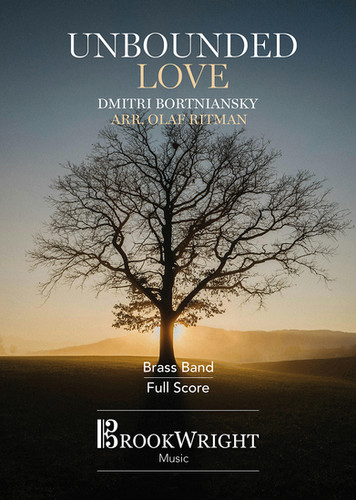
Unbounded Love (Brass Band) Bortniansky arr. Olaf Ritman
Unbounded Love is a deeply moving work that bridges the gap between sacred tradition and personal tribute. Drawing inspiration from the beloved 18th-century hymn Ich bete an die Macht der Liebe (I Pray to the Power of Love), this arrangement transforms a timeless spiritual message into a profound musical experience.The foundation of this work lies in the 1822 melody by Dmitri Bortniansky. Originally set to the poetry of Gerhard Tersteegen, this dignified and contemplative theme has served as a cornerstone of ceremonial music for centuries, symbolising solace, reverence, and the liberating power of divine love.Unbounded Love is an intimate memorial dedicated to Hein Voskamp, a cherished soprano player and close friend of the composer. Born from a simple final request - to hear this hymn one last time - the piece became the composer's way of navigating grief and expressing gratitude when words were no longer enough.To view a video of the Amsterdam Staff Band performing the work please visit https://youtu.be/Ug6tZwX7MiQDuration: Approx. 5.45 minutesDifficulty Level: 4th Section +This PDF download includes the full score and parts.Sheet music available at www.brassband.co.uk (UK) or https://satradecentral.org (USA)Instrumentation:Soprano Cornet EbSolo Cornet BbRepiano Cornet Bb2nd Cornet Bb3rd Cornet BbFlugel Horn BbSolo Horn Eb1st Horn Eb2nd Horn Eb1st Baritone Bb2nd Baritone Bb1st Trombone Bb2nd Trombone BbBass TromboneEuphonium BbBass EbBass BbTimpaniGlockenspielPercussion
In Stock: Estimated dispatch 1-3 working days
-
 £7.42
Euphonium Concerto with Brass Band (Karl Whelan) Soloist Copy
*Karl Whelan's Euphonium Concerto with Brass Band is written in three linked movements:I: PreludeII: AriaIII: ScherzoThe first movement, Prelude, is in a mirror image sonata form and with its menacing ostinato sets the tone for the entire concerto and also introduces material on which the concerto is based. During this movement, the soloist has the opportunity to display their technical ability as well as the extremes of the instruments range.A chord based on the notes of the ostinato signal the beginning of the second movement, Aria. Here, material from the first movement has been weaved together and moves through a multitude of keys, the soloist is able to show the expressive side of the instrument to create an almost yearning, operatic aria.A reiteration of the 1st subject takes us into an almost march like figure at the beginning of the third movement, Scherzo. This is then interrupted both times by dance-like scherzo which, as with the rest of the concerto navigates itself through different keys leading to the cadenza that even the temple blocks have the the chance of participating in! The concerto concludes with almost a battle between the band (playing fragments of the first and second subjects from the first movement), and soloist who is attempting to have the last word!To view a follow-the-score video of the work please visit: www.youtube.com/watch?v=aEnou67XHqATo purchase the full band set please visit www.brookwrightmusic.com/product-page/euphonium-concerto-with-brass-band-karl-whelan*Please note this download only includes the soloist copy.Sheet music available from:UK - www.brassband.co.ukUSA - www.solidbrassmusic.comInstrumentation:Euphonium Soloist BbSoprano Cornet EbSolo Cornet Bb2nd Cornet Bb3rd Cornet BbFlugel Horn BbSolo Horn Eb1st Horn Eb2nd Horn Eb1st Baritone Bb2nd Baritone Bb1st Trombone Bb2nd Trombone BbBass TromboneEuphonium BbBass EbBass BbTimpaniPercussion 1-3
In Stock: Estimated dispatch 1-3 working days
-
£89.17
Euphonium Concerto with Brass Band (Karl Whelan)
VIEW SCORE PDFKarl Whelan's Euphonium Concerto with Brass Band is written in three linked movements:I: PreludeII: AriaIII: ScherzoThe first movement, Prelude, is in a mirror image sonata form and with its menacing ostinato sets the tone for the entire concerto and also introduces material on which the concerto is based. During this movement, the soloist has the opportunity to display their technical ability as well as the extremes of the instruments range.A chord based on the notes of the ostinato signal the beginning of the second movement, Aria. Here, material from the first movement has been weaved together and moves through a multitude of keys, the soloist is able to show the expressive side of the instrument to create an almost yearning, operatic aria.A reiteration of the 1st subject takes us into an almost march like figure at the beginning of the third movement, Scherzo. This is then interrupted both times by dance-like scherzo which, as with the rest of the concerto navigates itself through different keys leading to the cadenza that even the temple blocks have the the chance of participating in! The concerto concludes with almost a battle between the band (playing fragments of the first and second subjects from the first movement), and soloist who is attempting to have the last word!To view a follow-the-score video of the work please visit: www.youtube.com/watch?v=aEnou67XHqASheet music available from:UK - www.brassband.co.ukUSA - www.solidbrassmusic.comInstrumentation:Euphonium Soloist BbSoprano Cornet EbSolo Cornet Bb2nd Cornet Bb3rd Cornet BbFlugel Horn BbSolo Horn Eb1st Horn Eb2nd Horn Eb1st Baritone Bb2nd Baritone Bb1st Trombone Bb2nd Trombone BbBass TromboneEuphonium BbBass EbBass BbTimpaniPercussion 1-3
In Stock: Estimated dispatch 1-3 working days
-
£65.00
Blackbird Special - Davis, Lewis, Towns, Harris, Marshall, Joseph, Johnson & Jones - Reid Gilje
"Blackbird Special" is a song by American band Dirty Dozen Brass Band.The song is an entertainment piece, a good concert opener or encore.When used as a concert opener one may let the different sections of the band enter the stage one by one playing in order of appearance.Percussion section may play their parts ad lib. The most important is the groove of the piece.Please pay attention to strict articulation from bar 17. Be aware of the marcatos at 33. The last note of the slurs at 41 must be not be too short.It's important to hold the note values, especially in bars 49, 51, 53 and 55.From 57 and throughout the piece, the percussion may invite the audience to join for handclaps.As an extra effect, the Bass Tubas may stand at 57, the Horns at 59, backrow Cornets and Trombones at 61 and Euphonium/Baritone/Solo Cornets at 63.
Estimated dispatch 7-14 working days
-
£60.00
A Gallimaufry Suite - Harper, P
I - Fanfare & ThemeII - SongIII - HymnIV - Toccata & FinaleA Gallimaufry Suite consists of four movements, all thematically independent. The first movement consists of a sparkling Fanfare followed by a stately Theme which ends quietly. The second movement is a Children's Song; quirky but cute, and the Hymn which follows is a study in calm and tranquillity, featuring a quartet-group of cornet, baritone, trombone and euphonium. The last movement is a virtuosic Toccata which eventually begins to recall the other themes of the suite before a grand reprise of the first movement Theme brings the work to a dazzling conclusion.Approximate duration: 11 minutes
In Stock: Estimated dispatch 1-3 working days
-
 £29.72
Fanfare from La Peri (Brass Band) Dukas arr. Rob Bushnell
La Peri is a one-act ballet by the French composer Paul Dukas, best known for The Sorcerer's Apprentice (L'apprenti sorcier) as in the 1940 Disney film Fantasia. Dukas was commissioned to write La Peri by the Ballets Russes, producing a Poeme danse en un tableau ('dance poem in one scene') in 1911; this become his last published work.With Natalia Trouhanova due to play the Peri and Vaslav Nijinsky to play Iskender (the name of Alexander the Great in Persian, who is scouting around Iran in search of the Flower of Immortality), the production was ultimately cancelled because Serge Diaghilev feel Trouhanova was not a skilled enough dancer to be partnered to Nijinsky. Trouhanova later hired Ivan Clustine to choreograph the music, with the ballet premiering at the Theatre du Chatelet in Paris on 22 April 1912.The brilliant fanfare that precedes the ballet is often performed separately and is the arrangement available here. Arranged for British-style brass band, it has optional percussion parts as well as alternative parts for horns in F and bass-clef lower brass. The piece has been lowered by a tone compared to the original.A recording of the original composition can be found here: www.youtube.com/watch?v=7EDekMos1ok.Duration: Approx. 2 minutesDifficulty Level: 2nd Section +Duration: 4 or 5 minutes (depending on tempo and without any cuts)PDF download includes parts and score.Sheet music available at www.brassband.co.uk (UK) or https://satradecentral.org (USA)Instrumentation:Soprano Cornet EbSolo Cornet BbRepiano Cornet Bb2nd Cornet Bb3rd Cornet BbFlugel Horn BbSolo Horn Eb1st Horn Eb2nd Horn Eb1st Baritone Bb2nd Baritone Bb1st Trombone Bb2nd Trombone BbBass TromboneEuphonium BbBass EbBass BbTimpaniPercussion 1 - Snare DrumPercussion 2 - Bass Drum & Cymbal
In Stock: Estimated dispatch 1-3 working days
-
 £37.15
Capriccio for Brass Band (Robbert Vos)
VIEW SCORE PDFCapriccio for Brass Band (Robbert Vos) was the winner of both the overall prize decided by the judges and Public Commendation prize for the 2020 International Brass Band Composer Competition, a contest that included some 92 entries from around the world.The composer writes: 'My Capriccio for Brass Band is a lively, intense and virtuosic piece based on several thematic, rhythmical and harmonic ideas which are developed during the piece. It is non-programmatic and not based on a storyline. The middle section, in contrary, is in more of a minimalistic style, where there is room to create a mysterious and open atmosphere. Rhythmical elements are quoted from the opening movement, whilst clashing chords are used to build up tension. The last movement builds to a big climax, where several of the compositorial ideas used before come together for the finale.'PDF download includes score and full set of parts.Sheet music available from:UK - www.brassband.co.ukUSA - www.solidbrassmusic.comDifficulty Level: Championship SectionInstrumentation:Soprano Cornet EbSolo Cornet BbRepiano Cornet Bb2nd Cornet Bb3rd Cornet BbFlugel Horn BbSolo Horn Eb1st Horn Eb2nd Horn Eb1st Baritone Bb2nd Baritone Bb1st Trombone Bb2nd Trombone BbBass Trombone1st Euphonium Bb2nd Euphonium BbBass EbBass BbTimpaniPercussion 1-3
In Stock: Estimated dispatch 1-3 working days
-
£125.00
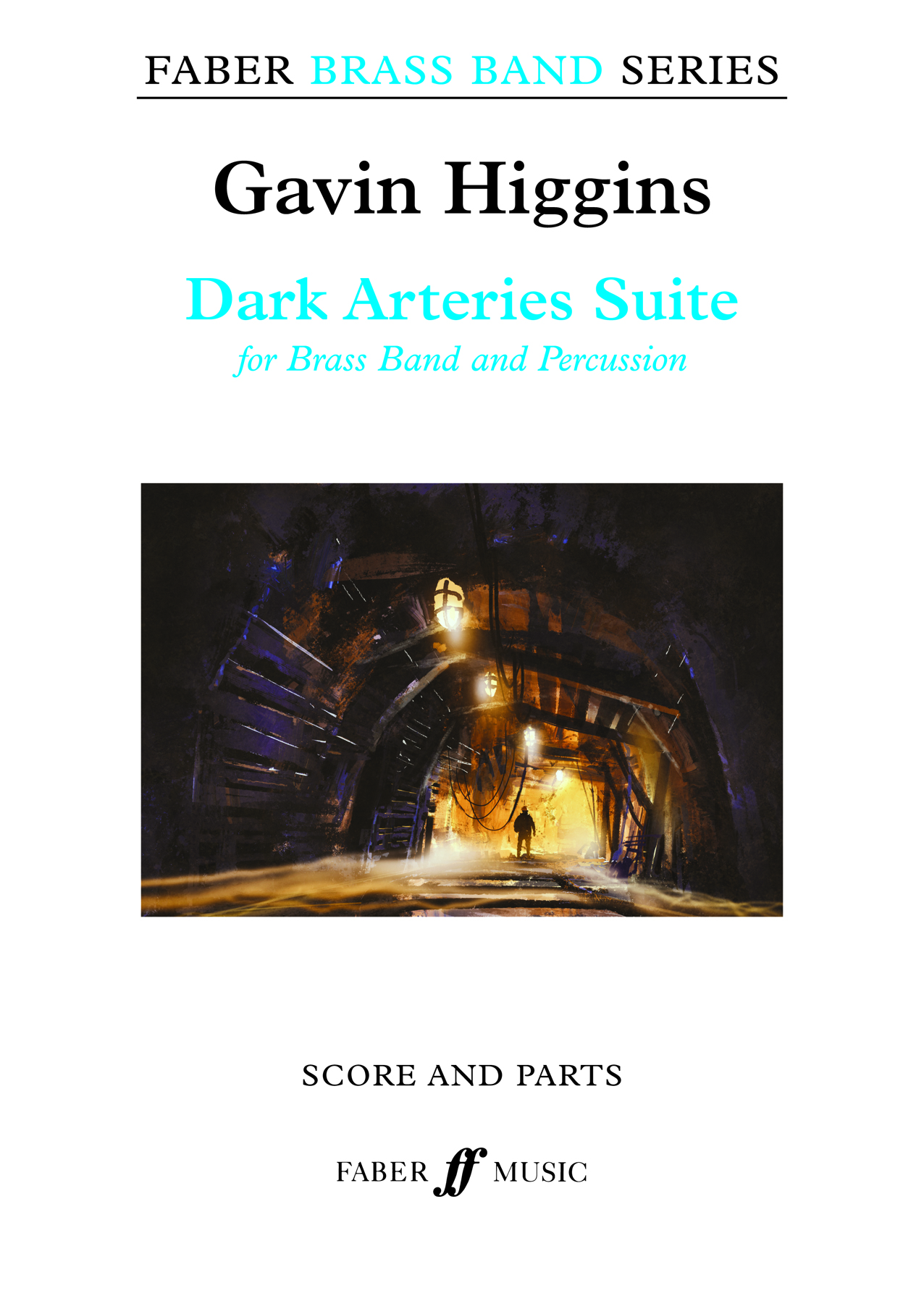
Dark Arteries Suite - Gavin Higgins
Dark Arteries was commissioned by Rambert Dance Company and first performed in May 2015 with the Tredegar Town Band sharing the stage with Rambert dancers. Dark Arteries is a personal and at times highly wrought response to the Miners Strike and its aftermath. It is in three movements, the first and last are expansive, with widely contrasting sound worlds, from dark, brooding melodies and the haunting sounds of solo flugel horn to wild syncopations on cornets, suggestive of an imposing, but often bleak mining landscape.In 2016 Higgins re-worked Dark Arteries into a virtuoso concert suite, which captures the essence of the work in three connected movements.Dark Arteries Suite was premiered by the National Youth Brass Band of Great Britain, conducted by Bramwell Tovey at the Barbican Centre, London, 22 April 2017.
In Stock: Estimated dispatch 1-3 working days
-
Foyle's War Theme - Jim Parker - Len Jenkins
Foyle's War was a TV crime drama created by screenwriter Anthony Horowitz, and tells the story of Detective Chief Superintendent Christopher Foyle, played by Michael Kitchen, fighting a personal war against crime amidst the turmoil of World War Two. The music for the series was composed by 4 time BAFTA winning Jim Parker and has an ethereal minor key melody, sparsely orchestrated and Wobbleco Music has attempted to capture this atmosphere in its arrangement for Brass Band. An arrangement for a Brass Ensemble is also available. The last episode of the Foyle's War was written in 2014 but such is its popularity that there have been many requests for it to return to the screens, particularly as the writer says that one of the wartime years has yet to be covered. We shall see. Meantime enjoy this beautiful theme.
-
£50.00
Peniel - Ball, E
This work is not intended to actually portray in music the events described in Genesis, Chapter 32, although the varying moods were evoked by a re-reading of the story. However, the following sequence of ideas may sometimes prove useful in presenting the work to audiences.Under Divine compulsion, Jacob sets out with Family, retainers, servants and cattle, to return to his homeland (Introduction and Sections 1 - 3).He is brought news of possible attack by his estranged brother Esau (Sections 4 - 6).Jacob seeks guidance in a lone vigil and, wrestling with a divine visitor, at last wins acceptance at the place he names Peniel--The Prince of God. He goes forward with his people and becomes reconciled with Esau (Section 12 to the end).Eric BallDuration 9 mins
In Stock: Estimated dispatch 1-3 working days
 View Music
 Watch video