
Results
-
 £25.00
Zephyrus - Andrew Duncan
The Big Blow', was a formal record attempt to create the largest brass band in the world. It took place at Butlin's Resort, Skegness on 20 January 27 and in addition to the fun generated by the event itself, it's main goal was to raise money in support of the work of Brass Band Aid, and specifically to provide long-term sponsorship for two children in the village of Adet, Ethiopia.The Music Company (UK) Ltd were one of the Official Partners of The Big Blow, providing the performance piece for the record attempt. As Editorial Director of the company, Andrew Duncan wrote 'Zephyrus' to mark the occasion.Originally presented at the event as 'March - The Big Blow', the published re-titling of 'Zephyrus' provides a more subtle alternative, taking its name from the Greek God of the West Winds.'Zephyrus' is a traditional British brass band march with an interesting African-feel lilt to the trio. This is enhanced by optional percussion instruments including djembi and bongos, which can also be covered by standard drum kit. A positive, upbeat concert march to reflect the sentiment behind 'The Big Blow' record attempt.There were 443 participants in total, including:Soprano Cornets x 12Cornets x 152Flugels x 19Tenor Horns x 68Baritones x 32Euphoniums x 32Trombones x 55Eb Basses x 35Bb Basses x 17Percussionists x 21The Music Company are pleased to continue their support of Brass Band Aid by offering a donation to this worthy charity for every set of this music sold.
In Stock: Estimated dispatch 3-5 working days
-
Codebreakers : Bletchley Park - Len Jenkins - Len Jenkins
Bletchley Park was the centre for Allied codebreaking in World War 2, responsible for decoding secret military codes used by enemy forces, in particular those related to the use of the 'Enigma' and other encoding machines. In the course of its endeavours it developed what was effectively the first electronic computer and brought to prominence the genius of Alan Turing when its wartime work was declassified and made public. The composer, Len Jenkins, still lives near Bletchley Park, went to school nearby, and attended training courses there when, after the war, it was used as a telecommunications training centre. This march is dedicated to the memory of all those who worked at Bletchley Park.
-
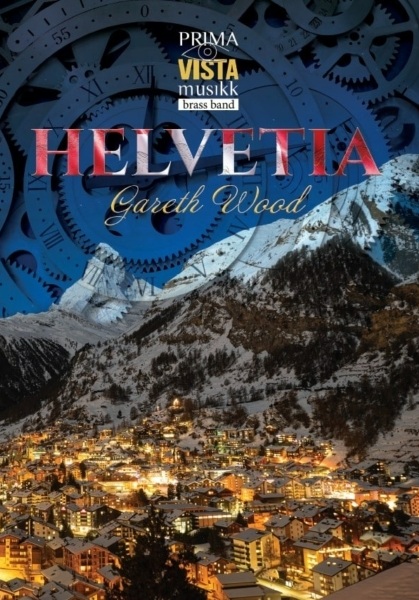 £74.95
Helvetia (Brass Band - Score and Parts)
I first went to Switzerland in the early 1970's and regularly played at the Lucerne Festival with the Royal Philharmonic Orchestra. It is a beautiful city, one of my favourite European cities.In writing Helvetia (the Roman name for Switzerland) I wanted to encapsulate the moods that remind me of this wonderful place. The work is in four distinct sections and is on the whole, self-explanatory.It opens with An Alpine Dawn and sunrise, the tubas and euphoniums substituting for the Swiss Alphorns. Next The Clock Shop at Mid-day, a loud ticking, chiming and the sad sound of a cuckoo, builds into the cacophony of the mid-day chimes. The third section is A Walk to Wagner's House. Just along the lake from the centre of town is Tribschen. This walk I have done many times, and it is here that Wagner wrote 'Tristan'. I have quoted the Dresden Amen (written by J.G. Naumann) which is much used in Parsifal. The final section is The Cesta Run, the most famous bob-sleigh run in the world. As we take each corner, the feeling of speed is demonstrated as only a brass band can do!The work is dedicated to the Cory Band and also to the memory of James Watson, a great cornet player, trumpeter and conductor. It was he who got me into writing for brass band and I hope this piece is worthy.- Gareth Wood (Feb. 2011)Duration: 11.00
Estimated dispatch 7-14 working days
-
£31.95
Helvetia (Brass Band - Score only)
I first went to Switzerland in the early 1970's and regularly played at the Lucerne Festival with the Royal Philharmonic Orchestra. It is a beautiful city, one of my favourite European cities.In writing Helvetia (the Roman name for Switzerland) I wanted to encapsulate the moods that remind me of this wonderful place. The work is in four distinct sections and is on the whole, self-explanatory.It opens with An Alpine Dawn and sunrise, the tubas and euphoniums substituting for the Swiss Alphorns. Next The Clock Shop at Mid-day, a loud ticking, chiming and the sad sound of a cuckoo, builds into the cacophony of the mid-day chimes. The third section is A Walk to Wagner's House. Just along the lake from the centre of town is Tribschen. This walk I have done many times, and it is here that Wagner wrote 'Tristan'. I have quoted the Dresden Amen (written by J.G. Naumann) which is much used in Parsifal. The final section is The Cesta Run, the most famous bob-sleigh run in the world. As we take each corner, the feeling of speed is demonstrated as only a brass band can do!The work is dedicated to the Cory Band and also to the memory of James Watson, a great cornet player, trumpeter and conductor. It was he who got me into writing for brass band and I hope this piece is worthy.- Gareth Wood (Feb. 2011)Duration: 11.00
Estimated dispatch 7-14 working days
-
£21.95
Helvetia (Brass Band - Study Score)
I first went to Switzerland in the early 1970's and regularly played at the Lucerne Festival with the Royal Philharmonic Orchestra. It is a beautiful city, one of my favourite European cities.In writing Helvetia (the Roman name for Switzerland) I wanted to encapsulate the moods that remind me of this wonderful place. The work is in four distinct sections and is on the whole, self-explanatory.It opens with An Alpine Dawn and sunrise, the tubas and euphoniums substituting for the Swiss Alphorns. Next The Clock Shop at Mid-day, a loud ticking, chiming and the sad sound of a cuckoo, builds into the cacophony of the mid-day chimes. The third section is A Walk to Wagner's House. Just along the lake from the centre of town is Tribschen. This walk I have done many times, and it is here that Wagner wrote 'Tristan'. I have quoted the Dresden Amen (written by J.G. Naumann) which is much used in Parsifal. The final section is The Cesta Run, the most famous bob-sleigh run in the world. As we take each corner, the feeling of speed is demonstrated as only a brass band can do!The work is dedicated to the Cory Band and also to the memory of James Watson, a great cornet player, trumpeter and conductor. It was he who got me into writing for brass band and I hope this piece is worthy.- Gareth Wood (Feb. 2011)Duration: 11.00
Estimated dispatch 7-14 working days
-
 £44.83
Summit (Brass Band) Andrew Batterham
Summit is a powerful descriptive work, lifting from broad beginnings to an exciting climax. It was written for the Hyde Street Youth Band in Melbourne's west, for the 2023 Australian National Band Championships. The piece was designed to give the band a chance to display their credentials. It will be an ideal choice for youth bands and above for both concert and contest programmes. To view a video of Hyde Street Junior Band performing the piece please visit www.youtube.com/live/G9klW3mhyI8?feature=share&t=7397 (the performance commences at 2:03:17) PDF download includes score and parts. Sheet music available from: UK - www.brassband.co.uk USA - https://satradecentral.org Difficulty Level: 4th Section + Instrumentation: Soprano Cornet Eb Solo Cornet Bb Repiano Cornet Bb 2nd Cornet Bb 3rd Cornet Bb Flugel Horn Bb Solo Horn Eb 1st Horn Eb 2nd Horn Eb 1st Baritone Bb 2nd Baritone Bb 1st Trombone Bb 2nd Trombone Bb Bass Trombone Euphonium Bb Bass Eb Bass Bb Percussion 1-3
In Stock: Estimated dispatch 1-3 working days
-
 £25.00
Zephyrus. March for Brass Band
Recommended - Suitable for all bands The Big Blow, was a formal record attempt to create the largest brass band in the world. It took place at Butlin's Resort, Skegness on 20 January 2007, and it's main goal was to raise money in support of the work of Brass Band Aid, and specifically to provide long-term sponsorship for two children in the village of Adet in Ethiopia. The Music Company (UK) Ltd were one of the Official Partners of The Big Blow, providing the performance piece for the record attempt. Andrew Duncan wrote 'Zephyrus' to mark the occasion. The title takes its name from the Greek God of the West Winds - Zephyrus. Zephyrus is a traditional British brass band march with an interesting African-feel lilt to the trio. This is enhanced by optional percussion instruments including djembi and bongos, which can alternatively be covered by standard drum kit. The Music Company are pleased to continue their support of Brass Band Aid by offering a donation to this worthy charity for every set of this music sold. Includes score & parts
-
£110.00
Legend - Geert Jan Kroon
Other than the title, there is no real story that connects this piece to eyeballs or werewolves. There is no real legend that precedes this work. The legend will evolve in the listener's mind while listening to this piece. For me, it started with the title. It was dreamed up by my son. He also suggested a musical gesture, which I then used to build all the musical materials in this piece. I have sought to capture a dark atmosphere with a sense of excitement. Although, there are some not so dark moments in the piece which serve as a musical contrast. I would like to invite every listener to imagine a world where there exists a legend of a bleeding eyeball and a blind werewolf. And if you do dream up a great story, please let me know and share it with each other!
-
 £30.00
O.B.1. Fanfare - Tom Watson
Tom Watson was born into a musical family in Hertfordshire, England and showed a flare for playing the trumpet from the age of just 4. Taught by his father James Watson, the prolific international soloist, conductor, educator and session trumpeter, Tom studied at the Royal Academy of Music, where he gained a first class honours degree. Whilst still at college, Tom embarked on a varied professional freelance-playing career and was guest principal trumpet with the Mahler Chamber Orchestra performing under Claudio Abbado, Daniel Harding, and Sir Neville Marriner. Tom can be regularly found performing and recording with the London Symphony Orchestra, The BBC National Orchestra of Wales and many of the UK's finest orchestras. Commercially, Tom has played in sessions or concerts for artists such as Sir Elton John, Sir Paul McCartney, Sir Tom Jones, Dame Shirley Bassey, Ozzy Osbourne, Phil Collins, Eric Clapton, Joe Cocker, Jarvis Cocker, Pete Doherty, Nick Cave, Karl Jenkins and Victoria Wood. Some of his film session work has included recording the scores for Brave, Eragon and Stormbreaker. Tom also works as a musical director, arranging and conducting various projects such as Tony Christie's album Made in Sheffield and for renowned harpist Catrin Finch. Tom also runs his own independent recording and production company Pro Audio, part of Prozone Music, which Tom owns and runs alongside his brother William. The O.B.1. Fanfare was written for the Harper Ensemble, a brass ensemble comprising of Tom's contemporaries from his time at the Royal Academy of Music. It was written for the Leicester Square UK premiere of the film "Ali" starring Will Smith. Composed as a salute to Hollywood and the big screen, this fine pastiche of film scoring is an ideal fanfare and concert opener.
-
 £40.00
Legends of Cyfarthfa - Matthew Hall
Legends of CyfarthfaCombining the music of Joseph Parry and the legendary Cyfarthfa Band, Legends of Cyfarthfa is a technically challenging but musically rewarding concert work. Robert Crawshay owned the Cyfarthfa Ironworks in South Wales creating a business empire second to none.Cyfarthfa Castle was built by Crawshay as the family home from the income made via the ironworks. He wanted his own private band to play under the name of the ironworks with the best players in the world, playing on the highest quality instruments at the time. Employing the band members under the guise of iron workers, the Cyfarthfa Band was made up of virtuoso players, performing for the pleasure of the Crawshay dynasty.This virtuosity can be heard in some of the more technically challenging sections of Legends of Cyfarthfa. Joseph Parry was born in Cyfarthfa.He composed the first piece of music specifically written for brass band called Tydfil Overture for the Cyfarthfa Band, alongside many other memorable works for other instrumentation.Legends of Cyfarthfa incorporates many of Parry's works including his opera Blodwen, hymn tune Aberystwyth, folk melody Myfanwy and the Tydfil Overture, alongside many other melodies from Wales. Sospanfach, Men of Harlech, Lisa Lan and Calon Lan are just a number of the melodies that are used in this composition.The premiere performance was given by Tredegar Town Band under the direction of Ian Porthouse at the 2010 Brass in Concert Championships where it was awarded the Cyril Beere Memorial Trophy for Best New Composition or Arrangement.https://matthew-hall.co.uk/wp-content/uploads/2014/08/05-Legends-Of-Cyfarthfa.mp3Legends of Cyfarthfa
Estimated dispatch 5-7 working days
 View Music