Results
-
£40.00
Barcelona - Mercury & Moran - Harper, P
'Barcelona' was one of the biggest hits of Freddie Mercury's solo career. Reflecting his love of opera with high notes and Montserrat Caballe's operatic voacls it was a key part of the 1992 Summer Olympics. A wonderful piece arranged by Philip Harper
In Stock: Estimated dispatch 1-3 working days
-
 £29.88
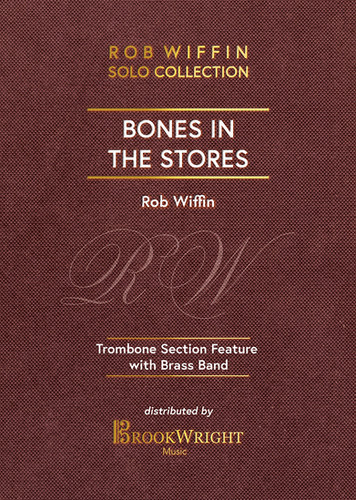
Bones in the Stores (Trombone Feature with Brass Band) Rob Wiffin
This arrangement for trombone section and band combines two well-known wartime songs, The Quartermaster's Store and Bless 'em All, giving the trombone section a thorough workout as well as a lot of fun. The Quartermaster's Store is a traditional song from England; the origins of both tune and words are uncertain and may date back as far as the English Civil War. The origins of Bless 'Em All are also unclear - the words have been credited to Fred Godfrey in 1917, set to music composed by Robert Kewley, though earlier versions of the song may have existed among British military personnel in the 1880s in India. It was first recorded by George Formby Jr in 1940 and became a patriotic song. Audio demo: https://soundcloud.com/user-565396545/bones-in-the-stores-trombone Duration: Approx. 2.50 minutes Difficulty Level: Medium This PDF download includes the full score and parts. Sheet music available at www.brassband.co.uk (UK) or https://satradecentral.org (USA)
In Stock: Estimated dispatch 1-3 working days
-
 £33.62
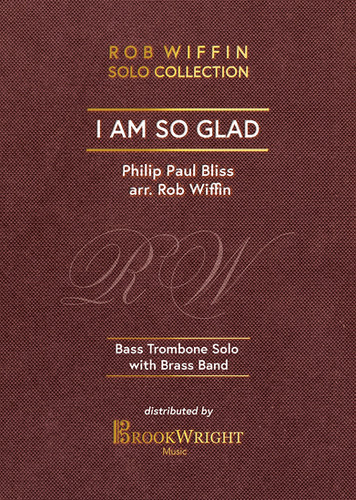
I am so glad (Bass Trombone Solo with Brass Band) Philip Bliss arr. Rob Wiffin
This is a slow blues version of the well-known Christian hymn written by Philip Paul Bliss (1838-76). It was arranged as a solo for bass trombone and band, giving the instrument a rare chance to be the featured soloist. Audio demo: https://soundcloud.com/user-565396545/i-am-so-glad-bass-trombone Duration: Approx. 3.25 minutes Difficulty Level (Band): Medium Soloist: Medium This PDF download includes the full score and parts. Sheet music available at www.brassband.co.uk (UK) or https://satradecentral.org (USA)
In Stock: Estimated dispatch 1-3 working days
-
 £33.62
The Risen King (Brass Band) Getty & Townend arr. Andrew Wainwright
VIEW SCORE PDF This scintillating work will be an ideal opener to your band's concert programme. Written at the request of Bandmaster Christopher Ward and the Eastern Michigan Divisional Band of The Salvation Army (USA), it was premiered at the 2019 Autumn Praise Festival in Rochester, Michigan which featured the Eastern Michigan Divisional Band and Choir, and the Chicago Staff Band. The piece is based on the popular modern hymn by Keith and Kristin Getty and Stuart Townend, Come People of the Risen King. To view a video of the New York Staff Band performing the work please visit: https://www.youtube.com/watch?v=o1w7qY2dyvY&t=3s Sheet music available from: UK - www.brassband.co.uk USA - www.solidbrassmusic.com Difficulty Level: 2nd Section + Instrumentation: Soprano Cornet Eb Solo Cornet Bb Repiano Cornet Bb 2nd Cornet Bb 3rd Cornet Bb Flugel Horn Bb Solo Horn Eb 1st Horn Eb 2nd Horn Eb 1st Baritone Bb 2nd Baritone Bb 1st Trombone Bb 2nd Trombone Bb Bass Trombone Euphonium Bb Bass Eb Bass Bb Timpani Percussion 1-3
In Stock: Estimated dispatch 1-3 working days
-
£65.00
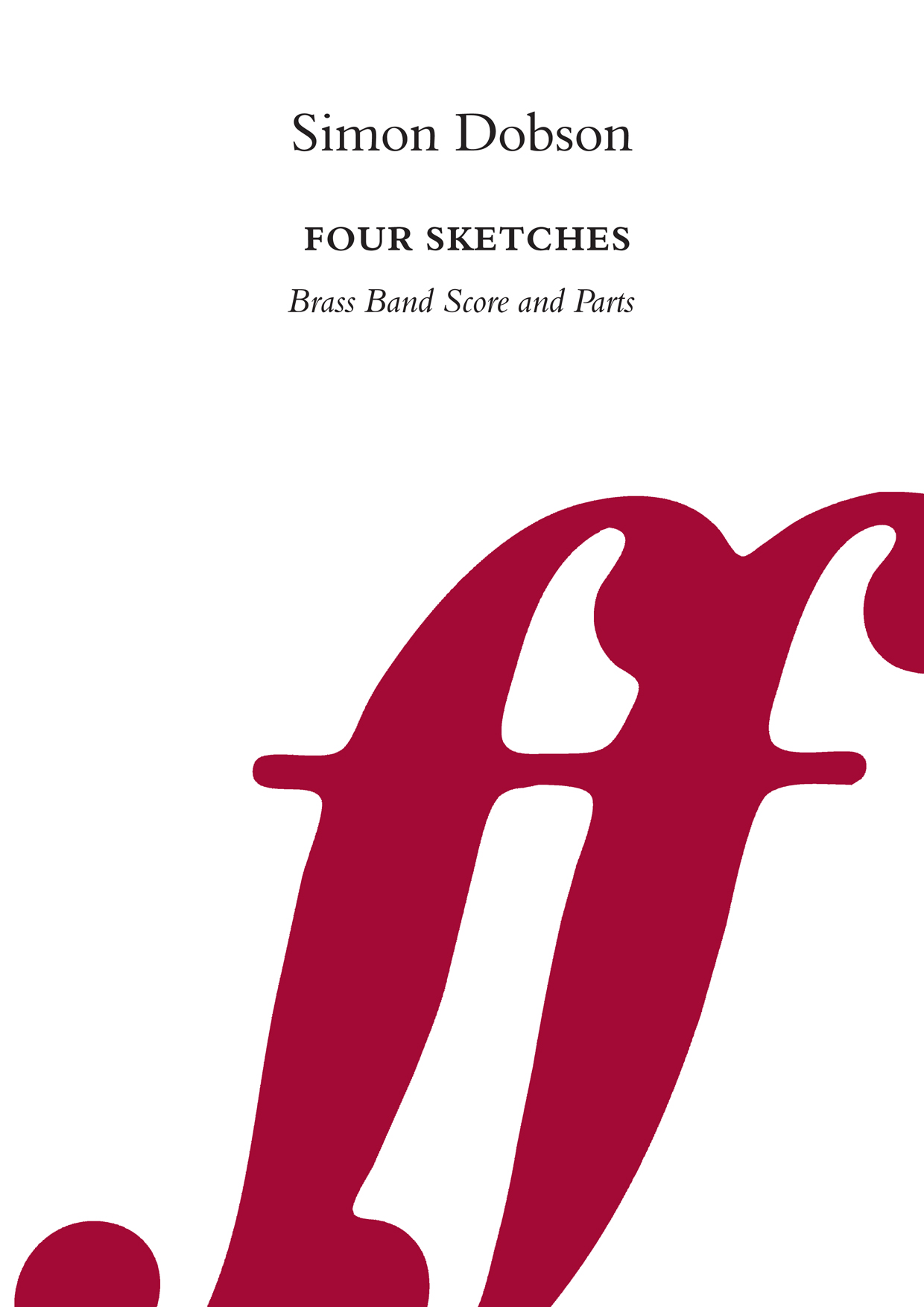
Four Sketches (Score & Parts) - Simon Dobson
Simon Dobson wrote his Four Sketches at the request of Peter Bossano, Head of Brass at the Royal College of Music, in recognition of the 25th anniversary of Benjamin Britten's death. It was the winning entry in the European Brass Band Composer Competition in 2002.Brass Band Grade: 5Duration: 10 minutes
In Stock: Estimated dispatch 1-3 working days
-
£50.00
Sing Praise - Geert Jan Kroon
Sing praise is an upbeat opener or concert piece that is based on the Old Hundredth. It was a commission by Flevo Brass Emmeloord to praise the conductor/teacher Klaas de Jong. I know Klaas as a high-spirited teacher who always devotes his time to guiding young players and developing music ensembles by investing in youth bands and music education. The title is a reference to the hymn tune Old Hundredth and a message to ensembles to sing praise to teachers and youth.
-
 £20.51
Mis Meurth (March): Fun Cornish March Score Parts - Kevin Ackford
Mis Meurth (March) pronounced Miss Merr is the Cornish Language for the word March. It was composed for the St Minver Training Band.
Estimated dispatch 5-7 working days
-
 £34.00
(I've Had) The Time Of My Life - (Arr. by David Beal) - Brass Band Music Full Score & Parts - LMAM096
COMPOSER: Donald Markowitz, Franke Previte, John DenicolaARRANGER: David Beal"(I've Had) The Time of My Life" is a song composed by Franke Previte, John DeNicola, and Donald Markowitz. It was recorded by American singers Bill Medley and Jennifer Warnes and used as the theme song for the 1987 film Dirty Dancing. The song has won a number of awards, including the Academy Award for Best Original Song, the Golden Globe Award for Best Original Song, and the Grammy Award for Best Pop Performance by a Duo or Group with Vocals.
In Stock: Estimated dispatch 3-5 working days
-
 £65.00
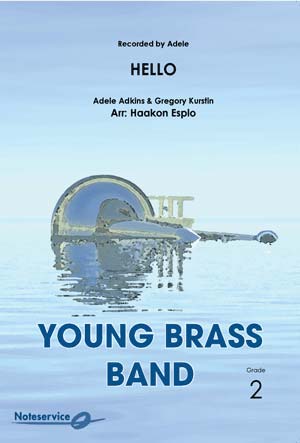
Hello - Adele Adkins & Gregory Kurstin/Haakon Esplo
Hello is a song by English singer Adele. It was released October 2015 as the first single from her third studio album, 25. Adele co-wrote the song with her producer, Greg Kurstin.Hello has achived great success wordwide, reaching no. 1 on almost every chart.
Estimated dispatch 10-14 working days
-
£39.00
Smak av honning - Lars Lillo-Stenberg og Per Lillo-Stenberg - Idar Torskangerpoll
"Smak av honning" ("Taste of Honey") is one of the greatest hits by Norweian pop band DeLillos. It was first included on the EP "Smak av honning" in 1995 and also on the "Sent og tidlig" album-release later that year.Lars Lillo-Stenberg wrote the music shortly after receiving the lyrics from his father, Per Lillo-Stenberg.
Estimated dispatch 7-14 working days
 View Music