
Results
-
 £19.95
Chichester Dances (Brass Band - Score Only) - Downie, Kenneth
This music is an entertaining suite in four movements, playable by most bands. It opens with Samba, followed by Quick Waltz, Pavane and, finally, Sailor's Dance. Each movement lasts approximately two minutes. It is ideal for concert use and each movement could be performed separately if desired.
Estimated dispatch 7-14 working days
-
 £34.95
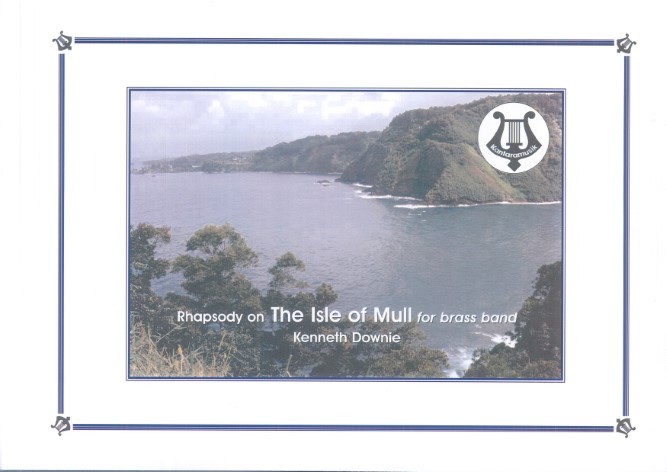
Rhapsody On The Isle Of Mull (Brass Band - Score and Parts) - Downie, Kenneth
Mull is an island off the west coast of Scotland and it gives its name to the lovely tune which forms the basis of this music. It is very scenic, with some beautiful mountains and the composer has tried to suggest something of the atmosphere of grandeur in his score. The largely pentatonic nature of the tune heavily colours the musical texture.
Estimated dispatch 7-14 working days
-
£17.50
Rhapsody On The Isle Of Mull (Brass Band - Score Only) - Downie, Kenneth
Mull is an island off the west coast of Scotland and it gives its name to the lovely tune which forms the basis of this music. It is very scenic, with some beautiful mountains and the composer has tried to suggest something of the atmosphere of grandeur in his score. The largely pentatonic nature of the tune heavily colours the musical texture.
Estimated dispatch 7-14 working days
-
 £29.95
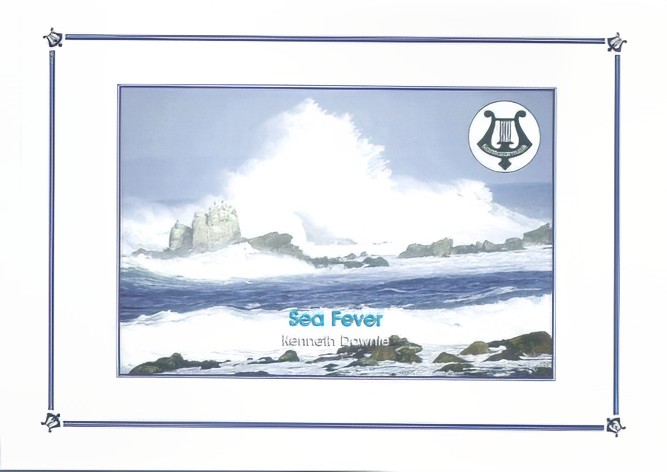
Sea Fever (Brass Band - Score and Parts) - Downie, Kenneth
This lively concert piece is a follow-up to the composer's earlier Dance Fever. It is based around the Northumbrian song Bobby Shaftoe, in the same way as the earlier piece was based on The Dashing White Sergeant. Several other sea-faring songs are quoted, all in a light-hearted, humorous fashion. Played with flair and panache, it should result in an entertaining concert item.
Estimated dispatch 7-14 working days
-
£14.95
Sea Fever (Brass Band - Score Only) - Downie, Kenneth
This lively concert piece is a follow-up to the composer's earlier Dance Fever. It is based around the Northumbrian song Bobby Shaftoe, in the same way as the earlier piece was based on The Dashing White Sergeant. Several other sea-faring songs are quoted, all in a light-hearted, humorous fashion. Played with flair and panache, it should result in an entertaining concert item.
Estimated dispatch 7-14 working days
-
 £34.95
Happy Land (Cornet Solo with Brass Band - Score and Parts) - Camsey, Terry
This composition is a very challenging one for the soloist and requires the accompaniment to be subservient at all times. The soloist will find it helpful to, generally, adopt a very light and playful style. As a young aspiring cornet player, the composer was influenced by a number of soloists of that day, one being Del Staigers of the Goldman Band in the USA. Many of the musical motifs reflect that influence and it is hoped that this solo will, in turn, inspire the many aspiring cornet players of today.
Estimated dispatch 7-14 working days
-
£17.50
Happy Land (Cornet Solo with Brass Band - Score only) - Camsey, Terry
This composition is a very challenging one for the soloist and requires the accompaniment to be subservient at all times. The soloist will find it helpful to, generally, adopt a very light and playful style. As a young aspiring cornet player, the composer was influenced by a number of soloists of that day, one being Del Staigers of the Goldman Band in the USA. Many of the musical motifs reflect that influence and it is hoped that this solo will, in turn, inspire the many aspiring cornet players of today.
Estimated dispatch 7-14 working days
-
 £60.99
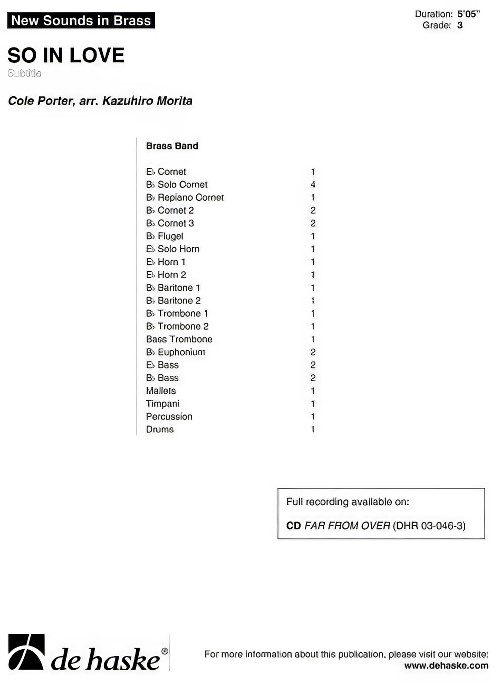
So in Love (Brass Band - Score and Parts) - Porter, Cole - Morita, Kazuhiro
Cole Porter was one of the great masters of Broadway musicals during the thirties, forties and fifties, with So in Love, from the musical Kiss Me Kate, being one of his best loved works. It has been recorded by many artists including Bing Crosby, Lulu, Shirley Bassey and Julie Andrews, however it is the Ella Fitzgerald version that is best known. This jazzy musical classic can now be enjoyed by your brass band with this excellent new arrangement.Duration: 5:00
Estimated dispatch 7-14 working days
-
 £59.99
MacArthur Park (Brass Band - Score and Parts) - Webb, Jimmy - Sparke, Philip
Over a period of four decades Jimmy Webb (b. 1946) has written hits for a number of singers including Glen Campbell, Art Garfunkel, Frank Sinatra, Willie Nelson, Johnny Cash and Linda Ronstadt. His songs are often epic in character and include By the Time I Get to Phoenix; Up, Up and Away; Didn't We; Wichita Lineman and Galveston. MacArthur Park (1968) was unlike anything that had gone before it. Running at over 7 minutes, it is 2 or 3 times the length of most pop songs and has an extended orchestral interlude. Richard Harris' seminal recording topped the music charts in Europe, while peaking at number two on the U.S. charts. Philip Sparke has made this excellent arrangement for brass band, which is sure to become a regular feature on your concert programme.Duration: 07:30
Estimated dispatch 7-14 working days
-
 £54.99
Vivo Per Lei (Brass Band - Score and Parts) - Stalman, Wim
A passionate desire for Andrea Bocelli's voice has spread across the world like wildfire for Andrea Bocelli possesses a truly remarkable voice. A voice as palpably powerful, as it is almost ethereal. Vivo Per Lei (I live for Her) tells of a passion so great that it is felt in every action, every moment of the day. This excellent arrangement will bring a moment of tender passion to any concert.Duration: 4:30
Estimated dispatch 7-14 working days
 View Music