
Results
-
£35.00Edward Gregson: Fanfare for a New Era (for Brass Band)
DescriptionComposer's NoteThe Fanfare has been designed to be partly antiphonal, with four separate brass 'choirs' initially playing their own music, and so some spatial separation is desirable. Soprano and solo cornets should be placed centrally, standing behind the rest of the band - or in some venues could even be placed off-stage in a side balcony, but still close to the band. If the Fanfare is played by a contesting size band, one of the solo cornets should play the 1st cornet part together with the usual player ie the number of players on the 1st, 2nd, and 3rd cornet parts should be equal. Otherwise the number of players in each of the two cornet 'choirs' is at the discretion of the conductor. The Tubular Bells accompanying the cornets 1-3 group should be placed close to that group. See inside back cover for suggested band formation.The style of playing should replicate that of symphonic brass, with a minimum of vibrato and with long notes being sustained without decaying.Programme NoteCommissioned in 2020 by Youth Brass 2000, Fanfare for a New Era was designed to be partly antiphonal - thus the separation of the band into four brass 'choirs', each with their own percussion accompaniment. First, soprano and solo cornets, rather like heraldic trumpeters, announce the main idea, majestic in character. Then horns, baritones, and euphoniums, with timpani, enter with stately figurations. Next, the heraldic trumpeters usher in trombones and tubas, to the accompaniment of tom-toms and snare drum, presenting a faster and rhythmic dance-like theme. Finally, the remaining cornets amplify the pealing of bells. All four elements then come together, surrounding the audience with a 'joyful noise' of festive brass and percussion.The original symphonic brass version of this fanfare can be purchased as part of a set of Three Fanfares HERE.For more information on Edward Gregson's music please visit the composer's website: www.edwardgregson.com
Estimated dispatch 7-14 working days
-
£69.95
TRANSFORMATION (Brass Band Set) - Kenneth Downie
I believe in transformation, God can change the hearts of men, And refine the evil nature, till it glows with grace again'. So wrote John Gowans in the second verse of his great hymn, 'I believe that God the Father, can be seen in God the Son', written specifically to affirm Salvationists' beliefs. It is sung to the tune Bethany and in seeking to explore this great subject at the heart of the Christian gospel in musical terms, the composer has used this fine tune as the basis. Although it never appears in its entirety, it is seldom out of the picture and much of the work is derived from it. The other main source of material is the lovely, simple chorus, 'Some day I shall be like him, changed to heavenly beauty, when his face I see'. This chorus is especially prominent in the middle section but there are important references to it throughout. There are also brief references to Charles Wesley's hymn, 'Love Divine' and, in particular, the telling lines, 'Changed from glory into glory, till in Heaven we take our place'. The work suggests that, at times, the process of being transformed is a struggle, portrayed with many passages of fraught and demanding music. Considerable reserves of stamina and technique are required while, in contrast, the chorus, 'Some day I shall be like him' provides the warm, gentle centre of the work. The premiere of the work was given by The International Staff Band of The Salvation Army in Cadogan Hall on Friday 3rd June 2011, as part of the band's 120th anniversary celebrations.
Estimated dispatch 7-14 working days
-
£44.95
TRAILBLAZERS (Brass Band Set) - Andrew Mackereth
This overture draws its inspiration from the story of the first Household Troops Band. It tells the story of the 1887 band, the subsequent lull of nearly a hundred years and the re-awakening of the Troops phenomenon in 1985. It was originally written in 1995 and featured prominently by the band on its North American tour of 2002. Given the history of the Household Troops Band, it is fitting that this composition is preoccupied with marching. It begins with a marching song played by a solitary muted cornet, symbolic not only of the call to bandsmen to join the evangelical effort but also a muso-dramatic device to indicate the steady increase in members and technical ability! The music quickly develops into stirring versions of 'A robe of white' and 'Storm the forts of darkness' with two early day Salvation Army tunes crucially adding to the narrative; 'Marching on in the light of God' and 'Soldiers of our God, arise!' The second section is a reflective setting of the Herbert Booth song, 'The penitent's plea'. This song serves to represent the many people who were 'saved' during those early day campaigns. The expressive music transports the listener through a period of uncertainty and angst until finally reaching the song, 'There is a message, a simple message, and it's a message for us all'. The final section deals first with the emergence from the annals of history with the muted cornet figure again before, symbolically, the present day band bursts forth with an emphatic statement of 'Would you be free from your burden of sin? There's power in the blood'. The stirring climax represents a fitting tribute to those gallant pioneering musicians and their equally impressive and dedicated contemporaries.
Estimated dispatch 7-14 working days
-
£70.00
Macbeth - Peter Meechan
Commissioned by the Scottish Brass Band Association for the 2007 Scottish Open Championship, Macbeth takes itsa inspiration from the Shakespeare play of the same name. Character portraits (Of the three witches as well as Macbeth himself), abstractions (The lament), and scenes (Macbethas final battle with Macduff) make up the nine sections of the piece.i: WitchesThe prophecies of the three witches are an integral part of the play, and in this opening section, these mysterious characters are represented by three different sections of music that introduces the listener to the musical material of the piece.ii: DaggerMacbethas aIs this a dagger I see before theea speech, where an imaginary dagger leads him to contemplate the pending murder, builds in intensity before the bell tolls at itsa conclusion - a sign from Lady Macbeth that Duncan is now alone.iii: General MacbethA character portrait of Macbeth - a fearless General who has led his armies to defeat foes from all over Europe. His ambition and flair that make him such a great General are also the characteristics that lead to his eventual downfall.iv: Contemplations of Lady MacbethAlone and mad, Lady Macbeth ponders all that has gone, before taking her own life.v: LamentAlthough the play tells of Macbeth not feeling the pain of his wifeas death, this lament ponders not only her death, but the tale as a whole.vi: Tomorrow and tomorrow and tomorrowIt is in this final soliloquy that we see the ultimate tragedy of Macbeth - the realisation that his life is ultimately worthless.vii: A spell still castThis acts as an prologue to section eight, restating the original awitchesa music, before heading into Macbethas final battle.viii: Final BattleMacbethas final battle, where he locks swords with Macduff.ix: Not of woman bornMacbethas realisation that the witches have misled him comes all too late, as Macduff beheads Macbeth, fulfilling the last prophecy.
Estimated dispatch 12-14 working days
-
£60.99Cityscape (Brass Band - Score and Parts) - Hadermann, Jan
Cityscape was commissioned for the 't Stad Geblazen event, which took place during the weekend of European Heritage Days in 2024.This short concert piece describes the impressions given when approaching and visiting the beautiful Belgian city of Antwerp from the north across the river Scheldt. We first pass the busy bustle of the harbour, home to the impressive Port House. Then the old city comes into view: the graceful cathedral tower, surrounded by smaller church spires and modern buildings, dominates the distinctive skyline. After setting foot ashore, we are struck by the beautiful way the medieval buildings here blend harmoniously with modern architecture. Our walk through the city continues: we visit the serene cathedral and are impressed by the picturesque facades of and around the city hall, as well as the Brabo Fountain on the Grote Markt (Large Market Square). Finally, it is time to enjoy the merriment taking place on the many squares of the lively city centre.Duration: 5.30
Estimated dispatch 7-14 working days
-
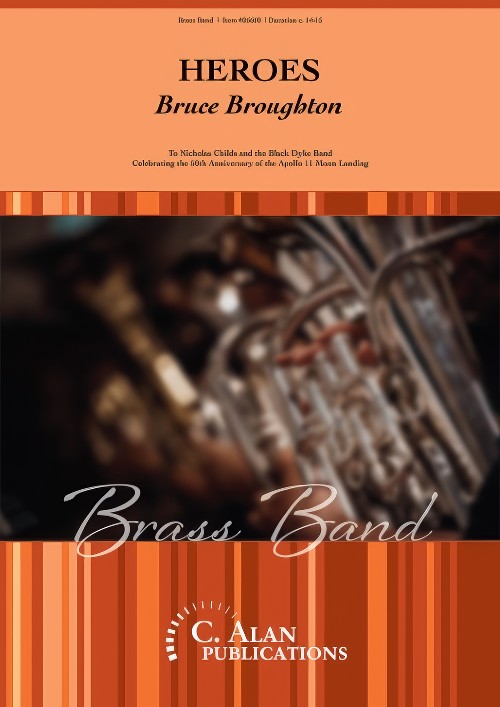
£15.00Symphony in Two Movements (Brass Band - Study Score) - Gregson, Edward
Selected as the Championship Section test piece for the National Brass Band Championships of Great Britain 2025This work was jointly commissioned by the National Youth Brass Band of Great Britain (NYBBGB) and the National Youth Brass Band of Wales (NYBBW), the latter with funding from T Cerdd (Music Centre Wales), to celebrate their 60th and 30th anniversaries respectively. The first performances were given at Cadogan Hall, London, in April 2012, by the NYBBGB, conducted by Bramwell Tovey; and at the Great Hall, Aberystwyth University, in July 2012, by the NYBBW, conducted by Nicholas Childs.When I was approached about a joint commission to write a new work to celebrate the anniversaries of these two outstanding youth bands I was delighted to accept, and decided to respond by writing a work apposite for the magnitude of these special occasions, namely a 'symphony for brass'.Through a long journey of writing music for brass band, which commenced with Connotations (1977), and continued with Dances and Arias (1984), Of Men and Mountains (1991), The Trumpets of the Angels (2000) and Rococo Variations (2008), I arrived at what I regard as the most important work of the cycle to date, combining as it does serious musical intent with considerable technical demands. It is perhaps my most abstract work for brass band, avoiding any programmatic content.The symphony lasts for some 19 minutes and is structured in two linked movements. The form is based on that used by Beethoven in his final piano sonata (Op.111), which is in two movements only: a compact sonata-form allegro, followed by a more expansive theme and four variations. Prokofiev also adopted this model in his 2nd Symphony of 1925.The opening Toccata of this Symphony is highly dramatic but compact, whilst still retaining the 'traditional' structural elements of exposition, development and recapitulation; indeed, it also has the 'traditional' element of a contrasting second subject - a gentle, lyrical modal melody first heard on solo cornets.In contrast, the longer and more substantial second movement Variations is built around a theme and four variations. The slowly unfolding chorale-like theme accumulates both added note harmony and increasing instrumentation, whilst the four variations which follow are by turn mercurial (fast, starting with all the instruments muted), march-like (menacing, with short rhythmic articulations underpinning an extended atonal melody), serene (a series of 'romances' for solo instruments alongside echoes of the chorale) with an emerging theme eventually bursting into a climax of passionate intent; whilst the final variation is a dynamic scherzo (concertante-like in its series of rapid-fire solos, duets, trios and quartets) with the music gradually incorporating elements of the main ideas from the first movement, thus acting as a recapitulation for the whole work. It reaches its peroration with a return to the very opening of the symphony, now in the 'home' tonality of F, and thus creating a truly symphonic dimension to the music.Most of the melodic material of the symphony is derived from the opening eleven-note 'row', which contains various intervallic sets, and although the work is not serially conceived it does use some typical quasi-serial procedures, such as canons, inversions, and retrogrades. The symphony uses somewhat limited percussion, in line with a 'classical' approach to the sound world of the brass band, alongside a use of multi-divisi instrumentation, whereby each player has an individual part rather than the traditional doubling within certain sections of the band.- Edward GregsonDuration: 19.00
Estimated dispatch 7-14 working days
-
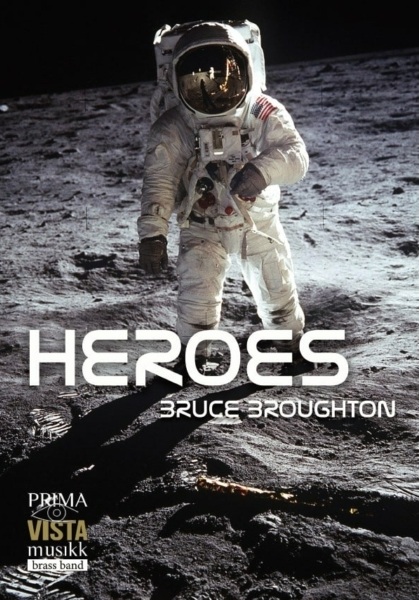
£76.99Tango for Joe (Trombone Solo with Brass Band - Score and Parts) - Sparke, Philip
Tango for Joe was written for Joe Alessi, principal trombone of the New York Philharmonic. He gave the official premiere with the Brass Band of Battle Creek on 3rd December 2022 at the W K Kellogg Auditorium in Battle Creek, Michigan.Opening with an (optional) unaccompanied recitative for the soloist, Tango for Joe then develops into a slow and sensuous tango, exploring the lyrical properties of the trombone. The opening of this theme is then taken up by the full band but is soon interrupted by a highly decorated version of the melody by the soloist. A further cadenza-like passage then leads to a faster 'tango nuevo' which makes up the majority of the work.A long introduction by the band builds to the first entry of the soloist, who plays the main tango melody over a rhythmic accompaniment. This is taken up briefly by the band but the soloist enters again with his own variation on the theme. After a bridge passage featuring a brief 'question and answer' exchange between the instruments, the soloist then plays a new version of the opening slow tango theme over rhythmic interpolations. After a climax, the soloist presents a long and elaborate cadenza accompanied only by a solo cajon or drum kit. This eventually leads to a repeat of the main theme and , after a short second cadenza, the piece ends with a flourish for band and soloist.Duration: 8.45
Estimated dispatch 7-14 working days
-
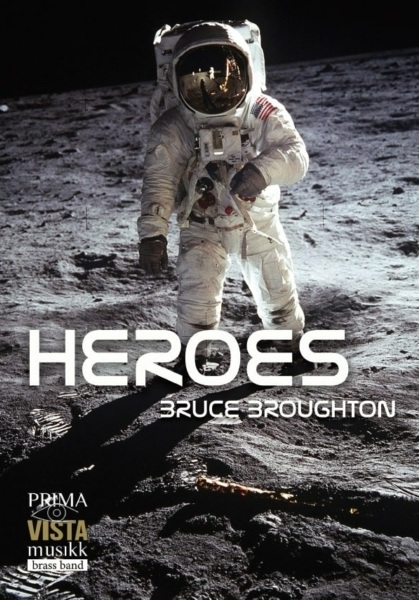
£107.95Symphony in Two Movements (Brass Band - Score and Parts) - Gregson, Edward
Selected as the Championship Section test piece for the National Brass Band Championships of Great Britain 2025This work was jointly commissioned by the National Youth Brass Band of Great Britain (NYBBGB) and the National Youth Brass Band of Wales (NYBBW), the latter with funding from T Cerdd (Music Centre Wales), to celebrate their 60th and 30th anniversaries respectively. The first performances were given at Cadogan Hall, London, in April 2012, by the NYBBGB, conducted by Bramwell Tovey; and at the Great Hall, Aberystwyth University, in July 2012, by the NYBBW, conducted by Nicholas Childs.When I was approached about a joint commission to write a new work to celebrate the anniversaries of these two outstanding youth bands I was delighted to accept, and decided to respond by writing a work apposite for the magnitude of these special occasions, namely a 'symphony for brass'.Through a long journey of writing music for brass band, which commenced with Connotations (1977), and continued with Dances and Arias (1984), Of Men and Mountains (1991), The Trumpets of the Angels (2000) and Rococo Variations (2008), I arrived at what I regard as the most important work of the cycle to date, combining as it does serious musical intent with considerable technical demands. It is perhaps my most abstract work for brass band, avoiding any programmatic content.The symphony lasts for some 19 minutes and is structured in two linked movements. The form is based on that used by Beethoven in his final piano sonata (Op.111), which is in two movements only: a compact sonata-form allegro, followed by a more expansive theme and four variations. Prokofiev also adopted this model in his 2nd Symphony of 1925.The opening Toccata of this Symphony is highly dramatic but compact, whilst still retaining the 'traditional' structural elements of exposition, development and recapitulation; indeed, it also has the 'traditional' element of a contrasting second subject - a gentle, lyrical modal melody first heard on solo cornets.In contrast, the longer and more substantial second movement Variations is built around a theme and four variations. The slowly unfolding chorale-like theme accumulates both added note harmony and increasing instrumentation, whilst the four variations which follow are by turn mercurial (fast, starting with all the instruments muted), march-like (menacing, with short rhythmic articulations underpinning an extended atonal melody), serene (a series of 'romances' for solo instruments alongside echoes of the chorale) with an emerging theme eventually bursting into a climax of passionate intent; whilst the final variation is a dynamic scherzo (concertante-like in its series of rapid-fire solos, duets, trios and quartets) with the music gradually incorporating elements of the main ideas from the first movement, thus acting as a recapitulation for the whole work. It reaches its peroration with a return to the very opening of the symphony, now in the 'home' tonality of F, and thus creating a truly symphonic dimension to the music.Most of the melodic material of the symphony is derived from the opening eleven-note 'row', which contains various intervallic sets, and although the work is not serially conceived it does use some typical quasi-serial procedures, such as canons, inversions, and retrogrades. The symphony uses somewhat limited percussion, in line with a 'classical' approach to the sound world of the brass band, alongside a use of multi-divisi instrumentation, whereby each player has an individual part rather than the traditional doubling within certain sections of the band.- Edward GregsonDuration: 19.00
Estimated dispatch 7-14 working days
-
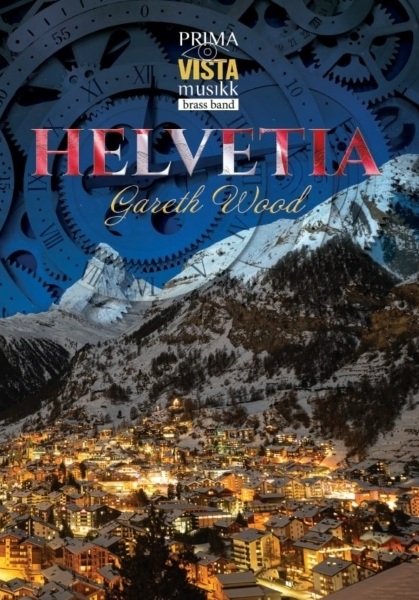
£57.95Symphony in Two Movements (Brass Band - Score only) - Gregson, Edward
Selected as the Championship Section test piece for the National Brass Band Championships of Great Britain 2025This work was jointly commissioned by the National Youth Brass Band of Great Britain (NYBBGB) and the National Youth Brass Band of Wales (NYBBW), the latter with funding from T Cerdd (Music Centre Wales), to celebrate their 60th and 30th anniversaries respectively. The first performances were given at Cadogan Hall, London, in April 2012, by the NYBBGB, conducted by Bramwell Tovey; and at the Great Hall, Aberystwyth University, in July 2012, by the NYBBW, conducted by Nicholas Childs.When I was approached about a joint commission to write a new work to celebrate the anniversaries of these two outstanding youth bands I was delighted to accept, and decided to respond by writing a work apposite for the magnitude of these special occasions, namely a 'symphony for brass'.Through a long journey of writing music for brass band, which commenced with Connotations (1977), and continued with Dances and Arias (1984), Of Men and Mountains (1991), The Trumpets of the Angels (2000) and Rococo Variations (2008), I arrived at what I regard as the most important work of the cycle to date, combining as it does serious musical intent with considerable technical demands. It is perhaps my most abstract work for brass band, avoiding any programmatic content.The symphony lasts for some 19 minutes and is structured in two linked movements. The form is based on that used by Beethoven in his final piano sonata (Op.111), which is in two movements only: a compact sonata-form allegro, followed by a more expansive theme and four variations. Prokofiev also adopted this model in his 2nd Symphony of 1925.The opening Toccata of this Symphony is highly dramatic but compact, whilst still retaining the 'traditional' structural elements of exposition, development and recapitulation; indeed, it also has the 'traditional' element of a contrasting second subject - a gentle, lyrical modal melody first heard on solo cornets.In contrast, the longer and more substantial second movement Variations is built around a theme and four variations. The slowly unfolding chorale-like theme accumulates both added note harmony and increasing instrumentation, whilst the four variations which follow are by turn mercurial (fast, starting with all the instruments muted), march-like (menacing, with short rhythmic articulations underpinning an extended atonal melody), serene (a series of 'romances' for solo instruments alongside echoes of the chorale) with an emerging theme eventually bursting into a climax of passionate intent; whilst the final variation is a dynamic scherzo (concertante-like in its series of rapid-fire solos, duets, trios and quartets) with the music gradually incorporating elements of the main ideas from the first movement, thus acting as a recapitulation for the whole work. It reaches its peroration with a return to the very opening of the symphony, now in the 'home' tonality of F, and thus creating a truly symphonic dimension to the music.Most of the melodic material of the symphony is derived from the opening eleven-note 'row', which contains various intervallic sets, and although the work is not serially conceived it does use some typical quasi-serial procedures, such as canons, inversions, and retrogrades. The symphony uses somewhat limited percussion, in line with a 'classical' approach to the sound world of the brass band, alongside a use of multi-divisi instrumentation, whereby each player has an individual part rather than the traditional doubling within certain sections of the band.- Edward GregsonDuration: 19.00
Estimated dispatch 7-14 working days
-
£69.95Transformation (Brass Band - Score and Parts) - Downie, Kenneth
I believe in transformation, God can change the hearts of men, And refine the evil nature, till it glows with grace again'. So wrote John Gowans in the second verse of his great hymn, 'I believe that God the Father, can be seen in God the Son', written specifically to affirm Salvationists' beliefs. It is sung to the tune Bethany and in seeking to explore this great subject at the heart of the Christian gospel in musical terms, the composer has used this fine tune as the basis. Although it never appears in its entirety, it is seldom out of the picture and much of the work is derived from it. The other main source of material is the lovely, simple chorus, 'Some day I shall be like him, changed to heavenly beauty, when his face I see'. This chorus is especially prominent in the middle section but there are important references to it throughout. There are also brief references to Charles Wesley's hymn, 'Love Divine' and, in particular, the telling lines, 'Changed from glory into glory, till in Heaven we take our place'. The work suggests that, at times, the process of being transformed is a struggle, portrayed with many passages of fraught and demanding music. Considerable reserves of stamina and technique are required while, in contrast, the chorus, 'Some day I shall be like him' provides the warm, gentle centre of the work. The premiere of the work was given by The International Staff Band of The Salvation Army in Cadogan Hall on Friday 3rd June 2011, as part of the band's 120th anniversary celebrations.
Estimated dispatch 7-14 working days
