
Results
-
 £110.00
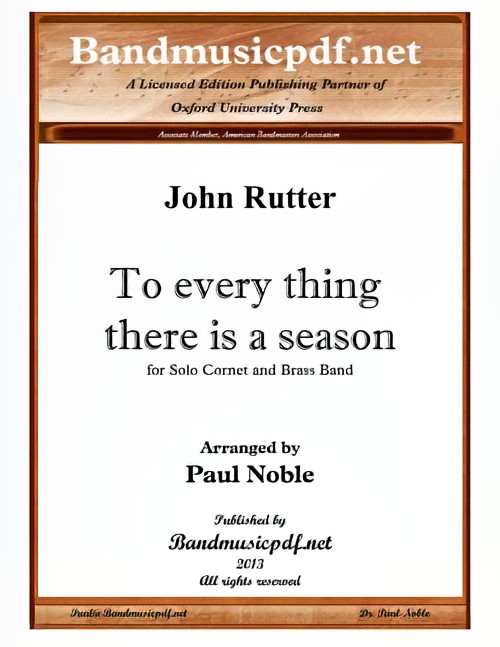
To Every Thing There is a Season (Cornet Solo with Brass Band - Score and Parts) - Rutter, John - Noble, Paul
Upon first hearing this beautiful composition by John Rutter, it seemed obvious that it would not only be a great piece for combined Band and Chorus, but also would be a perfect solo for trumpet. Therefore, in addition to the arrangement for either combined band and chorus, or trumpet solo and band, this arrangement for Brass Band is now available as well. The beauty and simplicity of the piece should certainly allow it to become a mainstay in the repertoire of trumpet solos at any level.
Estimated dispatch 7-14 working days
-
 £74.95
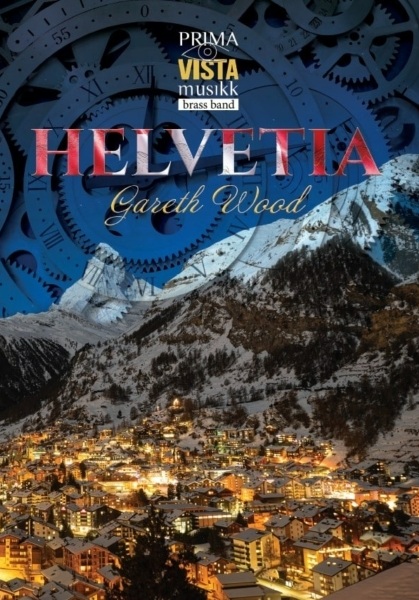
Helvetia (Brass Band - Score and Parts) - Wood, Gareth
I first went to Switzerland in the early 1970's and regularly played at the Lucerne Festival with the Royal Philharmonic Orchestra. It is a beautiful city, one of my favourite European cities.In writing Helvetia (the Roman name for Switzerland) I wanted to encapsulate the moods that remind me of this wonderful place. The work is in four distinct sections and is on the whole, self-explanatory.It opens with An Alpine Dawn and sunrise, the tubas and euphoniums substituting for the Swiss Alphorns. Next The Clock Shop at Mid-day, a loud ticking, chiming and the sad sound of a cuckoo, builds into the cacophony of the mid-day chimes. The third section is A Walk to Wagner's House. Just along the lake from the centre of town is Tribschen. This walk I have done many times, and it is here that Wagner wrote 'Tristan'. I have quoted the Dresden Amen (written by J.G. Naumann) which is much used in Parsifal. The final section is The Cesta Run, the most famous bob-sleigh run in the world. As we take each corner, the feeling of speed is demonstrated as only a brass band can do!The work is dedicated to the Cory Band and also to the memory of James Watson, a great cornet player, trumpeter and conductor. It was he who got me into writing for brass band and I hope this piece is worthy.- Gareth Wood (Feb. 2011)Duration: 11.00
Estimated dispatch 7-14 working days
-
 £31.95
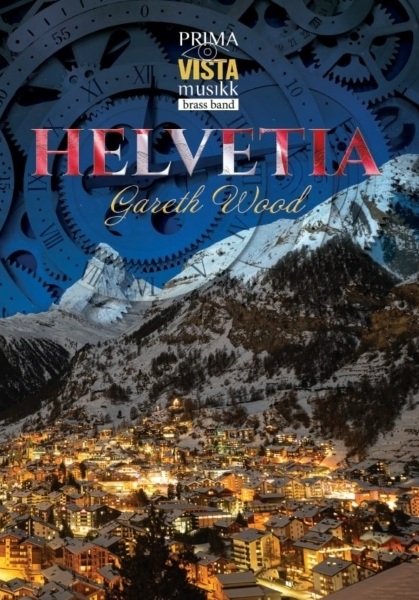
Helvetia (Brass Band - Score only) - Wood, Gareth
I first went to Switzerland in the early 1970's and regularly played at the Lucerne Festival with the Royal Philharmonic Orchestra. It is a beautiful city, one of my favourite European cities.In writing Helvetia (the Roman name for Switzerland) I wanted to encapsulate the moods that remind me of this wonderful place. The work is in four distinct sections and is on the whole, self-explanatory.It opens with An Alpine Dawn and sunrise, the tubas and euphoniums substituting for the Swiss Alphorns. Next The Clock Shop at Mid-day, a loud ticking, chiming and the sad sound of a cuckoo, builds into the cacophony of the mid-day chimes. The third section is A Walk to Wagner's House. Just along the lake from the centre of town is Tribschen. This walk I have done many times, and it is here that Wagner wrote 'Tristan'. I have quoted the Dresden Amen (written by J.G. Naumann) which is much used in Parsifal. The final section is The Cesta Run, the most famous bob-sleigh run in the world. As we take each corner, the feeling of speed is demonstrated as only a brass band can do!The work is dedicated to the Cory Band and also to the memory of James Watson, a great cornet player, trumpeter and conductor. It was he who got me into writing for brass band and I hope this piece is worthy.- Gareth Wood (Feb. 2011)Duration: 11.00
Estimated dispatch 7-14 working days
-
 £21.95
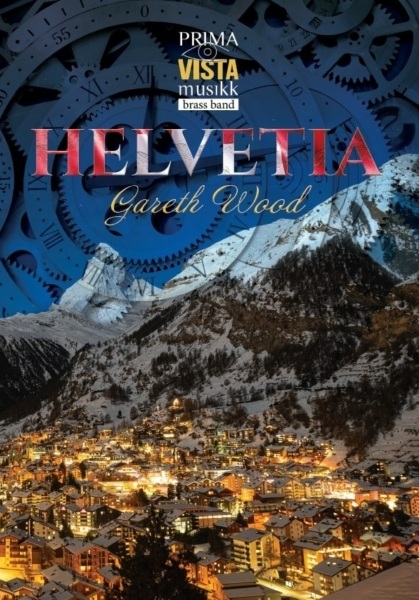
Helvetia (Brass Band - Study Score) - Wood, Gareth
I first went to Switzerland in the early 1970's and regularly played at the Lucerne Festival with the Royal Philharmonic Orchestra. It is a beautiful city, one of my favourite European cities.In writing Helvetia (the Roman name for Switzerland) I wanted to encapsulate the moods that remind me of this wonderful place. The work is in four distinct sections and is on the whole, self-explanatory.It opens with An Alpine Dawn and sunrise, the tubas and euphoniums substituting for the Swiss Alphorns. Next The Clock Shop at Mid-day, a loud ticking, chiming and the sad sound of a cuckoo, builds into the cacophony of the mid-day chimes. The third section is A Walk to Wagner's House. Just along the lake from the centre of town is Tribschen. This walk I have done many times, and it is here that Wagner wrote 'Tristan'. I have quoted the Dresden Amen (written by J.G. Naumann) which is much used in Parsifal. The final section is The Cesta Run, the most famous bob-sleigh run in the world. As we take each corner, the feeling of speed is demonstrated as only a brass band can do!The work is dedicated to the Cory Band and also to the memory of James Watson, a great cornet player, trumpeter and conductor. It was he who got me into writing for brass band and I hope this piece is worthy.- Gareth Wood (Feb. 2011)Duration: 11.00
Estimated dispatch 7-14 working days
-
 £32.50
Kingdom of Dragons (Brass Band - Score only) - Harper, Philip
The 'Kingdom of Dragons' is Gwent in South Wales, known in ancient times as the Kingdom of Gwent, and more recently home to the Newport Gwent Dragons Rugby Union team.This piece was commissioned by the Gwent Music Service with additional funding from Ty Cerdd - Music Centre Wales to celebrate the 50th anniversary in 2010 of the formation of the Gwent Youth Brass Band.Although the music is continuous, it is divided into four distinct sections, each one representing one of the unitary authorities which make up the County of Gwent.Monmouthshire, which has a large number of ancient castlesBlaenau Gwent, an historic area of iron and coal miningTorfaen, where Pontypool Park is a notable landmarkNewport, the largest city in the regionThe music begins with a two-bar fanfare, which sets out all the thematic material of the piece. The mood of pageantry that follows describes some of the ancient castles in Monmouthshire, with rolling tenor drums and fanfaring cornets. After a majestic climax the music subsides and quite literally descends into the coal mines of Blaenau Gwent. The percussion provides effects that suggest industrial machinery clanking into life, and the music accelerates to become a perilous white-knuckle ride on the underground railroad. There is a brief respite as a miner's work-song is introduced and, after a protracted build-up, this is restated at fortissimo before the music comes crashing to an inglorious close, much like the UK's mining industry itself. The middle sonorities of the band portray the tranquillity of Pontypool Park, a place of great natural beauty. Brief cadenzas for cornet and euphonium lead to a full band reprise of the pastoral mood. At the end of this section we find ourselves at the top of the park's 'Folly Tower' from which the distant castle turrets of Monmouthshire are visible. Pontypool RFC was one of eleven clubs in the first Welsh league in 1881 and a brief but bruising musical portrayal of the formidable Pontypool front-row, the 'Viet Gwent' leads into the work's final section. This portrays Newport, a symbol for progress and optimism for the future, ideals shared by the Gwent Youth Band itself. The music is a vigorous fugue which advances through various keys and episodes before the final triumphant augmented entry which brings the work to a magnificent conclusion.Duration: 12:00
Estimated dispatch 7-14 working days
-
£74.99
Kingdom of Dragons (Brass Band - Score and Parts) - Harper, Philip
The 'Kingdom of Dragons' is Gwent in South Wales, known in ancient times as the Kingdom of Gwent, and more recently home to the Newport Gwent Dragons Rugby Union team.This piece was commissioned by the Gwent Music Service with additional funding from Ty Cerdd - Music Centre Wales to celebrate the 50th anniversary in 2010 of the formation of the Gwent Youth Brass Band.Although the music is continuous, it is divided into four distinct sections, each one representing one of the unitary authorities which make up the County of Gwent.Monmouthshire, which has a large number of ancient castlesBlaenau Gwent, an historic area of iron and coal miningTorfaen, where Pontypool Park is a notable landmarkNewport, the largest city in the regionThe music begins with a two-bar fanfare, which sets out all the thematic material of the piece. The mood of pageantry that follows describes some of the ancient castles in Monmouthshire, with rolling tenor drums and fanfaring cornets. After a majestic climax the music subsides and quite literally descends into the coal mines of Blaenau Gwent. The percussion provides effects that suggest industrial machinery clanking into life, and the music accelerates to become a perilous white-knuckle ride on the underground railroad. There is a brief respite as a miner's work-song is introduced and, after a protracted build-up, this is restated at fortissimo before the music comes crashing to an inglorious close, much like the UK's mining industry itself. The middle sonorities of the band portray the tranquillity of Pontypool Park, a place of great natural beauty. Brief cadenzas for cornet and euphonium lead to a full band reprise of the pastoral mood. At the end of this section we find ourselves at the top of the park's 'Folly Tower' from which the distant castle turrets of Monmouthshire are visible. Pontypool RFC was one of eleven clubs in the first Welsh league in 1881 and a brief but bruising musical portrayal of the formidable Pontypool front-row, the 'Viet Gwent' leads into the work's final section. This portrays Newport, a symbol for progress and optimism for the future, ideals shared by the Gwent Youth Band itself. The music is a vigorous fugue which advances through various keys and episodes before the final triumphant augmented entry which brings the work to a magnificent conclusion.Duration: 12:00
Estimated dispatch 7-14 working days
-
 £80.00
Concertino For Brass Band (Brass Band - Score and Parts) - Downie, Kenneth
This music, in its original four movement form called 'Concerto for Brass Band', was commissioned by Brass Band Treize Etoiles from Switzerland as an own-choice test piece. For its use as the test piece for the Championship Section of the 2008 National Brass Band Championships of Great Britain it was specially published without the second movement Scherzo (available separately) as 'Concertino for Brass Band'.
Estimated dispatch 7-14 working days
-
£39.95
Concertino For Brass Band (Brass Band - Score Only) - Downie, Kenneth
This music, in its original four movement form called 'Concerto for Brass Band', was commissioned by Brass Band Treize Etoiles from Switzerland as an own-choice test piece. For its use as the test piece for the Championship Section of the 2008 National Brass Band Championships of Great Britain it was specially published without the second movement Scherzo (available separately) as 'Concertino for Brass Band'.
Estimated dispatch 7-14 working days
-
 £59.99
The Conqueror (Brass Band - Score and Parts) - Sparke, Philip
This fantastic contest march was composed for the Alexander Brass Band from Stavanger, Norway, who wanted a brand new march to play when they took part in the world-renowned Whit Friday March Contest. In the march Philip Sparke has followed the traditional brass band contest march format and it is named as a tribute to Alexander the Great, rather than the Alexander brass band, who were actually named after their local pub!Duration: 3:00
Estimated dispatch 7-14 working days
-
 £30.00
Accolade (Brass Band - Score and Parts) - Littlemore, Phillip
Accolade, meaning an award, an honour or a laudatory notice. This fanfare for brass band literally builds from the bottom up - a battery of percussion leads to the lower band's statement of the theme before passing through the middle of the band that builds a series of interjections. The theme is then restated in the upper band before the battery of percussion returns to end. The fanfare was written for Regent Brass as the title track for their 1990 recording to celebrate both their 5th anniversary and to celebrate being crowned 3rd Section Champion Band of Great Britain in 1988 - an accolade indeed!?Duration: 1:00
Estimated dispatch 7-14 working days
 View Music