
Results
-
 £115.60
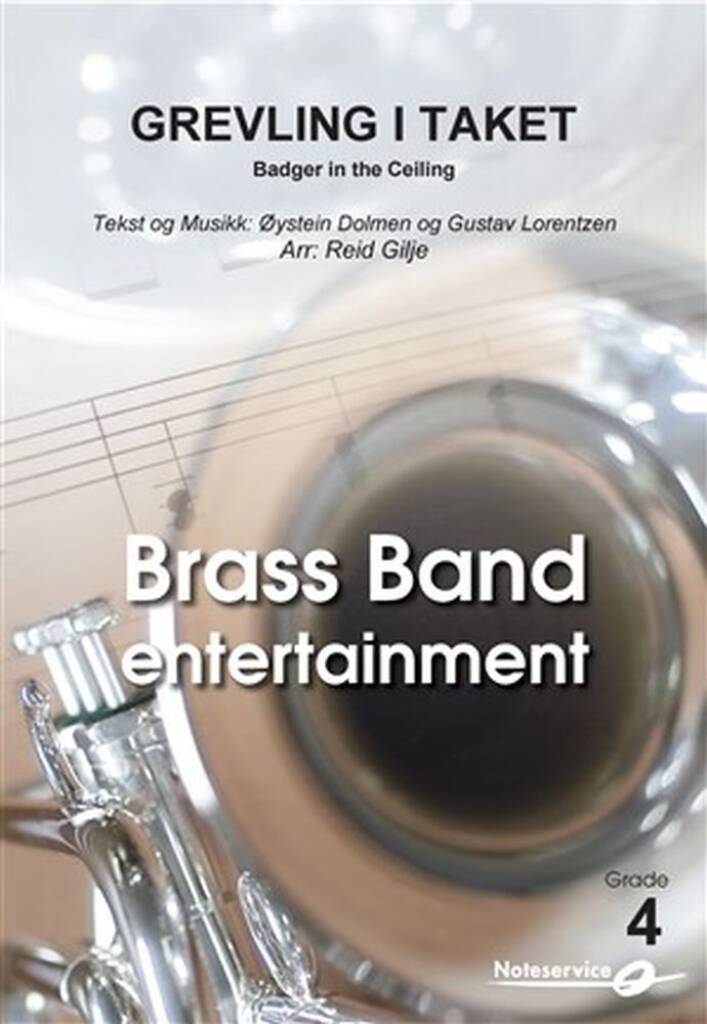
Grevling i taket - Øystein Dolmen og Gustav Lorentzen - Reid Gilje
This is an arrangement which has to be performed a bit humorous in the spirit of the original.It starts with a kazoo-like opening, played on the mouthpieces. At C, baritones and euphoniums should stand up. Maybe the musicians can play it by heart?Two bars before D, the tempo increase. On E, the cornet players should stand (and play by heart)?New, even higher tempo two bars before F. The trombonists should stand up in bar 103 to prepare for a terrific tempo. But G will be played like a laidback reggae-version. Flugelhorn and horns can stand up simultaneous with the glissando in bar 120.The tempo at H should be high and fresh and with several sections standing. In bar 158 should almost all players sit. At bar 160 everyone should stand up.In bar 162, all players should turn to the audience during the crescendo.
Estimated dispatch 5-14 working days
-
 £42.95
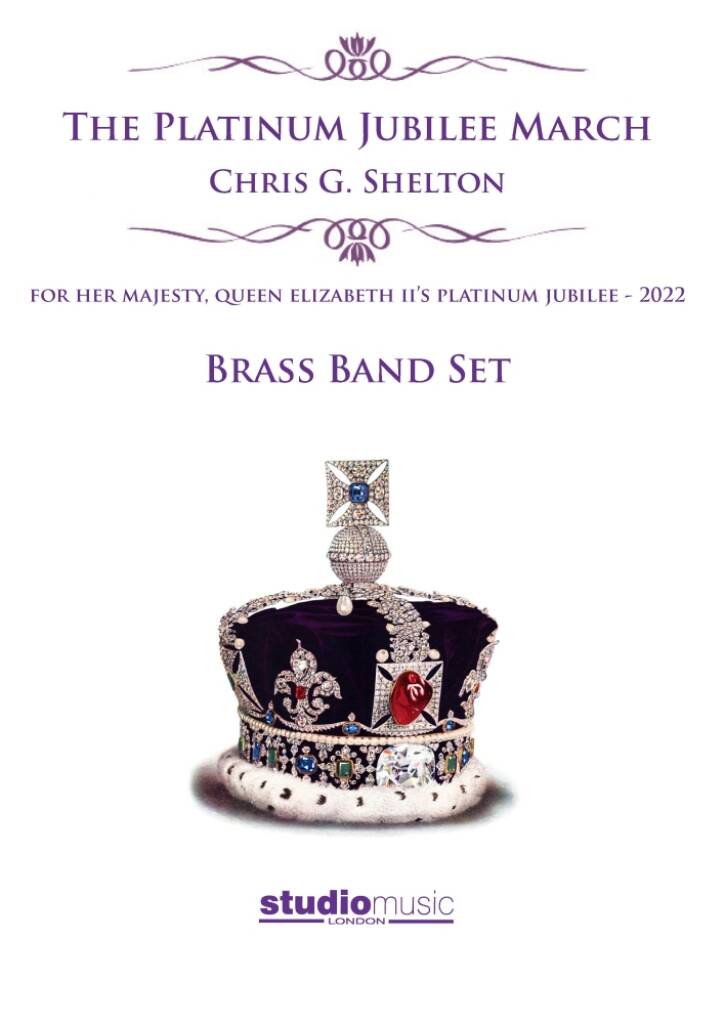
The Platinum Jubilee March - Chris G. Shelton
The Platinum Jubilee March was written to celebrate Her Majesty, Queen Elizabeth II's seventy-year reign as monarch of the United Kingdom. Its premiere was televised live around the world as part of the Queen's Birthday Parade which marked the start of the national Platinum Jubilee celebrations. The Queen's Birthday Parade 2022 saw the First Battalion of the Irish Guards trooping their colour. To reflect this, the march begins in a celebratory style and features a melody based around the opening motif of Let Erin Remember - the regimental slow march of the Irish Guards. In traditional style, the march develops excitement both harmonically and melodically, creating a strong sense of drive before reaching a stately trio. This section has a very regal and noble feel, lending subtle harmonic nods to two of the most quintessentially British composers, Gustav Holst, and Sir William Walton. The march culminates in a bold grandioso, featuring semi-quaver lines that are underpinned by a driving trombone countermelody. A forthright restatement of the introductory fanfare brings the march to a very definite and resolved ending.
Estimated dispatch 5-14 working days
-
 £105.00
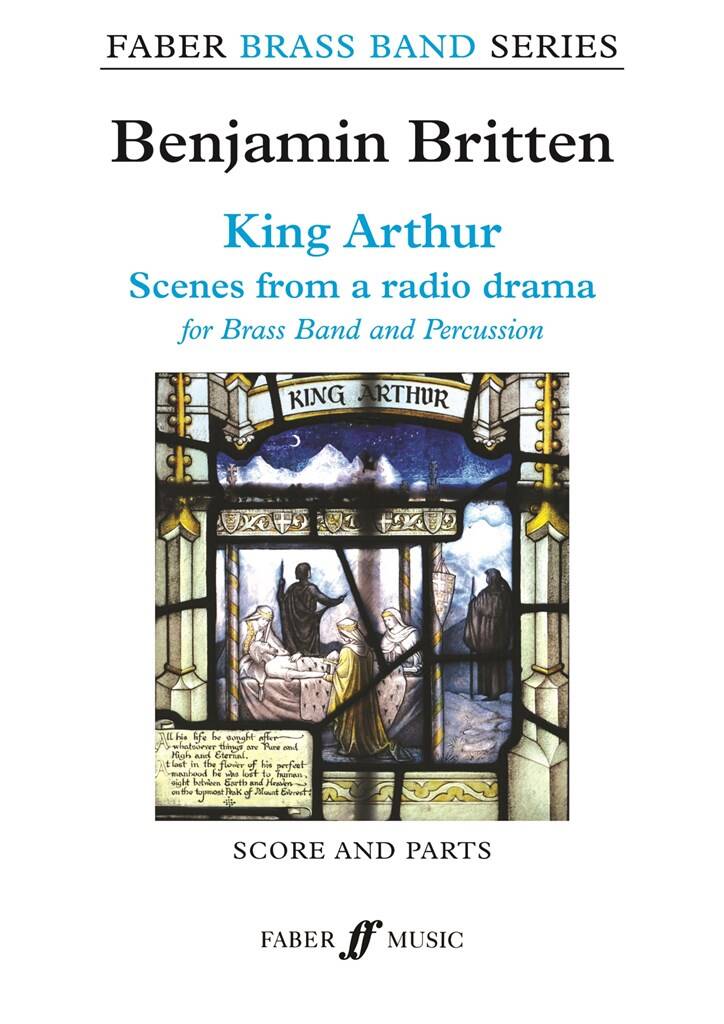
King Arthur - Benjamin Britten
King Arthur was the first of 28 scores Benjamin Britten (1913-1976) composed for radio between 1937 and 1947. It was an ambitious dramatisation of King Arthur's life and times - part pageant, part play, partcantata - written by D.G. Bridson. This colourful suite incorporates the Introduction, a dramatic Wild Dance, some of the music underscoring the scenes for Galahad and The Holy Grail, and two vividbattle scenes, ending with The Final Battle and Apotheosis. King Arthur (scenes from a radio drama) for brass band should not be confused with a much longer orchestral suite which Paul Hindmarsh devised from the same sourcein1995. King Arthur (scenes from a radio drama) will be played by the 20 First Section finalists on 16th September 2018 at this year's National Brass Band Championships of Great Britain.
Estimated dispatch 5-14 working days
-
 £78.20
Marche Fete des Vignerons 1851 - Fr. G. Grast
Estimated dispatch 5-14 working days
-
£69.00
Carnaval De Paris - Dario G. - John Ryan
Estimated dispatch 5-14 working days
-
£89.95
Of Distant Memories - Edward Gregson
Parts only. Of Distant Memories pays homage to the brass band composers that form the backbone of the brass band repertoire and their music, and in the process summons up a kind of subconscious memory bank of the musicallanguages, styles and forms used by them. The music is conceived in the form of a 'traditional' tone poem, reflecting certain aspects (e.g. melodic, harmonic, textural)of those early test pieces. Although fairly traditionalconcepts have been kept in planning the architecture of the work, certain aspects of the instrumentation, or scoring, are more contemporary in colouristic terms, as befits a composer writing in the 21st century. However, thepercussion requirements are fairly modest, similar to those used in the works of that period. The brass band tradition owes much to the composers of that period, for through their music they established a truly homogenous'British' brass band sound which has spread throughout many parts of the world. That tradition flourishes today and remains important for today's composers, even if their musical language is far removed from that of theirpredecessors. Of Distant Memories is the composers own way of repaying that gratitude.
Estimated dispatch 5-14 working days
-
£60.99
Pastorale - J.G. Brouwer
A sonorous work with a pastoral atmosphere. This composition is not based on a Christmas song, but fits very well in the program of a Christmas concert! drum-part ad lib.
Estimated dispatch 5-14 working days
-
 £54.99
Sumba Samba - Ron Gilmore
The Samba is a Latin American dance, which is mostly associated with parties, as a result of the fast tempo in which it is usually played. 'Sumba Samba' forms an exception to this rule. In order to get this samba to swing it is important to stick to the tempo prescribed. 'Sumba Samba' starts with a motif which will play an important role throughout the piece. This motif can be heard in the first notes of the 'refrain' and, as said before, has been used in the introduction, as well as in the transition after the middle part (letter G). Furthermore, it plays an important role in the middle part itself (letter E), in which the samba has momentarily disappeared and acompletely different atmosphere has been created. At letter H we pick up where we left off with the samba and swing to the end of this composition.
Estimated dispatch 5-14 working days
-
 £54.95
Sonata - Derek Bourgeois
This work, composed in 1998, was commissioned by the American trombonist Don Lucas as a work for trombone and piano and first performed by him in Birmingham on 19th May 2000. Subsequently, I arranged the music for both solo trombone and brass band and solo trombone and wind band so that it now exists in three formats. The first movement, in B flat major, is brisk and energetic, and is cast in sonata form. The second subject is gentler and more lyrical. The second movement, a scherzo in C major, is the most complex of the four. Basically the structure is a rond. For a long time the music remains in the opening 5/8 time until a new theme introduces more broken rhythms in a more jazzy idiom. After a return of the opening theme the following episode is more tonally ambiguous. Finally, the main theme returns to round off the movement. The third movement, a lyrical adagio, is really one long extended melodic flow. The harmonies are lush and the textures simple and direct. The tonal center is A minor, but the music meanders through so many keys, that this key centre is heavily disguised. The finale is a fiery affair. G minor is really its home key, but throughout the movement the music moves about a lot and the second subject is first heard in A flat minor. The movement's underlying sonata structure is masked not only by its loose tonality but also by its frequently changing time signatures. Like the first movement the second subject is more lyrical in nature and for a while it seems that the music will end peacefully, but a final flurry heralds a triple forte unison on the home note of the first movement - B flat. Derek Bourgeois
Estimated dispatch 5-14 working days
-
 £68.90
Second Suite for Brass Band - G. Jacob
Estimated dispatch 5-14 working days
 View Music