
Results
-
 £69.50
End of The Year Special - Andrew Pearce
The end of the year special is an original composition not based on any carols, written originally for orchestra for a French TV channel to celebrate their end of the year festivities. It's a short 2 1/2 minute opener with lots of tuned percussion and sleigh bells, plus some solo work for the euphonium. It's fun and festive and a great way to open any Holiday concert. There's even an optional part for women's chorus if you like. End of the Year Special could very well be the perfect opening for your Christmas concert.
Estimated dispatch 5-14 working days
-
£105.20
Marche pour la ceremonie des Turcs - Jean-Baptiste Lully - Haakon Esplo
Jean-Baptiste Lully (1632-1687) moved from Italy to Paris and started as a kitchen boy. Alongside he also composed music and was a dancer and actor. He soon became leader of the court orchestra, and wrote music for the parties at the court. At aconcert in 1687 he hit his foot with his conductor pole, got gangrene in the wound and died three months later. Lully is the first known composer of French baroque operas and had great influence on the development of the European musictowards the end of the 1600s.Turkish march is used in the 1991 movie "All the mornings of the world" (Tous les matins du monde) starring Gerard Depardieu. The action takes place in France in seventeenthcentury where we follow the relationshipbetween the viol player Marin Marais and his mentor Sainte Colombe.
Estimated dispatch 5-14 working days
-
 £137.70
Why Not? - Michel A. Camilo - Lars Erik Gudim
"Why Not?" is the most well-known piece by Dominican Republic pianist/composer Michel Camilo. It appeared for the fist time on his 1984 album record "French Toast". He re-recorded it in 1985 for the "Why Not?"-album whoich is among his best-selling to date. The song has also been recorded by other artist like the vocal group The Manhattan Transfer. "Why Not?" ia a modern latin-jazz classic and this demaning arrangement for Brass Band captures the featureless and musical challenges of the original piece.
Estimated dispatch 5-14 working days
-
£32.95
Phil the Fluter's Ball - French
Estimated dispatch 5-14 working days
-
 £54.99
My Way - Thijs Oud
The evergreen My Way, originally a French chanson (Comme d'Habitude), was written by Jacques Revaux and Gillies Thibault and first released by Claude Francois in 1967. Paul Anka wrote the English lyrics which were used by Frank Sinatra who made it in to the American charts with his world famous interpretation in 1969. Since then the song has been covered by a variety of pop stars, including Elvis Presley. This arrangement is based on the Elvis version and within it the chorus appears in a swinging blues style. This popular song will be ideal for that spectacular ending to your concert.
Estimated dispatch 5-14 working days
-
 £59.99
Whence is that goodly Fragrance flowing? - Philip Sparke
'Whence is that Goodly Fragrance Flowing?' is the first line of an old French Christmas song that originated in the 17th century. In 1728 John Gay used this joyous and markedly festive melody that honours Jesus Christ and His miraculous birth in his Beggar's Opera. Philip Sparke has given this melody a new lease of life with his charming and imaginative arrangement for the Christmas season.
Estimated dispatch 5-14 working days
-
 £76.99
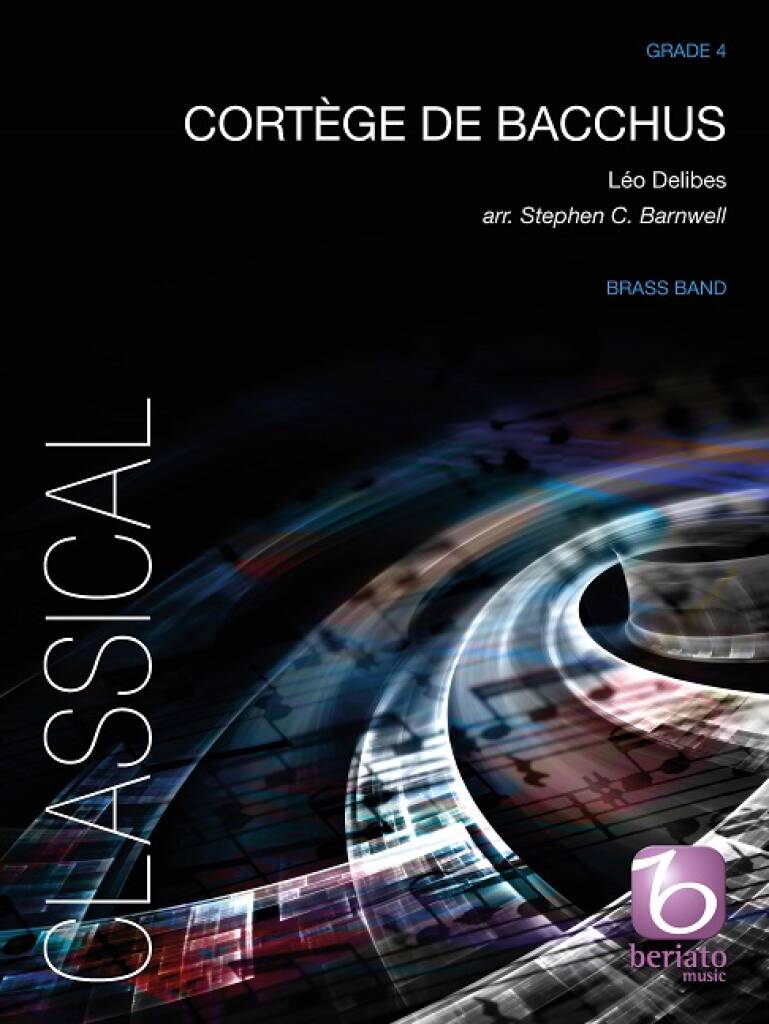
Cortege de Bacchus - Léo Delibes - Stephen C. Barnwell
This majestic processional march entitled Cortge de Bacchus (Procession of Bacchus) is an extract taken from one of the most popular scenes in the ballet Sylvia by the celebrated 19th Century French composer Lo Delibes.In this arrangement for brass band by Stephen C. Barnwell, it can be used an ideal concert opener or for any festive occasion.
Estimated dispatch 5-14 working days
-
 £43.99
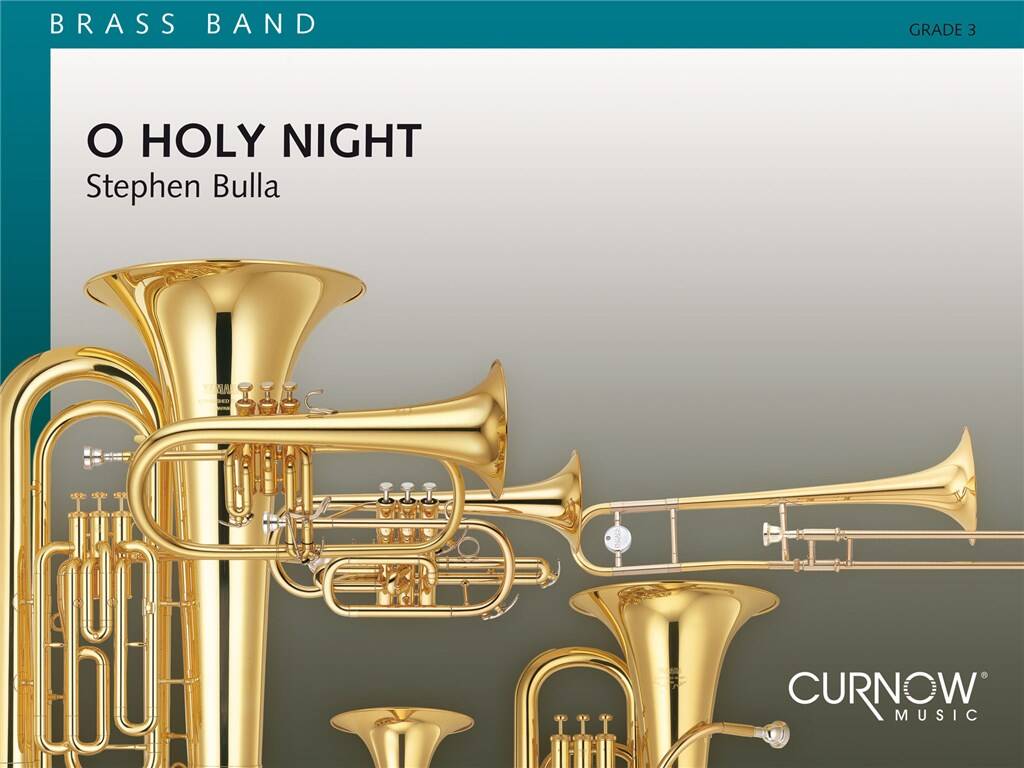
O Holy Night - Adolphe Charles Adam - Stephen Bulla
This terrific melody by the 19th century French composer Adolph Adam is one of the world's most famous Christmas solo melodies. It is unique due to the fact that it was the only Christmas song recorded by the legendary opera singer Enrico Caruso. This arrangement for soprano cornet and brass band will make a fantastic touching addition to any Christmas carol.
Estimated dispatch 5-14 working days
-
£69.99
Suite Symetrique - Jacob de Haan - Menno Haantjes
This playful three-part suite is largely based on symmetry. This of course is largely due to the relations of the arrangement of the themes; however, on the other hand, to the larger structures in form. The first part, (Prelude et Scherzo) has a solemn opening. Followed by it a related scherzo with many changes in time, this too is composed in a symmetrical form. In the second movement, Choral Dorian, the theme of the prelude is reversed and used in chorale in Dorian tonality. The suite comes to a close with Rondo d'Avignon. An annual theatre festival in a French city on the Rhone inspired this suite. It is a lively movement, symmetrically bought to a finish with a repeat of theprelude from the first movement.
Estimated dispatch 5-14 working days
-
£60.99
Cantique de Noel - Roland Kernen
The French composer Adolphe Charles Adam's (1803- 1856) carol Cantique de No l (better known in France as Minuit, Chretiens, and also widely known as O Holy Night) was initially criticised by church authorities who observed a lack of musical taste and the absence of religious perception. How wrong they were is now clear as the song is popular worldwide and is often performed in churches as well as carol concerts. Roland Kernen has produced this beautiful version of Cantique de Noel for brass band.
Estimated dispatch 5-14 working days
 View Music