
Results
-
 £30.00
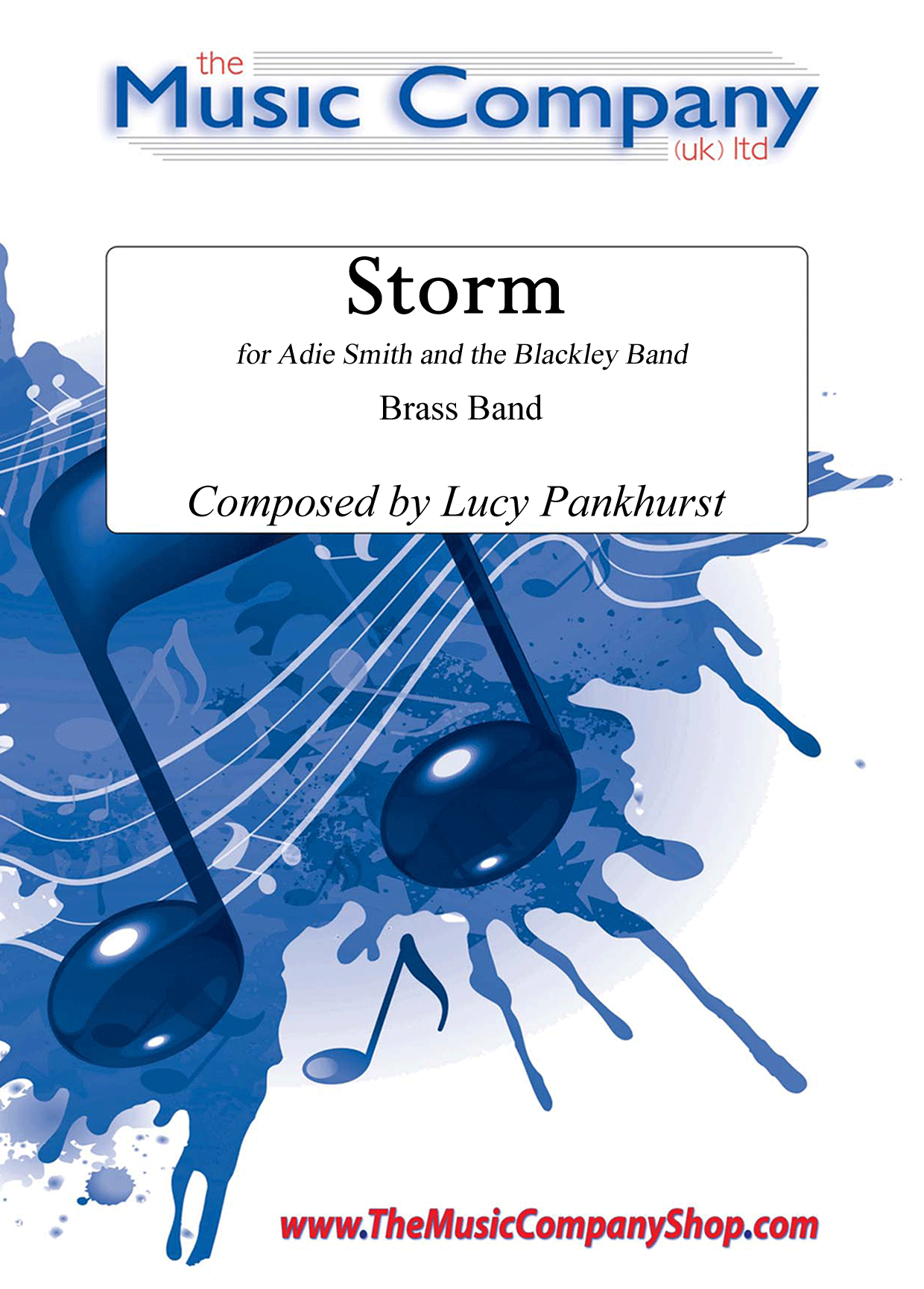
Storm - Lucy Pankhurst
A highly rhythmic and powerful modern work mixing high impact with tranquility and offering intermittent moments of lyrical beauty. Listen for yourself to fully appreciate the clever way so many senses are brought together under this single roof.Originally commissioned and performed by the Blackley Band for their attendance at the 2009 French Open Brass Band Championships, this piece really shows the many facets of Lucy Pankhurst's musical innovation.
In Stock: Estimated dispatch 3-5 working days
-
Pie Jesu - Faure - Len Jenkins
Gabriel Faure is acknowledged as among the very best of French composers, and his best-known work must be his Requiem, composed between 1877 and 1890. Nevertheless it did not achieve popularity until after 1945. The Requiem includes 'Pie Jesu' as an independent movement, and it is that movement which is arranged here to feature the particular tonal qualities of the soprano cornet. The solo instrument is accompanied by contrasting groups of instruments from within the Band.
-
Le Canal En Octobre - Frederic Paris - Len Jenkins
The tune that forms the basis of this arrangement for brass band was recommended to us by a good friend who plays concertina and melodeon in the traditional English Folk genre. Its delightfully simple melody is based on a French Schottische composed by Frederic Paris and is frequently played at folk music sessions where it is instantly recognised and internationally known. As a folk tune used for dancing, the piece would consist of Tune A and Tune B which would each be repeated several times in succession. In this arrangement for brass, that basic order of the melodies has been varied, and includes a brief foray into a minor key to maintain audience interest. It is not a difficult piece and should be within the capabilities of a fourth section band. However, it is recognised that not every brass band possesses a Marimba, and that part can be played on a Glockenspiel, with appropriate adjustment to fit the available range of the instrument.
-
Ah! Les Crocodiles - French Traditional - Lennox Rhodes
'Ah! Les crocodiles' is a popular children's song in France. The song has been around since at least 1860 and relates the adventures of an Egyptian crocodile going to war against Elephants. It has a very catchy tune! This nineteenth-century nursery rhyme is derived from Jacques Offenbach's song Hooray for the Crocodile, part of the "Tromb-al-ca-zar ou les Criminels dramatiques", premiered in April 1856.
-
 £60.00
Fantasie Concertante (Score only) - Philip Wilby
This exciting new concerto is a welcome addition to the repertoire of french and tenor horn players alike. Like the 18th-Century Serenade form there are five movements, arranged symmetrically around a slow movement - Soliloquy - which separates movements entitled Burlesque (two) and Valse Caprice (three) respectively. The first and last movements share common material of a more symphonic stature, and the concerto ends with a brisk fugato. The solo horn is (in the band version) accompanied by a quintet of solo players (two cornets, euphonium, trombone, and tuba) who provide the lion's share of the counterpoint and contrast with the main body of musicians who provide musical punctuation in the more sonorous tutti sections. The first movement, Don Quixote's Dream, contains references to Cervantes' famous hero, the Spanish nature of his stories, and the ambling gait of his horseback adventures.
Estimated dispatch 7-9 working days
-
 £74.00
Fantasie Concertante (Parts only) - Philip Wilby
This exciting new concerto is a welcome addition to the repertoire of french and tenor horn players alike. Like the 18th-Century Serenade form there are five movements, arranged symmetrically around a slow movement - Soliloquy - which separates movements entitled Burlesque (two) and Valse Caprice (three) respectively. The first and last movements share common material of a more symphonic stature, and the concerto ends with a brisk fugato. The solo horn is (in the band version) accompanied by a quintet of solo players (two cornets, euphonium, trombone, and tuba) who provide the lion's share of the counterpoint and contrast with the main body of musicians who provide musical punctuation in the more sonorous tutti sections. The first movement, Don Quixote's Dream, contains references to Cervantes' famous hero, the Spanish nature of his stories, and the ambling gait of his horseback adventures.
Estimated dispatch 7-9 working days
-
 £58.00
Henry V (Score only) - William Walton
It takes a special ability to compose film scores which serve the images perfectly yet translate into first class concert music. William Walton was such a talent as the continuing popularity of his brilliantly evocative film music shows. Included are the poignant Death of Falstaff, the victorious Agincourt Song and Touch her soft lips and part - one of the most tender miniatures in all music. Winwood Music are delighted to bring this music from Laurence Olivier's classic film to the brass band world in a fabulous arrangement, including optional narrator, by Edward Watson - so idiomatic that you'll think this is the original version! Full Movement Listing: Fanfare Prologue: O For a Muse of Fire Interlude at the Boar's Head Inn The Death of Falstaff Touch Her Soft Lips Fanfare Fanfare The Battle of Agincourt Bailero Interlude at the French Court The Agincourt Song
Estimated dispatch 7-9 working days
-
 £74.00
Henry V (Parts only) - William Walton
It takes a special ability to compose film scores which serve the images perfectly yet translate into first class concert music. William Walton was such a talent as the continuing popularity of his brilliantly evocative film music shows. Included are the poignant Death of Falstaff, the victorious Agincourt Song and Touch her soft lips and part - one of the most tender miniatures in all music. Winwood Music are delighted to bring this music from Laurence Olivier's classic film to the brass band world in a fabulous arrangement, including optional narrator, by Edward Watson - so idiomatic that you'll think this is the original version! Full Movement Listing: Fanfare Prologue: O For a Muse of Fire Interlude at the Boar's Head Inn The Death of Falstaff Touch Her Soft Lips Fanfare Fanfare The Battle of Agincourt Bailero Interlude at the French Court The Agincourt Song
Estimated dispatch 7-9 working days
-
£19.00
Old Scottish Psalm Tunes - Various - Rimmer, D
Duke St., Crimond, French, Glasgow, Saltzburg, and Kilmarnock
In Stock: Estimated dispatch 1-3 working days
-
£45.00
Automne - Chaminade, C - Bell, K
Although female French composer Ccile Chaminade wrote many large orchestral works, she is best remembered for her extensive output of piano salon music. Automne, probably her most endearing, has been arranged by Katie Bell as a euphonium solo. A difficult solo, but well worth the rehearsal.Difficult, 1st section +
In Stock: Estimated dispatch 1-3 working days
 View Music