
Results
-
£42.50
Fresena March - Jacob de Haan
Fresena is the original name for Friesland, a northern province of the Netherlands, with its own language and culture. In this simple mars, Jacob the Haan used two traditional Friesian folksongs. Together with his composition Fox from the North this mars was a part of the festival suite that Jacob de Haan once wrote by order of the council of Friesland.
Estimated dispatch 5-14 working days
-
 £84.99
Pacific Dreams - Jacob de Haan
Pacific Dreams describes the experience of Miguel, a traveling composer from Spain who, feeling somewhat alienated from his homeland, is wandering through an area of Sydney known as The Rocks. At a small outdoor market in a typical street of this oldcolonial neighbourhood, he discovers a print of William DeShazos painting "Pacific Dreams" Portrayed in the painting is the surf of one of the exotic islands in the Pacific. Next, with the impressive Sydney Harbour Bridge looming over the narrowstreets of The Rocks, he envisions sultry Pacific beaches. Suddenly a theme he once composed about the lakes in Japan comes to him. Is it the Asian influences present in cosmopolitan Sydney that bring this theme to mind? Or perhaps the waters aroundSydney, over which he could sail to Tahiti? He is uncertain. Could this same theme be used to create a new composition about his feelings for the metropolis Sydney? How then to work his Pacific Dreams into the mix? Miguel is certainly no fan ofHawaiian music. Mayby he could use the vocabularies of islands like Hawaii and Tahiti, their beautiful vowel combinations being sung ad libitum by a mixed choir.With these ideas and his newly purchased print of "Pacific Dreams", he boards the Metroat Circular Quay. He has a final glimpse of the harbour and the Sydney Opera House as the train races into the ground. On to the hotel! To work! He must compose!Maestoso : Miguel is impressed as he gazes upon the Sydney Harbour Bridge. And yet, hewants to go away from this city. Away, to an exotic island in the Pacific.Steady Rock : In the Rocks, musicians are playing at a square. Miguel basks in the atmosphere but at the same time he is fantasizing about Hawaii and Tahiti.Andante Lamentoso :In his hotel room, Miguel is feeling sad and lonely in this big city. He takes comfort in his "Pacific Dreams".Allegro : Miguel boards the boat that takes him from Darling Harbour to Circular Quay. In his mind he is traveling on to Hawaii. Or is ithome, where the bolero is playing? He is pulled back to reality by the skyline of Sydney.
Estimated dispatch 5-14 working days
-
 £54.99
Amazing Grace - Traditional - Jacob de Haan
Jacob de Haan arranged the famous piece Amazing Grace for four-part variable ensemble, which may be complemented with percussion. With this intrumentation, it is possible to play the piece with almost any combination of instruments.The piece opens with the song theme, which after a modulation, flows into an intermezzo, characterized by a free interpretation of the theme. The interlude reaches a climax introducing the finale where the melody can be heard once again in all its beauty.
Estimated dispatch 5-14 working days
-
 £60.99
Consolation - Jan de Haan
Wer nur den lieben Gott lasst walten was composed by Georg Neumark in about 1641 and was subtitled 'Trostlied' literally meaning consolation song. Songbooks at the time showed the popularity of this song and it is still well-known today partly due to Johann Sebastian Bach's use of the melody for one of his own chorals. In Jan de Haan's arrangement the choral is heard twice, once, alternating with the original motif from the introduction and a second time, without interruption, reflecting the composer's original intention - a song of consolation.
Estimated dispatch 5-14 working days
-
 £54.99
They are Coming - John Emerson Blackstone
There are people who are capable of planning well. They live their lives in a well-structured manner and know exactly what they have to do. On the other hand, there are also people who are the exact opposite: they want to do too many things at once and are often somewhat absent-minded, which occasionally results in frantic situations. The outcome of one such situation is 'They are coming'. John Emerson Blackstone had been working on a new composition for some time when he received a telephone call from his editor, who told him that the deadline was approaching rapidly, even worse, that it would expire at the end of that same day and that he would drop by in person to fetch thecomposition! Blackstone set to work in a frenzy and completed the last details. When his editor arrived, the piece was finished ..... and got its definitive title: 'They are coming'.
Estimated dispatch 5-14 working days
-
 £154.99
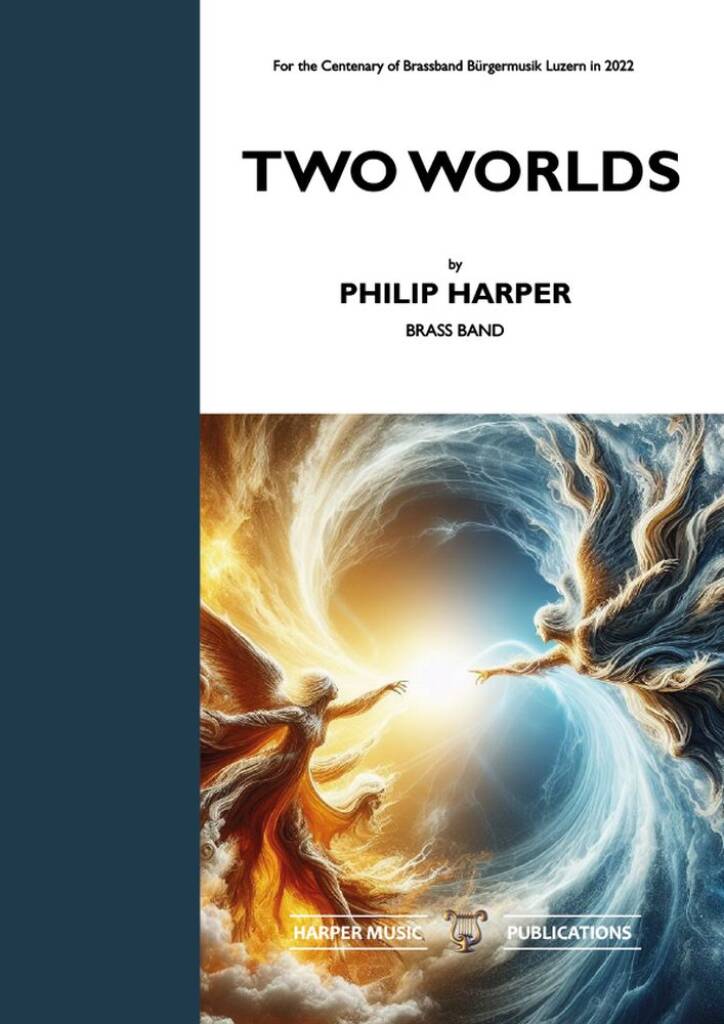
Two Worlds - Philip Harper
A powerful musical journey through time, Two Worlds explores the enduring force of storytelling. In an imaginary encounter, the Egyptian Pharaoh Tutankhamun and the American President Lincoln - in reality, separated by 5,000 years - meet to discuss the myths, truths and beliefs that shaped their respective civilizations. From the divine sun gods of Ancient Egypt to America's dream of equality, this evocative work blends fantasy and history with bold, cinematic music. At once dramatic and thought-provoking, Two Worlds reminds us that the stories we believe in can unite or divide, destroy or inspire.Commissioned for the centenary of the Swiss Brassband Burgermusik Luzern, in 2022.
Estimated dispatch 5-14 working days
-
 £102.99
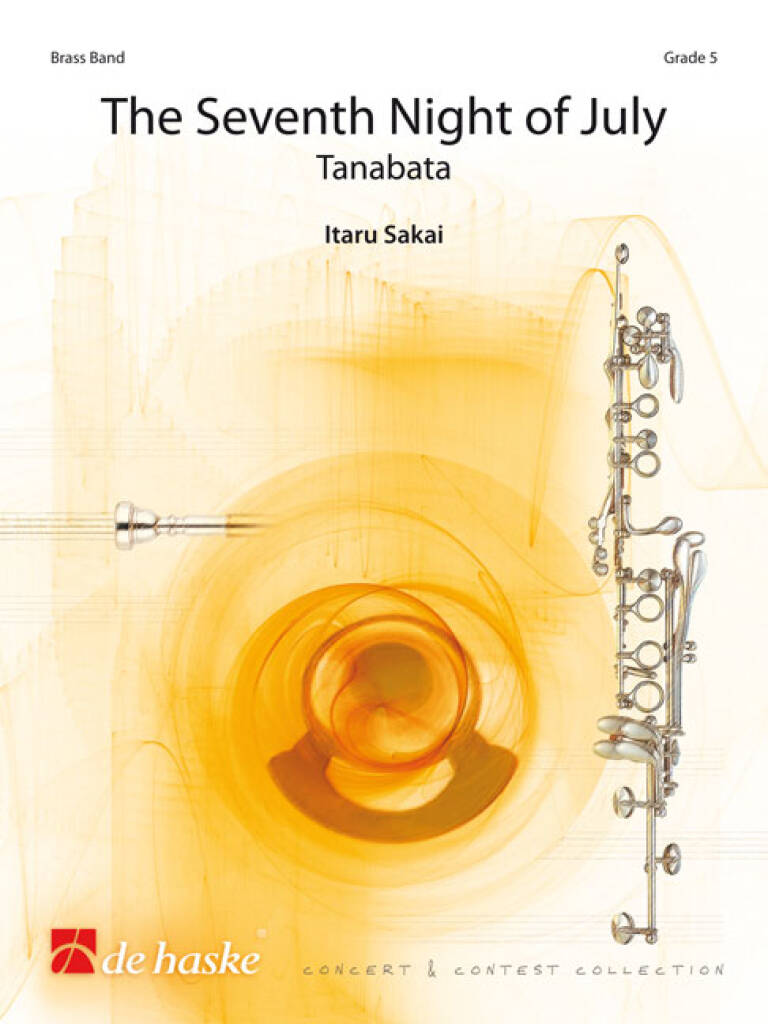
The Seventh Night of July - Itaru Sakai - Marc Jeanbourquin
In Japan, July the 7th is a holiday known as Tanabata, for which large celebrations are held throughout the country. The holiday is based on a legend about a young man and a young woman who are separated by the Milky Way and can only see each other once a year on this night. The Seventh Night of July is Itaru Sakai's musical interpretation of this romantic legend. The flugel horn and euphonium solos during the middle movement represent the two main themes from the legend.
Estimated dispatch 5-14 working days
-
 £127.95
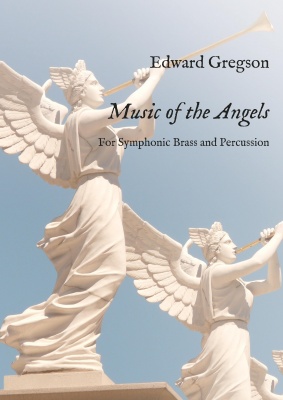
Music of the Angels (Symphonic Brass Ensemble - Score and Parts)
In 1998 Gregson was commissioned by conductor Martyn Brabbins to write a short concert opener with choir to mark his debut as Music Director of the Huddersfield Choral Society. Entitled ...and the seven trumpets... this ten minute flourish is founded on a verse from Chapter 8 of the Revelation To John (The Apocalypse), the last book in the Bible: 'and I saw the seven Angels which stood before God: and to them were given seven trumpets'. The performance employed the full power of the Huddersfield Town Hall organ and the brass section of the BBC Philharmonic, including seven trumpets and four horns placed strategically around hall.The following year, when Gregson received a commission from the Cheshire-based Foden's Brass Band (conducted at that time by Nicholas Childs) for a work to mark its centenary in 2000, he turned to the first portion of ...and the seven trumpets... as the basis for an ambitious celebratory work entitled The Trumpets of the Angels. "The opportunity to create an extended work which would break out of the brass band mould was an important milestone for me," the composer says. In 2015 he was asked by Nicholas Childs to create a new performing edition without organ for the Black Dyke Band. This received its first performance in April 2016 at the European Brass Band Festival in Lille. In 2018, Gregson revisited the music for a third time, returning the opening fanfares to orchestral brass and transforming substantial portions of the 'Black Dyke' version to create Music of the Angels, a dramatic canvas for symphonic brass and percussion.An array of bells and gongs offer an unmistakable key to the source of Gregson's inspiration. Inscribed In tribute to Olivier Messiaen, the work's principal material and its sound world, but crucially not the underlying musical processes, are influenced by Messiaen's masterpiece for wind and percussion, Et exspecto ressurectionem mortuorum (1964). Music of the Angels begins with braying of horns suggestive of the start of an ancient ritual. Six 'angel' trumpeters, set behind the ensemble, answer in sequence, with the evocative sound of tam-tams creating the Messiaen-like aura. Once the horns have reached the performing space, four of the trumpeters deliver highly contrasting fanfare cadenzas. At the climax of this episode, the individual fanfares are presented together, as if, perhaps, to reflect the Biblical writer's apocalyptic visions of hail, fire, seas of blood and the cataclysmic destruction of man and beast.This powerful vision of death and destruction gives way to a prayerful lament, re-imagining a sung Kyrie Eleison from the 'Black Dyke' edition, with flugel horn and euphonium obligati. The hushed atmosphere is broken by tenor and side drums, and trumpets five and six, which gallop away like the Horsemen of the Apocalypse. In the biblical account their steeds had 'heads like lions with fire and smoke and sulphur issuing from their mouths'.As the reverberation of a dramatic climax dies we hear the entry of the seventh trumpet, from 'on high', blazing forth with a version of the main that extends across the entire compass of the instrument - almost three octaves. Supported by a 'holy trinity' of gongs, an 'epic' final cadenza introduces new material which is further developed in a frenetic final section. This is announced by two sets of timpani, to the left and right. Braying brass (euphoniums and horns) once more adds an air of foreboding. As the music builds towards a magisterial conclusion, the Messiaen-inspired tritones of the principal motif are smoothed out into perfect 5ths and combined with the earlier material in a full-voiced chorale, over which the seventh trumpet blazes in triumph.- Programme note by Paul HindmarshScored for1 Trumpet in E flat (Trumpet 5)6 Trumpets in B flat (Trumpet 4 doubling Flugel Horn)4 Horns in F3 Tenor Trombones1 Bass TromboneEuphonium2 Tubas2 Timpani (Percussion 3 doubles Timpani 2)Percussion (3 players): 3 Tam-tams, 3 Suspended Cymbals, Bass Drum, Tenor Drum, Snare Drum, Tubular Bells.Duration: 16.00
Estimated dispatch 7-14 working days
-
 £79.95
Lost Village of Imber, The - Christopher Bond
The village of Imber on Salisbury Plain had been inhabited for over one thousand years when it was evacuated in 1943 to make way for military training in the Second World War. At the time, with preparations for the Allied invasion of Europe underway, most villagers put up no resistance, despite being upset, with the belief that they'd return once the war had concluded. To this day, Imber and its surrounding land remain a military training ground. The villagers never returned, and just the shell of what was once a community remains. Structured in three movements, it is on this very real story that the work is based, setting out the series of events of 1943 in chronological order. The first movement, On Imber Downe, portrays a sense of jollity and cohesiveness - a community of individuals living and working together before news of the evacuation had broken. Sounds of the village are heard throughout, not least in a series of percussive effects - the anvil of the blacksmith; the cowbell of the cattle and the bells of the church. The second movement, The Church of St. Giles, begins mysteriously and this sonorous, atmospheric opening depicts Imber in its desolate state and the apprehension of residents as they learn they have to leave their homes. Amidst this is the Church, a symbol of hope for villagers who one day wish to return, portrayed with a sweeping melodic passage before the music returns to the apprehension of villagers facing eviction around their sadness at losing their rural way of life. In complete contrast, the third movement, Imemerie Aeternum, portrays the arrival of the military, complete with the sounds of the ammunition, firing and tanks - sounds which were all too familiar to those living in the surround areas. To close, the Church of St. Giles theme returns in a triumphant style, representing the idea that the church has always been, even to this day, a beacon of hope for the villagers and local community - both the centrepiece and pinnacle of a very real story. The work was commissioned by Bratton Silver Band in celebration of the band's 160th Anniversary, with funding from the Arts Council National Lottery Project Grants Fund and the Brass Bands England Norman Jones Trust Fund.
Estimated dispatch 10-14 working days
-
 £65.00
Rise of the Phoenix (Brass Band - Score and Parts)
As the title suggests, the phoenix was a fabulous mythical bird, who every morning at dawn, sang a song so enchanting that even the sun God, Apollo, would stop and listen. The bird would live for a hundred years, and at the end of its life, would build a pyre, set it on fire and be consumed by the flames. After three days, the phoenix would be reborn from the ashes, to sing once more.This work was commissioned by Clifton and Lightcliffe Band and reflects the difficulties and rebirth of the band to make music once more.Suitable for second section bands and above.
Estimated dispatch 7-14 working days
 View Music